
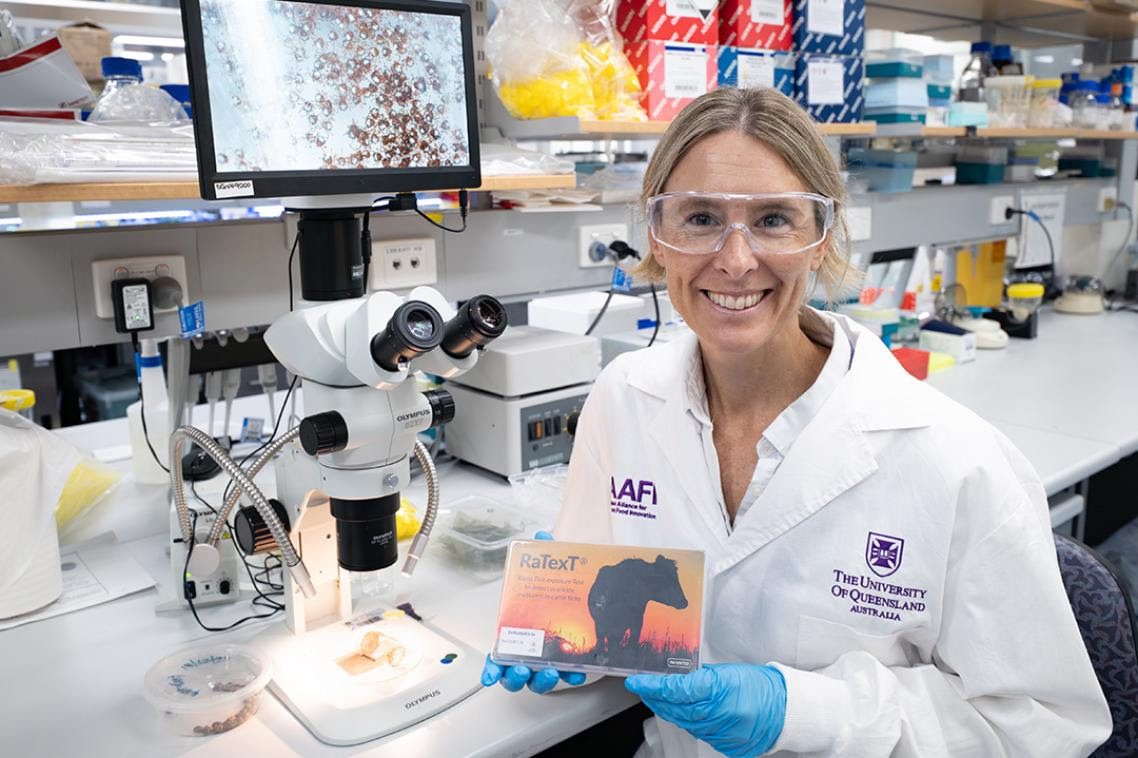
Dr Hannah Siddle. (Photo: Megan Pope)
‘We want your ticks’ – that is the callout from University of Queensland researchers who need cattle producers help to understand the growing resistance to chemical control in cattle ticks.
Chemical treatments are an important tool for producers to control and manage ticks, but as ticks develop resistance to these chemicals, producers are left with fewer treatment options.
UQ Research Fellow Dr Hannah Siddle said the team needs ticks from across northern Australia to test for chemical resistance.
“We would like producers to send us ticks even if they’re not particularly worried about resistance because we want to test as broadly as possible to gain understanding of chemical resistance in Australia,” Dr Siddle said.
“Cattle ticks are a costly pest on beef and dairy farms as they can affect weight gain, milk production, and carry disease, forcing producers to rely on chemical treatments to control them, she said.
“Resistance to common chemical groups is a growing problem. Testing will help determine populations of ticks that are resistant and susceptible to a range of chemicals in different parts of the tick-zone.”
The second step of the work is to sequence the genomes of resistant and susceptible ticks to improve testing.
“The aim is to identify markers in the genome that we can use to make quick, reliable and cost-effective molecular-based tests,” Dr Siddle said.
The samples will be tested using a novel testing kit called RaTexT, developed by researchers in the Netherlands and tested in Brazil.
“These kits provide results in 24 hours, which is faster than the six-week turnaround for standard diagnostic testing,” Dr Siddle said.
“The RaTexT kit is not a replacement for diagnostic testing by biosecurity authorities, but they’ve been used in Africa and South America and are a powerful research tool to gain a better understanding of chemical resistance in ticks in Australia.”
Understanding resistance will improve efficacy of chemicals
Last week, Qld’s Minister for Primary Industries, Tony Perrett announced a review into cattle tick management, stating resistance to chemicals as one of his key concerns.
Part of Dr Siddle’s research will including mapping chemical resistance across northern Australia to allow producers to make better decisions on what chemical to use.
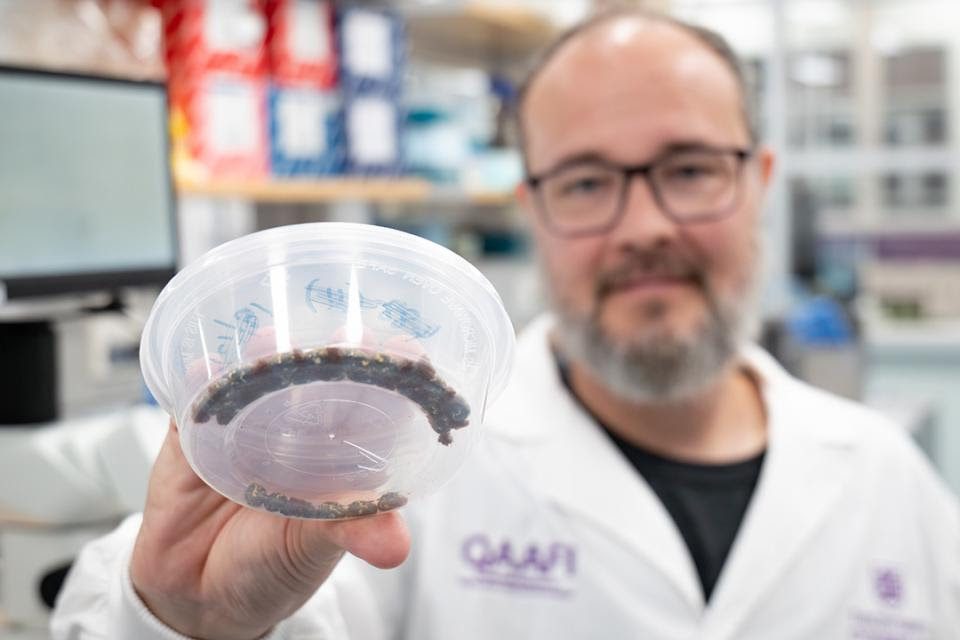
Dr Guilherme Klafke. (Photo: Megan Pope)
Collaborator Dr Guilherme Klafke from Brazil’s State Centre for Diagnosis and Research in Animal Health, said the RaTexT kits could help producers develop better strategies for controlling ticks.
“The advantage of this test is the quick turnaround in getting results,” Dr Klafke said.
“It’s complementary to the regular biosecurity testing, adding another level of information for farmers who need to make decisions about what products to use on infested animals.
“The genomic analysis can also help us to understand the population structure of ticks in the region.
“That means if there is any movement of ticks from one place to another, that sees resistance shift with the cattle.”
The work is supported by Dr Siddle’s Australian Research Council Mid-Career Industry Fellowship and is in collaboration with animal health companies, Boehringer Ingelheim and TBD International.
Producers who want their ticks tested for chemical resistance need to complete a survey and follow instructions on how to collect and send ticks to UQ for testing.
Producers can also email Dr Hannah Siddle h.siddle@uq.edu.au for details on how to participate in the trial.
HAVE YOUR SAY