
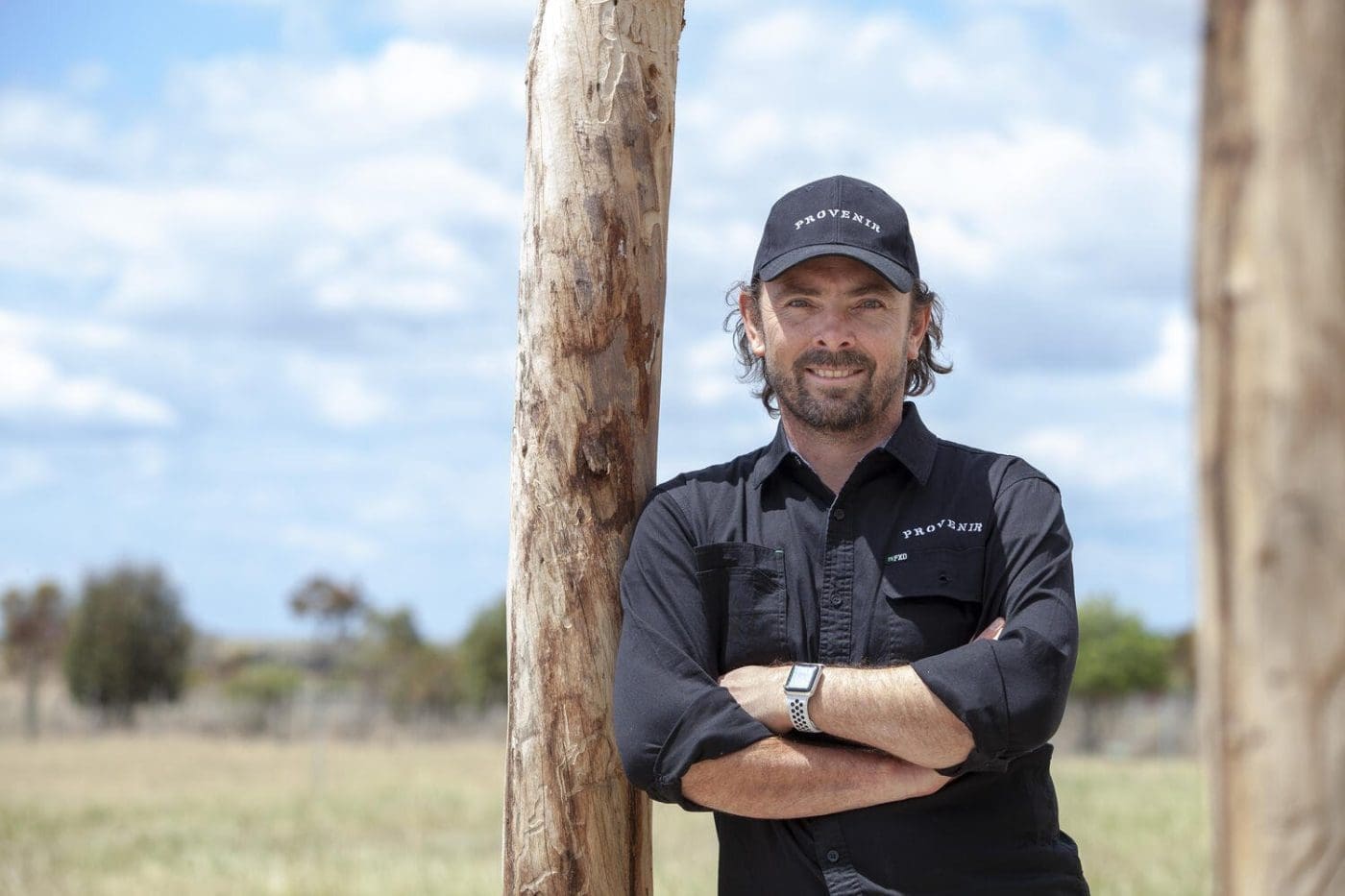
 Six years ago, a novel beef processing model was launched, designed around slaughtering cattle on-farm, using a Mobile Processing Unit (MPU).
At the time it was described as a game-changer for the beef industry with the potential to ‘disrupt’ conventional processing.
The concept was built around relocating the Mobile Processing Unit from farm-site to farm-site, slaughtering cattle to dressed-carcase stage, before transporting chilled carcases to a centralised boning and packaging facility.
A key selling-point was a claimed elevated standard of animal welfare, avoiding the transport phase prior to slaughter.
Along the way, the Provenir concept attracted ag-tech development and financial support, including funding from SproutX, an agtech startup accelerator and some funding from Meat and Livestock Australia to help fund the design and construction of the unit.
While the ‘disruptor’ claim hasn’t happened, the Provenir business today has morphed out of simply processing cattle on-farm, into a fully-integrated paddock-to-plate retail business with direct-to-door customers across Australia.
“We see we have brought an innovation to the cattle industry, and we feel we have cracked the nut, and after six years feel we have proven the concept and proven it is financially viable,” Provenir chief executive officer Chris Balazs told Beef Central.
Provenir had the first MPU approved in Australia for on-farm slaughter, where the meat was eligible for sale to the public. Earlier forms of mobile processing were licensed for personal (farm of origin) use only.
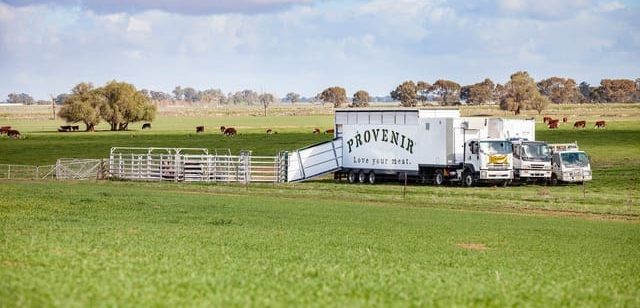
Since June 2019, Provenir has partnered with regenerative farmers to supply consumers with what it describes as ‘Ethical Meat’.
“Instead of the cows going to the abattoir, the abattoir comes to the cows. Because they don’t have to go on the back of a truck, animal welfare is improved, which in turn improves meat quality as we are taking the stress out of the animals,” Mr Balazs said.
In its six years of operation, Provenir has partnered with 85 farmers in Victoria and southern New South Wales to process their cattle.
Mr Balazs said it took several months for new farmers to come onboard with Provenir.
“We have to ensure the farmers are producing the cattle in a way we know our customers would respect, which is why we work exclusively with regenerative farmers,” he said.
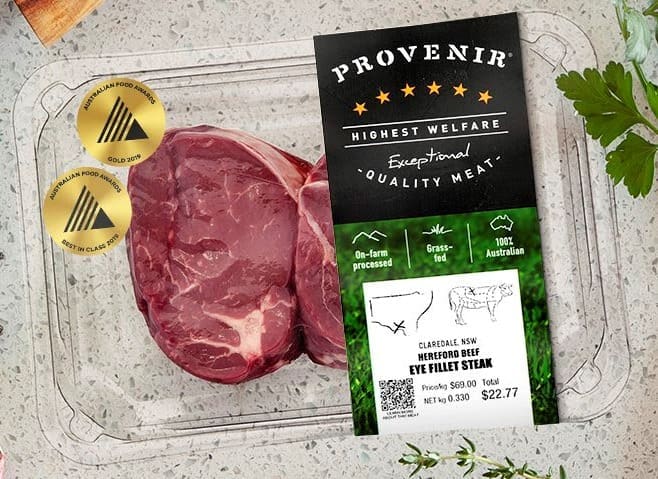
The retail part of the business offers full traceability with a QR code on each product taking customers to the origin story of the meat in the pack.
“The digital provenance platform we offer is industry leading technology in regard to traceability and provenance,” Mr Balazs said.
Provenir processing and prices
Originally it was thought that the MPU would slaughter up to 30 animals a day, using a staff of four, but Mr Balazs said Provenir now works off processing 18 head a week, producing about 5.5 tonnes of beef (carcase weight) on average.
The business now preferred to do three to four weeks on one farm before moving to the next.
“We generally process on-farm for two days, and then the carcases are transported back to our boning facility in Geelong, where the butchers break them down and package everything. From there the beef goes direct to the end customers,” Mr Balazs said.
“We have found processing for two days on farm provides enough meat for the butchery to go for five days.”
Acquisition model
Provenir works exclusively with ‘regenerative’ farmers who have grassfed, grass-finished cattle and work on an acquisition model whereby the animal is purchased at the time of slaughter and payment is made off the carcase weight.
“We currently work with almost 20 farmers, and we always sit down with them before we process the animals to negotiate the price,” Mr Balazs said.
“We estimate there is an 8-12 percent price advantage working with us, over sending cattle to a saleyard or to conventional processors, because there are no transport costs, no commission for an agent and that is 5pc saved right there.
“Yield is above what the average yield is for the various classes of cattle, because the cattle haven’t gone through stress of transportation, so their moisture retention is higher – so we basically get more meat from each animal which flows back to the farmer as well.”
Regulations identical to conventional processors
Mr Balazs said Provenir had to meet the same food safety and hygiene regulatory standards, including waste management, as other domestic processing facilities, as well as auditing requirements of the two states it operates in.
“With regards to waste management, we are well below EPA thresholds, but we generally take a lot to a rendering facility,” he said.
Provenir also employs several meat inspectors who are onsite for the processing of the cattle.
Mobile processing no threat to conventional processing
Mr Balazs said on-farm processing was not going to replace conventional processing and therefore should not be seen as a threat to industry.
“We are Australia’s smallest abattoir, we fully understand we are niche. We want to grow, but we are a niche player. Instead, we are offering an alternative to farmers and to consumers,” he said.
“We are not going to replace fixed abattoirs, but we can play a role in meeting increasing demand from consumers who want traceability.
“In fact, a MPU could be added to any static abattoir that has a boning room, and it could be another class of product that they offer. We are open to helping others build an MPU.”
Given its higher cost base, the Provenir business model is geared toward appealing to consumers who are prepared to pay a premium for on-farm processed beef that comes with a provenance story.
“We want to offer people in the cities a way to support regenerative farming and ethical processing, but we know it is a high-end product,” Mr Balazs said.
 “The value proposition we put forward is not price-dependent, our customers choose us because it aligns with their value system, so they may go without other things so they can purchase our meat.”
In recent offers to customers, Provenir has advertised 500g of premium grassfed mince at $14.50 (equivalent to $29/kg), while a 450g grassfed (note: not Certified Grassfed) rump steak is $23.50 (about $51.50/kg).
Compare those prices to Woolworths lean beef mince this week at $16/kg and rump $36/kg (Certified Grassfed $41.60/kg).
Mr Balazs said like all processors, the biggest challenge for Provenir was setting a price for the home-delivery meat, when there is so much volatility in the cattle market.
“Cattle prices are the most variable factor, and can change 5-6pc in a week, but the retail market can’t tolerate that price volatility,” he said.
Expansion plans in the next five years
Provenir set out to have several units across Australia and in the next five years would like to see those expansion plans come to fruition.
“We have identified a number of areas in Australia that have quality cattle, consistent turnoff and access to markets, we know would support the business, looking at Qld, NSW and SA,” Mr Balazs said.
“In order for an MPU to work, several producers are needed to ensure supply and the properties need to be located within a few hours of a boning facility.
“We have had interest from several co-operatives who are producing meat, but which are struggling due to lack of availability of space for service kills. We are just looking for the right partners to make it a reality because it is a significant capital outlay.”
Mr Balazs said that an MPU did not have a set price as the cost can vary depending on the size and what it is being used for.
“We have had big demand from producers and consumers to start doing lamb, as well as beef, and in the next three years we would like to be developing the next MPU,” he said.
“The next design will have six years of learning built in to improve operability, efficiency and human comfort.”
Mobile abattoir laws in each state
New South Wales
Mobile abattoirs are permitted to operate in NSW and must comply with all legislative requirements relating to regular abattoirs.
Proposed mobile abattoir operators are encouraged to liaise with the NSW Food Authority regarding proposed operations to ensure compliance with requirements can be achieved.
Victoria
Mobile or vehicle-based abattoirs are permitted to operate in Victoria due to legislative changes made in 2019.
PrimeSafe can issue licences for facilities that adhere to stringent food safety standards and operate under an approved Food Safety Program. The Victorian Government offers support for those wanting to establish micro-abattoirs which includes an eGuide to help proponents navigate the approval processes for micro-abattoirs.
Tasmania
There are currently no mobile abattoirs accredited to operate in Tasmania.
Food safety standards and accreditation requirements apply through the Tasmanian Primary Produce Safety Act 2011 and Primary Produce Safety (Meat and Poultry) Regulations 2024 to all commercial livestock slaughtering and meat processing businesses.
This means that mobile abattoirs could be allowed to operate commercially, subject to a satisfactory application.
South Australia
Currently there are no mobile abattoirs accredited in South Australia.
All accredited abattoirs – whether fixed or mobile – are required to comply with the Australian Standard (AS:4696:2023) for the hygienic production and transportation of meat and meat products for human consumption. They are also required to have suitably qualified staff, regardless of the size and scale of the facility.
Northern Territory
There are currently no mobile abattoirs licenced in the NT and any potential operator would need to meet the NT Meat Industries Act 1996 and Australian Standards AS4696 before applying for a licence.
Western Australia
Mobile abattoirs are permitted to operate in Western Australia, provided local government, health, environment and other regulatory requirements are satisfied.
Queensland
If a person or business intends to operate a fixed or mobile abattoir in Queensland, they are required to hold a Safe Food accreditation.
An accreditation provides the legal authority to sell or supply meat or meat products in Queensland.
A person or business needs to comply with the Food Production (Safety) Act 2000 and Food Production (Safety) Regulation 2014 (meat scheme) which calls up the Australian Standard for the Hygienic production and transportation of meat and meat products for human consumption (AS4696:2023).
In Queensland, there are currently no mobile abattoirs accredited for operation or have applied for accreditation with Safe Food Production Queensland.