
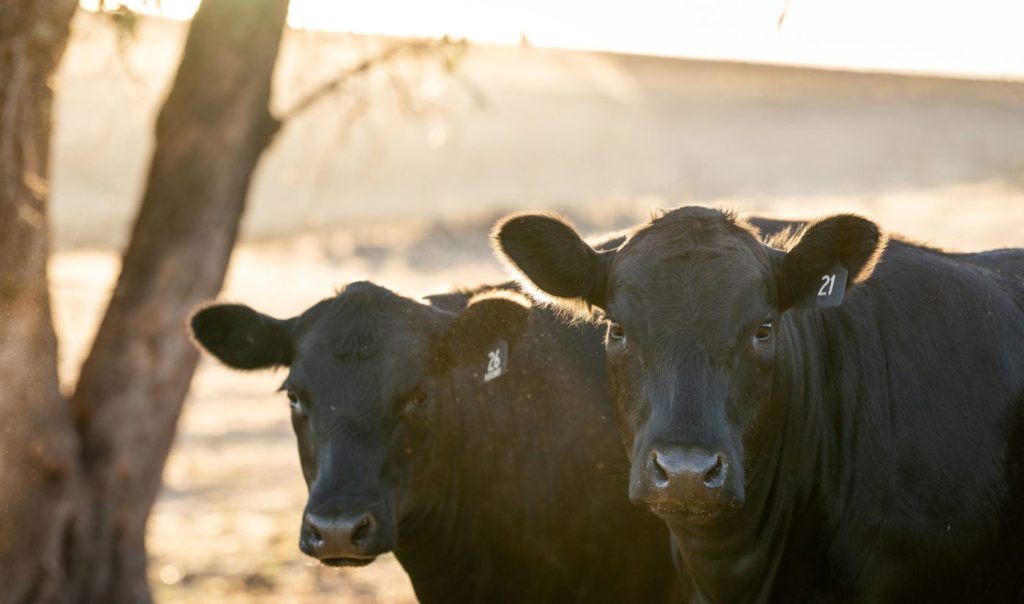
Breeders of Angus cattle now have access to a new service of testing, analysis and guidance for the genetic improvement of their herd.
AGRI consultant, podcaster and self-described ‘tragic of breeding stuff’, Mark Ferguson, has spent the better part of 35 years developing his knowledge of livestock selection, building from a small group of Angora goats as a 12-year-old to becoming CEO of leading farm advisory service, neXtGen Agri.
But the industry veteran says it’s really been in the past decade that the use of DNA information to understand and predict animal performance has exploded from being a niche tool to a cornerstone of modern breeding in both the beef and sheep sectors.
“Most of the traits that really drive profitability in livestock are either hard to measure or completely invisible,” Mr Ferguson said.
“Fertility, longevity, feed efficiency, carcase quality – you can’t see those just by looking at an animal in the paddock.
“Genomics makes the invisible visible, and that allows producers to make more informed breeding decisions much earlier in an animal’s life.”
Boosting genetic gain year-on-year
In the past, genomic testing was centred on stud breeding and research programs. Today, it is increasingly being adopted by commercial producers seeking to lift productivity, improve resilience and stay competitive in a tightening economic environment.
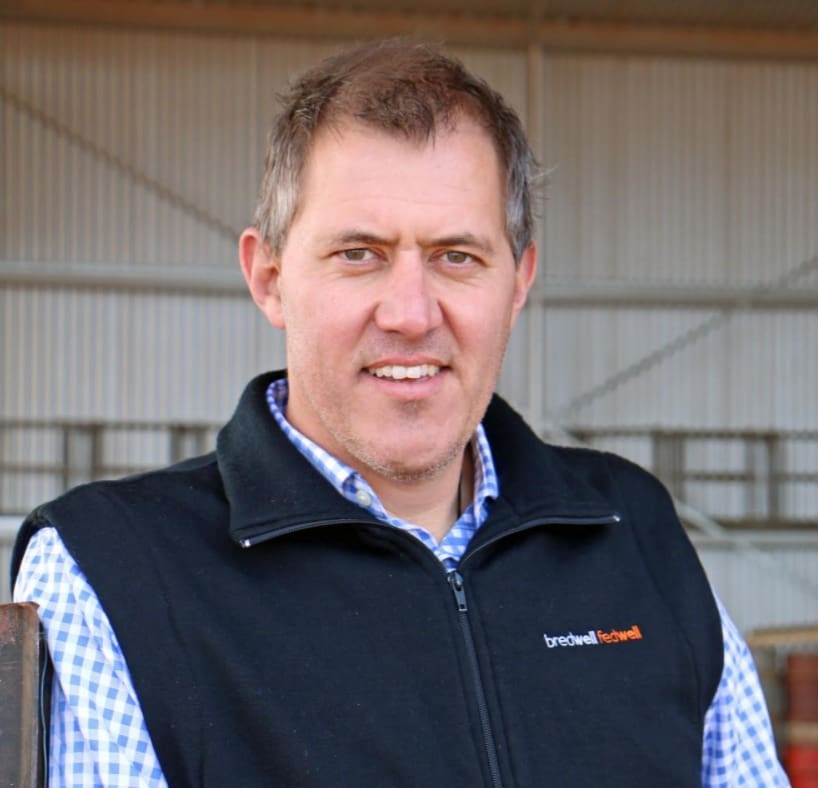
Mark Ferguson, CEO of neXtgen Agri. Photo Kim Wood.
That shift has been driven by growing reference populations that are linking phenotypic performance to the underlying genotype that is discovered from DNA testing through companies like Weatherbys Scientific.
“There’s no such thing as a silver bullet in livestock production, but genomics is about as close as you get in terms of giving producers better foresight about how their animals are likely to perform.”
He points to the well-established drivers of genetic gain: heritability; genetic variation; selection intensity; generation interval; and selection accuracy.
Focus on what you can control
“The biggest thing that farmers have control over is the accuracy of their breeding selection,” he said.
“But genetic gain never happens by accident. It comes from a clear plan and good information. Producers might only make bull or ram decisions once or twice a year, then they’re handed spreadsheets from genetic testing and pages of breeding values, indexes and trait data. Without support, it’s very easy to feel overwhelmed.”
He says many producers respond by focusing on just one or two traits, which can lead to unbalanced breeding outcomes.
“An animal might be slightly below average for one trait but outstanding across several others that really drive profit,” he said.
“The challenge is to look at the whole picture and make balanced decisions.”
His rule of thumb for producers unsure about where genomics fits?
“When you feel like you’re guessing, that’s the time to look at introducing genomics to your operation.”
Where to find guidance
A new collaboration between leading genomics provider Weatherbys Scientific, nextGen Agri, and Angus Australia, has brought a new service for those needing guidance on the journey of genetic gained.
Called neXtPredict Heifer, it builds on the introduction in 2025 of neXtPredict for commercial sheep breeders in Australia and New Zealand.

Weatherbys Scientific Business Development Manager ANZ, Michael-John Barry.
Weatherbys Scientific Business Development Manager, Michael-John Barry, said neXtPredict combines, for the first time, the genomics provider, the analysis of Angus Australia’s Angus GenetiQ and the guidance available from neXtGen Agri’s team of consultants.
“neXtPredict is a complete solution for breeders who are looking for guidance, no matter where they are on their genetic journey,” Mr Barry said.
“Through an easy-to-use dashboard, it also allows farmers to customise selection weightings for certain traits that they need to optimise herd performance and unlock those genetic gains and greater profitability.”
Annual gains of 5pc achievable
Mark Ferguson says most producers are leaving gains on the table.
“The dairy industry has shown that you can do four to five per cent in genetic gain per year and some stud cattle breeders are achieving that. But commercially it’s probably more like 0.5pc,” he said.
“Closing that gap is a massive opportunity. With inflation sitting at two to 2.5%, if you’re doing half percentage point gains you’re going backwards or you have to be finding productivity gains somewhere else.
“It doesn’t cost you a lot more to make those good decisions.”
- For more information on neXtPredict Heifer or neXtPredict for Merino producers, contact neXtgen Agri at nextpredict@nextgenagri.com or +64 27 313 4265.