
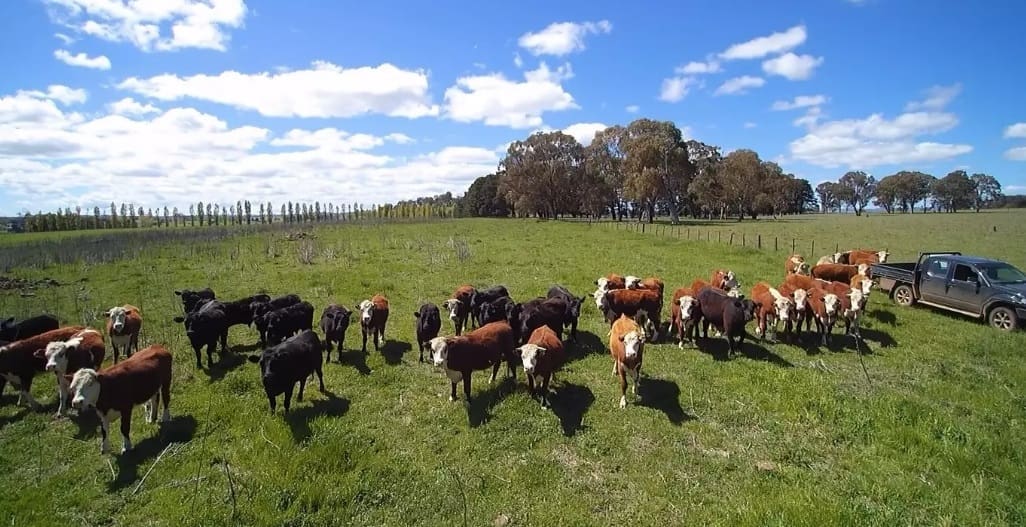
With the rural property market now slowing for Christmas break, this week’s property review provides a state-by-state snapshot of the defining grazing property sales across Australia, as reported over the past 12 months.
This is not a definitive list, as other significant properties have sold in off-market deals. It is however interesting to look back over the past year at the prices and size of the more significant grazing properties that have changed hands.
Biggest buyer
This year, mining magnate Gina Rinehart takes out the honours, forking out more than $270 million to add four assets spanning more than 32,000ha to her extensive agricultural portfolio.
February – Ms Rinehart paid more than $70 million for the 10,000ha Wongaboori Station (comprising four non-adjoining holdings) near Mendooran, 90km north-east of Dubbo, in central western NSW. She now owns close to 26,000ha of quality grazing country in the region including Glencoe, Hiddendale, Boogadah and Caigan.
May – Ms Rinehart took ownership of the 7166ha Jindabyne Station, 23km east of Ashford and 80km north of Inverell, in a deal valued at $40m on a walk-in walk-out basis including 2000 cows and weaners ($38.1m bare). The high rainfall mixed grazing and fodder operation has fertile black soils and runs around 3500 breeders.
June – Ms Rinehart secured the 5003ha grazing asset Wirribilla for $75m, expanding her cattle footprint in the New England region to around 42,000ha. More details below.
September – Gina Rinehart emerged as the buyer for most of the Jandowae Aggregation, 50km north of Dalby, on Queensland’s Northern Downs. Offered as 9966ha, she purchased 7000ha for $90 million.
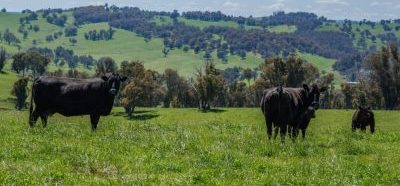
the 5000ha Wirribilla on the New England achieved around $75m (including around 1500 mixed cows and weaners).
Highest sales on a state-by-state basis
New South Wales
August – Global funds manager New Forests agreed to pay more than $150 million in a staged process for the McPhee Beef Farms in the New England – making it the biggest cattle property transaction this year. The 8394ha property operates across two hubs – the 6755ha Benditi, Moorabank, Overflow and Clonmel (adjoining properties) near Yarrowitch and the 1638ha Glen Eagle, around 58km away, near Walcha. Going forward, McPhee Beef Farms will be known now as Benditi Pastoral Co and jointly owned by the McPhee family and the Japanese backed New Forests’ Australia New Zealand Landscapes and Forestry Fund (ANZLAFF). The fund has been given up to 24 months to acquire the remaining 50 percent ($75m).
June – Described as one of the New England’s finest agricultural assets, the 5003ha Wirribilla achieved around $75m (including around 1500 mixed cows and weaners). The breeding and backgrounding property is located 20km south-west of Walcha in a region known as the ‘Pasture Wonderland’. The undulating and open grazing land boasts mostly red and chocolate basalt soils and some New England traps. With a history of producing both beef and prime lambs, it can run 73,000DSE. It is exceptionally well-watered by five bores, 217 dams and frontages to the Macdonald River and several creeks.
NSW mixed aggregation
February – Purchased for around $70m (bare) as a Wagyu breeding facility, the 10,000ha Wongaboori Station is near Mendooran, 90km north-east of Dubbo in central western NSW. The mixed grazing and cropping enterprise, comprising four non-adjoining holdings, also grows crops including barley, wheat, oats and canola.
Queensland
November – The central portion of the highly developed Meeleebee Downs portfolio spanning 10,285ha (over five adjoining holdings) sold for more than $63 million (bare). Located 65km north-east of Roma and 65km south-west of Taroom, the buffel grass breeding, backgrounding and finishing asset has been conservatively running 3000 breeders but was offered with an estimated carrying capacity of 9500 adult equivalents or 1AE per 2.5ha. It boasts extensive water infrastructure (water points within a 1km radius), improved pastures, extensive fencing and considerable income from 22 Origin Energy’s gas wells.
August – The 33,959ha Taylors Plains, a showpiece Wagyu breeding and finishing property, 101km north of Mungallala in south-west Queensland’s Maranoa district, sold for $55m ($1619/ha) bare or $66 million WIWO including 2500 breeders and followers.
The country includes 9000ha of brigalow, bottle tree and belah scrub, 11,500ha of poplar box on alluvial plains and 8200ha of lancewood and bendee ridges. Dense stands of buffel and native grasses support the conservative carrying capacity of 6250AE. It is abundantly watered by seven bores and 47 dams. The infrastructure is described as exceptional and offers extensive accommodation.
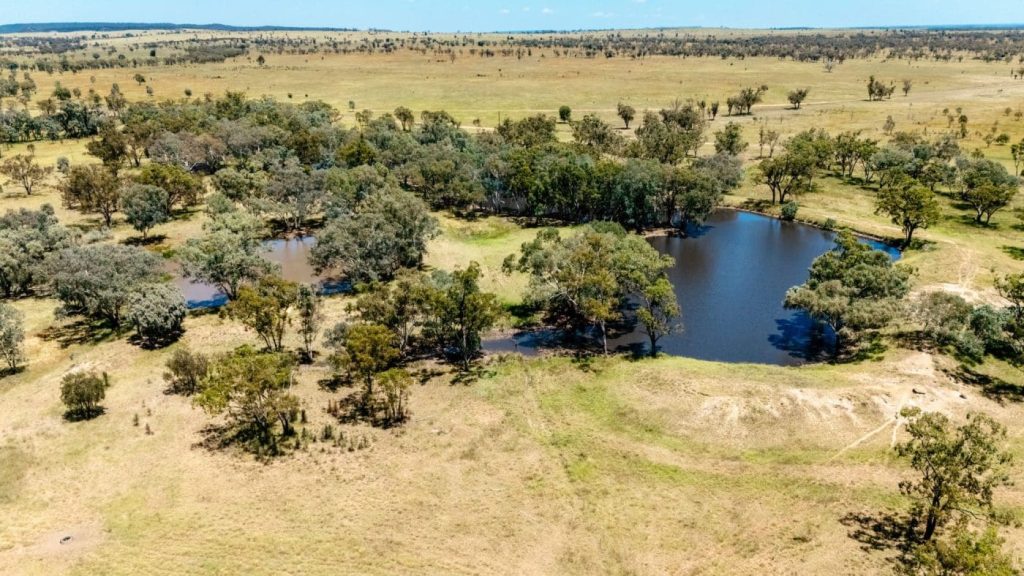
Country in Taylors Plains, near Mungallala, bought for $66m by Peter Hughes and family
Standout regions
Queensland’s central west has been a standout in the 2025 property market, with Herron Todd White valuer Chris Dyer describing it as a year of record value levels.
“Property prices have lifted between 10 and 20 percent above previous levels. I believe there is scope for more growth, particularly if summer rain is received and commodity prices hold up.”
Mr Dyer said properties south of Longreach had been sitting at $270/ac to $280/ac, however several recent sales have pushed through the $300/ac barrier, with AE rates ranging from $8000 to $8600.
“South of Hughenden, country is typically making $400/ac, with at least four sales above that level, making around $8500 to $9300AE. Three sales in the desert uplands around Jericho transacted for more than $9000/AE.”
Mr Dyer said previously, Barcaldine country was selling for $350/ac to $380/ac.
“Earlier this year, one property sold for $500/ac and was subsequently superseded by another sale above $500/ac (to a neighbour), with AE rates spiking at $10,000.”
He reported a few sales around Blackall, which is broadly sitting at $13,500/AE to $14,500/AE.
“This compares favourably to the Central Highlands where you can buy top quality developed scrub country for $15,000/AE, with most sales in the region achieving $11,500/AE to $13500/AE.”
“Blackall has a good reputation for weight gains and is in a tick free area, however it does have lower rainfall than the Central Highlands,” Mr Dyer said.
He said there had also been good interest around Richmond and Hughenden for downs country suitable for conversion to farming.
“Traditionally, northern breeders sought grower country in the central west. However, producers from southern and central Queensland are seeing the region as value for money on a beast area rate, compared to what they can buy locally.”
Standout on a per hectare basis
May – One of the last remaining dryland farming development opportunities in the Border Rivers Catchment of southern Queensland sold at auction for $23 million ($6821/ha) – a sale everyone is still talking about.
At the time of sale, the 3372ha Eumerella, south-west of the Moonie River and adjacent to the Thallon township, was pastured with abundant Mitchell grass and supporting a Merino sheep and wool growing operation. The property sits on prized cropping country with three neighbours developing their holdings to broad scale dryland cultivation.
Herron Todd White Rural Director Bart Bowen described the result as “one of the strongest on a per hectare basis in the western Border Rivers region. Sold as grazing land with development potential, the price achieved at auction reflected rates more typically associated with cropping land.”
Northern Territory
Despite a record number of listings in the Northern Territory, very few stations changed hands in 2025. Despite reasonable demand, it appears many are priced beyond market expectations.
September – Murranji Station changed hands for $44m bare. Separately negotiated were 20,000 head of cattle, of which 14,000 were breeders. The 447,700ha breeding operation, 90km north-west of Elliot and 370km south of Katherine, is fully enclosed by boundary fencing and grows Mitchell, Flinders and spinifex grasses, along with other native species and a variety of seasonal herbs. Water is supplied by 38 bores and distributed by 216km of poly pipe. Extensive improvements include new fencing and laneways, a further seven cattle yards and an additional 10 bores.
July – $25 million was paid for Top End cattle station Dorisvale. The sale included 15,000 head of mostly Brahman cattle with 6700 breeders bringing the bare price down to around $12m. The 67,500ha cattle breeding property is located west of Pine Creek and has a reputation for attracting the first and last big rains of the wet season. Situated in a high annual rainfall region (1100mm), Dorisvale overlies Oolloo, Tindal and Jinduckin aquifers, it is abundantly watered by natural surface water, including the Bradshaw Creek, the Daly River and numerous springs and creeks.
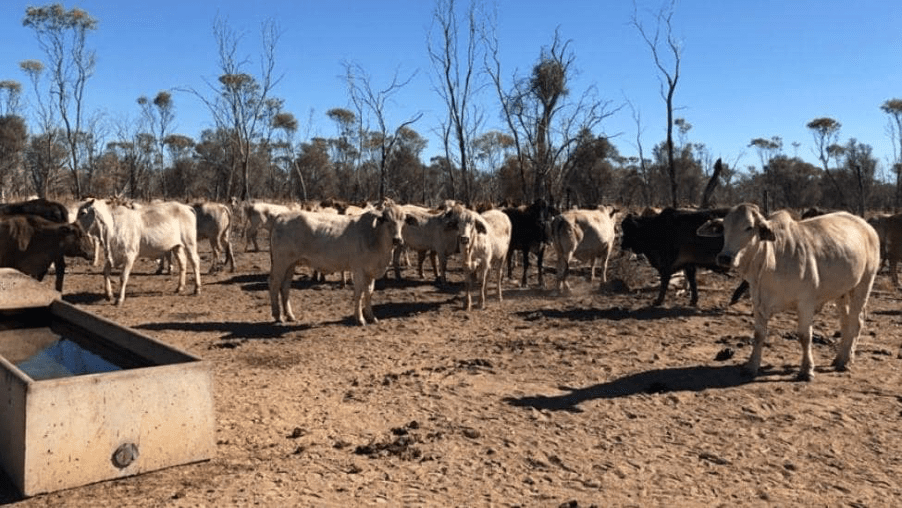
Brahman cross cattle pictured on Murranji Station
Western Australia
November – One of the Kimberley’s standout pastoral holdings, Kalyeeda Station, sold for around $27.5 million. Located 140km south-west of Fitzroy, the 122,519ha breeding, backgrounding and finishing operation boasts 40,000ha of productive flood-out country and musters on average 11,900 head a year. It was offered with a state-of-the-art cattle yard complex, extensive quality plant and equipment and more than 9000 head of mostly Droughtmaster cattle.
March – Rawlinna, Australia’s largest sheep station spanning 10,117sq km, changed hands for the first time as a going concern, including the sheep flock (around 60,000 merinos). While the price remains confidential, it is understood to have transacted for around $25 million. Located 400km east of Kalgoorlie in the Goldfields-Esperance region of Western Australia, it was offered with a working capacity of around 80,000 head.
South Australia
October – The long-held Rundles spanning 2039ha, 14km south of Lameroo, in the heart of South Australia’s Southern Mallee sold for $8.5 million on a walk-in walk-out basis. At the time of sale, it was running a 2220 head commercial sheep operation and cropping 400ha of triticale or feed grains on arable black soil flats. However, the country also lends itself to cattle backgrounding on veldt grass. The property had been extensively improved.
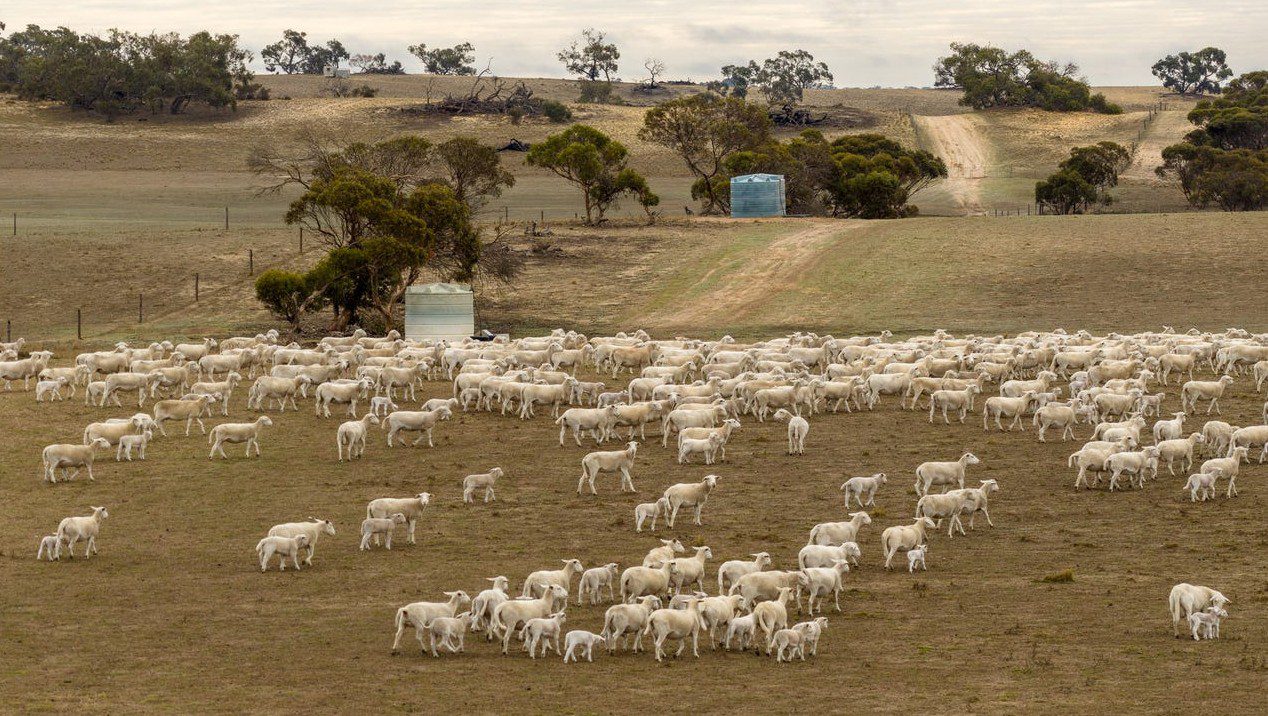
The long-held Rundles spanning 2039ha, 14km south of Lameroo, in the heart of South Australia’s Southern Mallee
Mixed aggregation
September – A well-established grazing and farming enterprise in South Australia’s Coorong achieved $8.5 million. The 2650ha Orlunda Downs is located near Salt Creek and 50km south of Meningie and focusses on prime beef and lamb production alongside an annual cropping program. It had been conservatively running 500 ewes and lambs, 550 dry ewes, 400 cows and calves and 280 cattle for finishing. It was also offered with feedlot approval for 480 standing cattle units. The diverse soil types range from sand over clay to red and brown fertile loams suited to growing malt barley, canola, peas, triticale, lucerne seed, oats and vetch for hay.
Victoria
Aggregation
June – The blue-ribbon 1208ha Condah Hills Aggregation (1083ha Condah Hills and the neighbouring 125ha Condah Dairy), south of Hamilton in Victoria’s Western District, originally marketed in mid-year, has just changed hands for $20.895 million. The drought-resilient, grazing and irrigation enterprise with first-class infrastructure (including a 1000 head feedlot) can support a range of livestock and mixed farming enterprises. A standout feature is the irrigation, with around 80ha under two centre pivots growing sorghum for feeding out over the summer and winter, with scope for further development. The enterprise is also underpinned by 1155ML of water entitlements. With the improvements valued at around $1m and the water at around $1.15m, the bare price sits around $15,520/ha.
 Overall, rural property transactions in Victoria during 2025 saw a significant decrease in volume, reaching historic lows, driven by poor seasonal conditions (particularly in the south-west and south and west Gippsland) and limited buyer confidence.
However, the tables are expected to turn next year with the listing of the largest grazing and cropping property in the state. Telopea Downs spans 47,660ha across 11 adjoining properties – 10 in Victoria and one in South Australia, midway between the towns of Bordertown and Kaniva. While no price guide has been made available, the original 40,454ha asset was purchased in 2018 for more than $70m – in what was seen at the time as the largest single farm transaction in Victorian history.
Meantime, around $55 million is anticipated for Victorian high-country grazing property Cobungra Station – one of the largest contiguous rural holdings in the state with a total area of 31,292ha, including almost 6500ha of freehold land and an alpine lease (agricultural licence) area of 24,800ha. Located in the Victorian Alps region at the foothills of Mt Hotham, 9km from Omeo and 11km from Hotham, it has an estimated carrying capacity of 50,000 Dry Sheep Equivalents and been run under a long-term lease by prominent Wagyu supply chain, fund-owned Stone Axe Pastoral.
Tasmania
November – The historic 4353ha Hermitage in the Central Highlands sold to a high-net-worth Tasmanian family for around $30 million. Situated near Waddamana and 17km from Bothwell, the beef cattle and wool producing enterprise was offered with a 30,000DSE carrying capacity. It boasts 38km of frontage to the Shannon River and River Ouse, with a five-span centre pivot and flood irrigation tapping into 17km of the Shannon River. Infrastructure includes a double-storey, five-bedroom Georgian sandstone homestead (circa 1822).
August – a local family farming group paid $26.95 million for Mineral Banks in Tasmania’s north-east. The 1236ha grazing, cropping and native forest opportunity is 25km from Scottsdale and 58km from Launceston.
It boasts extensive river frontage with the Dorset River and New River traversing the property. The rich red loam and alluvial soils grow improved pastures and support beef cattle and fat lamb production.
Interestingly, Nutrien Harcourts agent Andrew Fisher reports over the past 12 months, three large historic, east coast wool growing properties have changed hands and been purchased by three high net worth Tasmanian individuals.
Late last year, a local investor paid around $15m for the Gray family’s historic grazing property, Rheban, on Tasmania’s lower East Coast, ending 87 years of ownership.
Located 12km south of Orford and 88km from Hobart, the 3250ha property is considered one of the state’s premier coastal rural holdings, with extensive frontage to the Mercury Passage and views across Maria Island and the Freycinet Peninsula to the north. It supports 5500 sheep and 100 Angus cattle plus replacements.
This year, 1385ha Okehampton, one of Tasmania’s premier fine wool merino properties with a 5000DSE carrying capacity, and also boasting a spectacular coastline, sold privately for around $10m after selling in 2018 for more than $7m.
Recently sold for $14 million is the 2403ha Lisdillion, a former wool growing property now transformed into a multi-income producing opportunity capitalising on 2km of pristine east coast beach frontage.
Transaction number trends in summary
At the time of publication, Beef and Sheep Central counted at least 145 livestock properties (considered to be a living area or larger) across the country as sold (disclosed), and around 180 listed for sale.
2025 disclosed livestock property sales reported by Beef and Sheep Centrals show:
- 10 properties sold in the sub $5m bracket
- 9 properties sold in $5m-$10m
- 16 properties sold in $10m-$15m
- 31 properties achieved above $15m
2025 property sales with livestock, irrigation and/or cropping capabilities reported by Beef and Sheep Centrals show:
- 7 properties sold in the sub $5m bracket
- 4 properties sold in $5m-$10m
- 2 properties sold in $10m-$15m
- 11 properties achieved above $15m
2024 livestock property sales reported by Beef and Sheep Centrals show:
- 6 properties sold in the sub $5m bracket
- 17 properties sold in $5m-$10m
- 6 properties sold in $10m-$15m
- 23 properties achieved above $15m
2024 property sales with livestock, irrigation and/or cropping capabilities reported by Beef and Sheep Centrals show:
- 0 properties sold in the sub $5m bracket
- 2 properties sold in $5m-$10m
- 6 properties sold in $10m-$15m
- 18 properties achieved above $15m
2023 livestock property sales reported by Beef Central show:
- 12 properties sold in the sub $5m bracket
- 20 properties sold in $5m-$10m
- 14 properties sold in $10m-$15m
- 20 properties achieved above $15m
2022 livestock property (some of which have irrigation or cropping capabilities) sales reported by Beef Central show:
- 21 properties sold in the sub $5m bracket
- 46 properties sold in $5m-$10m
- 14 properties sold in $10m-$15m
- 36 properties achieved above $15m
2021 livestock property sales reported by Beef Central show:
- 30 properties sold in the sub $5m bracket
- 36 properties sold in $5m-$10m
- 20 properties sold in $10m-$15m
- 30 properties achieved above $15m
2020 (disclosed) livestock property sales reported by Beef Central show:
- 31 properties sold in the sub $5m bracket
- 19 properties sold in $5m-$10m
- 12 properties sold in $10m-$15m
- 22 properties achieved above $15m
2019 (disclosed) livestock property sales reported by Beef Central show:
- 17 properties sold in the sub $5m bracket
- 14 properties sold in $5m-$10m
- 18 properties sold in $10m-$15m
- 22 properties achieved above $15m
2018 (disclosed) livestock property sales reported by Beef Central show:
- 31 properties sold in the sub $5m bracket
- 17 properties sold in $5m-$10m
- 12 properties sold in $10m-$15m
- 14 properties achieved above $15m
2017 (disclosed) livestock property sales reported by Beef Central show:
- 40 properties sold in the sub $5m bracket
- 23 properties sold in $5m-$10m
- 10 properties sold in $10m-$15m
- 13 properties achieved above $15m