THIS week’s property review includes this wrap-up of recently completed sales, and two separate articles on interesting recent listings across the country.
- Palgrove’s two Qld holdings make $26m+
- Tightly held NSW High Country sells under the hammer
- Local secures picturesque New England grazing country
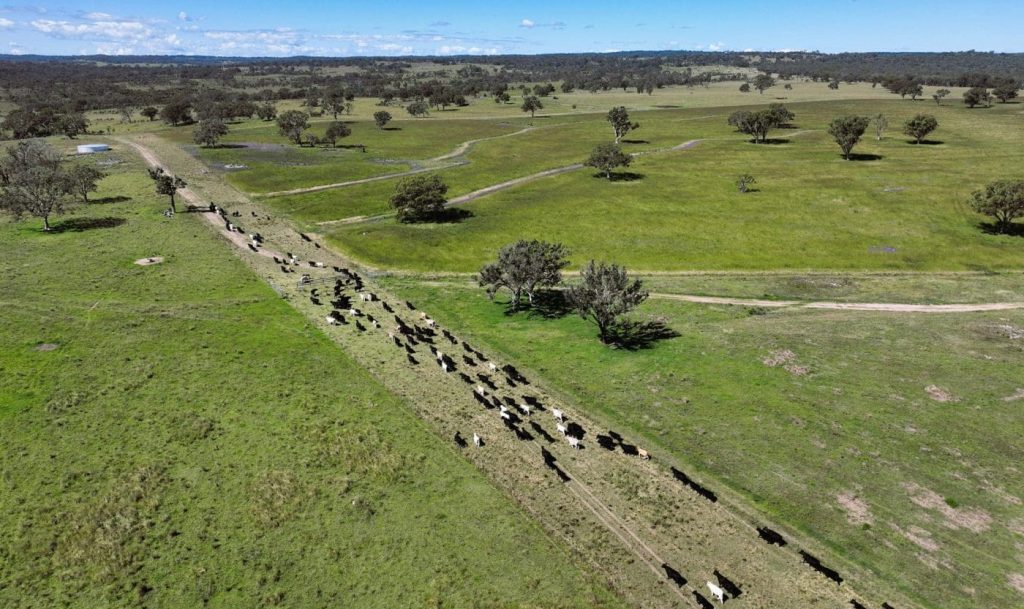
Part of Palgrove’s southern Queensland land holdings
Palgrove’s Qld holdings make $26m+
Seedstock and commercial beef producer Palgrove has offloaded two Queensland properties as part of a strategic refocus aimed at doubling the scale of its commercial breeding herd to about 6000 cows and strengthening its position as a leader in high-performance beef genetics.
The Bell family, a Brisbane-based property development business, has paid just over $14 million (land and some plant) for the high-performance breeding and backgrounding hub, Palgrove in southern Queensland.
Listed by Palgrove, one of Australia’s most respected seedstock operations and backed by the New Zealand Superannuation Fund, the property that bears the same name was one of two Queensland properties brought to the market in May.
With Palgrove needing to retain its trademark, the property will now be known as Bellgrove.
Spokesman Bruce Bell said the family had been actively looking for another grazing property to diversify its portfolio and chose Bellgrove because of its proximity to Brisbane and potential.
“Over the next five years, under existing management, the development program initiated by Palgrove will continue. This includes further developing the country, improving and fertilising pastures, as well as fencing, with the water infrastructure in advanced stages.”
Interestingly, the purchaser, the Bell family, sold its highly regarded beef cattle enterprise, 1482ha Raleigh and Sunsetview near Bukkulla to Palgrove in 2019. Palgrove owns the neighbouring Macintyre Station which has now been expanded to 9508ha.
The sale of Palgrove/Bellgrove was handled by LAWD director Simon Cudmore.
Here’s a summary of what’s been sold:
Palgrove (the property), Dalveen
The 2566ha Palgrove is located near Dalveen on Queensland’s Southern Downs region, 38km from Stanthorpe and 40km from Warwick.
Offered with a conservative estimated carrying capacity of 1400 Adult Equivalents, it is a well developed and improved breeding and backgrounding enterprise supported by a productive mix of granite soils and hard-setting clay loams.
Most of the property has been developed to high-performance improved tropical pastures, including Rhodes, digit, blue grasses and seasonal herbages, with areas planted to oats for winter forage.
Palgrove/Bellgrove has Logan Creek frontage and is watered by three bores and 58 dams.
Infrastructure includes a five-bedroom home, a cottage and a quarters/office building, steel cattle yards, a shearing shed, numerous sheds, two grain silos and pasture seed storage.
Earlier this year, the Palgrove business announced the sale of its entire Charolais herd following a strategic review to streamline operations and accelerate the growth of its Ultrablack program.
In July, the Charolais herd was purchased by long-time Palgrove employees Ben and Gemma Noller, in partnership with Simon and Mym Daley and family, from Western Queensland.
Killaloo, Drillham
Meantime, Palgrove’s 1651ha Killaloo has sold to Marcus Curr from Julia Creek. In June the Curr family listed the 6124ha Spellary Creek however it has been subsequently withdrawn from the market.
Killaloo adjoins the Drillham township in the highly productive Western Downs region, 220km north-west of Toowoomba and is suited to cattle breeding, backgrounding or finishing, along with mixed forage cropping, to support an estimated carrying capacity of 785AE.
Across Killaloo, 1447ha of brigalow belah scrub country is interspersed with 204ha of narrow-leaved ironbark, with soils comprising a productive mix of mostly deep brown and grey clay scrub soils and small areas of lighter yellow duplex loams.
Areas of arable land not developed into high-performance pastures are planted to oats, lucerne and forage sorghum planted in the summer months.
Over recent years, capital expenditure projects have focused on significant land development, pasture improvement, an extensive water reticulation program, as well as fencing and infrastructure upgrades.
Killaloo is watered by two equipped bores, dams, dual frontage to the Drillham Creek, seasonal waterholes, as well as a 40ML water entitlement.
Infrastructure includes a home, a cottage, numerous sheds, two steel cattle yards and two grain silos.
Palgrove (the business)
In November 2023, Palgrove sold the 3605ha Gilgal Station near Cootamundra on the south-west plains of New South Wales, to a German investor for around $55 million.
Agri Carbon Investments was subsequently engaged to generate an income from the livestock country (with carrying capacity of 37,000DSE), 560ha of dual-purpose winter-cropping land and carbon credits.
Palgrove continues to operate at:
- The 1138ha Glen Wilga,16km south-east of Chinchilla, that sits on the banks of the Condamine River. Purchased as a greenfield site, it has been developed with a sale complex where Palgrove’s annual sale is held.
- The 9508ha Macintyre Station, near Bukkulla and 35km north of Inverell, is the base for Palgrove’s Ultrablack program – running the stud Angus, Ultrablack and Brangus herds. It can run 8075AE.
- The 3613ha Mountview Aggregation is near Ben Lomond and 32km south-west of Glen Innes. Comprising seven properties, it is a base for the company’s Charolais females and forms part of its weaner bull development and finishing programs. It can run 5235AE.
Tightly held NSW High Country sells under the hammer
First class High Country in south-eastern New South Wales has been sold under the hammer for $4.4 million to a local producer for expansion.
The 1642ha Moles Station near Kybeyan, around 50 minutes south-east of Cooma, was offered for sale by Michael Green and his son Joe after four years of ownership.
The original 2585ha holding, held by the Hains for 85 years, was purchased by the Keating family in 2015 and then sold to the Greens in 2021 – both long term local families.
Moles Station is among a tightly-held enclave of productive grazing properties.
Positioned in a high rainfall area, often benefiting from easterly weather systems, the property has an excellent mix of improved land and native vegetation with ample shelter.
Moles Station has 40 percent of open grazing, 35 percent of lightly timbered and 25 percent of densely timbered country running 200 cows and calves and 2500 ewes and lambs.
Over the last six years, pasture improvement has focussed on growing cocksfoot, plantain, white clover, sub clover, strawberry clover and Italian ryegrass. Other areas have been sown down to turnips and oats, as well as mixed pastures, for winter grazing.
Moles Station has 11km of Kybeyan River frontage and is watered by the Mowitts Swamp Creek and 18 dams.
Infrastructure includes a four-bedroom home, a three-stand shearing shed, sheep yards, steel cattle yards, a 42-tonne silo and numerous sheds.
Kirschner Mackay agent Aaron Mackay handled the sale.
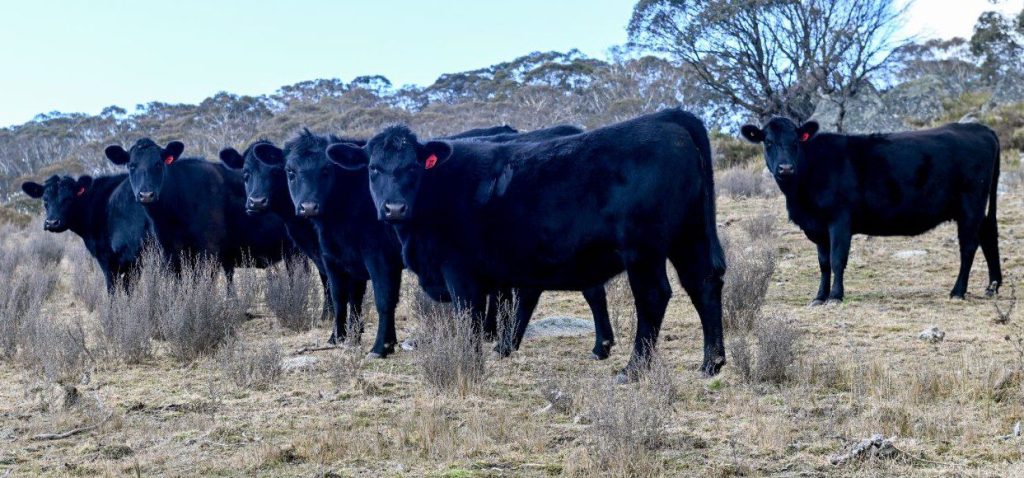
Moles station cattle
Local secures picturesque New England grazing country
Picturesque New England grazing country, offering potential for development and an off-farm income, has been snapped up by a local for expansion.
Listed by a Brisbane-based businessman after 27 years of ownership, the 1491ha Linwood Aggregation comprises the adjoining 857ha Linwood and 633ha Auburn Vale and is located 25km north-east of Walcha and 65km from Armidale.
Currently operated as a Merino wool growing and breeding property with a herd of Angus breeders for weaner production, there is potential for production to be increased with the development of permanent pastures and fertiliser.
Offered with an 8500DSE estimated carrying capacity, it has been comfortably carrying 6000 mixed sheep and 100 cows and replacement females.
The mostly gently undulating traprock country rises to some steeper basalt hills growing mostly native species, with 180ha cropped to oats.
Situated in the Winterbourne district, there is also potential for off-farm income through the New England REZ (renewable energy zone) and more specifically, the proposed Winterbourne wind project.
Linwood is watered by two bores, four creeks and 53 dams, in a 780mm annual average rainfall region.
Improvements include two homes, a cottage, two three-stand shearing sheds, cattle yards, four sheep yards, grain silos and numerous sheds.
The sale was handled by Nutrien Harcourts agent Bruce Rutherford.