
In this week’s property review, the current market is being driven less by spreadsheets and more by seasonal maps, with dry conditions pushing buyers to chase feed and water wherever they can find it.
Agents across western Queensland and far western New South Wales say inquiry has lifted for country carrying a body of grass, but transactions are harder to secure because few vendors have blocks de-stocked and ready to take cattle immediately.
Tom Brodie, Brodie Agencies Winton, Qld
Tom Brodie, principal of Brodie Agencies, has worked in Winton for 32 years.
He said the district is enjoying its best season since 2000, or possibly even longer.

Tom Brodie
“When the Middle East crisis started, inquiry slowed from late February through to April due to uncertainty. Now, with lower fuel prices, the wheels are starting to turn.”
“Many producers who sold their weaners and dry stock are now chasing grass for their core breeding herds. It is costly to grain-feed 1000 to 3000 breeders and most producers will do whatever it takes to keep them, despite the higher cattle prices on offer,” Mr Brodie said.
Mr Brodie has witnessed truckloads of black cattle moving north into the Winton district.
“I know a producer who has taken on 2500 head of agistment cattle, about 30 percent above what they normally run, because of the outstanding season. A lot of people are doing the same.”
“However, finding agistment could become difficult if seasonal conditions deteriorate, so if people with grass are willing to sell, they could potentially achieve a premium,” Mr Brodie said.
Mr Brodie has advised several clients considering a sale, particularly in the $5m to $10m bracket, to list now while the opportunity is strong.
“Demand is for well grassed country around Winton and to the south. However, the properties I am currently marketing are too big for most of those grass buyers.”
Mr Brodie said that, until recently, most inquiry was coming from central-western to northern New South Wales.
“Those producers looking for agistment or something to buy have more than likely shifted livestock, sold them or made other arrangements.”
“Fresh inquiry is now coming from southern Queensland, particularly south of Roma and Mitchell through to St George, Bollon and Charleville, where it’s starting to dry off.”
Darryl Langton, Nutrien Harcourts Roma, Qld
In response to the feed shortfall across parts of New South Wales and southern Queensland, Roma-based Nutrien Harcourts agent Darryl Langton reports increased inquiry for properties that still have reasonable supplies of grass, however, listings remain slim.
He said many producers are chasing lease or agistment country.

Darryl Langton
“There is certainly strong inquiry from areas to the south of Roma and back towards the border, and I have had phone calls from as far as central New South Wales.”
“Any listings with grass are attracting buyer inquiry. However, it hasn’t translated to sales because there are few properties that are de-stocked and full of feed,” he explained.
Mr Langton said producers still have some options at this stage.
“Cattle in good condition can be sold, and agistment is still available around Julia Creek and Winton, and in far western Queensland and New South Wales.”
Mr Langton said buying a property for grass is a significant investment decision.
“Producers will consider buying when they don’t accept the market rate for livestock, their animals are less saleable due to the season, or agistment is completely exhausted.”
Mr Langton said a similar situation occurred seven years ago, when some drought-affected producers were left with no option but to purchase properties for grass.
“While it is very dry over a large area, it is not as dry as it was in 2019. North of the Warrego Highway, around Roma, Wandoan, Taroom and Injune, the season has been pretty good, however, no one has an abundance of feed.”
Mr Langton said south-west Queensland is moving into a traditional winter pattern.
 “In a summer-dominant rainfall region, feed is haying off. The season is already below average south of Roma to Surat and St George, and producers there are looking for agistment. Some are finding it through farmer-to-farmer networks rather than the commercial space.”
According to Mr Langton, demand for agistment country is not as strong as it used to be.
“Many producers have moved away from breeding and running bullocks, focusing instead on backgrounding and grain finishing. When the season breaks and markets are good, people are much quicker to jump back in and buy stock compared to the old days, when rebuilding herd numbers was a slower, more gradual process.”
Mr Langton said there is strong buyer inquiry for properties with feed.
“Producers considering an investment need to consider their budgets. To make it worthwhile, suitable blocks would need to run up to 600 head of dry cattle or 400 cows. Otherwise, producers are faced with selling to reduce numbers.”
“Others may consider selling up and relocating to a higher rainfall location or diversifying their business. It is rare for someone to purchase a block for grass and then offload it after a couple of years of ownership.”
David Russell, Nutrien Russell Property & Livestock Cobar, NSW
David Russell from Nutrien Russell Property & Livestock is receiving higher than normal inquiry from northern New South Wales.

David Russell
“There is good feed west of the Darling River around Broken Hill and Tibooburra, and an abundance from Cameron Corner to Innamincka in the far north-east of South Australia.
“The number of cattle trucks heading west through Cobar is unbelievable. I even spoke to a producer carting cattle from Barraba in the New England to Woomera in South Australia.”
Mr Russell said some landholders are taking on agistment as an additional source of cash flow.
“The amount of rain that has fallen around Broken Hill, Tibooburra and White Cliffs has been astronomical, and the body of feed has effectively doubled carrying capacity. Those producers will take on cattle over winter, until September or October.”
Mr Russell said Bureau of Meteorology forecasts are also lifting inquiry and inspections for properties listed for sale.
“Unfortunately, there are few places available with a good body of feed and some of those are better suited to sheep than cattle.”
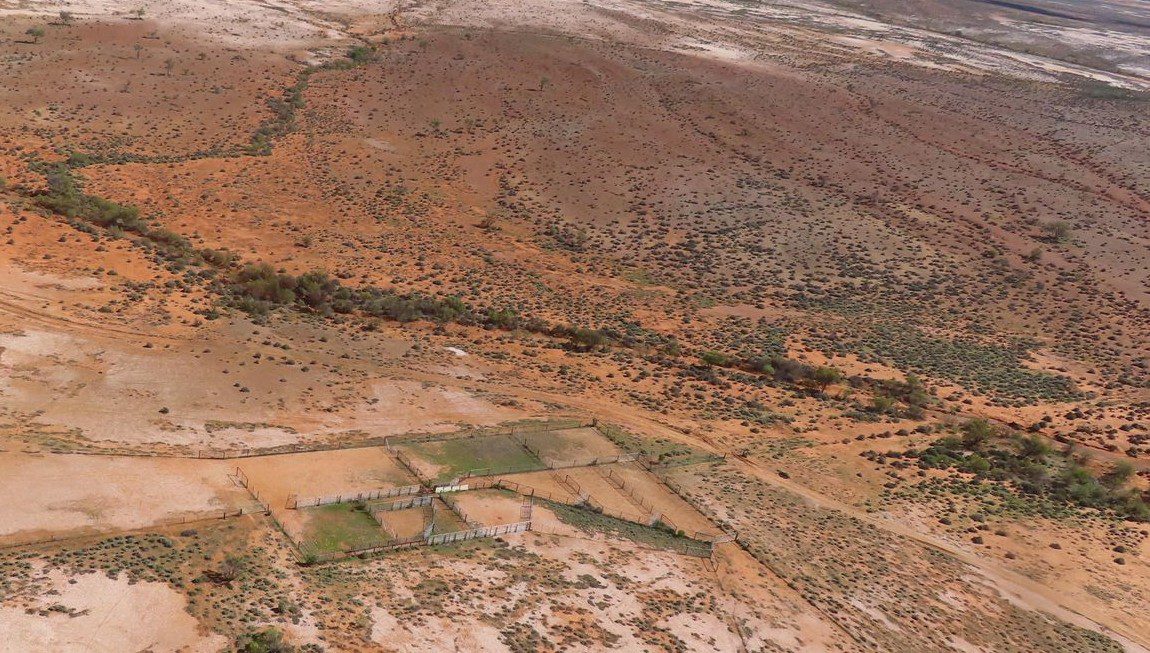
The 48,699ha Kayrunnera Station, 64km west of White Cliffs and 211km north-east of Broken Hill, listed by Mr Russell in September last year is receiving fresh inquiry for both feed and water.
It is on offer for $9.5 million, walk-in walk-out, with immediate access for 4000 sheep.
Mr Russell has also received numerous phone calls and booked several inspections for a grazing property recently listed between Bourke and Hungerford.
The 16,385ha Maureen Joy Station is available for $4 million WIWO, with a lucrative carbon contract.
He said one interested party is completely out of feed, while another needs immediate access for 250 cows.
Mr Russell said water is also becoming a major issue, particularly around Cobar and in surrounding western districts, where some producers have run dry. As a result, properties with secure water are proving especially attractive.