
A first-ever study into northern beef cattle gestation length has found that the trait has high heritability, with few environmental influences.
The study by leading Australian beef geneticists considered data from three major tropical breeds and showed that gestation length was subject to ‘high genetic influence’, with a direct heritability of 79 percent.
Breed, calf sex and the cohort were shown to have significant effects on gestation.
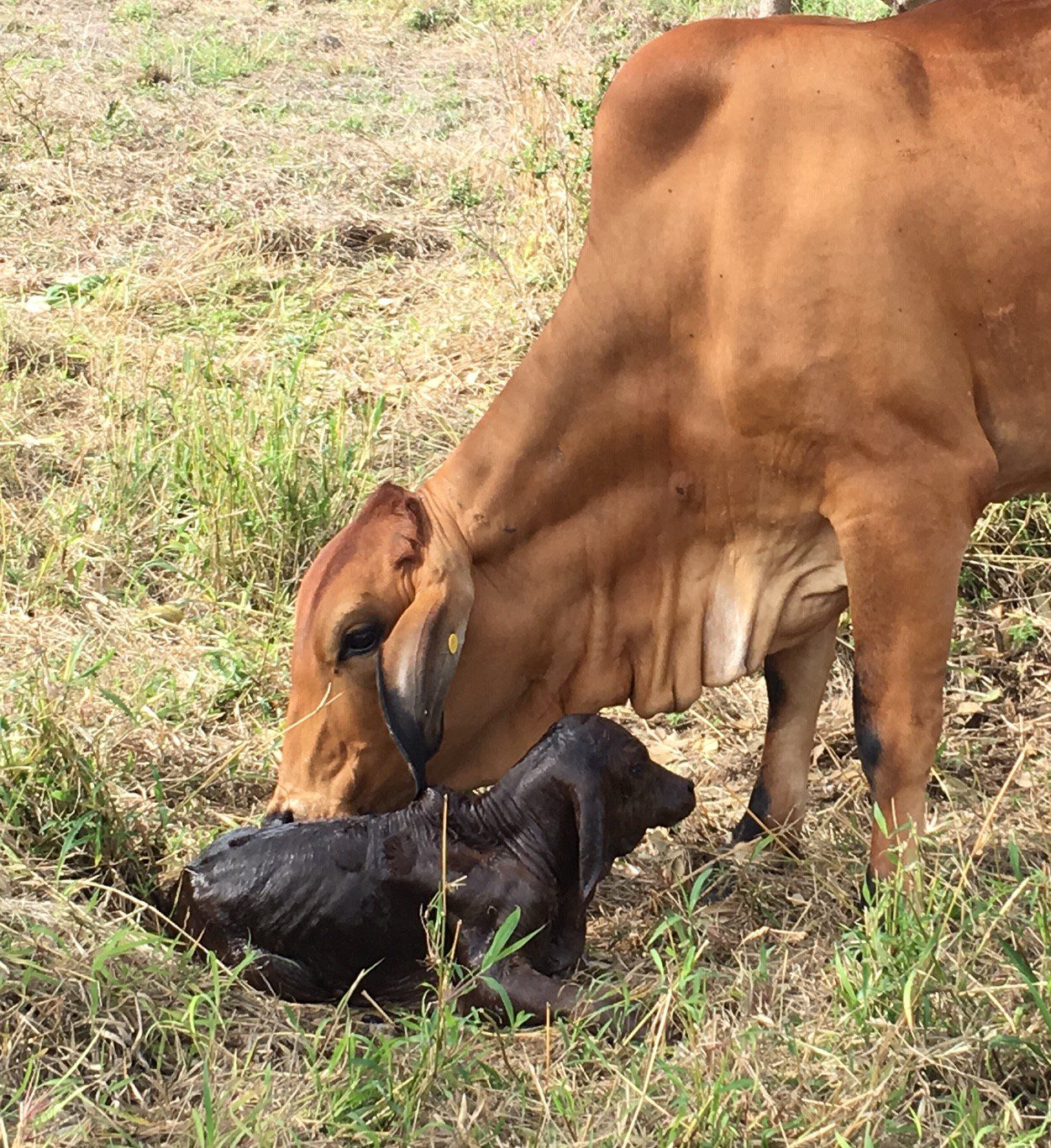
Cow and calf at the time of recording calf date of birth.
There was a 6.4-day difference in gestation lengths between breeds. The means estimated for Brahman, Droughtmaster and Santa Gertrudis were 291.5, 288.2 and 285.1 days respectively.
Gestation length in tropical breeds is longer than that observed for temperate breeds, which are typically 282 days.
Male calves were estimated to have longer gestation lengths of 3.1, 2.4 and 1.9 days longer than female calves, respectively, for the Brahman, Santa Gertrudis and Droughtmaster breeds used in the study that was undertaken by the Animal Genetics and Breeding Unit and the Queensland DPI.
The study also found a correlation between higher birth weight and longer gestation, but did not find a significant genetic relationship between gestation length and weaning weight.

Dr Kirsty Moore
Researcher Dr Kirsty Moore, senior research scientist at AGBU in Armidale said: “This demonstrates that selection for reduced gestation length will indirectly also reduce birth weight, but will not change weaning weight.”
No genotype by environment interactions were detected for gestation length, birth weight and weaning weight, according to the research report published in CSIRO’s journal Animal Production Science.
“Animals at each of two study sites did not differ in their genetic rankings for the three traits considered,” Dr Moore said.
The research team also included Dr David Johnston, principal scientist at AGBU, and Tim Grant of the Queensland DPI.
Their study examined calves born between 2014 and 2022 from two herds, resulting in 2,346 records for gestation length, 7044 for birth weight and 6248 for weaning weight.
The offspring were by 245 sires, with an average half-sibling family size of 29. Genetic parameters were estimated from a pooled breed dataset.
 Dr Moore said: “Gestation length is an important trait in beef cattle because it is associated with calf birth weight and dystocia.
“Our research paper presents the first genetic parameters for gestation length in Australian tropical breeds and the genetic relationships with birth and weaning weight.
“Our results show that gestation length is highly heritable, and if shorter gestation length is selected for, birth weight will also be indirectly reduced, but weaning won’t be changed.
“These correlations suggest that the genes underlying the relationship between gestation length and birth weight are not the same genes that influence an animal’s subsequent growth.”
Gestation length was recorded as the number of days between the AI date (i.e. conception) and the birth of the subsequent calf, with very accurate birth dates recorded for project calves.
The gestation length EBV is an estimate of genetic differences between animals, and the BreedPlan genetic evaluation for all three breeds in the study includes gestation length.
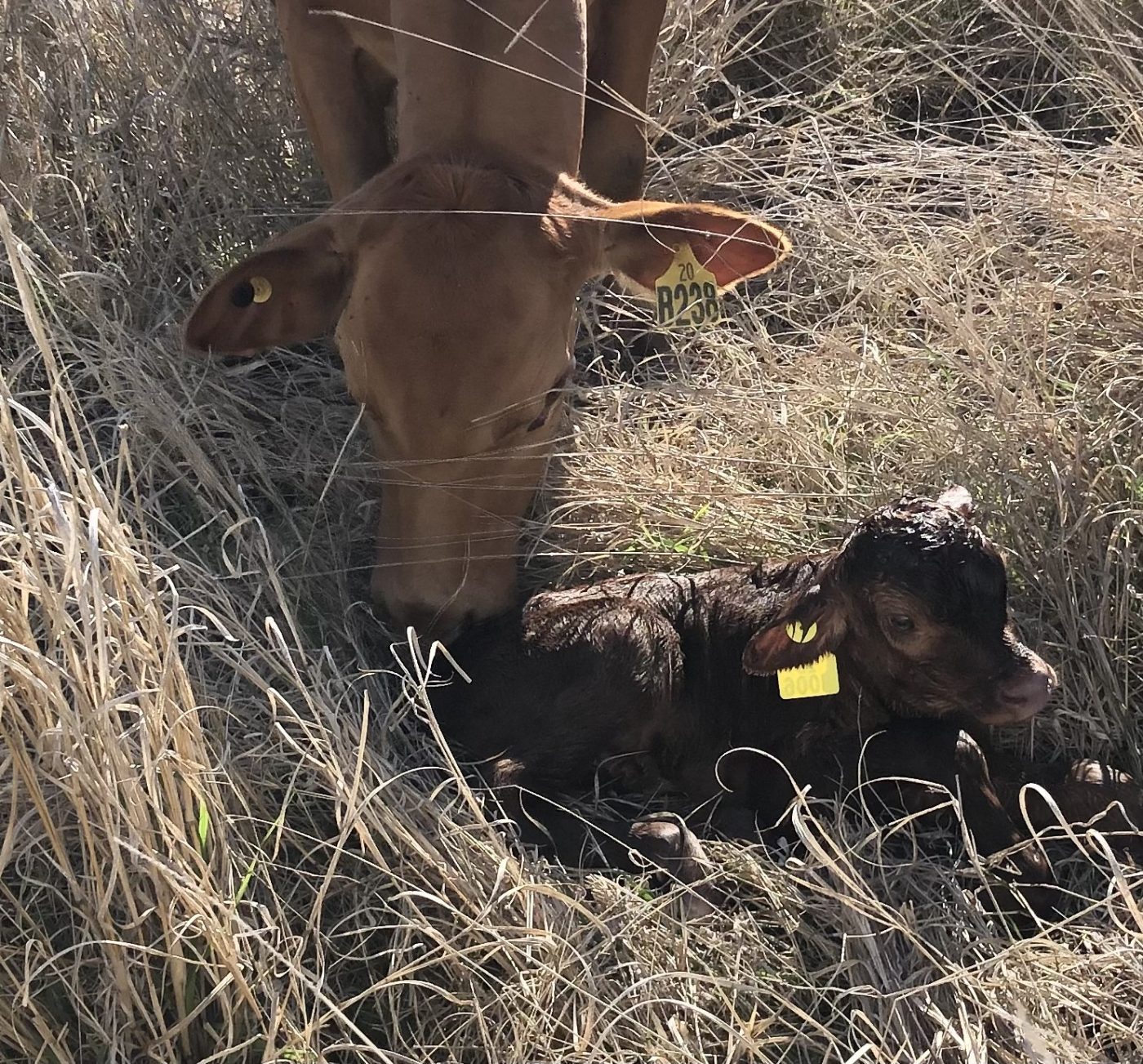 In addition to being a highly heritable trait, this study demonstrated that there was a large spread in the gestation length sire EBVs. The difference between extreme sires for gestation length EBVs was 19.1, 21.7 and 16 days for Brahman, Droughtmaster and Santa Gertrudis sires, respectively.
Dr Moore said: “The high heritability and large spread indicate that genetic selection for gestation length is likely to be effective in reducing gestation length.
“Breeders can use BreedPlan gestation length EBVs when selecting new sires to identify sires with genetics for shorter gestation length.”
Data for this study were collected as part of the Repronomics project. a large breeding project in Queensland and the Northern Territory focused on enhancing the genetic evaluation of female reproductive traits.
It is building a reference population to enable genomic selection techniques for tropically adapted beef breeds. The trial is funded by Meat & Livestock Australia and Queensland DPI.
What about effect of nutrition on gestation length?
The author forgot to say that the high heritability is the result of a drastically reduced residual variance, which in turn is the result of the data being collected in an experiment. As the authors stated themselves: “The heritability estimates in the current study may be higher than those observed from industry data, because the dataset used in this study was collected as part of a designed experiment with high-quality data recording, especially having very accurate dates of birth.”
Heritability from field data, and therefore the precision with which genetically superior animals can be identified, will be much lower.
excellent data shared
There you go Alf, science is catching up!!