
SOME Queensland beef processors are skipping days this week, or at least reducing daily kills due to the impact of widespread heavy rain in drawing areas.
All processors in the northern state, which accounts for roughly half the national kill, are struggling to raise kills, with each shift being a ‘day-to-day proposition’ for some operators.
As described in yesterday’s report, falls of up to 300mm fell over a 48 hour period in some regions, with the western downs and South Burnett receiving some of the larger falls.
‘Anything on four legs’
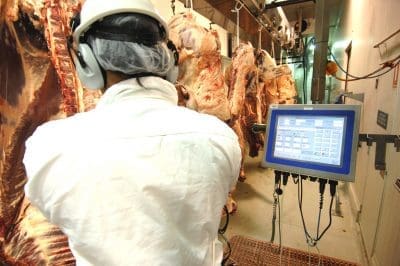 With direct consignment bookings being cancelled or postponed due to logistics issues and waterlogged paddocks making mustering impossible, northern processors have shifted focus into the saleyards system early this week, in a case of ‘anything on four legs is better than nothing.’
Processor margins on slaughter cattle have incentivised operators to remain open at all costs, rather than the more familiar wet-weather response of skipping a day or two.
Having said that, there are a number of large Queensland export plants that have been forced to close this week, due to access problems – some evidently for a minimum of two days.
Big money was being paid for cows at Gympie sale north of Brisbane yesterday (not reported by NLRS), with light boner type cows making 391c/kg. The better run of the processor cows at Gympie averaged around 410-420c/kg – heavily influenced by this week’s cattle supply challenges. Some were being put on trucks to travel long distances to fill holes in kill rosters.
Further south, some big money was being paid at Tamworth and Leongatha sale yesterday for the same reasons. In a large yarding of 5320 at Tamworth, secondary cows were up to 8c dearer, with prime heavy cows 25c dearer. Score 2 and 3 cows to the processors sold from 310-416c/kg, with prime heavyweights selling from 378-425c/kg to average 408c/kg. An Outstanding line of young Angus cows PTIC topped at 464c/kg. Prime grown steers sold from 426c to 480c and prime grown heifers sold from 396-476c/kg.
Saleyards numbers in Queensland this week have been slashed due to weather related cattle access issues and road – delivering the smallest offering since early January.
In contrast saleyards in other states are mostly firm or larger in offering size this week.
Road closures
A long list of major cattle transport routes remain closed in Queensland this morning, although the major north-south Pacific Highway connecting Brisbane and Cairns reopened a few hours ago, after being shut north of Gympie.
Major cattle routes still shut this morning include sections of the Burnett Highway, the Capricorn Highway and Dawson Development road, the Dawson Highway around Banana and Bauhinia, the Diamantina Development road between Windorah and Quilpie, the Eyre Development Road and Donohue Highway in the far west, the Fitzroy Development Road around Taroom (cut in several places), Gulf Development Road, Kennedy Development Road, and the Leichhardt and Warrego Highways on the western Downs near Chinchilla.
Here’s a list of more than 300 Queensland roads still cut this morning from the Qld Traffic website.
Some roads will face lengthy closures due to repair work, reports suggest, after the floodwater has subsided.
Cattle sales have been cancelled at Emerald, Gracemere, Blackall and Charters Towers this week and restricted access to several feedlots is expected to put short-term pressure on supply for Queensland grainfed processors.
Today’s Roma sale was greatly reduced by the weather, showing a reduced yarding of only 2480 head. Dalby is drawing for only 2600 tomorrow. Full report tomorrow.
Grids steady in the north, lifting in the south
In Queensland, direct consignment cattle slaughter grids were mostly unchanged this week, despite the weather access challenges.
In southern regions of the state, good heavy slaughter cows are still 750c/kg, and four-tooth ox around 830c (840c may be available on some grids for no HGP).
Central Queensland export plants are still struggling to maintain supply due to earlier waterlogged paddocks, and are paying similar rates this week as southern Queensland.
Some southern Australian processors last week lifted direct consignment rates on slaughter cattle by up to 30c/kg, and some have lifted another 10c this week. Part of that is evidently rain-related, as cattle become hard to deliver, but general shortage is also underpinning that change, Beef Central was told.
Best quotes we’ve seen this week for kills in eastern areas of South Australia are 830c on good quality heavy cows, up from 790-800c a week ago and 870c/kg on four tooth grass ox.
A southern NSW export plant was this morning offering 870c/kg on no-HGP four tooth grass ox, and 800c/kg on good quality heavy cows best cows.
Saleyards trends
A string of Queensland weekly and fortnightly sales have been cancelled this week due to weather, including Emerald, Gracemere and Blackall.
While Queensland yardings so far this week are sharply down, some NSW selling centres saw rises for slaughter-type cattle early this week, as processors raced to secure stock to keep kill shifts active, in the face of cancellations.
Victorian processors like Midfield and TFI have both had a strong presence in NSW saleyards this week.
Gunnedah yarded 6100 this morning, back 750 on the previous week, including large numbers of cows and weaner calves. Store condition cows were heavily represented with strong restocker competition. Grown steers and heifers were 10c dearer with the prime grown steers selling from 402c to 476c/kg. Prime grown heifers sold from 392c to 460c/kg. Secondary cows were 10c dearer while the properly finished heavy weight cows were 15c dearer. Score 2 and 3 cows to the processors sold from 250c to 398c/kg. Prime heavy weight cows 378c to 416c and averaged 405c/kg.
Wagga yarded 3560 yesterday, down about 1600. The market has experienced a significant shift following substantial rainfall across the region, leading to notable changes in prices and overall market dynamics. Well-finished trade or export cattle were notably scarce. There was considerable interest from several feedlots looking to acquire feeder cattle over 400kg, which resulted in a price lift of 15c, with the bulk of these selling in the range of 445-522c/kg. Heavy feed steers weighing 500-600 kg sold for an additional 7c, averaging between 452 -495c/kg. The cow sale saw a big variation of weights and grades, with restockers actively competing against processors for the leaner types under 520kg. Store cows mostly sold from 330-390c/kg. Heavy, well-finished cows remained firm, averaging 403c/kg, while leaner D3 cows under 520kg gained 11c, selling from 368-399c/kg.