
Values for so-called ‘pretty cattle’ – those destined for premium programs, whether it be certified grassfed, MSA breed-related programs, Certified Organic etc – are rapidly approaching the record levels seen during the supply-starved 2022 year.
Direct consignment quotes seen this week reflect the point that slaughter cattle with special attributes are approaching all-time records – and perhaps widening the gap from ‘commodity’ lines.
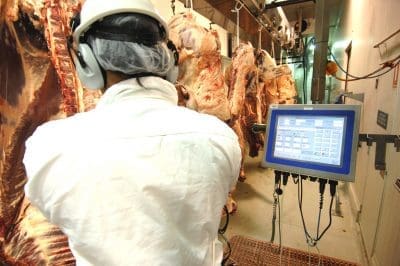 Recent rain, road damage and flooding impact has clearly made life difficult for some special classes of slaughter cattle, such as Certified Organic where supply disruptions have occurred out of Central Australia. The Birdsville Track is an important supply route for Organic cattle and is likely to remain closed for some time, reports suggest.
We’ve seen quotes for direct consignment MSA Angus certified grass steer 0-2 teeth in eastern regions of South Australia at 920c/kg this week, up 20c on rates seen a week or ten days ago in the case of one operator. That’s not far off the record highs of 2022 for the same description.
Best quality MSA Angus-type cows are quoted this week in SA plants at 820c, up from 800c a couple of weeks ago, with an MSA-graded grass ox 0-4 teeth 900c.
Woolworths and Coles forward contracts on grainfed MSA yearling steer are at, or slightly above 900c/kg, with Certified Grassfed MSA YG steer at similar rates. Similar southern steers in 2022 tapped-out at around 930-940c.
Certified Organic quotes seen in Central Queensland and South Australia this week are showing 960c/kg for MSA-graded steer and 930c/kg for the non-MSA, four teeth and less.
Beef processors across eastern Australia are continuing to work overtime to maintain kills, in the face of rain, road and paddock disruptions caused by recent weather.
Last week was probably worse, one large multi-site, multi-state operator told Beef Central this morning, but supply and logistics conditions remained challenging.
Substitutions for grass cancellations out of feedlots has helped, and some operators have shipped cattle extensive distances to keep plants fed with stock.
Having said that, several Queensland plants recorded lost days last week as logistics problems mounted.
Generic grids erratic
There are erratic price signals for more generic direct consignment slaughter cattle in both northern and southern regions of Australia this week.
Some large Queensland operators continue to take unpriced space bookings only, with prices agreed-to closer to slaughter date. Some of those cattle were carry-over from earlier cancelled deliveries – some dating back to late February.
Others have lowered rates in Queensland plants this week, by 10-20c in places, claiming adequate numbers on the books until after Easter. In one case, a large southern Queensland plant is doing a Saturday shift this week to help ‘clean up’ some of the residual cattle that are about.
Best quotes we have seen this morning for consignments into southern Queensland plants are 730-750c on heavy cows (some of those lower offers down 20c), and 810-830c on four-tooth grass heavy ox (lower offers back 20c).
Talking about Easter, it’s worth remembering there is a series of short processing weeks coming up – two covering the Easter period (3 and 6 April) and another three weeks later covering ANZAC day. That will slow rates of weekly production by 20pc at a time when many predict finished cattle supply to start to lift, as country starts to dry out after local rain. Congestion like this often puts pressure on prices.
“There’s a sub-set of producers in Queensland that are now motivated to sell meatworks cattle for cash flow purposes, but it has to dry-out enough first,” one Queensland processor contact said this morning.
“And for those bigger pastoral operators in Queensland’s west, they have young cattle starting to arrive soon from breeder properties further out – so they are motivated to make some room.”
“But before that can happen, plenty have some work to do with the grader to fix roads and fences, before they can get started on cattle work. Everything (in the extensive northern and western areas) is going to have a slow start, but it could change quickly. May is now shaping up as a heavy supply period, and it could test processing capacity.”
Southern Australian numbers tighten after weather
In parts of southern Australia, slaughter cattle numbers have tightened after the earlier weather events that went through Victoria and southern NSW.
The rain has delivered a level of optimism heading into winter that was not evident only three weeks ago. Having said that, one larger southern NSW operator has no quotes available this week, having booked cattle heavily earlier for the next few weeks.
Eastern regions of South Australia have cow grids on 830c/kg this week, and four tooth grass steers (no HGP) 870c.
As reported yesterday, black feeders in Victoria/SA have now found a level around 520-530c/kg. Some southern grainfed operators are saying it may get to a point soon where ever-higher prices will not flush out any more feeder cattle.
Northern reliance
The combination of the rain impact and rising diesel prices is putting some pressure on Victorian and southern NSW processors’ growing reliance on northern cattle to supplement local cattle supply.
Some SA/VIC processors have been less active in the north in the past week or two, although Midfield and others are still buying Brahmany-type cows in some numbers, and AMG is continuing to supply into Cootamundra.
But one estimate suggests the already expensive freight bill might have risen another $30-$50 a head to get them home, since the Middle East conflict emerged and fuel prices started to rise.
One calculation suggested a $200/head freight bill from southern/Central Queensland might now be more like $230-$250, which has to put more pressure on that supply strategy.
Saleyards system
In the saleyards channel this week, the constant flow of numbers in southern selling centres started to take a toll on slaughter cattle prices.
Gunnedah sale this morning yarded a record 7250, up 1150 on last week, with cows and yearling cattle heavily represented. The top end of the feeder steers were firm however the majority of feeder steers were up to 15c cheaper and ranged from 391-530c/kg. Grown steers and heifers were firm with the prime grown steers ranging from 462-485c/kg while the heifers made from 420-474c/kg. Score 2 and 3 cows were 5c cheaper making from 346-387c/kg, while prime heavyweight cows were 15c cheaper making 372-409c to average 389c/kg.
Tamworth yesterday yarded another record at 7109 head. Overall cow quality was not to the standard of the previous sale. Feeder steers were firm to slightly cheaper making 380-524c/kg, while feeder heifers were 10c cheaper. Limited numbers of prime grown steers and heifers were cheaper on quality with the prime grown steers selling to 430c and the prime grown heifers to 449c/kg. Secondary cows held firm while the prime heavyweights were 20c cheaper compared to the previous sale’s very strong market. Score 2 and 3 cows ranged from 248-376c/kg, prime heavy cows 360-405c to average 388c/kg.
Wagga sale yesterday yarded 4584, with a saw a notable uptick in numbers across various categories reflecting the strong results the previous sale. There was a significant scarcity of well-finished cattle, particularly in the trade and heavy export classes. Feedlots once again played a dominant role in the market. Competition for feeder steers remained buoyant, resulting in a slight increase in prices for medium-weight steers. The bulk of light and medium-weight feeder steers sold from 440-535c/kg. Heavy steers and bullocks were notably scarce, with the majority selling from 410-465c/kg. The cow sale attracted a large number of processors and restockers with strong demand from restockers. Heavy cows remained unchanged to a few cents dearer averaging 406c, while leaner cows faced weaker demand from processors, with those under 520kg selling between 318-390c/kg.