
AFTER some big downwards adjustments in northern slaughter cattle pricing prior to Easter, most direct consignment offers across Eastern Australia appear little changed this week.
This time last week, some Queensland slaughter grids had fallen 30-40c/kg, but the market appears to have stabilised for the time being.
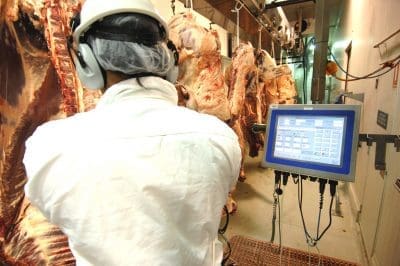 Higher fuel and transport-related operating costs (not only on livestock, but also shipping meat to port, packaging materials etc) are now being mentioned by some processors as contributing factors to recent cattle price movements – on top of cattle availability and international meat demand.
However two consecutive short Easter weeks has taken some production capacity out of the system this month, and most states have another public holiday coming up soon.
With some processors prioritising grainfed cattle in advance of triggering of Australia’s beef quota into China (a 55pc tariff applies after that figure is reached), it has tended to push other cattle back in the waiting list. One large Queensland processor has scheduled another Saturday shift this week, to try to tidy up some backlog, especially on cattle held-up earlier due to rain.
We’ve also heard reports this week of drought impacted cattle out of the New England region (two mobs each of 300 cows, in one conversation) that are now being caught up in the lengthy waiting list for kill space.
Processors often try to prioritise on compassionate grounds like this, but it’s also well know that margins on light-conditioned cows quickly look very poor for processors, with many grids discounting heavily on sub-260kg and sub-240kg examples. Effectively they are saying to vendors: “We really don’t want them.”
Other New England drought-impacted cattle are now moving into areas like Blackall and Longreach on agistment, after solid wet seasons in the north (650 breeders in one uplift mentioned this morning), but those cattle are carrying hefty freight bills as a result of the recent fuel price crisis.
In Queensland, most large export processors are now well-forward on bookings – both priced and unpriced (where rates are settled closer to slaughter).
Some Queensland plants now have most kill slots covered until late April or early May, with extreme cases out to late May. And that has come before the traditional wave of large-scale pastoral company cattle from the far west, northwest and Channel Country start to move – likely some time between now and the start of May.
Competitive quotes
Competitive quotes seen this morning from export processors in Queensland’s southern region are showing 780-800c/kg on grassfed four-tooth heavy ox (790c on some grids for no HGP), back 30-40c on prices seen only a fortnight ago, and 700-710c/kg on heavy cows, back about 30-40c.
Central Queensland’s trio of export plants remain 10-20c/kg behind those rates quoted from the southern region of the state.
Direct consignment rates in southern states have been less impacted than Queensland, with good slaughter types remaining in short supply in some areas. Some grids have not changed at all, opening up a sizeable price gap for the same cattle between Queensland and Victoria.
In eastern regions of South Australia, heavy generic cows are quoted this week at 800-810c/kg, with four-tooth grass ox 860c, having eased 10c a week earlier. Another SA grid has MSA cows (320-420kg) on 800c/kg down 20c on last week, and four-tooth MSA heavy steer 900c/kg.
In southern NSW, cows this week in one grid are 800c and four-tooth grass steers 850c, having eased 10c earlier, while another grid that was offering 820c/kg on good quality heavy cows has now withdrawn quotes for the time being.
Higher freight rates due to spiralling fuel prices continue to make life difficult for Victorian processors trying to supplement their kills with numbers out of Queensland and northern NSW.
Freight cost in one example seen this week on cows was adding as much as 70c/kg on top of the purchase price, up from only 55c/kg a matter of weeks ago.
Saleyards numbers decline
Most saleyards and online platforms have seen big reductions in offerings early this week, due in part to the holiday-shortened week.
Gunnedah offered only 3400 this morning, not much more than half of last week’s yarding. It was a fair quality yarding with a higher percentage of plainer conditioned cattle on offer as the dry season continues. Prime cattle to the processor were sought after while store cows going back to the paddock saw limited competition. Prime yearling cattle to the trade held with steers making from 440-485c/kg. Feeder steers and heifers were cheaper overall, with steers ranging from 370-524c/kg while the heifers ranged from 300-410c. Prime grown steers to the processor were limited however prime grown heifers made to 416c/kg. Secondary cows to the processor were over 25c cheaper, making from 196-346c/kg while the prime heavy cows held firm and made from 345-368c/kg.
Warwick sale in southern Queensland yarded 1834 this morning, down 20pc on last week. The yarding continued to show signs of the drying season with most of the cows in plain condition, which reduced prices by 9-15c/kg. Rates were reduced across most lines. Yearling steers to feed for the domestic market sold from 330-448c/kg. Heavy yearling steers to feed sold from 300-420c with those to the wholesale meat trade at 438c/kg. Medium weight yearling heifers to feed sold from 280-390c. Heavy yearling heifers to processors sold from 320-434c/kg. Grown steers to processors sold from 350- 418c/kg. Grown heifers to processors sold from 350-382c/kg. Lightweight plain conditioned cows to processors sold from 198-287c/kg. Score 3 heavy cows sold from 270-325c with the best heavy cows topping at 329c/kg.
This morning’s Roma sale yarded only 3900 – less than half last week’s offering. Most cattle were drawn from south west Queensland and dry areas of northern NSW. While quality was mixed, prices on young cattle remained firm with demand from north west and western Queensland. There was noticeable absence of southern exporters this week and prime cattle lost ground across most categories. A limited number of heavy grown steers sold to 436c to average 392c and prime grown heifers over 540kg averaged 342c/kg. Medium weight cows to the processor topped at 331c and averaged 308c/kg, score 3 cows over 520kg sold to 334c while the best of the heavy score 4 cows reached 345 averaging 337c/kg.
HAVE YOUR SAY