
THERE’S been further slides in direct consignment slaughter cattle rates across Eastern and Southern Australia this week – due to both supply-side influences, as well as rising operating costs linked to fuel and raw materials price rises.
Grids across large parts of the country have fallen another 5-20c/kg depending on location and description.
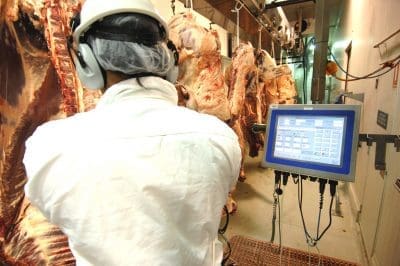 With large expanses of northern Australia now drying out after big rain events in February and early March, cattle movements are starting to activate and processors’ kill rosters are starting to look well-subscribed for the next month.
A number of large export processors across Queensland are now looking at the first or second week in May for bookings, either priced or unpriced. Some plants in northern NSW are showing a similar trend.
Over-the-hooks quotes in southern Queensland this morning show good heavy cows on 690c/kg, back another 10c or 20c on last week, depending on the company involved, with the standard four-tooth heavy grass ox anywhere from 760c to 775c/kg. Those steer prices are back anywhere from 5-20c. Some grids show an additional 10c for no-HGP steer, at 785c.
Central Queensland quotes are 10-20c/kg behind those numbers, with North Queensland another 20c behind that.
Some forecasts have prospects of further rain totalling 25-50mm over the next eight days, across the entire north, northwest and central west region of Queensland, as ex-Tropical Cyclone Maila crosses Cape York Peninsula on Wednesday or Thursday. With soil moisture profiles already full in the northern half of the state, another inch or two would be enough to deliver further cattle delivery delays, several processor contacts suggested.
Further south, some grids are also showing a softer trend again this week.
In southern parts of NSW, one large exporter’s grid is showing 770c/kg on heavy cows, and 850c/kg on four-tooth heavy steer, no HGP. Eastern regions of South Australia show direct consignment rates 10c above those figures. All are back 20c/kg on rate seen this time last week.
Some South Australian processors are still offering 900c/kg on a good MSA yearling grass steer, but numbers are becoming increasingly hard to find, one contact said.
Southern processors shopping closer to home
Clearly, southern processors are shopping closer to home rather than securing big numbers out of Queensland at present, with freight bills of 60-70c/kg in some cases due to rising fuel prices.
 Some southern processors are buying cows on a liveweight basis local scales out of central and northern NSW centres like Gunnedah and Tamworth at rates around 700c equivalent, on-leg, and paying the freight themselves. Some local vendors are looking at the long delay on kill slots further north, electing to sell to southern processors on prompt delivery terms instead.
Some are selling older cows 8-10 years at prices around $2000 each and electing to keep their entire heifer drop, with access to silage to feed them through to joining, meaning breeder numbers will fully recover in short time.
If Queensland offers continue to retract as they have, it’s not likely to be long before southern states processors are back in the north in volume – especially if they can offer kill slots more current than those further north. Cash flow will also be a consideration for some.
Rising cost of production impact
Fuel prices and access, cost of delivery, and rising prices on packaging materials, shipping containers and other commodities needed by processors is being mentioned more frequently now in cattle pricing conversations.
The Australian Meat Industry Council touched on this topic this week, saying record high livestock prices, increasing operating costs, and limited ability to pass on expenses to customers and consumers was being felt across the industry, as a cost squeeze occurs in red meat businesses.
While this had been largely focused on sheep processors over the last six or so months, the situation has been exacerbated in recent weeks for all red meat processors with the flow on effects of the Iran Conflict, AMIC’s Sam Munsie wrote.
“These impacts have manifesting themselves in member’s business in direct trade and export payment disruptions, but also in the form of additional fuel-related levies, charges and fees being added by suppliers from a broad range of critical inputs such as energy, packaging, insurance, and freight,” Mr Munsie said.
“As a result, we have heard from a number of our members that shifts are being reduced and difficult decisions to reduce staffing are being made to keep operating and processing, maintain capacity, and fill orders.”
Saleyards trends
Most selling centres have seen a lift in numbers this week, after the Easter disruption last week.
Wagga sale yesterday lifted to 3700, following last week’s Easter holiday break. While the market lacked the intensity observed two weeks prior, there were a few impressive sales for feeder types. Heavy export numbers rose, and was driven by increased competition, particularly due to the step up in quality compared to the previous sale. Heavy steers and bullocks saw prices from 445-499c/kg. Heavy cows experienced fluctuating competition, with prices firm to slightly higher, averaging 381c/kg.
Gunnedah sale this morning yarded 7200, a big 3800 head increase against the short week last week. It was a fair quality yarding with large numbers of cows again. Following the trend, secondary cattle were overall cheaper while heavy quality cattle remained strong. Score 2 and 3 cows to the processor made from 225-346c/kg. Prime heavyweights were 5c cheaper, making 312-375c/kg.
Tamworth saw another record yarding of 7553 yesterday, up 1300 on the previous sale. It was a fair quality yarding with large numbers of cows on offer. Yearling steers to feed were dearer, ranging from 380-523c to average 491c/kg. Prime grown cattle were limited, with steers making from 350-428c/kg while the heifers made from 402- 454c/kg. Score 2 and 3 cows were 10-15c dearer, making 260-350c/kg. Heavy cows were 5c dearer and making 330-377c to average 341c.
This morning’s Roma sale (still in progress, see full report tomorrow) yarded 6473 head, up almost 2500 on last week’s Easter-impacted sale. Among heavier lines, grown steers 400-500kg sold from 440c-456c/kg, steers 500-600kg averaged 386c and bullocks +600kg averaged 408c. Cows were yet to sell.
I would like to mention the misinformation about fuel surcharges. While i hear of rates of 45 and over 50% these are unjustifiable and wrong.
The correct price should be 22 to 25% to cover the extra price on fuel based on around $3.30.