

EARLY findings from a major transport trial are showing encouraging signs that cattle transported long-distance by rail can be integrated into the Meat Standards Australia (MSA) model.
Yet-to-be-published results from a multi-year road versus rail study involving more than 920 head of cattle sourced from four Queensland properties were shared with producers at the recent MLA BeefUp forum in Morven.
MSA business development officer Lachlan Jeffers said more detail will be available when the final report is published, but was able to confirm that several important findings have emerged.
 The project set out to test the extent to which long transport times, which have long been considered a barrier to MSA compliance, influence actual eating quality of beef for consumers.
The trial compared cattle transported to slaughter via road to those transported using a combination of road and rail, including long-haul journeys from the Winton, Clermont and Morven railheads to the Teys processing plant at Beenleigh near Brisbane. The trial also examined the role of intermittent rest and feed periods during transit.
To examine the effect of long-duration transport on eating quality, 4000 beef samples from the cattle involved in the trial were assessed by Australian consumers.
Findings
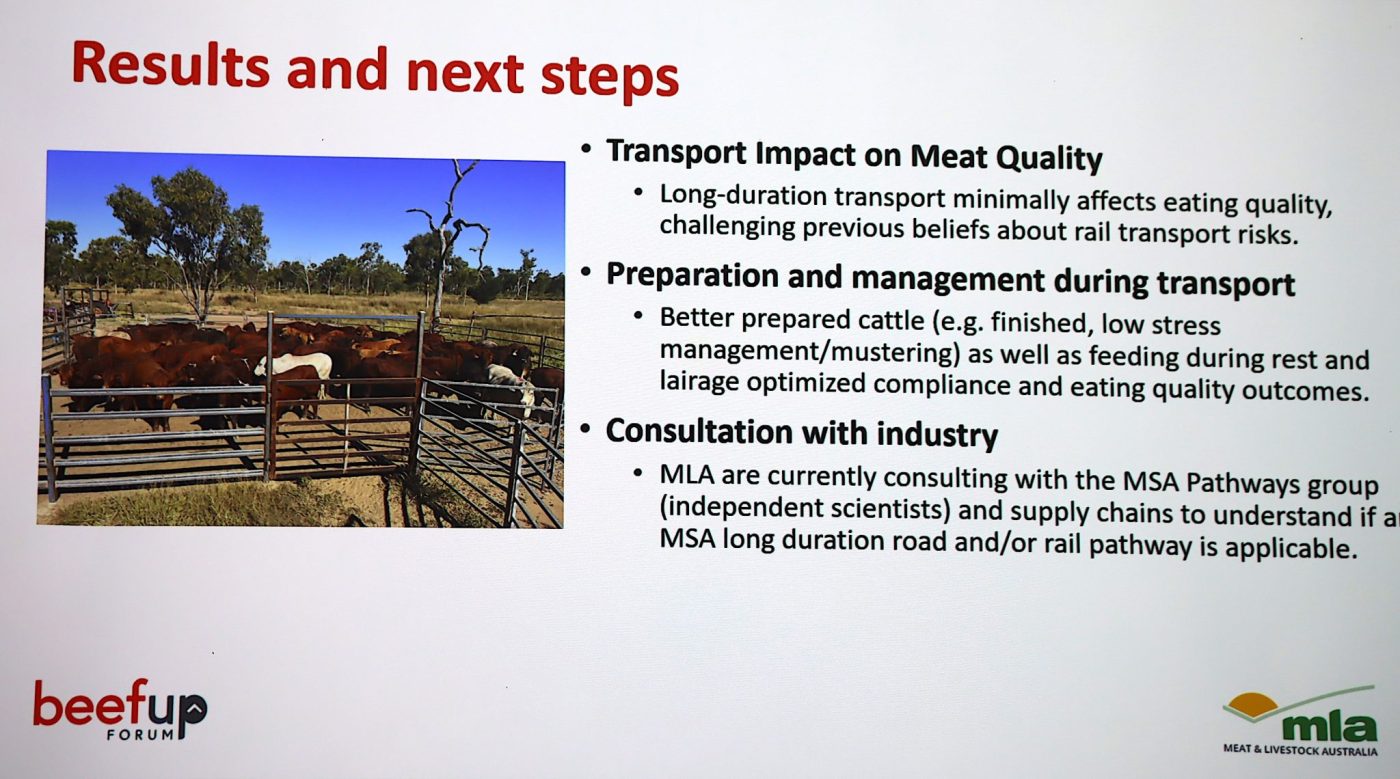
Mr Jeffers said findings included that long duration transport was shown to have a minimal effect on eating quality outcomes, which challenged traditional assumptions that time spent in transit, particularly via rail, would reduce MSA performance.
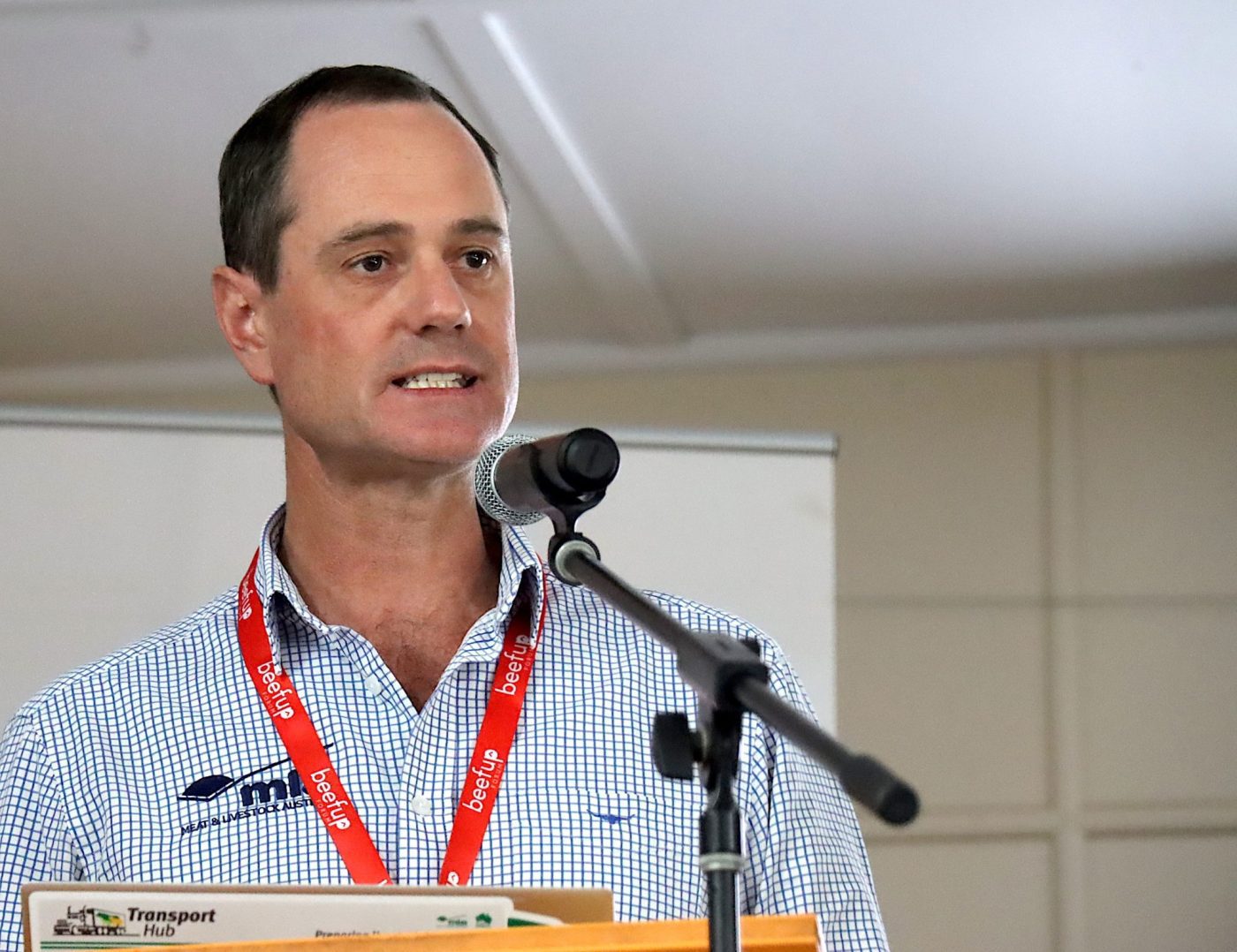
Lachlan Jeffers
The major factor that stood out clearly was the importance of good preparation of cattle prior to transport.
Cattle that were well-prepared, including being adequately fed, able to become familiar with troughs and hay, properly weaned and given time to rest and reset after drafting, performed strongly regardless of whether they travelled by truck or train.
Conversely, poorly prepared cattle performed less well, regardless of transport mode.
Across all cattle treatments, the one message that came through on all was that if cattle were well set up for transport, the train and the trucks had minimal effect.
“If they weren’t set up for transport and weren’t set up to go on their intended journey, the truck and the train weren’t going to magically make them any better,” Mr Jeffers said.
Mr Jeffers said the findings reinforced the importance of whole-of-life management, particularly nutrition and stress minimisation, in maintaining eating quality.
Ensuring cattle had sufficient glycogen reserves through good nutrition was critical to achieving compliant carcass pH levels and avoiding dark cutting, he said.
The trial also demonstrated potential animal welfare benefits from rail transport, with observations noting cattle handled and unloaded calmly after extended journeys.
Earlier article:
Teys throws support behind cattle trains, with multiple services booked from Clermont
Cows on trains! They corner like they’re on rails… because they are. Smooth, efficient due to economy of scale – and with large and significant upcountry facilities (like have been built in QLD), the system provides additional marketing opportunities.
Let’s build the same for SA and the NT – where the rail line goes from Adelaide and Crystal Brook (with abattoirs nearby), through the same property as AACo’s Livingstone abattoir in outer Darwin and all the way to the end of the East Arm wharf.
We moved cattle by rail out of NW Qld by rail many years. The secret was to have them fed and watered before they loaded and to have a train drover with them . They nearly always arrived in good condition but this was long before MSA. Qld Rail gave stock trains priority over goods trains which helped lessen the travel time. Passenger trains had top priority.
The MSA results don’t surprise me.
Editor’s note: During his earlier career, Kevin ran the Borthwicks Bowen abattoir in North Queensland – mid-way between Mackay and Townsville. The plant had good rail access. It closed around 1989 as part of broader industry rationalisation.