
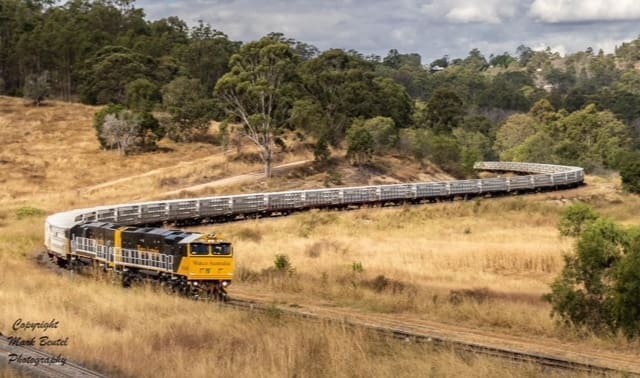
CATTLE trains have started to roll out of what was traditionally one of the country’s busiest rail heads again after a quiet couple of years.
One train has already departed from Clermont in Central Queensland to Teys’ Beenleigh plant in the south-east corner, with more trains booked through Watco East West to take the same route in the coming weeks.
Teys Australia’s general manager for industry affairs John Langbridge said with the cattle herd getting towards its maximum size the company was keen to use the rail to its capacity.
“We believe there’s always a place for both road transport and rail, and we’ll continue to ensure that the rail network plays its part in meeting the growing demand,” Mr Langbridge said.
“The MLA forecasts indicate that the herd will be almost maximum size for the next couple of years, so producers need as many options as possible to ensure that their stock can get to market.”
 Teys has been booking trains on the other major rail routes in Qld in recent years, including the Morven to Brisbane line, Winton to Rockhampton and Cloncurry to the east coast.
Mr Langbridge said the experience with the cattle rail had been mostly positive, however, the company was having to navigate the complex network closures that are needed to keep the tracks maintained. He said Teys was working hard to make sure the importance of prioritising cattle trains was known.
“Rail networks need maintaining from time to time but the ability to run scheduled cattle rail services on set days and times is essential for the services ongoing success,” he said.
“Producers must have a firm schedule to work to so they can plan their mustering, sorting and transportation of the selected stock to the rail, therefore ensuring that their cattle arrive on time to be processed in their allocated position.”
Teys are also working with the well-known and respected meat grading expert, Rod Polkinghorne to investigate a possible rail pathway for MSA. Once complete the Road and Rail carcase grading research will be submitted to the MSA Pathways committee for consideration for including formally into the MSA model.
Economics will win the day
The Clermont rail head has traditionally been one of the country’s busiest, with trains regularly running to both the JBS Dinmore plant and Teys’ Beenleigh.
However, Qld’s cattle rail network has gone into somewhat of a rebuild in recent years after Aurizon lost the contract to another company called Watco East West in 2020. A series of changes have followed in the past five years, with new loading facilities built and JBS handing the booking of trains back to producers.
The situation came to a head last year, with local producers calling a meeting in Clermont to work out what was happening with the rail line.
One of them was John Burnett from Frankfield Station, who has helped fill some of the trains heading from Clermont to Beenleigh in the coming weeks.
“If we can get a train that works and is efficient to go to Teys, that is a good start. Provided they are price competitive, we will send cattle that way,” Mr Burnett said.
“Economics will override everything in the long-term.
“A lot of cattle will still go by road to JBS or Teys in Rockhampton, cattle will still go to Townsville and, if they can get a good efficient rail system that is cost-competitive, cattle will go that way.”
On a local level, Mr Burnett said the viability of spelling cattle in Clermont was largely based off cattle going on the rail.
“The whole community needs to understand that if the train drops out of the system, the use of the Clermont Saleyards will be diminished,” he said.
“If it is diminished than the cost of the saleyards is going to go up and that is before you take into account the extra wear and tear on the roads.”