
CATTLE producers in the Taroom district have expressed they have ‘no confidence’ in the current tick management system in Queensland following a recent outbreak in the region.
More than 150 cattle producers gathered in Taroom on Friday to hear from the Qld Department of Primary Industries (DPI) on the latest outbreak.
“The most dangerous cattle to buy are cattle from the Tick Free Zone now,” one Taroom cattle producer told Beef Central.
“When we buy cattle out of Casino in NSW, every animal gets dipped and there are set protocols we have to follow.
“But when you buy out of the clean area or clean yards, like Dalby and Roma, you assume the cattle are clean because that is the law, but increasingly that is not the case and that’s how these outbreaks are occurring.”
Taroom cattle producer Alex Sparkes is one property removed from one of the infected properties and said he has taken preventive measures to ensure his cattle remain clean.

“We have mustered all the paddocks that we feel are high risk and made sure that every animal has been scratched and treated as a precaution and we’ll look to re-treat down the track,” Mr Sparkes said.
Former government stock inspector and current third-party scratcher Doug Stuart said prior to tick management changes in 2016 these preventative measures Mr Sparkes had taken were once mandatory.
“All neighbouring properties were told they had to front their cattle to be inspected and that was one way to determine how far the infestation had gone,” Mr Stuart said.
“Those properties were called ‘first removed’ and had the same movement restrictions for store cattle as the infected property.
“So, to move cattle that producer would have to have a clean inspection and treatment and that was through a clearing dip rather than on property treatment, like is done now.”
Mr Sparkes explained it is that level of surveillance and management he and others would like to see reinstated.
“We need more help on the ground from the DPI and more open and transparent communication from the DPI to producers who are in and near the affected areas,” Mr Sparkes said.
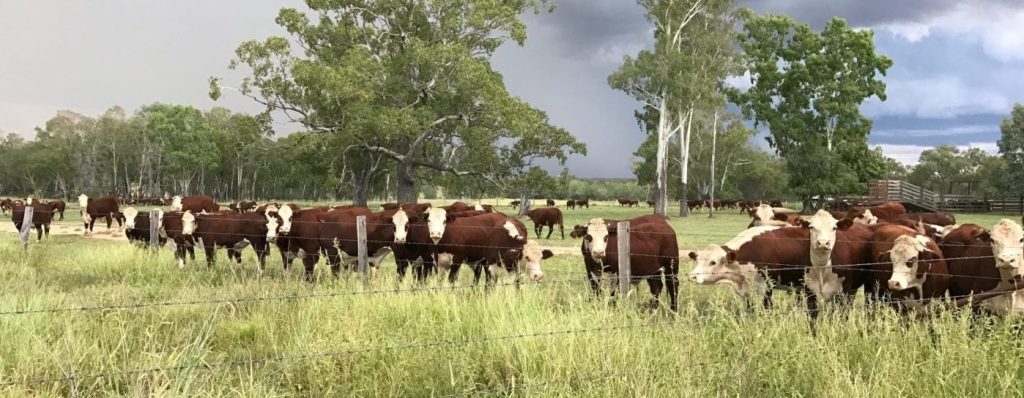
Taroom producer Alex Sparkes has scratched and treated his cattle for ticks as a preventive measure.
Calls for changes to tick management
Below is a list of changes that were called for at the Town Hall meeting in Taroom on Friday.
- More DPI officers on the ground to assist with scratching and tracing
Beef Central is waiting to speak with the Qld Minister for Primary Industries, Tony Perrett and will report once answers have been provided.
But in a written statement earlier this month, Minister Perrett said his government had recruited 31 new biosecurity officers and was committed to delivering a further 69 this term.
It is not yet clear if any of these positions will be tick related.
- Changes to privacy act so that the community can be told where the outbreak is
Beef Central is waiting for a response from the DPI which take a minimum of two business days, according to the department’s media team so more information will be published once responses have been received.
At the town hall meeting in Taroom on Friday the DPI’s Jed Taylor explained due to privacy the DPI is not allowed to share where the outbreak is, and it is up to the individual landholder to inform their neighbours if they chose to.
The DPI explained that during favorable seasonal conditions, there is an increase in tick infestations.
“As of February 10, there are 212 properties within the Queensland Cattle Tick Free Zone currently identified as restricted places,” a spokesperson for the DPI said in a written statement.
“Where possible, the DPI works proactively to provide guidance and support to producers to eradicate cattle ticks from their properties and be removed from the register.”
- The reinstatement of a buffer zone
In 2016 Queensland eliminated the buffer zone between the infested and tick free zones.
“Regarding suggestions to reinstate a buffer zone, the Queensland Government is not currently considering a change to the existing two-zone model,” a DPI spokesperson said.
“The current framework consisting of defined infested and free zones was established in close consultation with industry stakeholders to ensure the tick line remains in a sustainable location.
“While buffer or control zones were historically used to support specific interstate trade or large-scale eradication schemes, the current regulatory model focuses on individual biosecurity risk management.
“This approach ensures that requirements are targeted and sustainable, rather than imposing broad conditions across the industry regardless of specific risk profiles.”
- Stricter management or penalties for third-party scratchers who on a number of occasions allow tick infested cattle into the free zone.
Beef Central is waiting for a response from the DPI on this. The department advised that it might take at least two days to respond.