
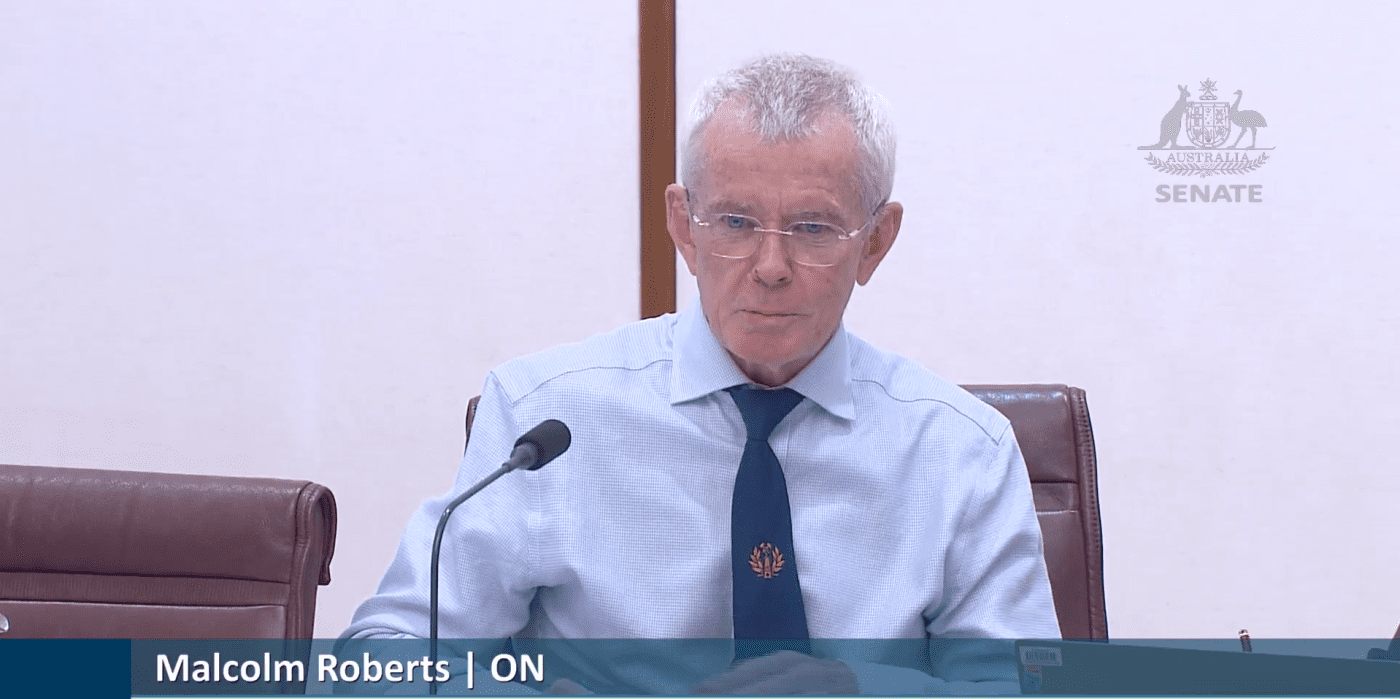
One Nation senator Malcolm Roberts.
AN exchange during a senate inquiry looking into information integrity in climate change and energy has raised an interesting discussion about the role of “consensus” in science.
In a line of questioning, One Nation senator Malcolm Roberts told science communicator Dr Karl Kruszelnicki or “Dr Karl” that consensus was a “political tool” when Dr Karl claimed that “99.999 percent” of climate scientists agree that climate change is real.
While Senator Roberts was laughed at by the other senators and largely dismissed by following media articles, he does raise a point of contention in the scientific community.
Just wrapped up another two days of public hearings in Canberra on the Greens-Labor inquiry into “Information Integrity on Climate Change and Energy”.
This is my session with Dr Karl. What do you think of his behaviour?
He asked me whether I thought the past 10 years have been… pic.twitter.com/EoE0riFI8k
— Malcolm Roberts 🇦🇺 (@MRobertsQLD) February 18, 2026
The “scientific consensus” has become an increasingly popular phrase in recent times and is often used to justify policy decisions.
It has also been used against the livestock industry, with work like Nina Teicholz’ book the Big Fat Surprise writing about the use of scientific panels to push an unproven hypothesis about red meat causing heart disease and legislation coming in to reduce livestock methane emissions despite big questions over methane’s actual warming impact.
I can’t help immediately wondering what the 1 percent are up to.
Following last week’s exchange, Beef Central contacted three well-known scientists to get their view on the role of consensus in science.
Livestock science has more questions than answers
Swiss scientists Dr Peer Ederer, from GOAL sciences, has long been critical about policy makers using scientific consensus to justify their decisions.

Peer Ederer addressing the 2025 WagyuEdge Conference in Perth.
He is also one of the initiators of the Dublin Declaration, which was formed out of concerns that weak anti-meat science was gaining a disproportionate amount of traction with policymakers – and that the idea of “consensus” was shutting down debate.
“I cannot recall having ever reached consensus on any position in my scientific work – and neither have I been seeking that,” Dr Ederer told Beef Central.
“The environmental impact of livestock has far more questions than answers – we need far more evidence to get closer in understanding of what is happening.”
Dr Ederer said the role of science is to always keep evolving.
“The role of science is not to provide consensus. On the contrary, scientific consensus is dangerous. The first role of science is to always keep questioning,” he said.
“The world used to be shaped by gods, until it wasn’t, and it became Euclidian instead. That lasted a while, and then it became Newtonian. Then Einsteinian, and a new era is soon to come.
“The second role of science is to provide the evidence of what we seem to know and what we do not know.
“It is then the role of the politician, the judge, the strategist or any other decision maker, to interpret this evidence and make a call of judgement. It is not the role of science to alleviate the decision makers of this responsibility for their judgement.”
Consensus has a place, with exceptions
Oxford University physicist Dr Myles Allen was the architect of the GWP* (global warming potential) metric for reporting methane emissions.
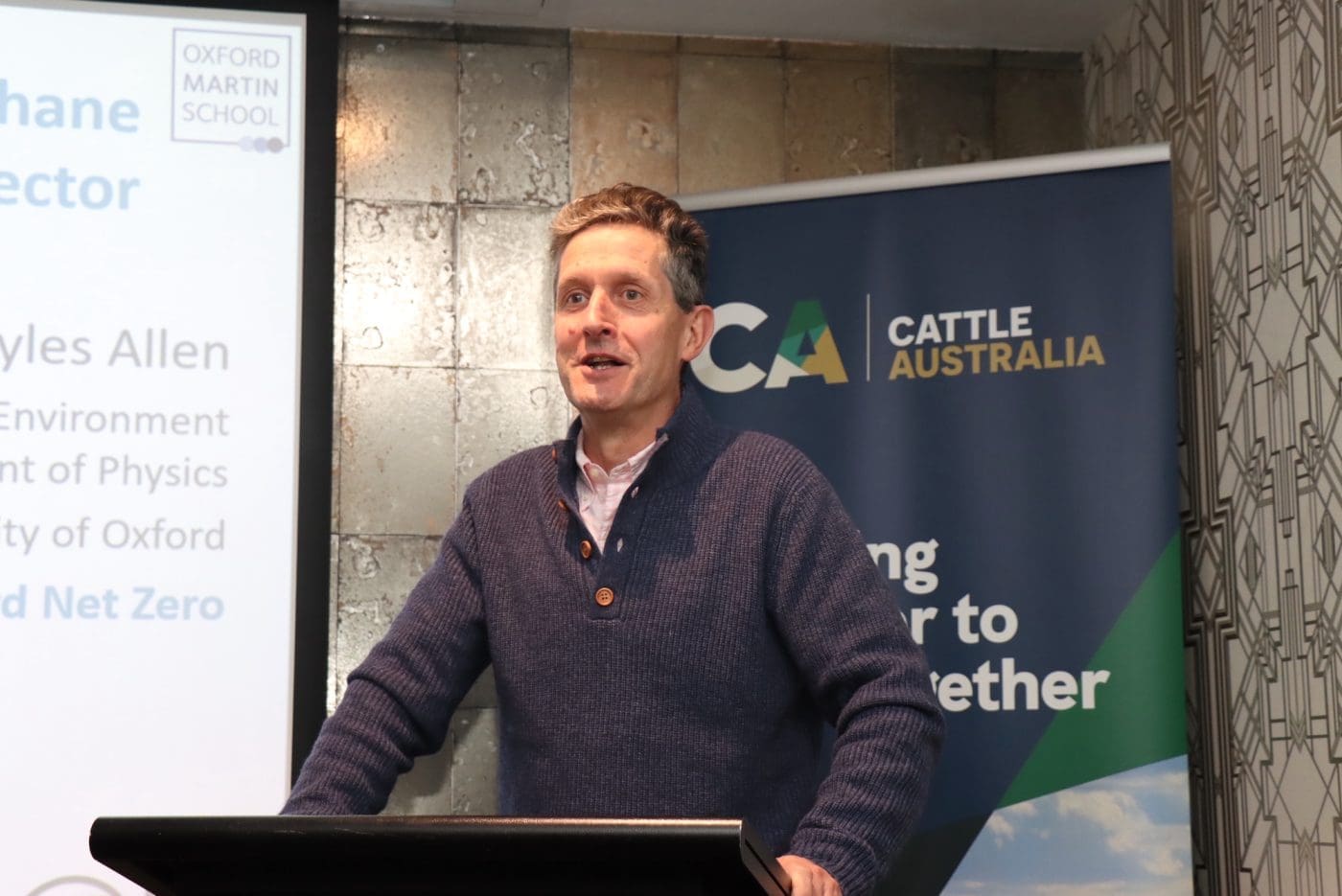
Dr Myles Allen presenting at a Cattle Australia function.
Dr Allen told Beef Central that sometimes consensus is needed to advance subjects and prevent researchers from having to go back to square one every time.
“Science couldn’t function (and your iPhone certainly wouldn’t function) if we had to go back to square one every time we wanted to ask a new question,” he said.
“So, of course, consensus has a place in science. Everyone has heard of the analogy of standing on the shoulders of giants.
“It’s the agreed set of facts — like the fact that thermometers work, or that the earth absorbs energy from the sun and sends it back out into space in the form of infrared radiation, and that certain gases in the atmosphere affect that passage of infrared radiation — that it has become a waste of time continuing to argue about.
“That doesn’t mean there may not be exceptions — after all, Einstein showed that Newton’s laws of motion don’t apply under certain very special circumstances. But if NASA had decided they wouldn’t use Newton’s laws at all because they were “unproven”, they would never have put a man on the moon.”
Dr Allen said where consensus was reached, scientists had a specific duty to explain why they collectively believe what they do.
“I don’t think anyone benefits from the line ‘trust me, I’m a scientist’, or ‘trust me, 99pc of scientists agree with me’ — especially the latter, because if someone says that to me, I can’t help immediately wondering what the 1pc are up to.
“It can get frustrating, especially when people keep asking questions that were answered 30 years ago. But that’s part of our job. Not all science can be explained to everyone — there are large branches of physics that I don’t understand and never will, and I’m a physics professor.
“But the science of carbon dioxide and global warming is actually quite simple, such that it can be explained to anyone. Unless, as Upton Sinclair put it, their salary depends on them not understanding it.”
You can always do better
Dr Rod Polkinghorne has spent a lot of his career researching meat eating quality and is also part of the Dublin Declaration. He said scientific data was never “absolute”.
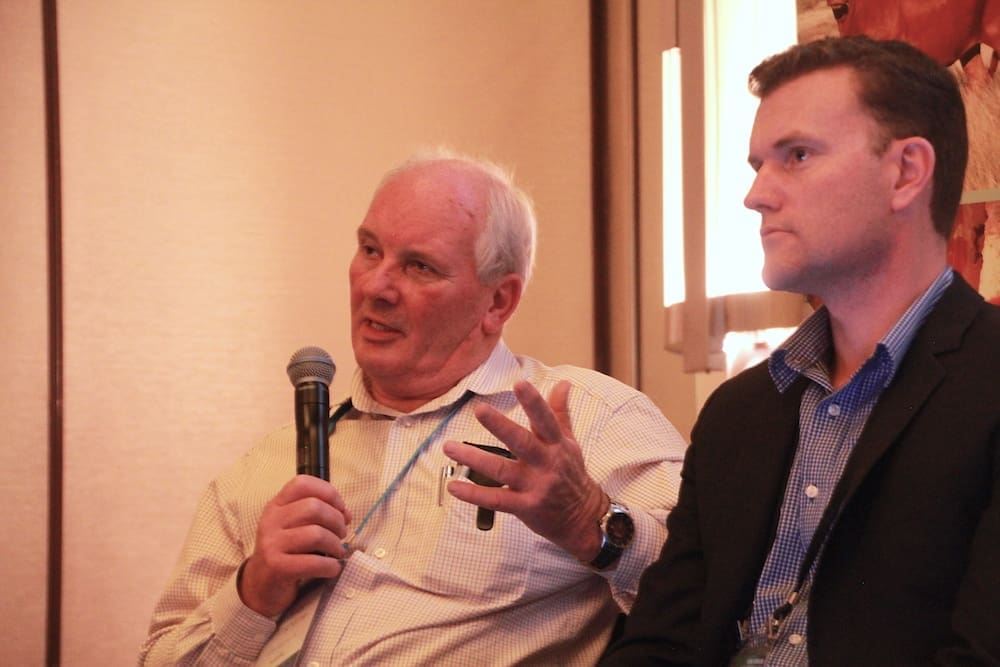
Dr Rod Polkinghorne
“If the data looks too good, you usually look for somebody who has been fabricating it,” he jokingly said.
“The best way to put it is that you should never believe that you can’t do better.”
Using a quote from British scientist James Lovelock that “The practice of science of the testing of guesses; forever iterating around and towards the unattainable absolute of truth” said science should always be questioned.
Using a quote from British scientist James Lovelock that “The practice of science of the testing of guesses; forever iterating around and towards the unattainable absolute of truth” said science should always be questioned.
A lot of Dr Polkinghorne’s work informs Meat Standards Australia (MSA), which is updated by a ‘pathways committee’. He said all updates to the MSA model are passed with a consensus.
“It is more about trying to get a consensus on what is the best we know at this time, not whether it is an absolute truth” he said.
“The process is a dog fight at times, it can involve two-three-four-or-five hours discussion at multiple meetings with the data in the background.
“But you can sometimes go back to data in the data bank that is 30-years-old, you can still use it and build on it.”
- Beef Central has also contacted Australian IPCC representative Mark Howden, this article will be updated with a response.
Scientific advancement depends on rigorous testing, open debate, and the willingness to challenge prevailing assumptions. That process is fundamental to progress. However, when scientific findings are selectively presented, amplified beyond their evidentiary limits, or translated into policy without transparent scrutiny, public confidence is undermined.
Australia is making significant economic and structural decisions on the basis of climate modelling and emissions assumptions. These decisions affect regional communities, primary industries, energy affordability, and national competitiveness. It is therefore essential that the information underpinning them is robust, transparent, and open to genuine critical review.
Policies built on incomplete data, untested assumptions, or metrics that do not fully reflect real-world systems will not withstand time or scrutiny.
So did you get a consensus opinion 😁?
Well there doesn’t seem to be a consensus about the role of consensus. Editor
you would have to assume then that Dr Karl is up to his 27th booster for covid. the weather or climate is not static. cheers Matthew Della Gola
Hmmmm? I’d like to know if Senator Roberts studied chemistry, physics and biology at high school like I did? It doesn’t make me a scientist but it allows me to understand the changes I’m reading in my rain gauge, my temperature gauge and the pattern of seasons on my farm. It’s also allowing me to modify our farm management practices to circumvent the changing climate we’re faced with. Ignoring it is just kicking the can further down the road and leaving the next generation with degraded soils and outdated farming systems. In addition, the obviously incorrect findings on the health benefits of eating meat can’t be conflated with the obviously correct findings on climate change. The 1% who say meat is bad for us have a vested interest — as do the 1% who say climate change is crap.