
Prime agricultural land the size of three Tasmanias could soon pave the way to achieve Labor’s net zero target, according to Nationals leader David Littleproud.
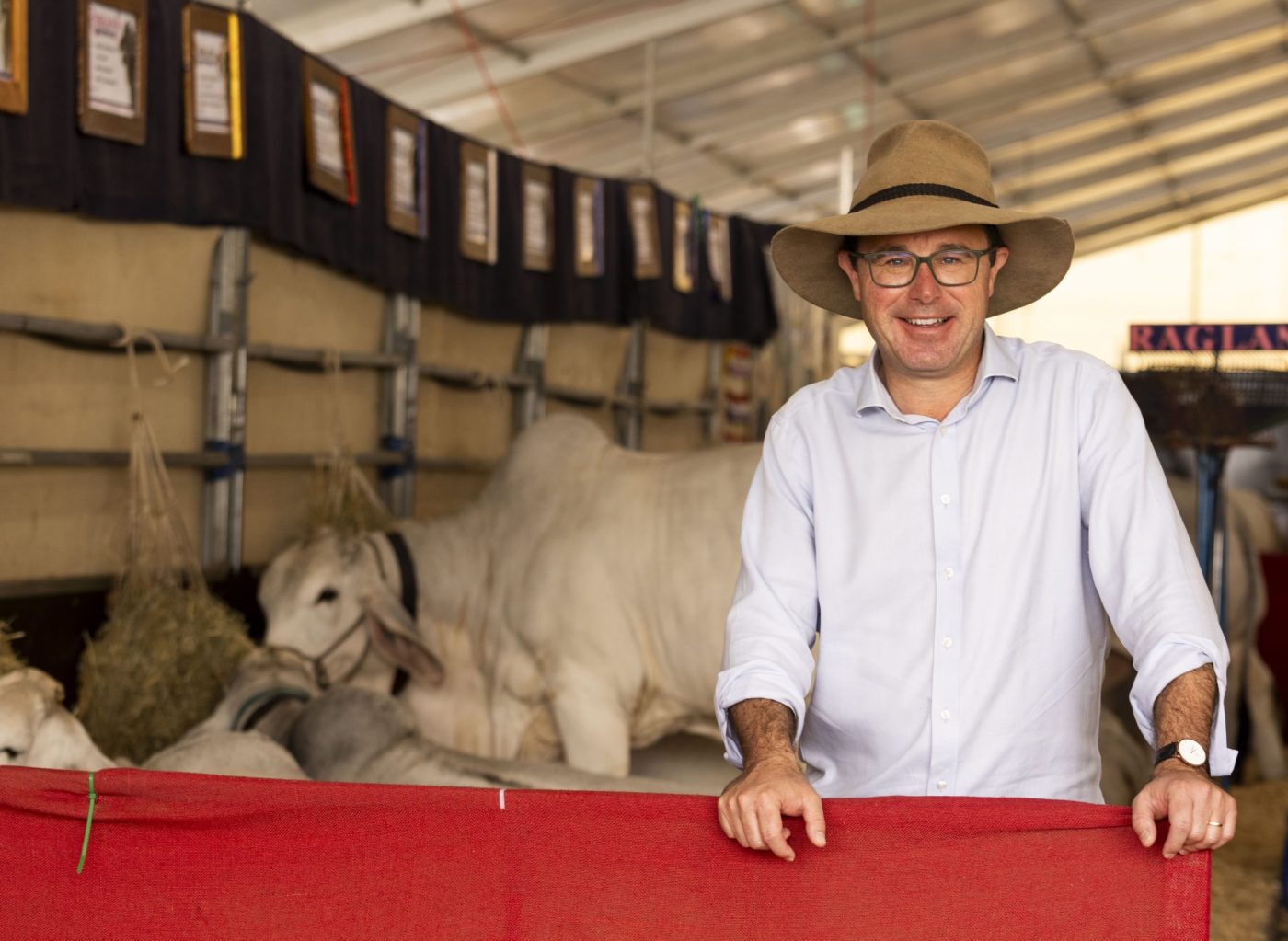
David Littleproud
Mr Littleproud said the agricultural land required by the Department of Agriculture, Fisheries and Forestry’s (DAFF) own calculations doesn’t factor in land that has already been sequestered.
It comes after Senate Estimates heard the ABARES Insights Sequestration on agricultural land: impacts and policy trade-offs report shows under the 119 million tonnes of land-based sequestration needed to achieve net zero, about 18 million hectares of sequestration projects would need to be established by 2050.
The eighteen million hectares could be the minimum agriculture land that is taken out of production, with no cap to be placed on halting the amount.
Mr Littleproud said that ABARES reports that one Local Government Area (LGA) Streaky Bay, SA, (Grey), will lose above 10 per cent of agriculture value that’s created in the region, while seven LGAs including Eyre Peninsula, SA, (Grey), Tenterfield, NSW, (New England), Warren, NSW, (Parkes), Chapman Valley, WA, (Durack), Northampton, WA, (Durack), Three Springs, WA, (Durack), and Cassowary Coast, QLD, (Kennedy), will lose between five and 10 per cent.
The same issue was raised in Senate Estimates last year, which was covered on the Week in Beef podcast at the time.
“Australia’s most productive agricultural areas and regional Australia is at risk under Labor’s net zero plan,” Mr Littleproud said.
“When supply goes down, prices go up, meaning families will feel the impact of Labor’s net zero goal and its consequences at the supermarket checkout.
“Concerningly, the Department has admitted there is absolutely no financial plan or grants to support the LGAs that will lose their agricultural value, despite the fact these regions require farms and their employees to thrive.”
Mr Littleproud added Labor hypocritically suggests Australia’s food security is not at risk, as Australia exports 70 per cent.
“The Department claims food production isn’t at risk, but the report estimates 55 per cent of sequestration would occur in the wheat-sheep and high rainfall zones – Australia’s most productive areas. These areas will never recover but families will bear the brunt amid a cost-of-living crisis.”
Source: David Littleproud’s office
18 million hectares put under renewable energy infrastructure is approximately 2.3% of the Australian land area. Not all of this land will be lost to agriculture but it needs to be seen in the wider context of area of land lost to agriculture.
The means of determining the area of land under grazing, farming and plantation forestry have changed over the years but several decades ago it was nearly 70% of our land area. In June 2024 the Australian Bureau of Statistics determined that this area had eroded to 48% (369 million ha). Land under formal conservation, within the National Reserve System has grown to 22.5% of the land area (173.5 million ha). Unoccupied crown land, land effectively assisting conservation in desert areas, covers a further 12.5% of our total land area. Private conservation covers another 1.3%. Land in various forms of conservation therefore covers some 36% of the land area, and its growing almost as fast as the land committed to agriculture is shrinking.
The concern is not that we can’t feed ourselves in the present, since our farming productivity has grown at an annual rate of 0.7%, greater than the rate of loss of agricultural land. The longer term concern is that our population is growing at 2% annually, and gradually more and more of our exports will be required to feed our home population.
Land and water available to agriculture are finite resources and neither our governments nor opposition seem to have any wholesome overview of trends in agricultural land and water availability, food productivity and population demand. Where we end up in 2070, on trend for a population near 60 million, needs careful planning way beyond an election cycle.