
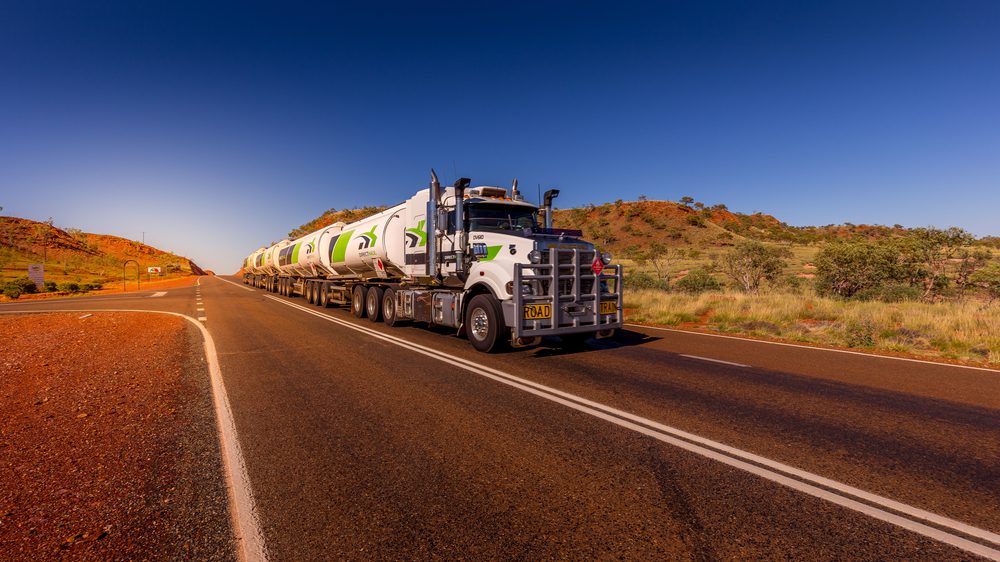
Image: Shutterstock
FARMING groups have warned the regional fuel squeeze could quickly become a food and animal welfare issue and are calling for urgent action from the Federal Government.
The National Farmers’ Federation, AgForce, New South Wales Farmers and Grain Producers Austtralia have issued statements calling for the Government to show some leadership on the issue.
The groups say farmers in regional communities are increasingly struggling to secure fuel, putting food security and animal welfare at risk.
NFF President Hamish McIntyre said the situation was rapidly escalating from a fuel logistics problem into a serious risk for Australia’s food production system.
“Farmers and fishers are telling us fuel is becoming harder to access and the prices are simply becoming unrealistic, and they need to see a clear plan from Government as to how they will respond both now and into the future,” Mr McIntyre said.
“The majority of fuel in regional communities is supplied by independent retailers. If those operators can’t access supply, farmers can’t access fuel.
“And if farmers can’t access diesel, they can’t harvest crops, plant crops, or move food and fibre to market. We also have industries like dairy that need fuel to move product every single day.”
Mr McIntyre said the situation also had serious animal welfare implications, such as poultry growers needing fuel to maintain the health of their birds and livestock producers needing to transport fodder to feed animals.
The Minister for Energy Chris Bowen just announced in Parliament that an extra 100 million litres of fuel will be kept in Australia. He has temporarily relaxed fuel quality rules to allow this to happen and told Parliament that Ampol Australia has committed to prioritise this redirected supply for regions of shortage and the wholesale spot market that supports independent distributors.
The NFF welcomed this announcement as a first step, and said the Government needed to consider what further actions it can take to address what is a real and escalating situation in regional areas and clearly communicate the trigger points for further action.
“At this point, the Government must be prepared to pull other available levers both now and if the situation continues to deteriorate,” Mr McIntyre said.
“Firstly, we strongly encourage the Government to continue to work closely with the major fuel companies.
“Failing that, the Government should consider appropriate regulatory options. These may include geographic or sector-specific measures to ensure fuel reaches critical industries. Should the situation continue to worsen, food supply should be considered a priority under the Liquid Fuel Emergency Act 1984.”
ACCC urged to act swiftly
The NFF also urged the Australian Competition and Consumer Commission (ACCC) to act swiftly if anti-competitive behaviour is identified within the fuel market.
“It’s encouraging to see the ACCC already increasing its scrutiny of fuel markets. If anti-competitive conduct is occurring, enforcement actions must occur quickly.
“We know every single Australian is feeling the pinch at the pump, but if these price hikes continue, it could mean the difference between a farmer planting a crop or leaving the paddock bare.”
The NFF noted overnight developments internationally aimed at stabilising supply, with the International Energy Agency announcing the release of 400 million barrels of oil from emergency reserves to help ease global disruptions. The NFF awaits Minister Bowen’s response to this request.
Mr McIntyre said while global markets were responding, it remained critical that domestic supply chains continued to function effectively.
“Australian agriculture depends on reliable fuel access every day,” he said.
“Right now farmers are heading into planting and harvest windows where diesel use spikes. Ensuring fuel reaches farm businesses is essential to keeping food moving from paddocks to plates and ports.”
An issue that needs to be addressed today, NSW Farmers
NSW Farmers President Xavier Martin said this was an urgent issue that needed to be addressed today.
“What we need the Australian Government to do today is ease the immediate problem of our domestic fuel supply, getting fuel from the terminal to country bulk suppliers, and then on to the farms and towns that depend on it,” Mr Martin said.
“There may be fuel coming into Australia, but the government needs to wake up and realise that does not automatically mean it’s getting to where it’s needed. Fuel sitting in terminals does not fill tanks in rural and regional areas let alone on farms.
“If the terminals are full of fuel and the farms run dry, then Energy Minister Chris Bowen has failed to do his job.”
Mr Martin said moves by the International Energy Agency to release 400 million barrels of reserve oil were welcome and would certainly ease some concerns about fuel supply around the planet. But there was a more immediate issue at home.
“Right now, we’ve got farmers across the country who have run out, or are running out of fuel, while others are only a week or two away from empty. Normally they’re refilled by bulk suppliers, many of them smaller independent distributors in rural and regional areas. Those suppliers are telling our members they’re dry as well, with no more fuel coming.
“This fuel is vital to keep feedlots running. It’s vital to keep livestock and milk moving around the country. It’s vital to get sowing underway.
“The Australian Government reports vessels continue to deliver fuel and this is a good thing. But what we need now is a practical, immediate solution to get fuel from the terminal to the country servos, bulk suppliers and farms that need it. State and federal governments much act now.”
Disruptions at critical time, AgForce
AgForce Grains President, Brendan Taylor, said producers were facing these fuel distribution challenges at a critical time in the farming calendar.
“With farmers across the state either harvesting summer crops, or preparing for winter planting, we’re in a period of high demand for fuel and fertiliser,” said Mr Taylor.
“Fertiliser is a vital part of putting food on the table for everyday Australians. Without it, crops either aren’t planted or yields are significantly reduced, which ultimately means less food reaching supermarket shelves.”
AgForce General President, Shane McCarthy, said the situation highlighted how quickly Australia’s fuel supplies could come under pressure.
“It is stunning how fast fuel security has become an issue, especially in regions where the food and fibre for the nation is grown,” said Mr McCarthy.
“If the tractors and the trucks stop running, the shelves at the supermarket will be empty. There will also be animal welfare concerns, as trucks carrying livestock won’t be able to get to their destination without fuel.”
Mr McCarthy said the agriculture industry had long raised concerns about Australia’s reliance on imported agricultural inputs.
“Farmers and representative organisations like AgForce have been warning for some time that Australia’s reliance on imported fuel and fertiliser leaves us vulnerable,” he said.
“If we run short of fuel or fertiliser, it has serious implications not just for farmers but for Australia’s food supply.”
“This situation highlights the importance of strengthening Australia’s fuel reserves and reconsidering domestic manufacturing capacity to support our long-term food security.”
Mr McCarthy said AgForce had been raising farmers’ concerns with the National Farmers’ Federation and government representatives to ensure agriculture has reliable access to diesel and other critical inputs.
AgForce encourages any farmers facing fuel and fertiliser shortages to get in contact so we can work with authorities and the National Farmers’ Federation to address issues as they arise.