
A new report from the Wentworth Group of Concerned Scientists has reignited debate over vegetation clearing in New South Wales, with researchers saying high-value biodiversity areas continue to be lost, but landholder groups strongly disputing the report’s accuracy and policy recommendations.
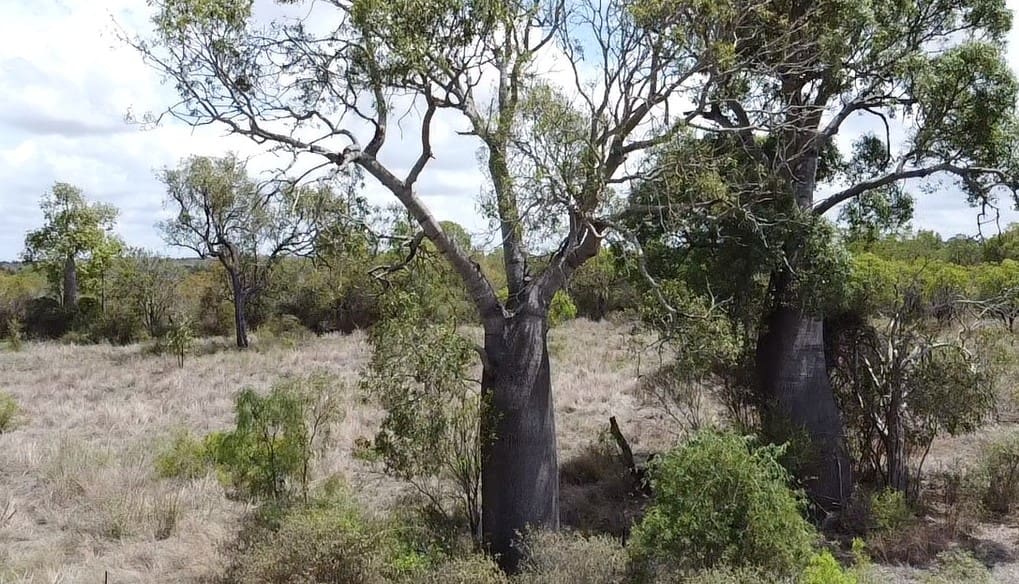 The Wentworth Group’s discussion paper released last week, Impact of vegetation clearing on NSW biodiversity 2010–2023 (link to full report below article), estimates that between 2016 and 2023 about 13,880 hectares of land classified as having high biodiversity value was cleared.
The group argues the findings highlight serious shortcomings in NSW environmental protections and has called for reforms to better safeguard threatened species.
Wentworth Group CEO Celine Steinfeld said the analysis suggested that in at least half of the high-value areas cleared during the period there was potential for “serious and irreversible impacts” on threatened species and ecological communities.
“This finding is highly concerning and reflects the shortcomings of NSW policy and legislation to protect our environment,” Dr Steinfeld said.
“Despite the important efforts made to recognise and map areas of high biodiversity value, they are still cleared.”
The report also estimates that since 2010 almost 700,000 hectares of land in NSW has been cleared, and that 80 percent of federally listed threatened species in the state are likely to have occurred in areas affected by clearing.
Landholders challenge methodology
However, landholder advocacy group Property Rights Australia says the report is bring promoted as proof that land clearing is driving biodiversity decline, but a closer look shows it is “not the hard-edged scientific analysis it is being portrayed as”.
 “The report relies almost entirely on the government’s SLATS satellite mapping system,” the group stated.
“That system is useful for detecting disturbance, but it measures gross clearing events, not the overall balance of vegetation across the landscape.
“In other words, it records when trees are removed, but it does not account for regrowth, natural thickening, or increases in biomass elsewhere.”
It also says the Wentworth report ignores data showing that across much of eastern Australia, particularly in grazing country, woody vegetation is expanding, not contracting.
“Regrowth after earlier clearing, along with natural thickening, often exceeds the area cleared each year.
“Yet the Wentworth report presents a single headline figure for “clearing and re-clearing” without any corresponding analysis of how much vegetation is growing back.
“The same problem appears in their biodiversity claims. The report does not measure actual habitat loss or species decline. Instead, it overlays clearing maps with very broad species distribution maps and then states that clearing occurred in areas where species “may” exist.
“The authors themselves admit these maps “may or may not be actual habitat” and that the clearing simply represents a “risk” to species.”
‘Clearing figures are distorted’
NSW Farmers Conservation and Resource Management Committee Chair Bronwyn Petrie said the SLATS report is presented in a way that hides the real figures that can be described as ‘land clearing’ or ‘land use change’.
“The clearing figures are distorted because they include invasive native species management, which is environmental rehabilitation of land, as well as regrowth control and the clearing of ground covers which include introduced species, not native species, as the technology cannot distinguish between native and non-native ground cover.
“Given over half the clearing is attributed to ground cover, this greatly changes the picture of what is really happening on the ground.
“Clearing figures make no reference to the amount of land set aside for conservation, which is roughly four times as large. In 2023 only 731 hectares, a tiny amount of land, was cleared for change of land use in NSW with more than 8000 hectares set aside in perpetuity for the environment. Environmental groups seek to ignore the reality of reduced land clearing, which has gone from 98,345 hectares in 2018 to 66,498 hectares in 2023.”
She also pointed out that the 2024 Australia’s Environment Report from the Australian National University shows a canopy increase of 14 percent and a plant growth increase of 12 percent; both figures include losses and gains of vegetation.
“It has been and remains our goal at NSW Farmers to increase landholder engagement in balancing productive agriculture with better environmental outcomes, to build on the years of work that landholders have done to protect biodiversity on farms
“The last thing we need is increased regulation that will only drive farmers away from the sorts of environmental partnerships that are essential if NSW Government wants to meet its nature goals.”
Wentworth Group recommendations
The Wentworth Group is proposing several key recommendations stemming from its technical report:
- The NSW Government implement a Land Stewardship Package to facilitate landscape protection and restoration at scale;
- Safeguard NSW’s irreplaceable biodiversity and cultural values through law reforms that work for people and nature;
- Rebuild trust by working closely with communities to design and deliver required reforms, such as by increasing the involvement of regional communities in the identification, protection and management of high value biodiversity and cultural areas;
- Develop an online spatial tool which identifies natural and cultural values and tracks changes in their condition.
Link to Wentworth Group Report: https://wentworthgroup.org/2026/02/analysis-of-vegetation-clearing-in-new-south-wales-2010- 2023/
When the Wentworth Group of Concerned Scientists write a report like this, readers should be aware that it presents one line of thought without reviewing the big picture of nature repair being undertaken by farmers across New South Wales since 2010. If the scientists are so concerned about the state of the environment, why have they not acknowledged the cumulative data for nature repair associated with for instance NSW Land for Wildlife participants? It’s 2024 annual report quotes 3000 members involving:
* Total property area 214,252 ha
* Native bushland conserved: 105,135ha
*Property area being rehabilitated: 26,454ha
And what about the hectares of nature repair undertaken by farmers in over 3000 NSW landcare groups since 2010? The same should be asked about hectares of catchment management sponsored projects, Greening Australia projects etc and about farmers who undertake nature repair because that’s what best practice farm management involves?
Then there’s a whole new dimension of nature repair taking place addressing climate change via the Clean Energy Regulator schemes accelerating carbon abatement including the Australian Carbon Credit Unit methodologies for re-afforestation, environmental plantings and dual-purpose Nature Repair credits. On top of that the Federal government has a National Roadmap for protecting and conserving 30% of Australia’s land by 2030. The Concerned Scientists February 2026 Report makes no mention of any farm-based initiatives since 2010 to participate in nature repair. The scientists have opted to ignore the positive impacts of 25 years of farm- based nature repair “on threatened species, threatened ecological communities, or ecosystems, with many important biodiversity and cultural values”.
The article says: “The clearing figures are distorted because they include invasive native species management”. So, you are telling me that the massive and growing amount of time and money we are putting into lantana management every year is being counted by The Wentworth Group as “land clearing”? I am speechless…
Another recommendation could be put a new tax on all urban people and then take that money and pay all farmers for income lost for not maintaining their properties.
So if you had $100 000 in lost income because you could not re-clear a paddock, the tax pays you that one hundred thousand dollars.
I am sure all the greenies in urban NSW will cheer on my idea and happily hand over tens of thousands of dollars for something they want. Or maybe not, they just want to dictate to others.
they want to stop us with no under standing of food production while rezoneing koala habitate in urban proximity for houseing development
But thats ok
also most remenant tree clearing is for the purpose of ruinables you know intermittent wind power