
AUSTRALIAN cattle producers are having to make substantial changes to business decisions, from selling cattle earlier and scaling back fertiliser programs to parking machinery and shelving development plans, as the Middle East conflict drives sharp increases in fuel and input costs.
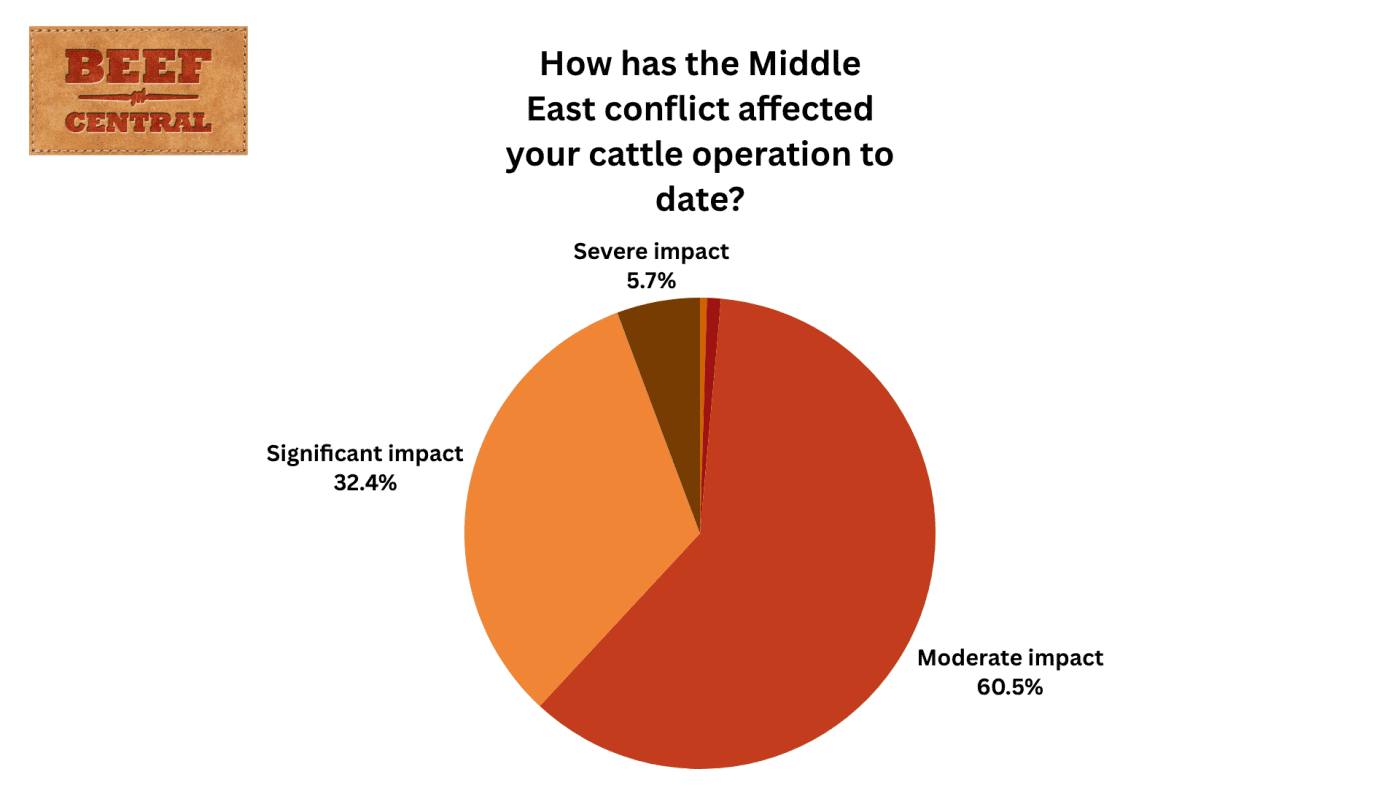
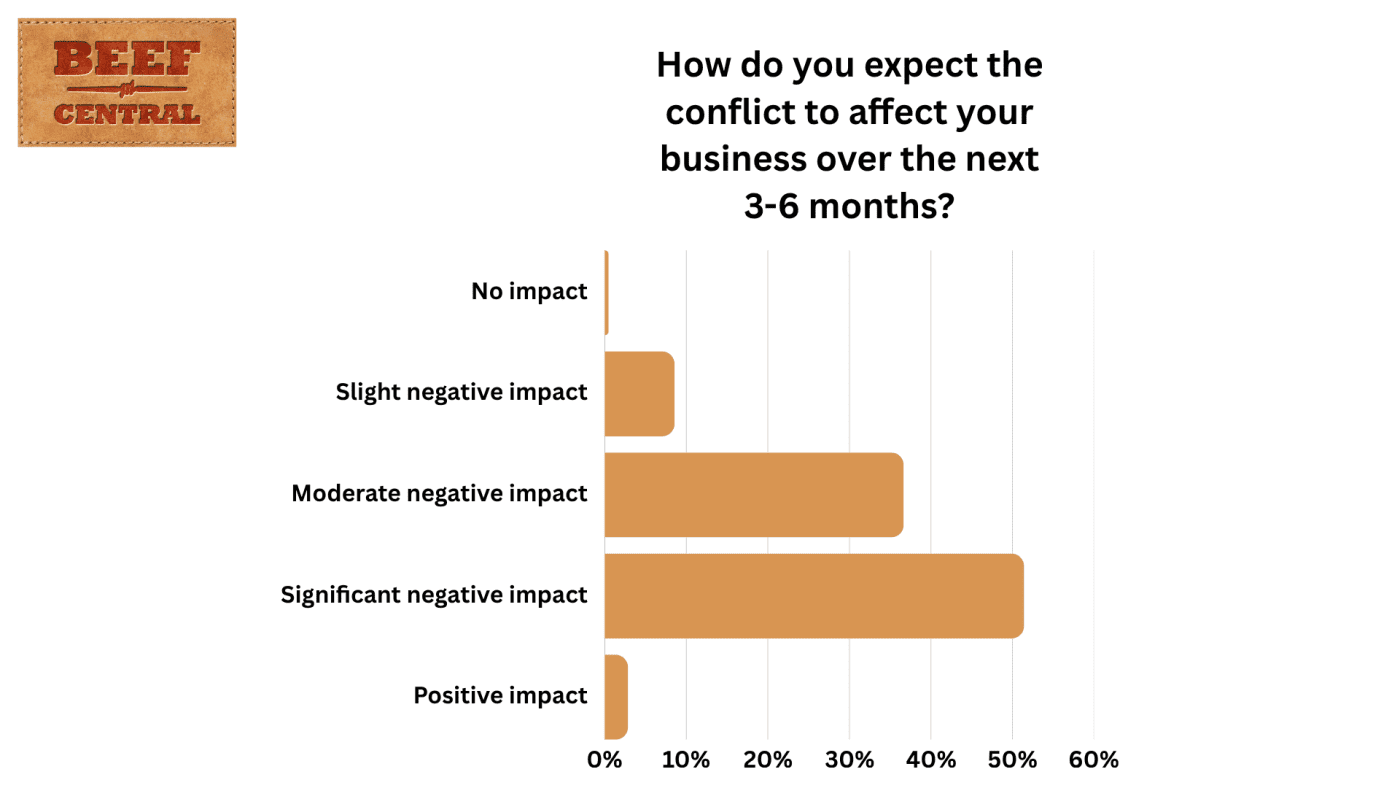
Results from a snapshot Beef Central survey to a small but nationally representative sample of known cattle producers over the past five days show the effects of the month-long war are intensifying, with almost three-quarters of respondents reporting moderate to significant impacts on their operations to date.
The response from 210 survey respondents nationally confirms rising fuel, freight and input costs are already driving widespread changes to business operations and fuelling concern about the months ahead.
 (To conduct this quick ‘ground truthing’ poll, Beef Central sent a survey link to a verified and nationally-representative sample of known cattle producers across Australia to ensure a credible reflection of genuine industry impacts. This approach was chosen over an open online poll, where there can be no way to verify that respondents or findings are truly representative of Australian cattle producers.)
The three “Fs” – Fuel, freight and fertiliser – have been the obvious dominant pressure points of this conflict so far and that was clearly reflected, with 97 percent of respondents reporting higher diesel prices and more than half already experiencing supply constraints.
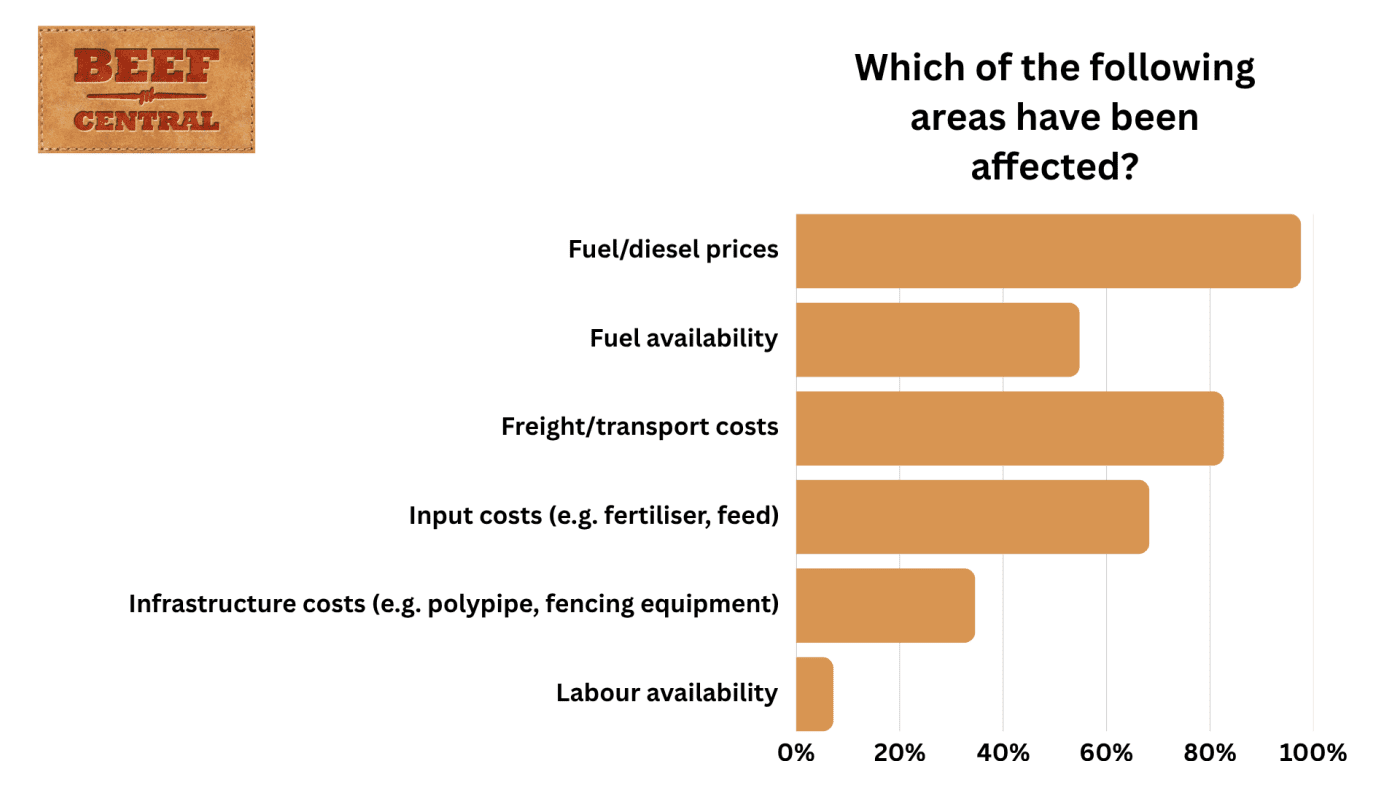
Freight costs (83pc) and broader input costs such as fertiliser and feed (69pc) also underlined the impacts flowing through the production sector.
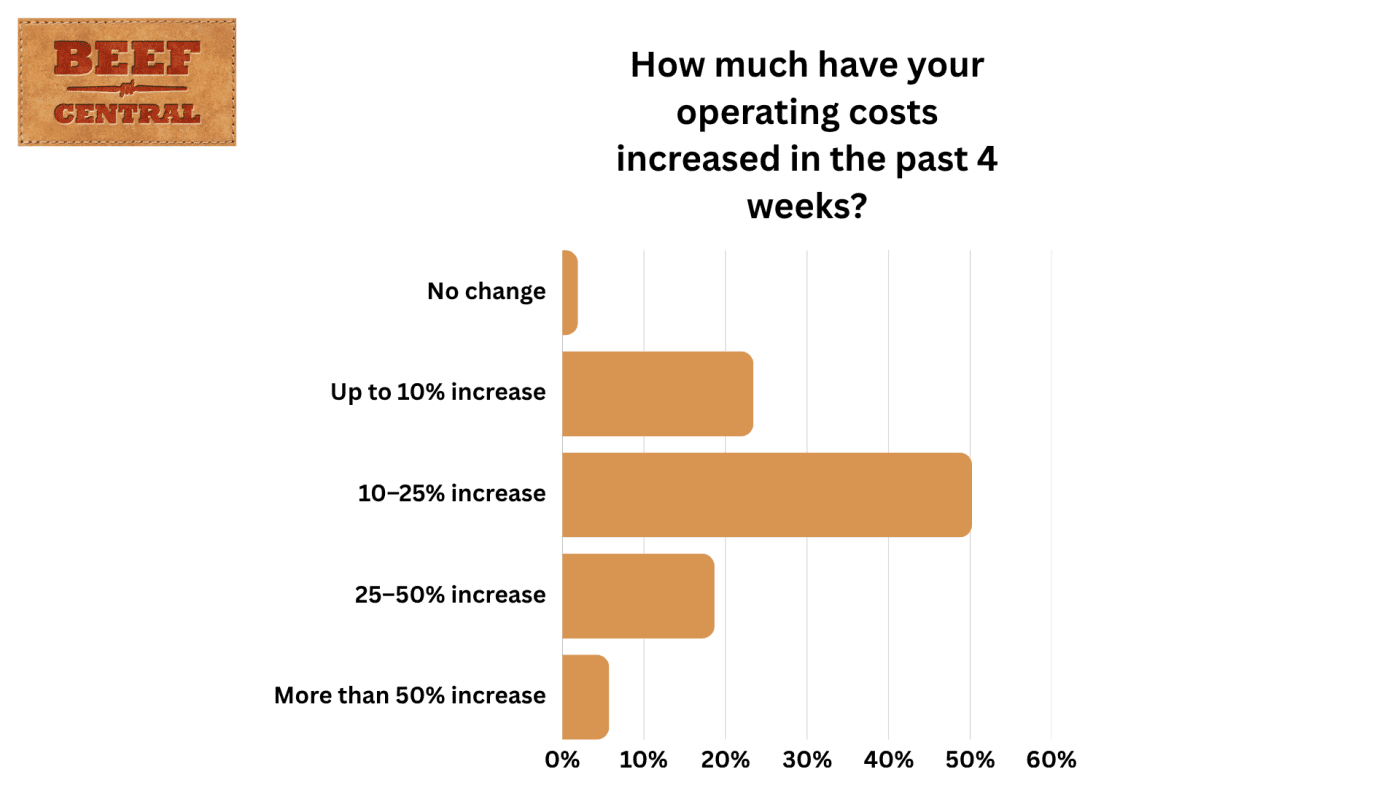
More than two-thirds of respondents reported operating cost increases of at least 10–25pc in the past four weeks, and one-quarter seeing rises above 25pc.
One producer noted: “In net of GST and excise terms for diesel used on farm, the price of bulk delivery is up 135pc compared to pre conflict prices… Cattle cartage up 24pc.”
Others pointed to compounding impacts on margins and production decisions:
“Because costs compound in a long term program, the margins become tighter close to pay day, hence lighter kill weights and lower carcase quality become more cash flow attractive.”
Diesel access tightening
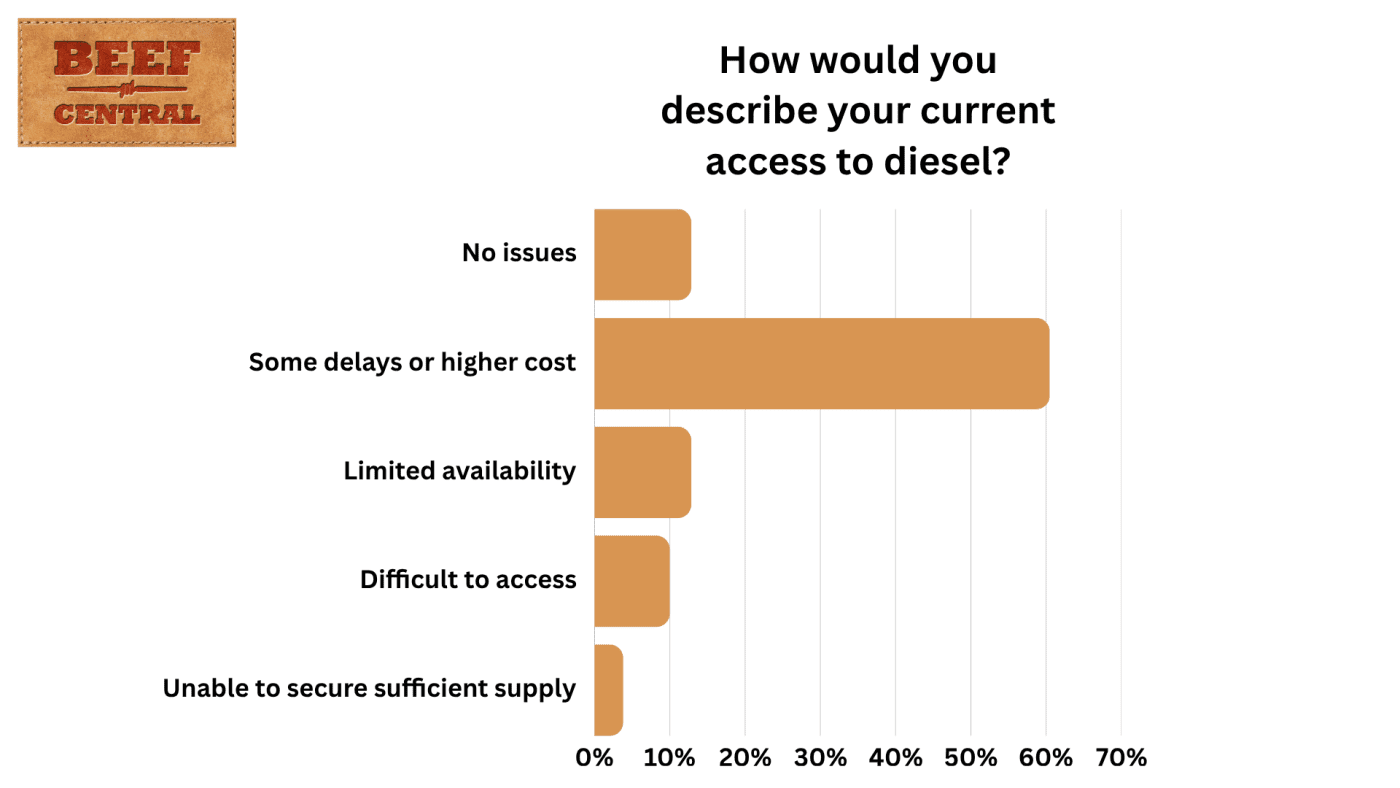
While only a small proportion of producers reported being completely unable to secure fuel, the majority are experiencing disruptions, with 60pc reporting delays or higher costs and around one-quarter describing availability as limited or difficult.
“I have no idea what the fuel will cost when I can finally get some. The queue is long,” one producer noted.
Businesses shifting quickly
More than three-quarters say they have made at least minor changes to their operations as a direct result of the conflict, with around 40pc implementing moderate to major adjustments.
Almost half have reduced fuel use or scaled back operations, while others are bringing forward purchases or stock movements.
From reader comments, here’s a sample of the various ways in which producers say they have responded to the input availability and cost squeeze:
- Selling stock earlier/Bringing cattle sales forward
- Buying in smaller cattle to slow down trading times
- Reducing optional travel – “ enjoying my motorbike more”; “using horse more to check livestock”
- Walking more cattle between yards
- Upgrading solar
- Purchasing from town fuel stations and leaving farm fuel for tractors because bulk delivery has been decreased
- Parked dozers up
- Only selling when can completely fill a cattle truck
- Limiting travel
- Planting less crop
- Delaying fencing and property development and land purchase decisions
- Taking forward positions on livestock to minimise risk
- Reducing winter stocking rate due to urea shortage
- Going back to burning stubble
- Cutting back numbers going into feedlot
- Destocking due to dry season and now massive freight cost to land feed on-farm
- Brought forward sale of trading stock
- Changing to selling on AuctionsPlus to save on freight cost
- Lick purchases deferred
- Holding off planned purchases of vehicles and machinery, and
- Carting own stock.
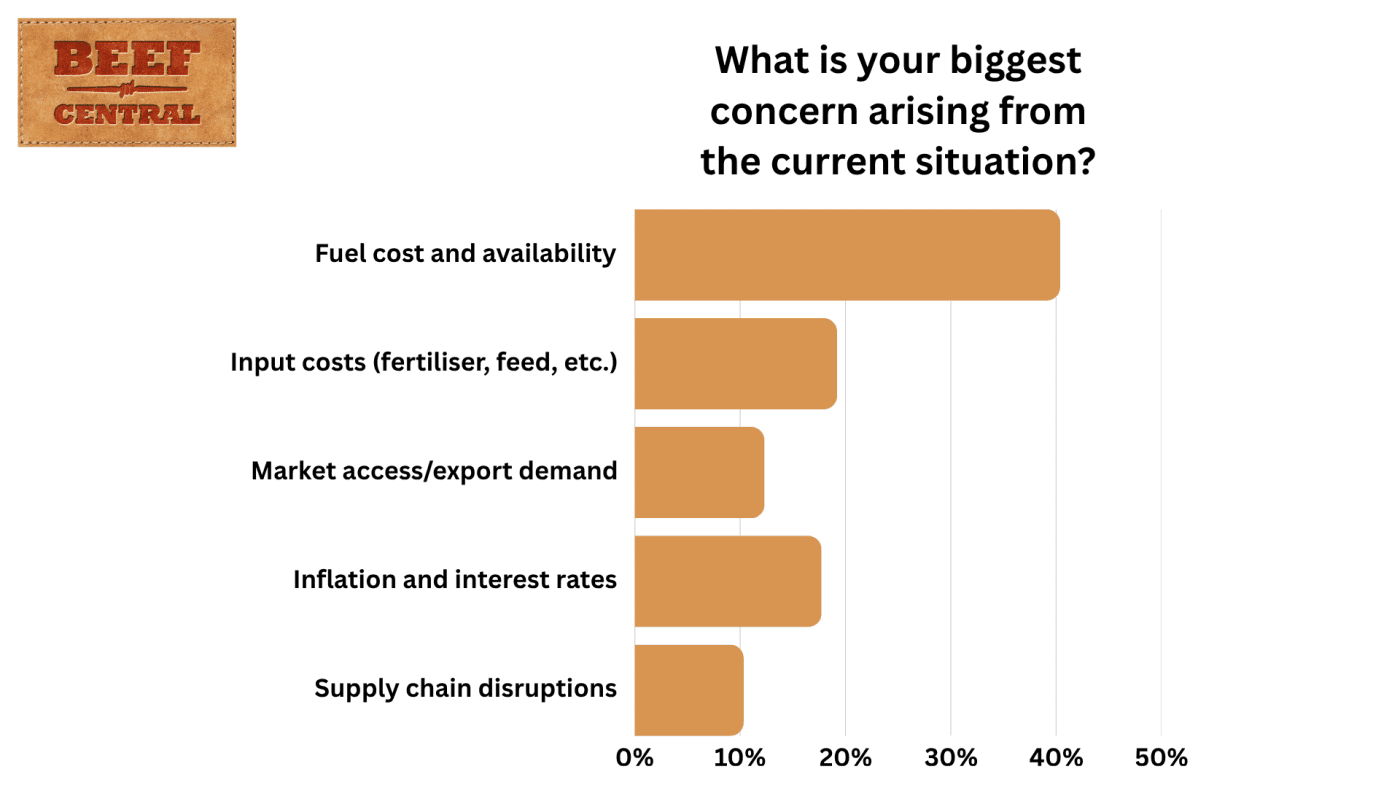
Among the biggest concerns highlighted by producers were:
- Long-term hike in costs remaining long after the Middle East conflict ends
- The flow on effect of high fuel prices on the supply chain and consumer demand
- A shortage of supplements downgrading breeder herd condition:
‘I am very worried about my supplement supply (10% urea)…It is key to my breeder operation & enables my breeders to be in good condition all year round …which helps deliver 300kg weaners, good preg tests, very forward PTE cows(last ones averaged 366kgs dressed weight) …the breeder herd is always in forward condition even when things dry off … without the lick I fear they’ll be set back’
Producers concerned about next three to six months
Looking ahead, most producers feel the situation is set to worsen, with 88pc of respondents stating they expect moderate to significant negative impacts in the next three to six months.
What support is needed?
In response to a questions about what support or action would most help cattle businesses to manage current conditions, producers overwhelmingly pointed to the need for immediate action to reduce fuel costs and guarantee reliable diesel supply, with many calling for cuts to fuel excise (which occurred on Monday), targeted subsidies and stronger oversight of pricing.
There was a clear message that agriculture and freight must be prioritised in any supply constraints, alongside frustration at Australia’s lack of fuel and fertiliser self-sufficiency. More broadly, responses reflected growing concern about inflation, interest rates and policy direction, with many warning that without decisive action, rising costs and supply uncertainty will place increasing pressure on farm businesses and the broader food production system.
Reader comments: to see more detailed comments from producers who responded to the survey, click to view this separate article