
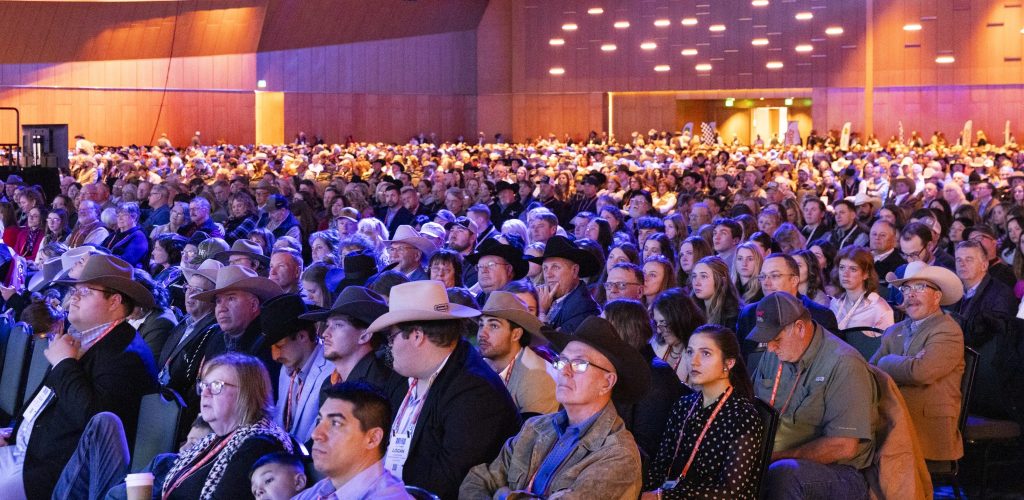
US cattle producers attending the CattleCon 2026 conference in Nashville. Image: NCBA
THE largest annual cattle industry event in the United States – CattleCon 2026 – wrapped up in Nashville, Tennessee a little over a week ago, and as usual there was a scattering of Aussie beef industry stakeholders in the audience.
Most of the Aussies in attendance came from the lotfeeding and industry representation sectors, and came back with a bunch of take-homes from what they observed.
Around 10,000 US cattlemen and women and other stakeholders attended the four-day event, supported by a comprehensive conference and seminar program and hundreds of commercial trade displays.
Given the US beef herd is now at 70-year lows and is yet to show any real signs of recovery, herd rebuild prospects was a common topic. Allied with that was discussion about record high US retail beef prices, concerns over New World Screw Worm Fly entering the US out of Mexico, US market access issues for beef into China and other topics.
 US Secretary of Health and Human Services, Robert F. Kennedy Jr was a last-minute inclusion on the program. He laid down a challenge to producers in the room to start rebuilding the US cattle herd, and received a standing ovation when he discussed beefing up America’s intake of beef, turning the nation’s new food pyramid literally on its head by addressing the future of US dietary guidelines and the growing focus on “real, nutrient-dense foods” like red meat.
Just a day or two after Sen Kennedy’s address, US cattlemen reacted dramatically differently when President Trump announced that Argentina would be granted a 500,000t tariff free quota for beef trimmings exports to the US this year.
Australian-based technology providers including Ceres Tags, Agriwebb and others had a trade show presence at the event.
New South Wales lotfeeder and former ALFA president Tess Herbert attended Cattle Con 2026, as a guest of feed mixing wagon manufacturer Roto-Mix.
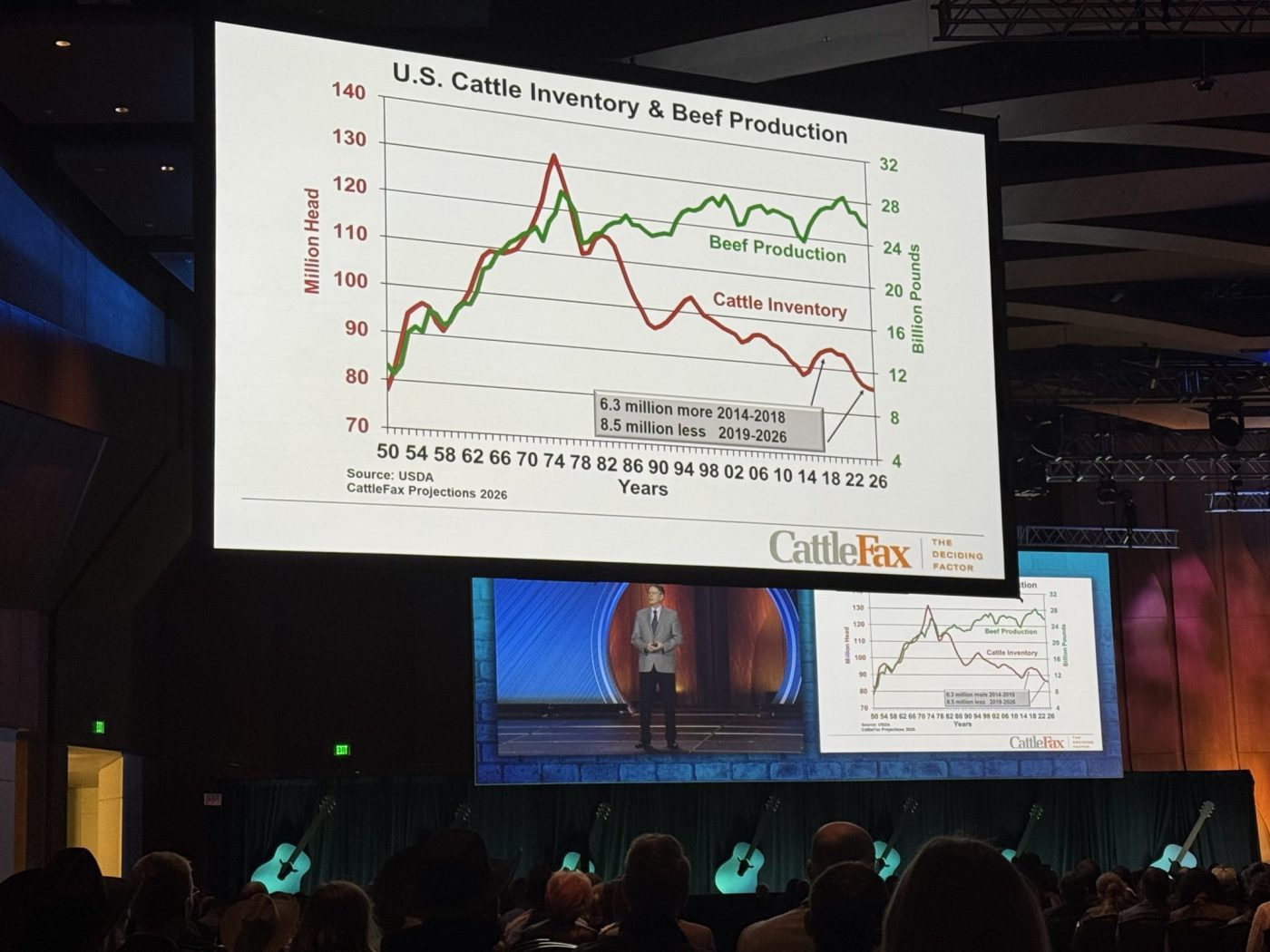
She sat-in on part of the popular CattleFax Outlook seminar, and was taken by this slide, plotting the declining US beef herd size against total beef production.
Click on image for a larger view
“What was clear was that even with its current herd level at 70-year lows, the US beef industry is still showing very good production levels, due to heavier carcase weights,” Ms Herbert said.
“They are still producing significant amount of beef, but just doing it with fewer animals, and that speaks a little to the sustainability story, also.”
In discussions about US herd rebuild prospects, the impression she got that was it will be quite hard to achieve, and in fact structural changes may be taking place in the US industry that will limit that.
“The CattleCon trade show floor was humming – producers were interested and engaged, particularly in new technology – but that US herd rebuild is evidently going to be a difficult ask,” Ms Herbert said.
“It looks like there are fundamental changes happening in the US industry that will make it very difficult to get back to previous herds levels.”
She listed a series of factors discussed during the event’s CattleFax seminar on what impacts the size of the US cow herd, including:
- Profitability
- Land values
- Input costs
- Alternative land use, shifting former grazing land into other functions, and allied with that,
- Urban encroachment
- Aging cattle producer population
- Government policy
- Access to labour
- ‘Uncertainties’ such as the arrival of screw worm fly.
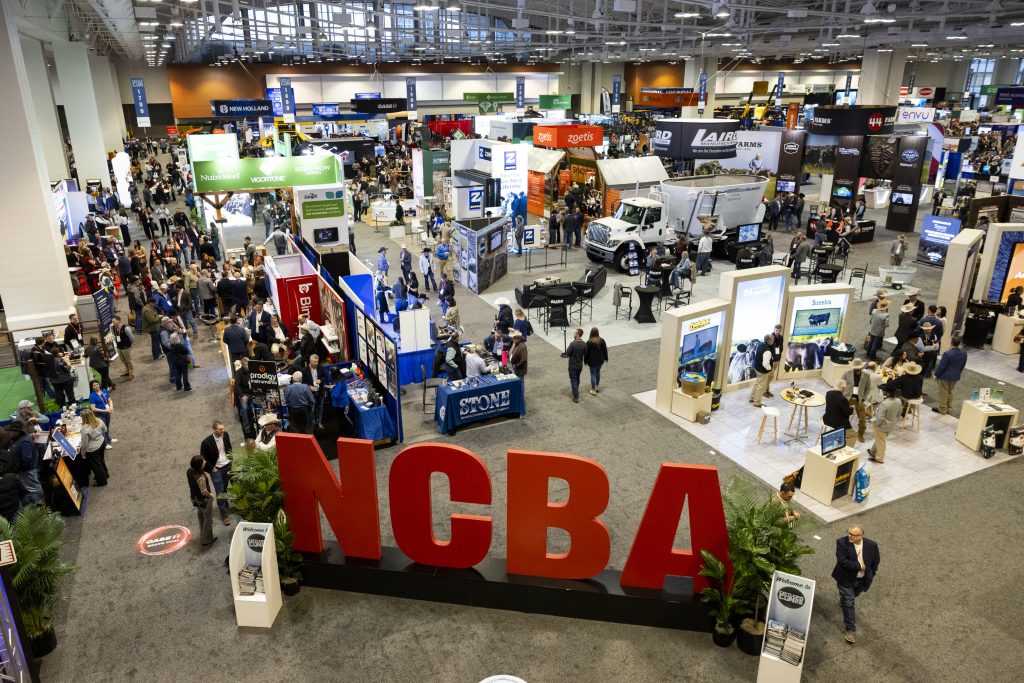
Trade show area at CattleCon last week
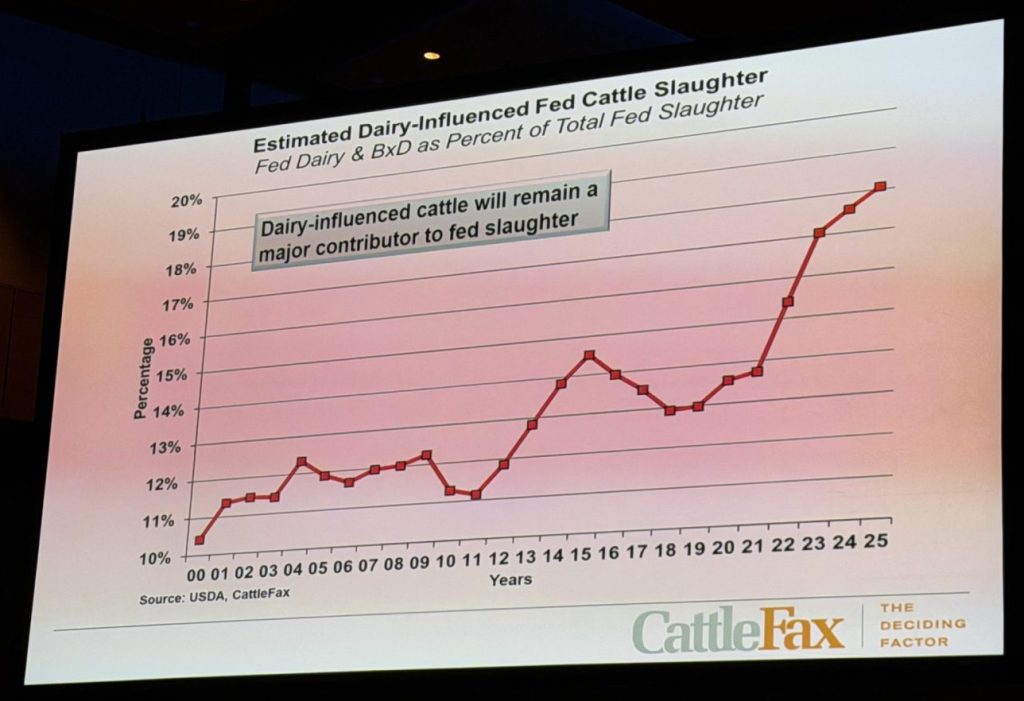
Another Queensland lotfeeder who asked not to be identified also attended the Cattlefax seminar, noting the greater reliance within the US beef industry in the dairy stream.
“Normally a US dairy farmer gets between 3pc and 6pc of their revenue from cull cow and calf sales,” he said.
“At the moment, due to the lack of local beef supply, they are making between 25pc and 27pc of their gross revenue from cull cows and calves destined for beef,” he said.
Visiting a 30,000 head ‘dairy calf feedlot’ during his US visit, he said day-old dairy calves were currently worth US$1500 (around A$2100).
“Approximately 23pc of all beef in the US is now derived from the dairy industry,” he said. “The US beef and dairy industries are clearly tied closer at the hip than they ever have been before.”
Asked about the event’s trade show exhibits, the lotfeeder noted a number of parasite control products, including new registrations designed to treat New World Screw Worm fly – despite the fact that the US has to this point never had an outbreak.
He also noted the heavy presence of Wagyu seedstock and genetics suppliers exhibiting at the event. “There were two entire rows – maybe 25 or 30 exhibitors – just for Wagyu genetics,” he said.
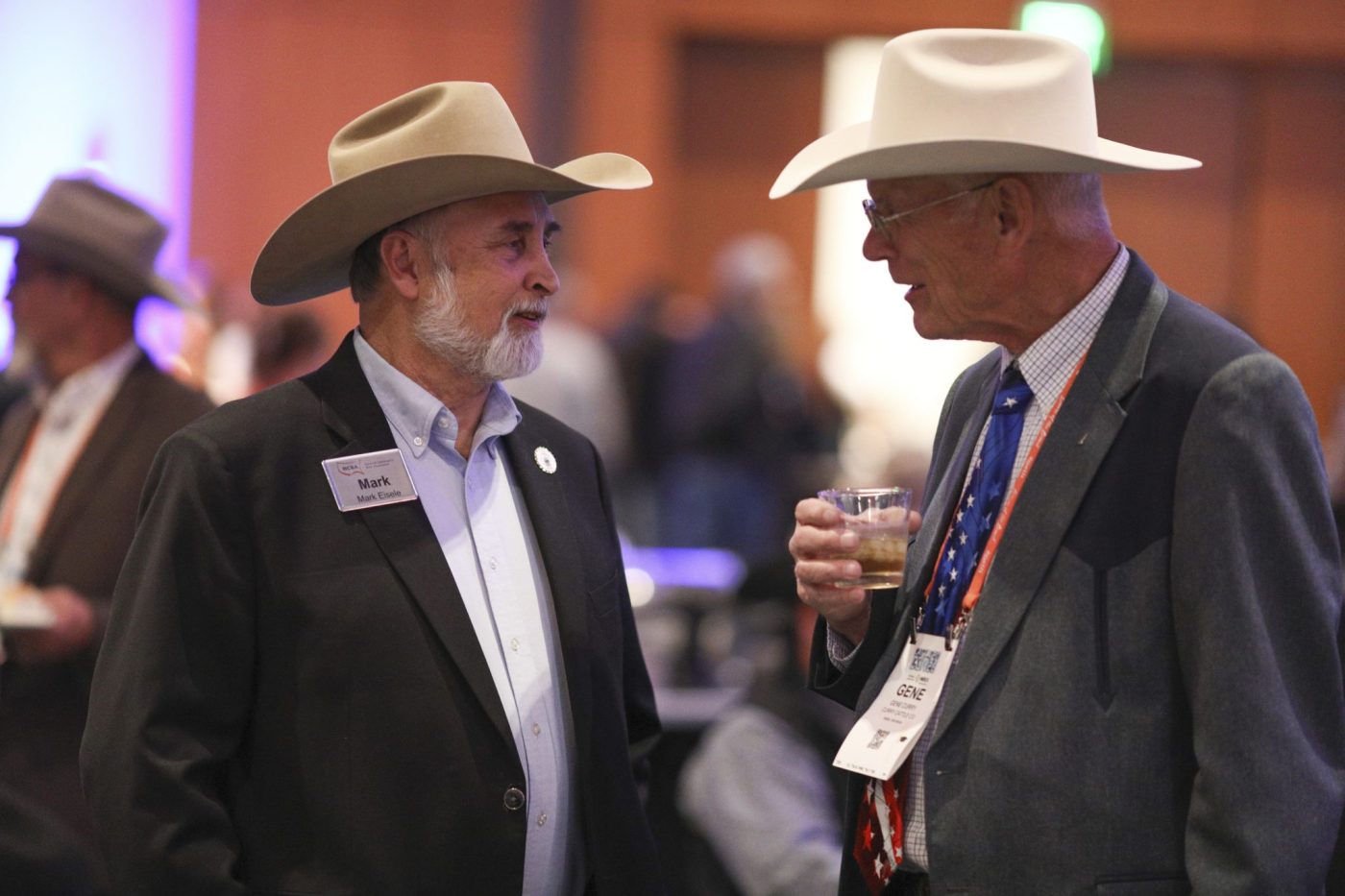
Former NCBA president Mark Eisele, left, who visited Beef 2024 in Rockhampton two years ago. pictured with prominent Montana cattleman Gene Curry, from Curry Cattle Co during CattleCon
Cautious optimism
Australian Beef Sustainability Framework chair Patrick Hutchinson attended CattleCon, noting that there was an element of cautious optimism evident among those in attendance.
“US beef processing activity has basically flatlined this year, compared with last year,” he said. “But a little extra carcase weight has helped compensate that.”
“At the same time, beef wholesale price is up 20pc on a year ago, but against that, consumption is still up 10pc over the same period. Americans have not lost their love of beef, despite the record high prices.”
“There’s cautious optimism evident in the US industry, but it’s hard to see any evidence of herd rebuild yet. It’s almost as if the US industry is now focussed on trying to ‘make more from less’, rather than rebuilding its herd.”
Mr Hutchinson said there was now a ‘clear mandate’ among many middle class Americans that red meat was essential in a healthy, protein-forward diet.
“What RFK Jr has been talking about is not about beef, specifically, but protein. It just happens that beef fits that role well – but you only have to look in the fridge at home to see that many foods are now also making protein claims, from Bega cheese to peanut butter.”
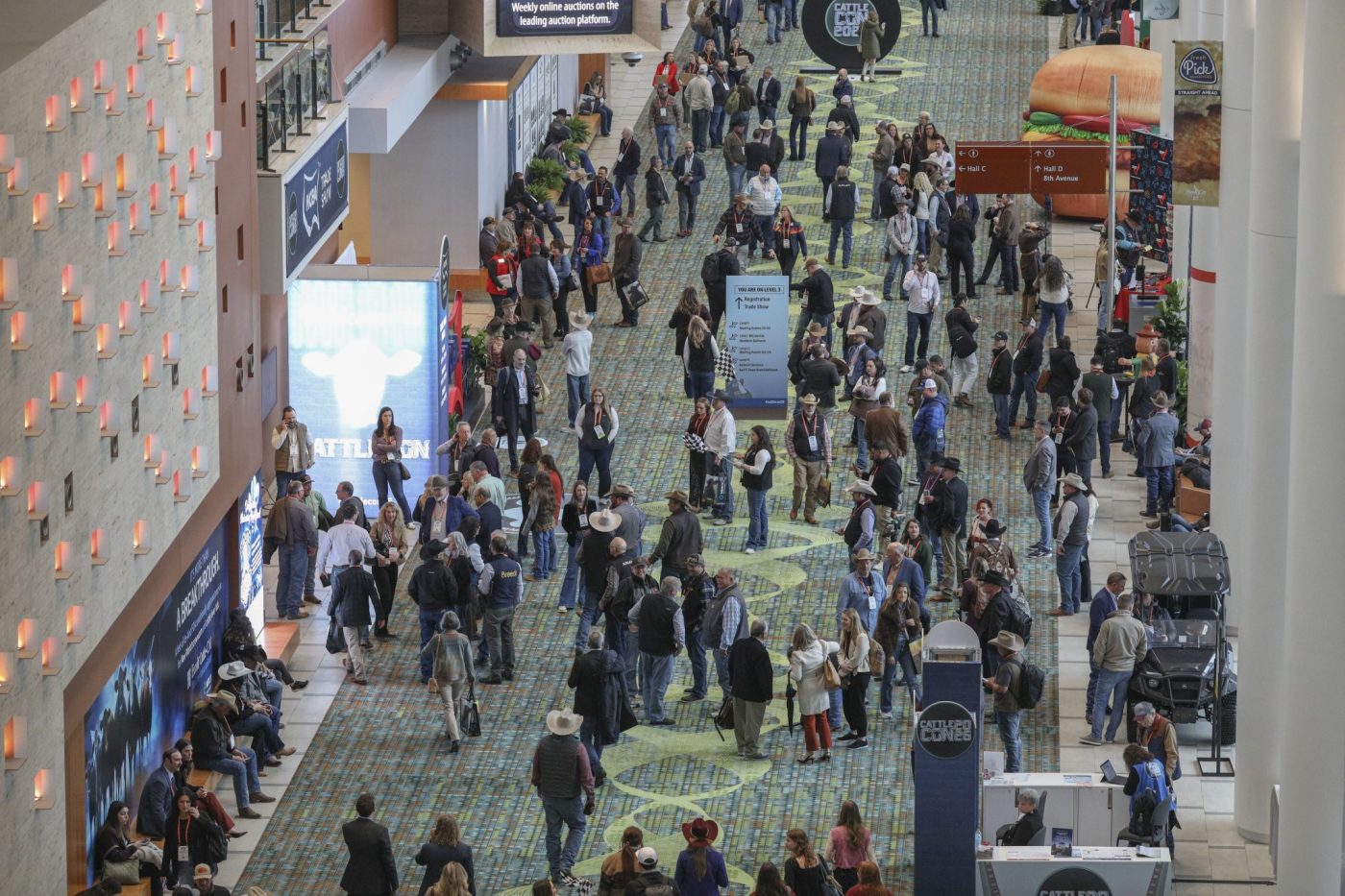
Almost 10,000 US cattlemen and women attended CattleCon
Screw Worm Fly threat draws closer
With New World screw worm fly now within 110km of the Texas border in Mexico, the growing risk of the external parasite entering the United States came up at several forums during CattleCon 26.
Key strategies designed to detect, control, and eliminate NWS included strengthening cattle traceability systems in Texas and areas exposed to the Mexican border, and the potential development of vaccines.
Progress was also discussed about the development of sterile screw worm flies to try to biologically eradicate the population. USDA last week announced the completion of a US-based sterile fly dispersal facility in Texas, to continue to prevent the spread of New World Screwworm fly into the US.
Secretary Brooke Rollins said USDA was “diligently working to stop the spread of screw worm in Mexico, conduct extensive trapping and surveillance along the border, increase US response capacity, and encourage innovative solutions.
At the same time, dialogue during CattleCon indicated the US is still looking for ways to safely re-open live cattle shipments from Mexico, given the enormous domestic US beef production shortage that’s emerged and the previous high intake of Mexican feeder cattle each year.
China beef access for US
Also during CattleCon, the US Meat Export Federation delivered a candid update on efforts to regain US beef access to China, underscoring the market’s strategic importance even amid tight cattle supplies.
Currently China remains off limits for several hundred US beef export plants, since early last year.
USMEF vice president for economic analysis, Erin Borror, told producers at CattleCon there had been no breakthrough yet in reopening China, describing the situation as a “complicated market closure.”
She emphasised the necessity of restoring access — particularly at this stage of the cattle cycle – to maintain export channels that add value across the entire US carcase.
Ms Borror stressed that exports were not just about volume, but about maximising carcase value. Even with relatively low US supplies, she said, the industry must have access to key international markets like China to sustain pricing power and profitability.
She also noted that USMEF has been working in Washington to reinforce the message that export access benefitted both producers and American consumers by supporting affordability and optimising product utilisation
Record high US retail beef prices
While US inflation has cooled from its pandemic-era peak, beef prices at US retail counters continue to skyrocket.
Beef costs have risen faster than most other items in the consumer price index, with the broad beef and veal category up 15pc over the past year as of January.
Ground beef reached a new record in government data released last week. The gains are a standout from the rest of the consumer grocery basket where things have broadly improved. Chicken prices rose only by 1.1pc in the past 12 months, while milk was little changed.
At current levels, any expansion in the US herd would at the earliest make it to the retail counter in 2028, keeping beef prices elevated for longer, Terrain Ag senior animal protein analyst Don Close said.
Long term outlook positive
The CattleFax Outlook seminar held as part of CattleCon heard that despite near-term volatility, the long-term outlook for US beef remained positive. Strong domestic demand, improving beef quality, and sufficient packing capacity were expected to continue supporting profitability for the cow-calf sector as the industry moves into the next phase of the cattle cycle, the audience was told.
“As we look ahead, several factors will shape the trajectory of the beef industry. The potential threat of New World Screwworm and the status of Mexican feeder cattle imports is something we’re watching closely,” Cattlefax presenters said.
“At the same time, shifts in packing capacity are rebalancing market leverage. Finally, the dairy industry will continue to be a growth industry supplying more cattle to the beef industry, following strong financial performance in 2025.”
“The US cattle and beef industry enters 2026 with strong but volatile market conditions, as historically tight cattle supplies, record-setting beef demand, and elevated policy and weather uncertainty continue to support prices, even as markets appear to near cyclical highs,” the seminar audience was told.
“Tight inventories and exceptional demand remain the dominant forces shaping the market; however, producer demographics, high input costs, and policy uncertainty point to a slow and measured expansion phase CattleFax chief operating officer Mike Murphy told the seminar.