
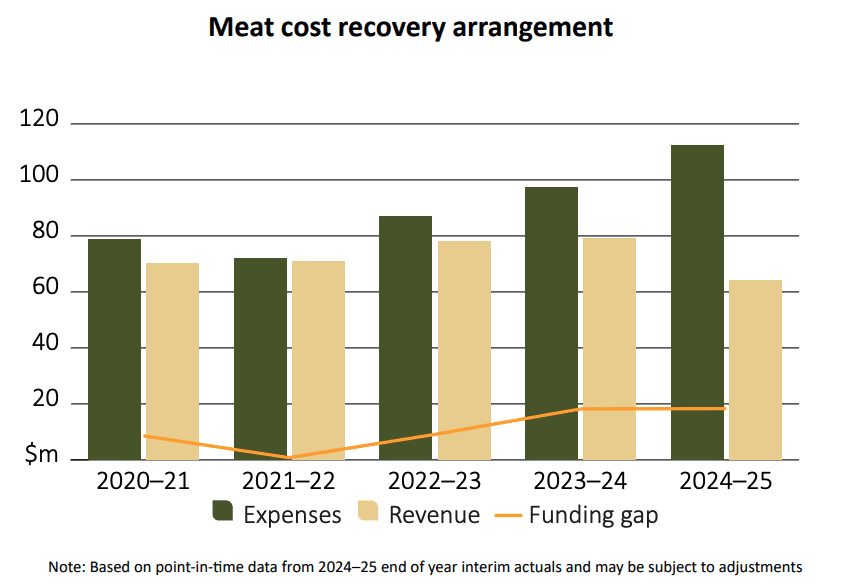
Source: DAFF Summary of draft cost recovery implementation statement – Meat arrangement
AGRICULTURAL export industries are facing steep increases in regulatory fees under new cost recovery arrangements, with some sectors set to see costs almost double as the Government transitions to full cost recovery for export regulatory services to industry by 2029-30.
Department of Agriculture, Fisheries and Forestry staff were grilled on the looming cost hikes at Senate Estimates hearings in Canberra this week, while also facing questions about the efficiency and quality of the services exporters will soon be required to pay more to access.
The meat export industry, which has already seen a 48 percent increase in export cost recovery charges from the Department of Agriculture, Fisheries and Forestry in the past five years, is facing another 38 percent rise over the next four years.
Consultation timeline questioned
Industry has been given a tight 36-day deadline to review the detail and respond – with a consultation deadline of March 6 – while the Department will then have a 55-day window to consider industry comments.
“There are real questions about how serious the consultation is,” one industry representative told Beef Central.
Shift to full cost recovery
The Australian Government has had a policy since the early 2000s to recover the full cost it incurs to provide regulatory services for agricultural exports.
However, while that policy has been in place for more than 20 years, the Government says a significant shortfall has existed between what industry actually pays and the true cost to Government of providing those services, with appropriation funding required from year to year to fill the gap.
The Albanese Government announced in December that new cost recovery arrangements will be introduced in July 2026, requiring agricultural exporters to transition to paying the full cost of the regulatory services provided by Government over the next three years.
The overall cost increase for agricultural export industries as the Government moves to “balance the books” will be in the vicinity of $60 million, according to industry sources.
In addition to industry concerns about the short 36-day consultation period, there are also questions about the efficiency of the services the Government is providing – services exporters have little choice but to pay for in order to access export markets.
Are DAFF services being delivered at ‘minimum efficient cost’?
All Australian Government entities engaging in cost recovery have an obligation to demonstrate that the fees they are charging represent the “minimum efficient cost” of delivering those services.
They must demonstrate this by publishing a Cost Recovery Implementation Statement (CRIS).
The Department has released a range of draft CRIS documents outlining fee increases for agricultural export industries over the next three years, including meat, live animal, dairy, seafood and grain exports.
However, concerns have been expressed by industry that detail demonstrating that the proposed charging arrangements represent the “minimum efficient cost” has been missing from consultation and engagement to date.
Industry sources have also said they were disappointed to be told that, two years after a taskforce was established to look at sustainable funding, the taskforce did not have the scope to review the Department’s expenses, with its focus only on increasing revenue through increased charges to industry.
More services now required to be industry-funded
Additionally, the Government is pulling more services into the category of those that must now be cost-recovered from industry. These include activities such as growing technical market access. Some would argue that growing market access is a public good for Australia, given its heavy national dependence on export trade. However, under the new arrangements the Government is classifying such activities as an industry benefit, and therefore saying industry must pay its own way.
To help industry transition to full cost recovery over the next three years, the Government will provide funding to buffer the impact.
It will offset 75 percent of the increases industry would otherwise pay in the first year (2026-27), dropping to 50 percent in year two, 25 percent in year three, and then 0 percent from year four (2029-30).
DAFF headcount increase raises eyebrows
The cost recovery issue dominated questioning by Opposition senators when DAFF executive leaders faced the Senate Rural and Regional Affairs and Transport Legislation Committee’s Senate Estimates hearings this week in Canberra.
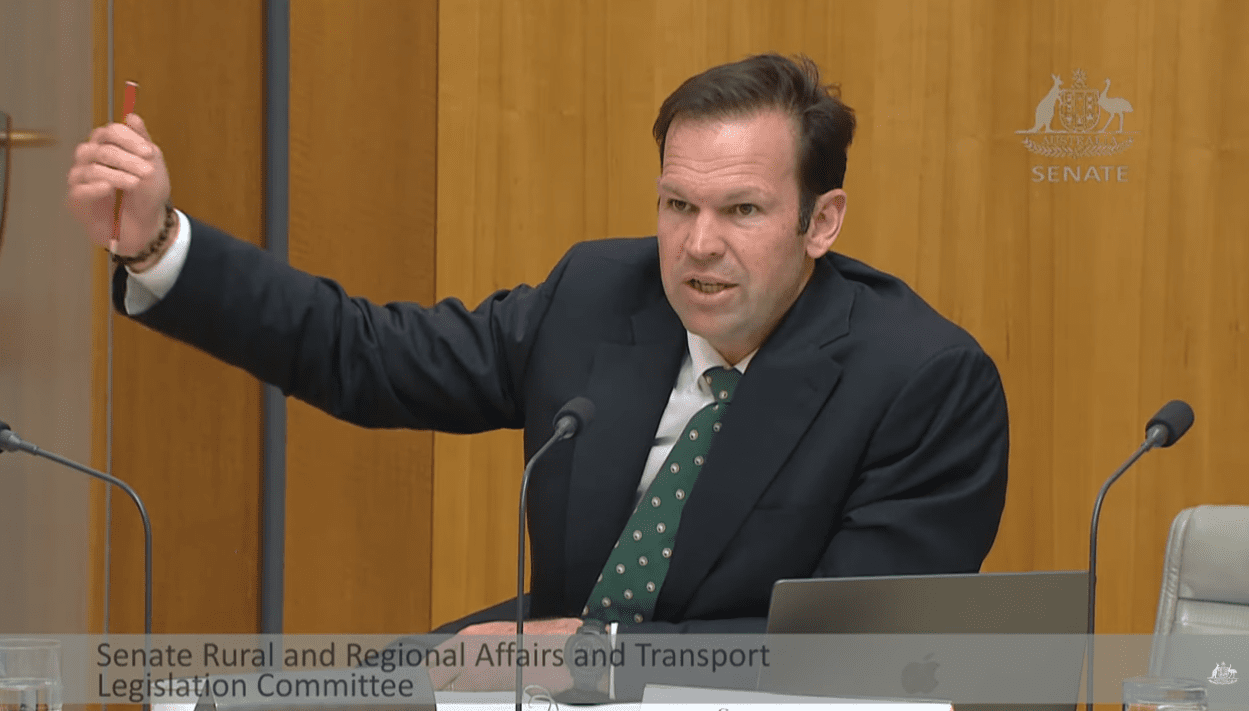 Nationals Senator Matt Canavan singled out a DAFF report showing that the Department’s total headcount will increase by 500 staff from 2024-25 to 2025-26.
Were the customers who would ultimately pay for some or many of these staff increases through increased cost-recovery charges consulted before they were appointed, he asked?
He also noted that some agricultural industries will face an almost doubling of cost recovery charges in the next four years, using the live export sector as an example. Its costs are due to rise from $12.8 million per year to $21.9 million per year.
“I already get a lot of complaints from the industry that the fees are too high today,” he said.
“So what work is being done that this is sustainable, is this going to cause some producers or operators financial difficulty, increasing the fees by this much?”
He further pressed DAFF staff about whether specific economic modelling has been conducted to assess how the cost of almost doubling Govt charges could impact the viability of businesses in affected sectors.
Departmental responses were broadly that no such specific modelling has been undertaken, but that the consultation process currently underway provides an opportunity for industry participants to draw attention to the impact the proposed costs will have on their businesses.
Bringing industry inline with long-standing policy
DAFF secretary Victoria Anderson, who took up the senior departmental position in early December, emphasised that the new cost recovery arrangements are not the result of a new policy, but rather the implementation of a long-standing policy after Government had supplemented industry costs for an extended period.
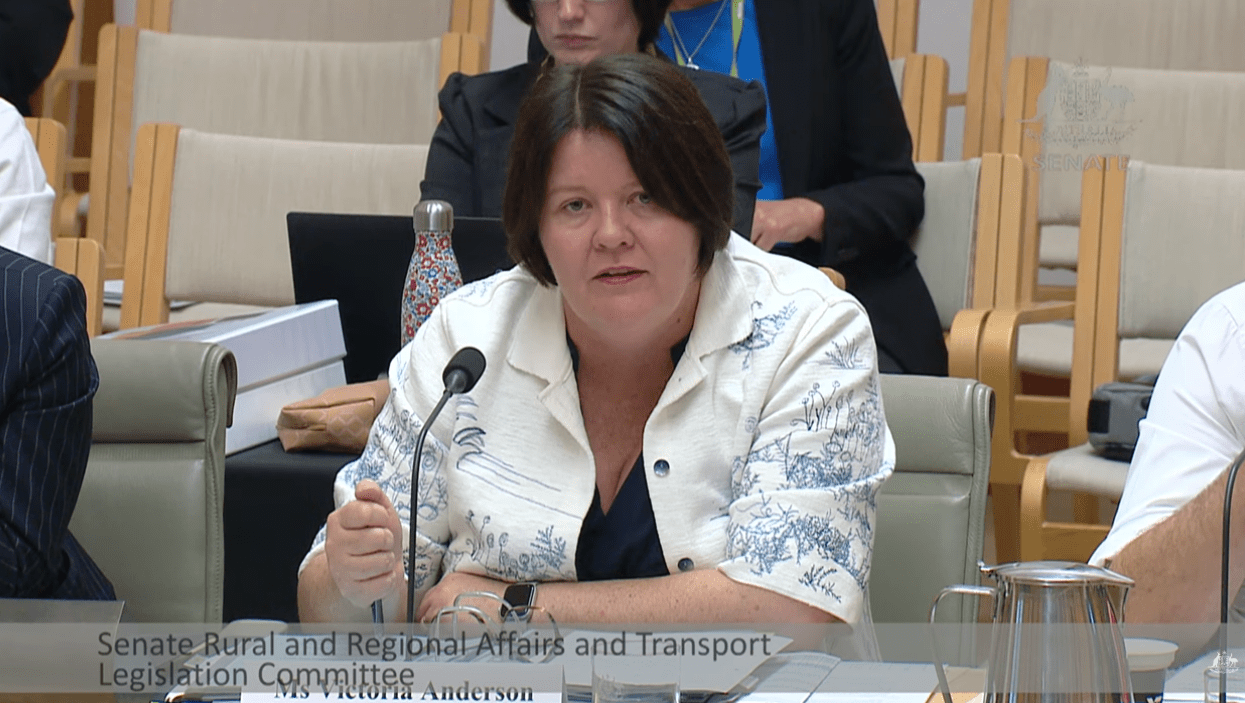 “We have not been recovering full costs over the past several years, in fact quite a long time, and this is an attempt to ensure we are able to move over a couple of years in a gradual way to full cost recovery which was the original intention of delivering these services,” she said.
She acknowledged that industry pushback to higher fees and charges was expected.
“Obviously industry is not going to welcome these sorts of moves,” she said.
“We totally understand that and that’s why we’re talking to them quite carefully, Senator, we understand it’s not welcome to be charged more for services, but the reality is this is what these services are costing.”
She said that as secretary she would give an undertaking to work to ensure processes are “as efficient as possible, and we do need to be held to account to that”.
“That is what the CRIS process is all about every year. And you know we’ll be giving that close attention. There is a phase-in so we do have some more time to continue to drive efficiencies, hear from industry on what they’d like to see us do, but I’m afraid the move to 100 percent cost recovery is a decision that has been made.”
Impacts on business viability
Senator Canavan said the Government’s own literature stated that increasing the price of export regulatory services could affect the viability of export businesses.
Ms Anderson said it was a matter for businesses to determine and consult the Department on changes they believe are needed to the methodology.
“Obviously margins are thin in some of these industries,” she said.
“We understand it will be a matter for businesses to determine whether or not the margins are sufficient to continue to participate in exports.
“I do note a range of industries are not doing too badly at the moment with record $84 billion exports.”