
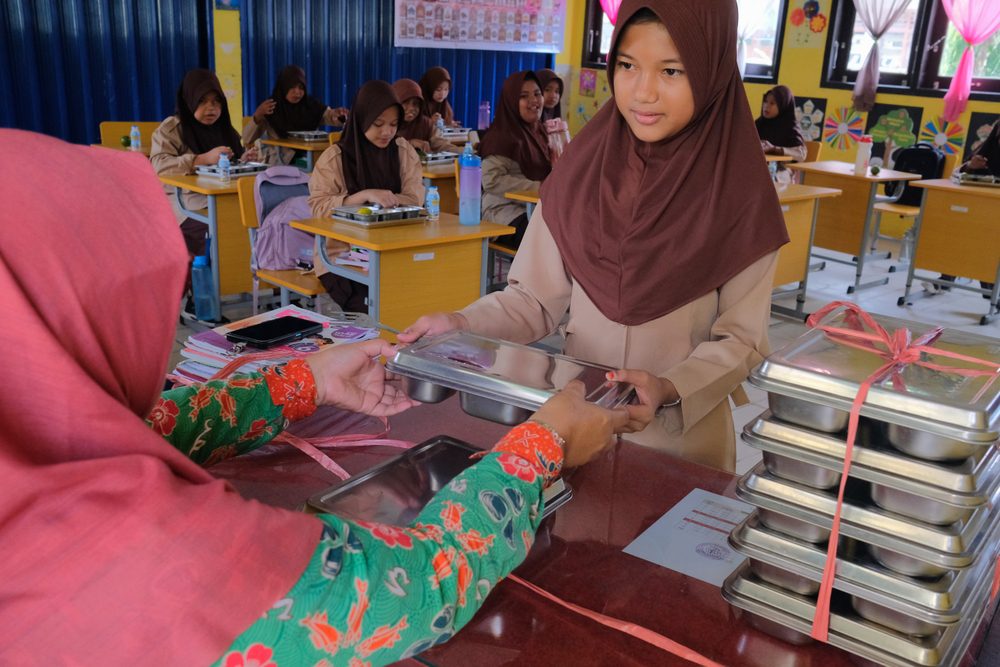
A simple image of an Indonesian school girl eating a nutritious meal shown during the conference symbolised for many people in the room at this week’s LIVEXchange conference in Perth why the livestock export trade exists – to provide a source of affordable, highly nutritious protein to millions of people around the world. Image: Shutterstock
LESSONS learned during the hard-fought Keep the Sheep campaign wlll be called on again as the battle for the future of Australia’s livestock export industry shifts to cattle.
‘Will cattle be next?’ was a central point of discussion at this week’s national livestock export industry gathering in Perth.
While some questioned whether any future Australian Government would seriously consider ending a legitimate, highly regulated and geopolitically important industry that underpins crucial relationships with near neighbours like Indonesia, the Albanese Government’s decision to do precisely that to the sheep export trade means anxiety about the future of the cattle trade is indeed running high.
The Albanese Government has stated it will not pursue a ban on live cattle exports, and Federal Agriculture Minister Julie Collins reiterated that message in a pre-recorded video address from Canberra where Parliament was sitting to the conference on Thursday morning.
The sense that the Albanese Government places low value in the importance of the overall livestock sector deepened noticeably as news simultaneously spread that Environment Minister Murray Watt – who as agriculture minister announced the live sheep ban in 2024 – had done a deal with the Greens that morning to push through even tougher environmental controls on agriculture, beyond the already extensive regulations under which the industry operates at State level.
In an emotionally-charged opening address, former Federal Trade Minister Andrew Robb warned that activists against the livestock export sector “had not gone anywhere”, would only be emboldened by their success in securing the live sheep export ban, and continued to benefit from significant funding flows from global activist networks in cities such as New York and London.
M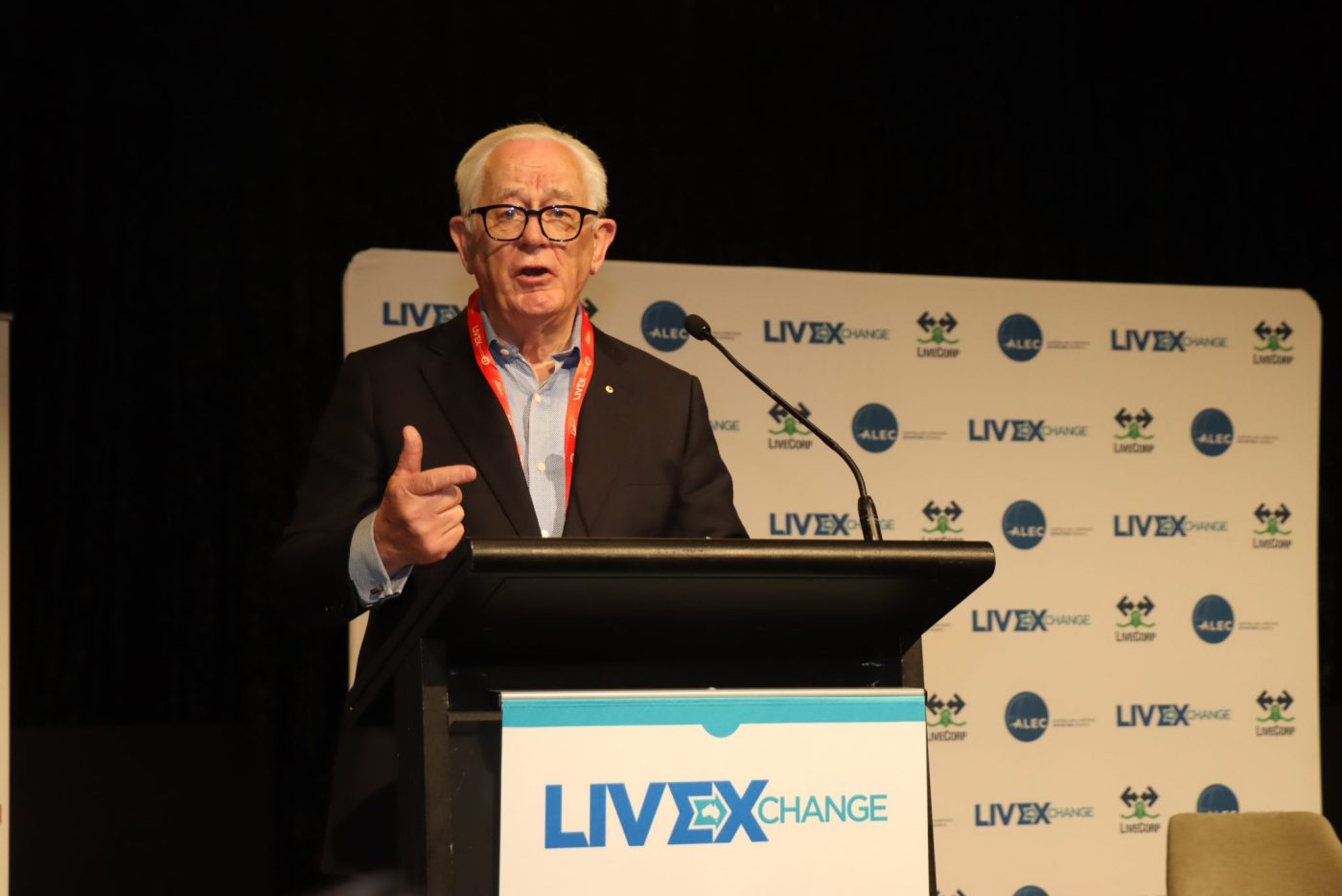 r Robb said many Australians did not understand how strategically important the live cattle trade is to Australia’s relationship with Indonesia, which is simultaneously being actively courted for closer ties by China, Russia and Brazil.
He added that because the industry operates far from metropolitan centres, most voters felt no personal consequence from its economic and geopolitical value, resulting in low empathy and limited political influence.
He contrasted this with France, where rural communities retain strong political sway because so many Parisians remain directly connected to family members on farms in regional areas.
“Paris is full of people with empathy for regional France and that makes it very difficult for the Government to move without accommodating the wishes of half the people in Paris.”
By contrast, Australia is one of the most urbanised countries in the world, meaning the livestock export industry must be able to demonstrate personal consequences to city voters when legitimate and economically vital agricultural industries are threatened, he said.
Ban ‘purely political’
Australian Livestock Exporters Council CEO Mark Harvey-Sutton said it could not be clearer that the Albanese Government’s decision to ban a legitimate and law-abiding industry in live sheep exports was “purely political”.
ALEC and 25 national agricultural industry organisations had presented compelling evidence to the Federal Government of the high standards of animal welfare in place in the live sheep export trade and the importance of the trade to rural Australia, but “that was ignored”.
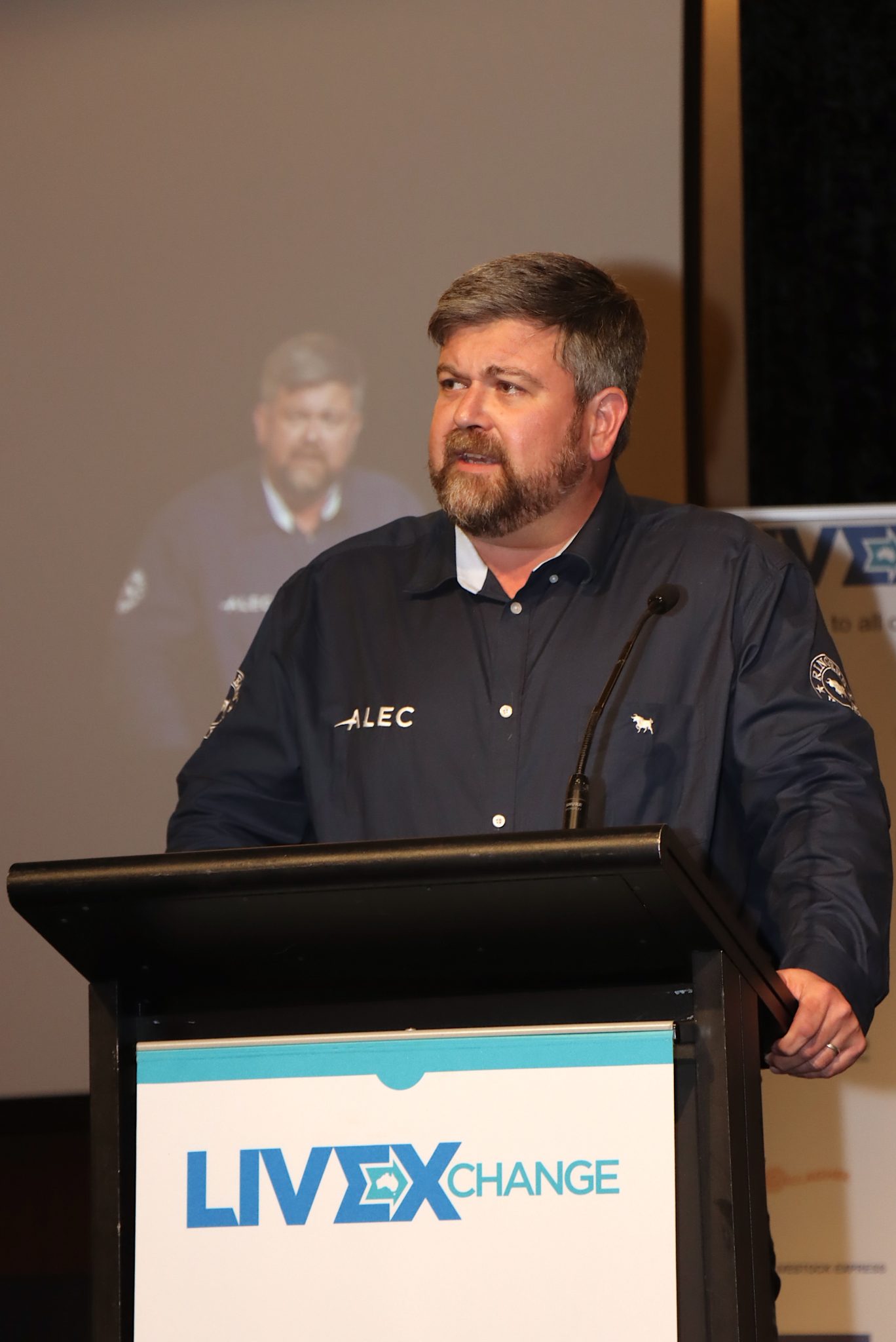 “Unfortunately, in this situation, evidence didn’t matter,” he said.
“It was politics, it was politics, it was politics.
“And that placed us in an extraordinary situation, because we knew that the trade was worth fighting for.
“And so we took the step of saying, well, if this is a political decision, our response has to be political.”
Mr Harvey-Sutton said the Keep the Sheep campaign broke new ground for Australian agriculture by taking an overtly political approach.
He described an early meeting in the WA Farmers office where industry groups debated whether they were prepared to run a political campaign. “No one really knew how to run a campaign, but we just knew this is what we had to do… we knew we had to go political to give the industry a chance.”
“Something extraordinary”
What followed was, in his words, “something extraordinary”.
A convoy of more than 3000 vehicles at the first Keep the Sheep rally became one of the defining images of the campaign. He credited the pivotal early roles of WA Farmers, the WA Livestock Transporters Association, the WA Shearing Industry Association, the Stud Merino Breeders of WA, the Livestock Collective and the WA Livestock Exporters Association.
“If those organisations hadn’t coalesced, the campaign would have gone nowhere.”
Mr Harvey-Sutton recalled the experience of riding in one of the lead trucks.
“It was just one of the most incredible things I’ve ever seen. Sometimes, if you have the privilege at work to actually be a little bit emotional about what you’re doing, it was just one of the most incredible things I’ve ever seen.
“People were coming out of their shops and their cafes as the convoy went past. The number of people that were tooting their horns, and I think that was really important for people. I think a lot of people thought, ‘Oh, we might be a bit unpopular doing this’.
“We only got one flip the bird that I counted, and everyone else was very happy about it.
“And I think that’s really, really important, because when you’ve got a government that’s bearing down you, it’s not listening, it’s ignoring you, sometimes you’re not sure how to fight, but what Keep the Sheep did, and I think this was the most really important thing, it gave them an avenue to fight this stupid decision.”
‘every single Opposition MP stood together’
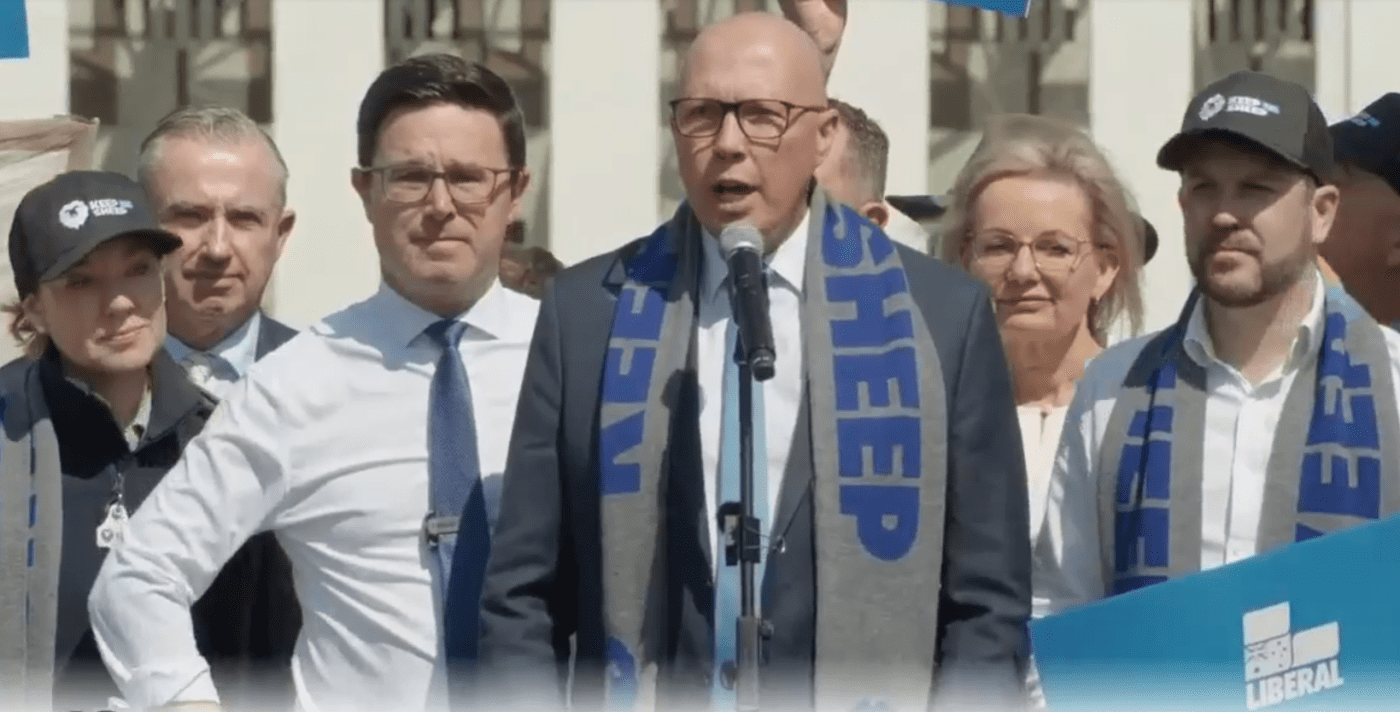
The campaign also resulted in the first national agricultural rally in 40 years, backed by the National Farmers Federation. In a rare display of support, every single Opposition MP stood together with supporters at the event, something Mr Harvey-Sutton said “doesn’t happen” in Canberra politics.
“The campaign raised one and a half million dollars. It got over 120,000 signatures of people in support of the trade.
“Now, just to put that in context, when Murray Watt introduced the phase out bill into parliament, he used a petition from the RSPCA of 40,000 signatures. We tripled that.
“So if you ever doubt whether people support you just remember that.”
Polling commissioned during the campaign demonstrated extraordinary public engagement, with awareness of the issue at 90 percent.
Lessons learned that will help to guide future fights
He acknowledged the campaign did not change the final outcome but rejected the idea it had “lost”.
“In the context of the whole political scene in Australia, it was a niche issue and we took it to the front pages of the national press,” he said. “Every political analysis leading into the federal election raised live sheep as an issue.
Ultimately, “the swing was on and people had bigger issues on their mind”, but he said the industry emerged from the fight with political experience and lessons that will be applied to the fight to continue to maintain the future of cattle export trade.
“As Andrew Robb said this morning, we can’t look at it as a failure. We have to look at it as the beginning, and we have to get angry, because we have to be heard,” Mr Harvey Sutton said.
“We actually have to make people change their votes because of big issues that are impacting rural Australia.”
He said ALEC and LiveCorp are working together to develop a growth plan to expand the cattle trade.
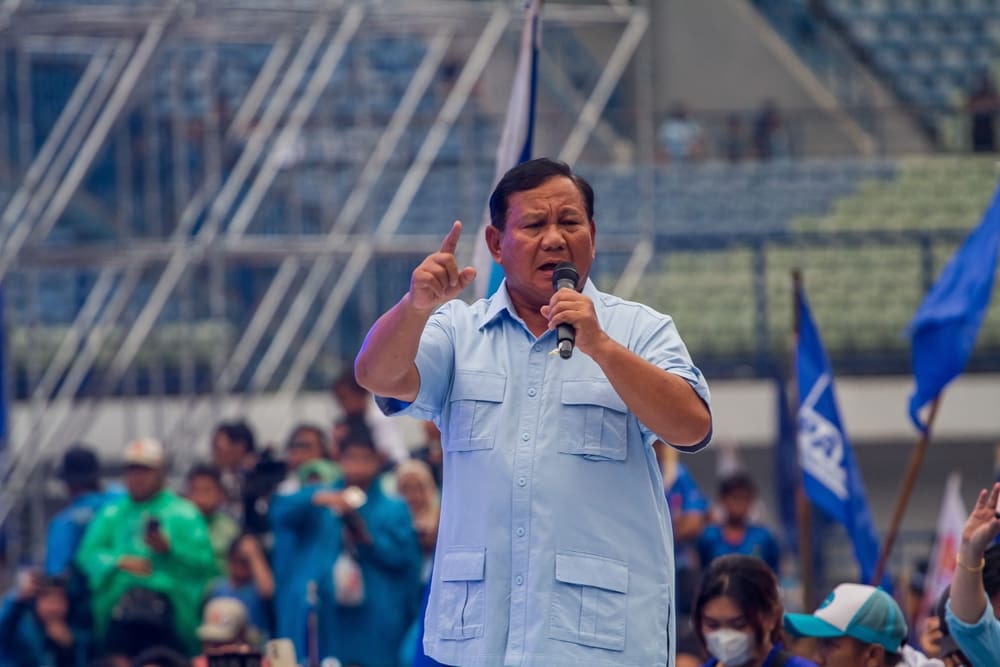
Indonesian President Prabowo Subianto addresing crowds during the 2024 Presidential election campaign.
He also pointed to positive signals for the industry in Indonesian President Prabowo’s mandate to provide 80 million highly nutritious lunches per day for school children and pregnant women.
“He wants to build the nutritional base for his population He wants them to be healthy. He wants them to be stronger.
“And the geopolitical relationship between Australia and Indonesia is critically important. There is no relationship that is more important.”
Mr Harvey-Sutton closed his address with an image of an Indonesian schoolgirl eating a beef meal (pictured at top of article”.
“This is why I’m proud to represent the industry, why I think it’s a good industry and it is an industry for good.
“There’s no better reason than that. That’s why we do it.
“The markets that we send our livestock to help children like that.
“It gives them food security. It lets those countries grow stronger, and that is a very big responsibility that our industry has.
And I know everyone in this room is very proud of that.”