
AS part of his keynote presentation at last week’s Northern Beef Research Update Conference, respected industry leader David Foote clearly offered producers an opportunity to increase their productivity and profitability.
One of his key points was that “every 1pc lift in weaning rate is worth $8–12 per cow per year, and a 10pc improvement delivers $80–120 per cow annually.”
While these figures show the financial incentive to increasing weaning rate, achieving consistent improvements remains one of the most persistent challenges in northern beef production.
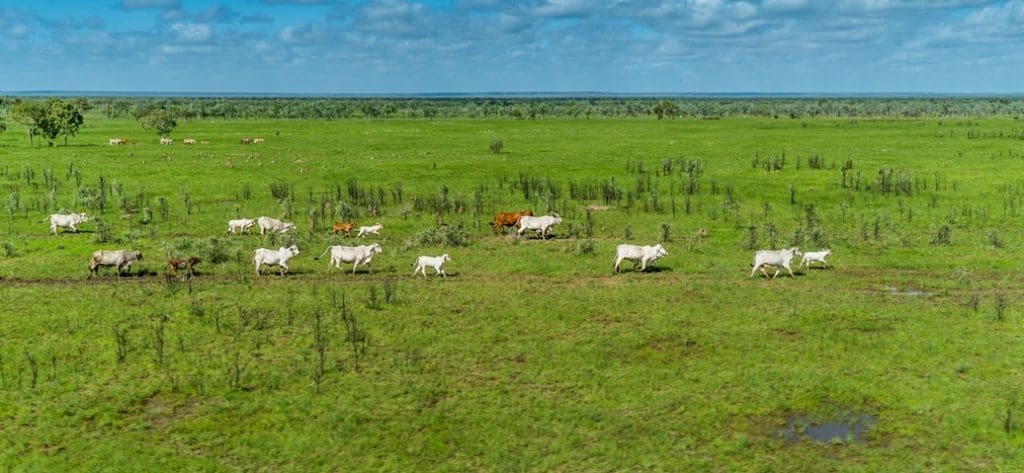
The CashCow project project measured almost 78,000 cows across 72 commercial properties and found average weaning rates ranging from around 53pc in Northern Forest country to 77pc in more productive northern regions.
A key finding from CashCow was not just the variation in weaning rate, but identification of the key causes of variation. Pregnancy within four months of calving, known as P4M, accounted for around 60pc of the variation in breeding rates across the study.
Nutrition is the most immediate and dominant factor impacting fertility. The relationship between feed quality, body condition, and a cow’s ability to conceive and rear a calf to weaning is fundamental to the management of any breeding herd.
However in grassfed environments, nutrition is subject to seasonal and climatic events that producers cannot fully control. Genetic merit is permanent. It compounds across generations, and critically, it determines how responsive a herd is when conditions do improve.
P4M difficult and expensive to measure
Until recently, selecting genetically for P4M was constrained by the fact that it is difficult and expensive to measure, has low heritability, and takes years to express in a herd.
The development of Multi-Breed Genomic Breeding Values by the University of Queensland and the Queensland Alliance for Agriculture and Food Innovation now presents new opportunities for producers to identify and select for P4M.

Prof Ben Hayes
Presenting at the 2025 AAABG Conference in New Zealand, Professor Ben Hayes spoke about research behind the development of multi-breed GBVs. The data set came from more than 34,000 heifers, representing 60 commercial northern Australian properties.
When tested against an independent dataset of almost 2000 Brahman and Tropical Composite cows, GBVs for P4M and heifer puberty were significant predictors of liveweight production. In Brahmans, top 20pc (quintile) animals for P4M produced 80kg more liveweight per cow than those in the bottom quintile.
At last week’s Northern Australian Beef Research Update, Elsie Vincent of Base Pair Genomics presented data demonstrating the validity of these GBVs across commercial herds in northern Australia.
Animals in the top 20pc for P4M had pregnancy rates 30 percentage points higher than those in the bottom quintile. For heifer puberty, top-quintile animals reached puberty around 80 days earlier than bottom-quintile animals.
Base Pair Genomics has been commercially delivering these rankings to producers across northern Australia. Producers looking to access GBVs for P4M and other fertility traits can already do so through Base Pair Genomics, making this a commercially available tool rather than one still waiting for real world application.
Ms Vincent demonstrated that rankings for P4M were consistent with the earlier work presented by Professor Hayes and as a result, this provides producers with greater certainty when making selection decisions.
When producers receive GBV results, animals are ranked and grouped into quintiles. Quintile 5 represents the top 20pc of animals for that trait, quintile 1 the bottom 20pc, with quintile 3 representing the middle 20pc – effectively, the approximate average. This grouping allows producers to make straightforward comparisons across a cohort without needing to interpret individual figures in detail.
Practical management tool
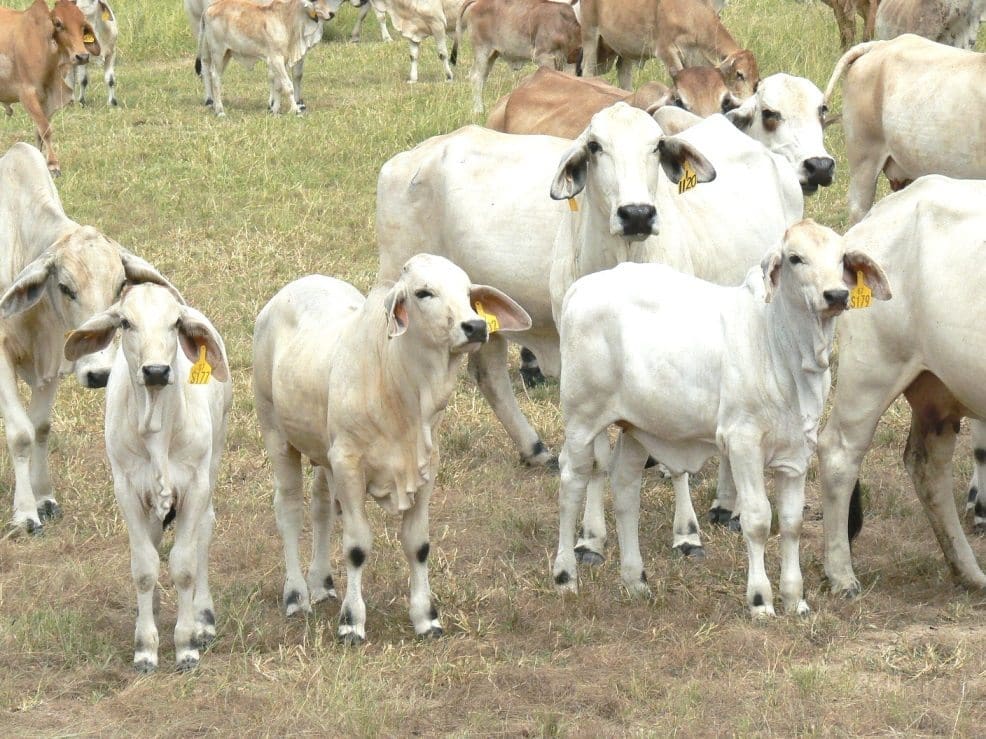
As a practical management tool, the rankings allow producers to look across a cohort of heifers or cows and identify which animals carry the genetic capacity to cycle early, conceive quickly, and return to production efficiently after calving.
In practice, retention decisions, whether selecting replacement heifers, culling from the breeder herd, or evaluating females coming through, can be guided by P4M GBVs to prioritise animals in the upper quintiles.
The goal is not to find a perfect number or chase a specific GBV figure. The goal is to shift the genetic mean of the herd upward by consistently favouring animals that rank well and removing those that rank poorly.
The data presented clearly proves that the rankings can separate animals reliably. The top quintile outperforms the bottom by margins that are commercially meaningful, with 30 percentage points more pregnant and animals reaching puberty around 80 days earlier.
Across a breeding herd of any scale, those differences translate into more calves on the ground, more cows cycling in time for the next joining, and less reproductive wastage through the herd.
 Alastair Rayner is the Strategic Account Manager for Southern Australia with Vytelle and Principal of RaynerAg. He has written about genetics for Beef Central for the past five years, and has more than 30 years’ experience advising beef producers and graziers across Australia. Alastair can be contacted here or through his website: www.raynerag.com.au
HAVE YOUR SAY