
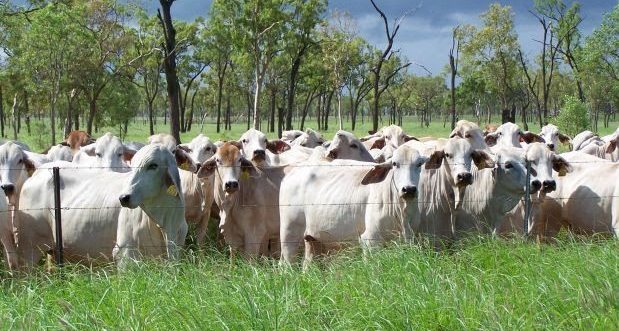
Brahman cattle in Central Queensland. Image: Geoff Fordyce
A University of Queensland analysis of genetic data from northern Australian cattle has identified key regions of the genome that influence traits like fertility, growth and body condition, sometimes all at the same time.
Queensland Alliance for Agriculture and Food Innovation researcher Dr Mehrnush Forutan said the study helps explain why some cattle grow faster, reach puberty earlier and maintain better body condition than others.
“We used sequence, gene expression and performance records from 28,000 multi-breed cattle,” Dr Forutan said.
“Our goal was to understand how traits like height, weight, body condition score and puberty are genetically connected.”
Trade-offs
The team found that some genetic variants create clear trade-offs.
“In some cases, the same variant that increases height is associated with delayed puberty,” Dr Forutan said.
“And we also see the reverse, where variants linked to earlier puberty can reduce height.”
Dr Mehrush Forutan is presenting on the findings at the Northern Beef Research Update Conference starting in Brisbane on Wednesday. She is scheduled in Session 6 titled, “Decision tools & technology for improved management” on Thursday 12 March.
Dr Forutan said trade-offs can make it difficult to balance breeding objectives, especially because fertility is typically harder to improve through selection.
“Fertility has lower heritability than growth traits, so progress can be slower,” she said.
“Historically, strong selection for growth and size can also make it harder to pinpoint the causal variants that specifically affect fertility.”
New opportunities
Despite the challenges, Dr Forutan said the research highlights new opportunities to improve fertility without sacrificing performance.
“Importantly, several of the fertility variants we identified are already represented on commercial SNP genotyping panels,” she said.
“That means breeders can start using this information within existing genomic selection programs to better manage trade-offs.”
The team is now investigating whether AI can further improve the discovery of causal variants and their impacts across multiple traits.
“The ambition is to identify the variants that truly drive economically important traits and quantify their trade-offs more precisely,” Dr Forutan said.
“Ultimately, this is about selecting animals able to get in-calf earlier and perform well rather than improving one trait at the expense of another.”
The research was published in Genetics Selection Evolution, utilising data from projects supported by the MLA Donor Company, the Australian Research Council and the Department of Primary Industries.
- The Queensland Alliance for Agriculture and Food Innovation is a research institute at The University of Queensland, established with and supported by the Department of Primary Industries.
- The Northern Australian Beef Research Update Conference starts in Brisbane on Wednesday. Stand by for reports in Beef Central.