
In recent years, the Australian Brahman Breeders Association has waged a war on discounts for cattle heading into Australian feedlots. Its main weapon – data.
The hard work of the last couple of years shone through at this week’s ABBA conference in Arlie Beach, overlooking the picturesque Whitsunday waters (coincidently a big Brahman producing area).
The past five years have seen some extremes in marketing Brahman cattle. Thousands of Brahmans headed into New South Wales and Southern Queensland to fill empty paddocks after the 2019 drought and, more recently, Brahman feeders have been copping heavy discounts in feedlots.
ABBA president Matthew Noakes told The Week in Beef podcast that Brahman breeders who had good performance data were gaining better access to feedlot programs.
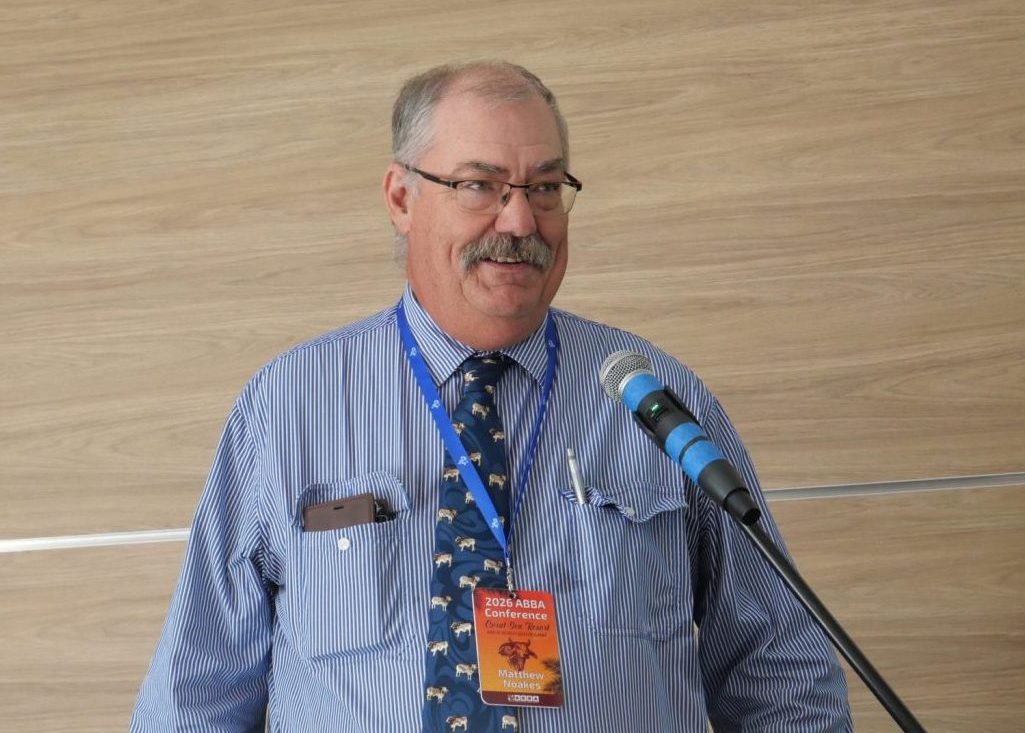
Matthew Noakes, President of the Australian Brahman Breeders Association.
“Producers of good quality Brahman cattle can negotiate with a feedlot, and if they have some performance records on their cattle, they will definitely not receive anywhere near as much discount,” Mr Noakes said.
“And there are some cattle commanding flatback rates for Brahman cattle, because they have performance.”
With pressure to respond to the discounts, the ABBA last year launched a large-scale steer trial and carcase competition to get more hard data on how the lead of the breed can perform in a 100-day grainfed program.
All cattle in the competition were pure bred Brahman, with DNA samples taken which can be matched up with carcase data over a longer period.
“We wanted to give a little bit of strength to the cattle that can and will do the job,” Mr Noakes said.
“We got some remarkable results from the first year and the cattle proved very profitable to feed. The weight gains averaged 2kg/day and the winning pen of five averaged 2.7kg/day.
“That was all on a little less feed consumption than Bos Taurus cattle.”
This year’s steer trial, shich started two weeks ago, was being done without HGPs to avoid HGP discounts on the Meat Standards Australia (MSA) index.
A long battle with MSA
Mr Noakes has seen both sides of the coin with marketing Brahman cattle domestically, as a former cattle buyer for Teys.
The conference heard from Meat & Livestock Australia about improvements in MSA scores for Brahman cattle over the years. An improvement Mr Noakes said was driven by years of work from the ABBA.
“MSA really challenged the Brahman breed when it first came and it was really developed to be pretty Bos Indicus negative,” he said.
“Teys became one of the first major processors that embraced MSA grading. So, I was working for a plant that embraced MSA grading as a Brahman breeder and naturally I sought to find pathways to get more Brahman cattle to grade.”
Mr Noakes said the improvements in MSA scores from Brahman cattle was the result of grading as many Brahman cattle as possible and trying to find solutions to the issues.
“People are critical of hump height, it is a measure of tropical breed content and half-a-million taste tests will tell you that has an impact. As does HGP, as does ossification, as does not enough fat,” he said.
“They are all part of the algorithm, we just have to work out how to use one to compliment the other. We have producers that we have noted that can grade and they are the people that get their ossification right, they get their growth right, they have quiet cattle – there is all these little things you can do that can help you achieve good enough outcomes with MSA.”
Potential for Indonesian premiums
In one of the early speeches, Dudy Wirawan and Muhammad Isnan Musrian from Consolidated Pastoral Company’s North Sumatera Feedlot reminded the conference that Brahman was still the preferred breed in Indonesia.
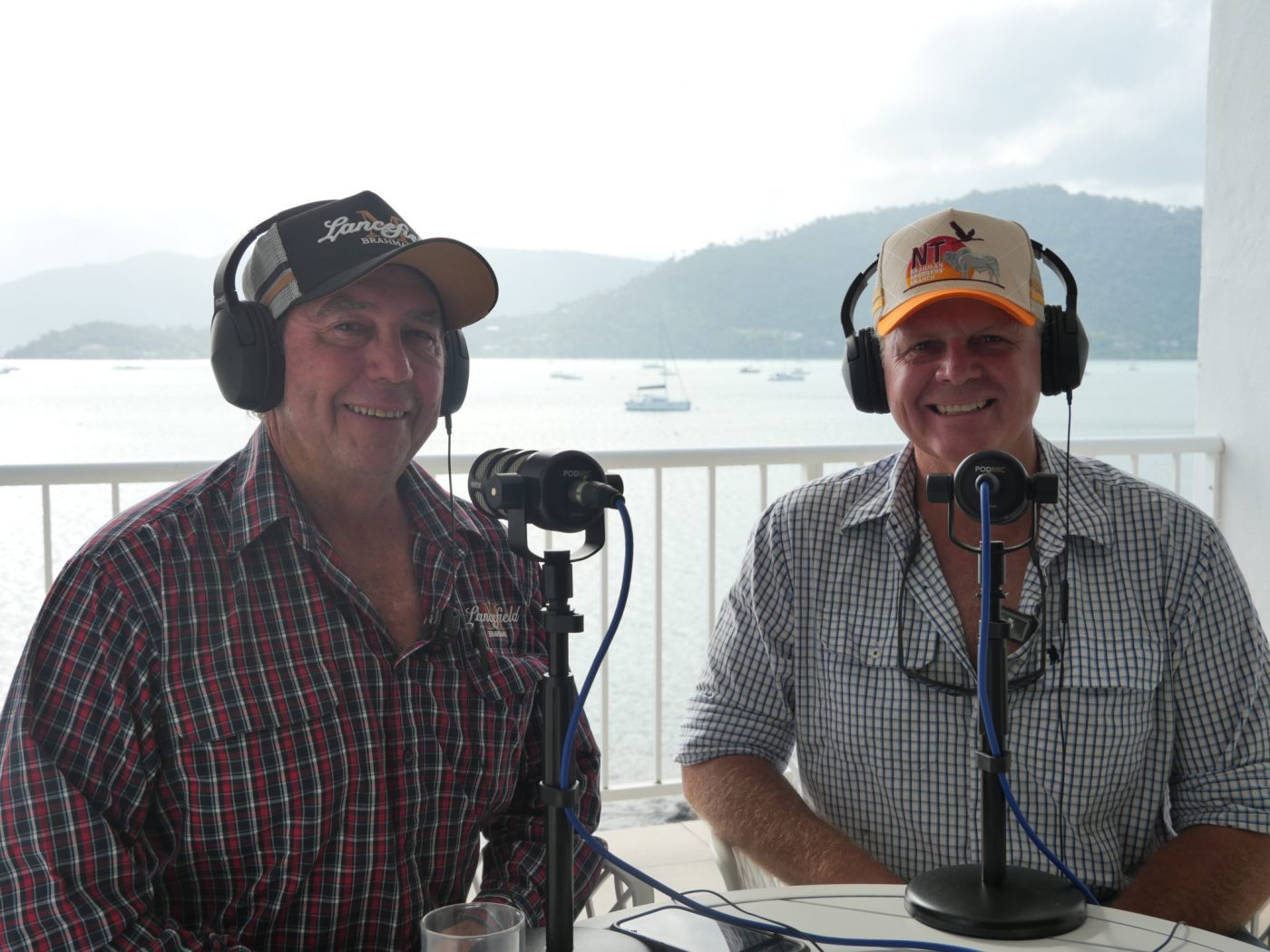
Matt McCamley and Brad Inglis at the ABBA conference at Arlie Beach.
ABBA board member Brad Inglis from Sturt Plains in the Northern Territory said for producers in his area, the proximity to Indonesia needed to be considered.
“If you are a fair way north and you are trying to (crossbreed higher marbling cattle), then you are going to need to find some cheap diesel to send them south,” Mr Inglis said.
 “Quality will sell no matter what the breed is and you have to breed to your market and our market is live export. But I have sold steers to bullock producers near Hughenden and at Alice Springs as well, so if you have good quality cattle you can send them both ways.”
Mr Inglis said feedlots and processors in Indonesia were becoming more sophisticated, which could be a positive for Brahman breeders selecting good genetics.
“A lot of people think ‘it’s just going to export’ but they have in-and-out data, yield data, carcase data, feed efficiency data. And it is hard because there is a flat rate for live export cattle, but I think in 10-12 years if you have good quality cattle you will get a premium,” he said.
“You get a premium now if the job is quiet, you will get a phone call because they will only want the good cattle. But the technology is getting more and more, and they are starting to realise how much easier it is buying cattle with more yield.”
Selecting the right ones
ABBA board member Matt McCamley from Lancefield Brahmans in Central Queensland also noted that Indonesian for feedlots were becoming sophisticated.
He said the high quality Brahman cattle have been around for a long time and the latest research has allowed the industry to separate the best from the rest.
“There are cattle in the breed that will do what the market requires,” Mr McCamley said.
“But we’ve also got to remember that the Brahman themselves what they’re designed for. The strength is in the export, they want purebred Brahmans, we have resistance to parasites which is so important – no other breed has the strength that we have in the area.”
HAVE YOUR SAY