
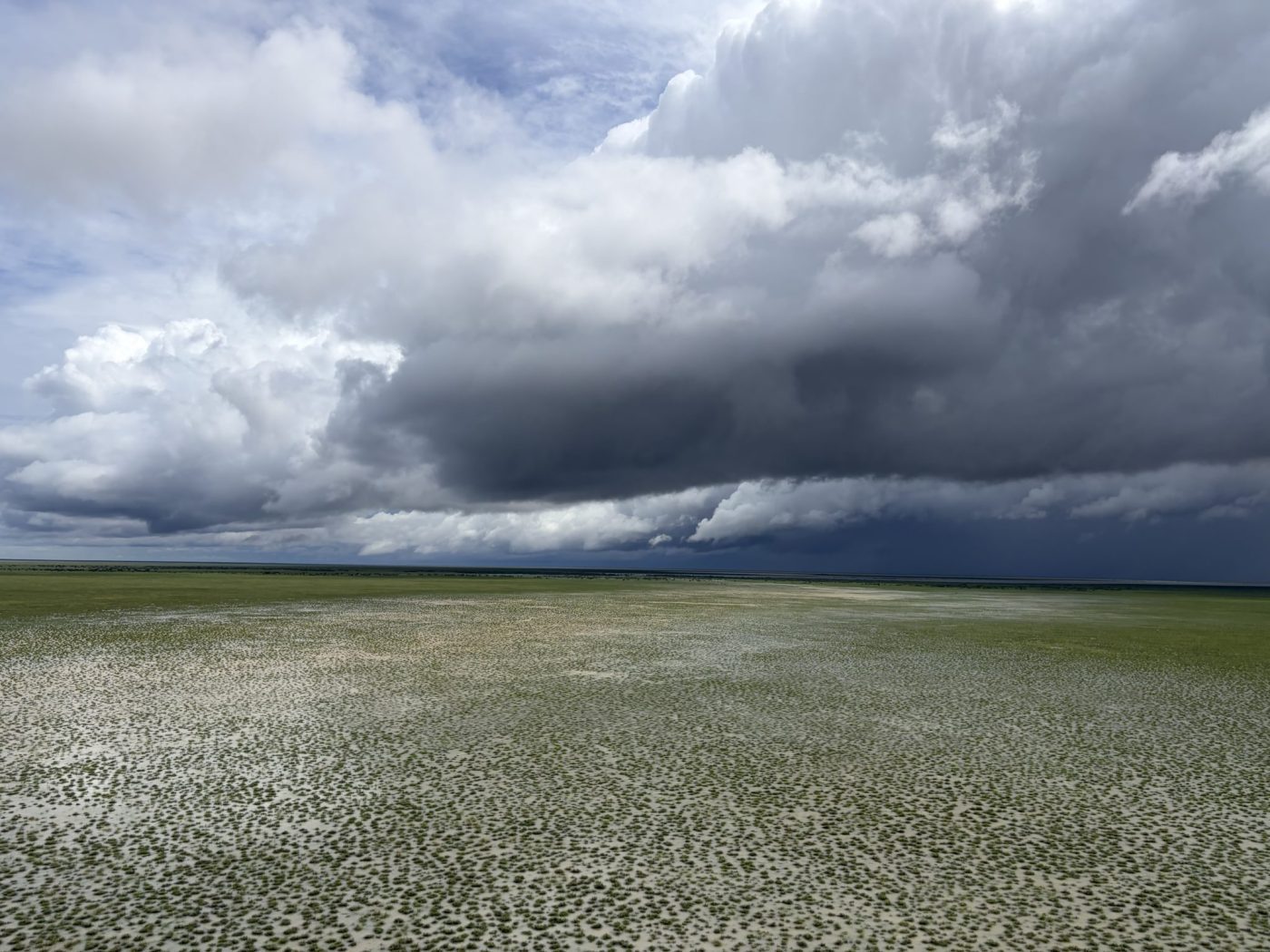
Lake Nash flood, February 2026. (Supplied by Erin Gibson)
THIS year’s wet season has been relentless in the Northern Territory with many telling Beef Central it is the biggest wet in terms of how constant the rain has been and how vast an area it has saturated.
The Bureau of Meteorology has predicted it could be northern Australia’s 10th wettest season in history.
Live exporter, Patrick Underwood, the managing director of Australian Cattle Enterprises (ACE) told The Week in Beef podcast he had never seen such a widespread, relentless wet season.
 “Basically, from late November it’s rained just about every day and across huge areas,” he said.
“Usually after a wet couple of weeks, you’ll get some dry weather, but that hasn’t happened.
“It seems most of Queensland, all the NT and a lot of northern Western Australia has had a good drink. So it’s a really broad area that has had two to three months of constant rain.”
One industry participant attending the Northern Territory Cattlemen’s Association (NTCA) conference said he hadn’t seen the sun and clear skies outside of Darwin for two months.
While all the pastoralists Beef Central spoke to at the NTCA conference were excited about how the wet season would set them up for a good year ahead, the prolonged wet will also have implications.
“Cattle don’t like standing around in the rain all day, it gets pretty uncomfortable for them walking around in mud, so they won’t necessarily be in great condition,” Mr Underwood said.
“We see in northern Australia these really big wet seasons, you end up with a lot of grass but you can get a protein drought later in the year.
“It also means more dry feed for bushfires later in the year, so it doesn’t always translate to a great season, but it beats a drought, so we will take it.”
Cattle hard to move, live export boats hard to fill
Damage to roads and infrastructure is already slowing the movement of cattle in the NT, making it difficult for live exporters to fill boats.
Mr Underwood said he had to send a boat short of 100 head of cattle last week to Indonesia, because cattle even from very reliable places on the bitumen were difficult to access.
“There are properties in the Douglas Daly that you can access cattle from 363 days a year, but we found last week was the two days you couldn’t get them,” he said.
“Territory people are tough though and they love a challenge, so people were pulling trucks with dozers and graders to try and get cattle out.
“But even the major highways are a huge challenge – the King River on the Victoria Highway had water over it for three or four days in a row and now there’s great big holes in the road.
“The Victoria Highway is the national highway to Kununurra and Western Australia, and we have no idea when it will open for trucks.”
Mr Underwood said next week three live export ships are scheduled to leave Darwin, but cattle may have to come from Qld if the roads are open as the Top End will still be too wet, following Tropical Cyclone Narelle.
“As an industry we need to find 10,000 head of cattle to go on ships next week,” he said.
“In the next five to six weeks, (off the back of Ramadan) I think Indonesia will need somewhere around 150,000 cattle to top their feedlots back up.
“That’s not going to happen straight away, it is going to be constrained by supply and by shipping, but the demand is definitely there.”
The lack of supply has helped push live export prices higher with a steer out of Darwin fetching $4.80 a kilogram around Christmas.
“It’s come back a bit now, I would say Darwin is $4.50 a kilo, but of course there’s no cattle around at the moment and anyone who’s got cattle and will make the effort to get them out is not giving them away cheaply,” Mr Underwood said.
Only one round of mustering expected this year
The NT is not set to have big numbers of cattle moving anytime soon, with first round unable to start until roads and fences are fixed.
“It’s a good time to be a fencing contractor,” one pastoralist remarked at the NTCA conference.
General Manager of Pastoral Operations for Consolidated Pastoral Company (CPC), Henry Burke said if the rain stops now, it will still be several weeks before first round can start.
“We are usually ready to go now but we need to make sure we can use the roads, and we can get our crew out to do the mustering, so I would like to think, depending on how long this wet goes, we will be starting at the end of April,” he said.
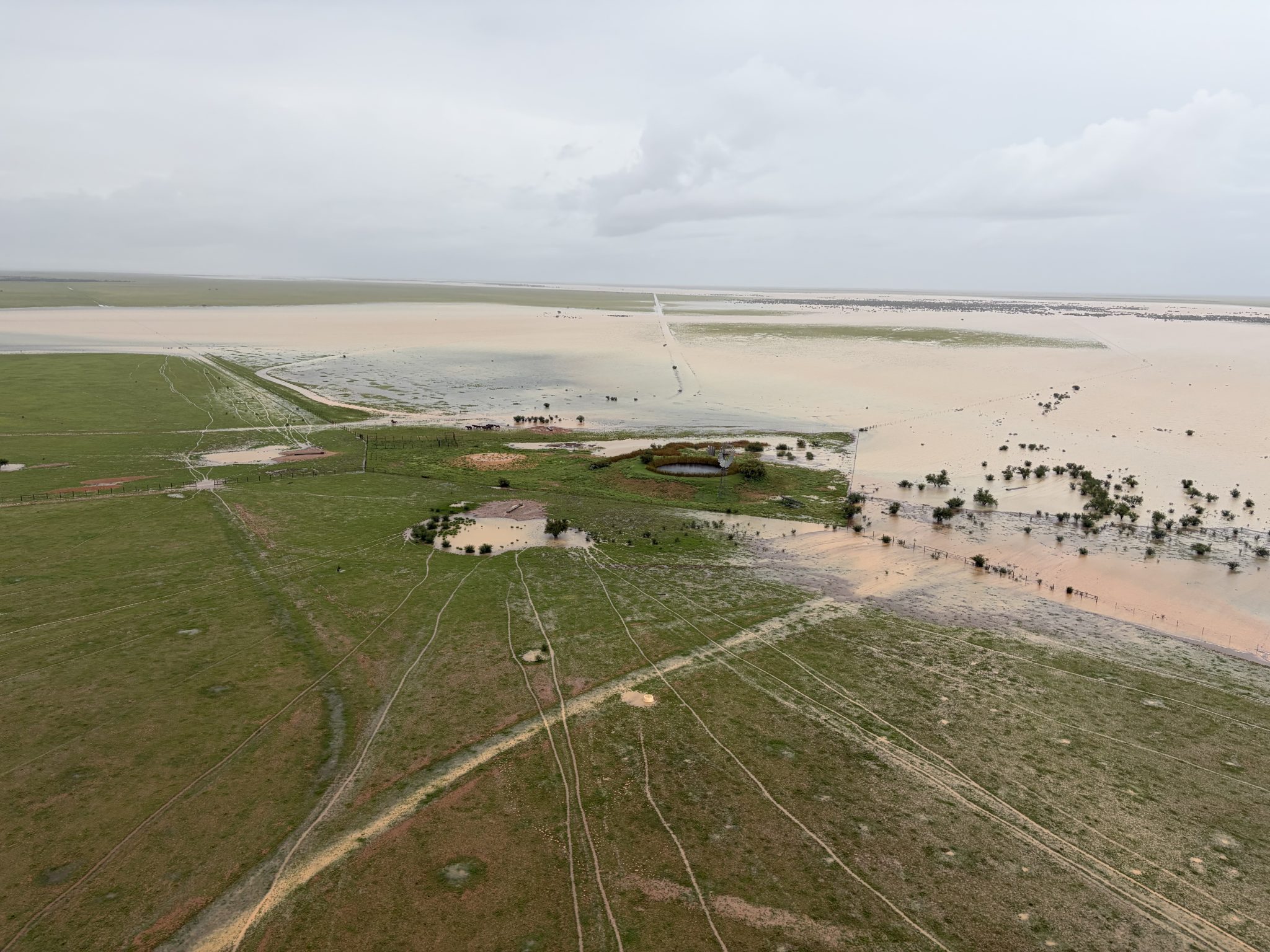
Lake Nash, February 2026. (Supplied by Erin Gibson)
Pastoralist, Amanda Murphy said she will only have one muster this year at Carpentaria Downs between Daly Waters and Borroloola.
“Last year we got quite a bit of rain in March, and we didn’t start first round until the end of June. This year it might even be a little bit later” she said.
“Not because it was too wet, there was just so much to do to be able to start mustering.
“Grade the roads, fix the fences, everything has to be in place before you start chasing cows.”
One Alice Springs pastoralist told Beef Central they won’t get a full muster done this year, as they can’t start cattle work until the roads are fixed and fences are back up.
Andy Hayes from The Garden station near Alice Springs said it was getting very dry in January, but it started raining on 8 February and it has only just stopped.
“We have normally started mustering by now, but it is going to be a couple of months before we get into it because we have a lot of roads to fix up and fences and we are only mildly affected,” he said.
“We left home at 7:30am the other day and didn’t make it to Alice Springs until 12:30pm and it is only 130km, but the road is buggered, so it is going to be a while before we get trucks in.
“But it is a beautiful season and is going to be a good year for fat cattle,”
Big wet is masking the fuel shortage
The big wet has likely eased the NT’s demand for fuel with stations unable to get fuel trucks in to fill their supplies.
Amanda Murphy and her husband also own cattle trucks and service a lot of stations on the Barkly Tablelands.
“The wet is probably helping the fuel shortage because no one is trucking and no one is mustering so they aren’t using as much fuel as they normally would,” she said.
“Even if you wanted fuel, you couldn’t get a fuel truck in, so we haven’t got any of those bills yet.”
HAVE YOUR SAY