
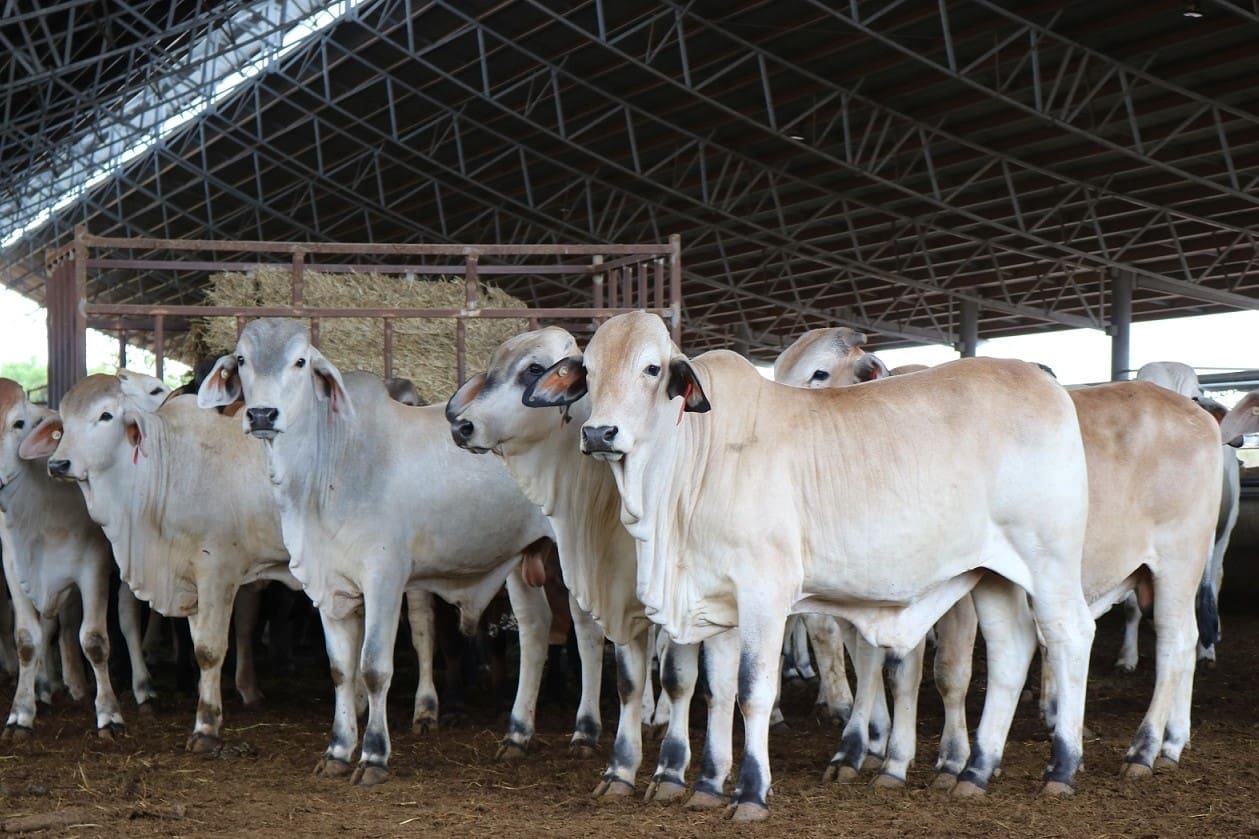
File picture of live export cattle at Berrimah in the NT. Picture: NTLEA
NORTHERN export feeder steer prices have been on a rising trajectory in recent weeks, while in the south, Australia’s first shipment of cattle to Turkey for seven years has been a new talking point.
In the north, prices paid for feeder steers onto ships in Darwin have risen by 15-20c/kg in the past three weeks to around 370c/kg now, according to trade sources contacted by Beef Central in recent days.
Prices have been rising as supply in the Northern Territory begins to slow with the conclusion of annual dry season mustering rounds.
Export buyers are again looking to Northwest Queensland to supplement numbers for export orders out of Darwin and Townsville, but the stronger domestic market is adding upward pressure on cattle prices.
Some Queensland feeders coming into the Northern Territory are reported to be going onto ships in Darwin at $4/kg, with expectations those prices will be closer to $4.10 next week.
Indonesian importers may also be feeling the price rises a little more acutely due to the recent strengthening of the Australian dollar versus the US dollar.
Australian exporters buy cattle in AUD and sell them to Indonesian importers in USD. A 2c rise in the AUD against the USD over the past month has made Australian cattle that bit more expensive for Indonesian importers, over and above the effects of the physical price rise alone.
One exporter told Beef Central that for now there is still enough cattle coming out of stations in the NT to say “the supply and demand balance is pretty right”.
But at a time of year when nutrition in grass is running out, the scales are tipping toward numbers being tighter in coming weeks, at least until the annual supply of floodplain cattle becomes available in December.
Higher conception rates mean fewer empty heifers available
One interesting anecdotal observation an exporter made to Beef Central today was that an improvement in northern heifer conception rates aided by back-to-back good seasons has meant there are fewer empty heifers available for export this year.
 “Heifer supply is probably down 20 percent because they have just increased conception rates,” he said.
“A lot of places are up around 90-95 percent, where they’re normally 75 percent for their first-calf heifers, which means they haven’t got as many empty heifers to sell this year.”
Orders to rise in November but permits still an issue
Export orders to Indonesia are expected to start increasing again in November as importers begin shipping cattle into their feedlots in preparation for the 2026 Lebaran festival, which occurs in mid-March next year.
There is still a lack of certainty around Indonesian import quotas and permits for the fourth quarter (October, November and December).
Beef Central has been told that some importers have been granted permits for the next three months, while others haven’t and are still waiting for their applications to be approved before they can place orders. A certain amount of unutilised permit in the hands of no-longer active importers is further complicating the permit landscape.
Trade sources told Beef Central that the lack of clarity is a major concern for their ability to plan ahead with certainty.
“The biggest threat for an exporter is vessel utilisation,” said one long-time exporter who asked not to be quoted in order to speak freely. “If we haven’t got permit we’re not going to risk having a vessel chartered.
“They (the Indonesian Government) run the risk of causing interruption in the supply chain at a critical time for Lebaran.
“We all need to have strong structural relationships in place so we can plan the shipping for them.”
Australia sends first cattle shipment to Turkey since 2018
Meanwhile, in August Australian exporters re-opened another market for dairy heifer exports this year, after trade with China which purchased more than 100,000 head a year for several years dropped to half those levels in the past two years.
Earlier this year Australia re-started exports of dairy heifers to Mexico for the first time in nine years, with more than 15,000 exported in several shipments since the trade re-commenced in February.
In August more than 5000 dairy heifers loaded in Portland and Fremantle were shipped to Turkey, representing the first Australian cattle shipped to the republic since 2018.
Australia exported 76,620 cattle in August
According to latest shipping figures from the Department of Agriculture, Australia exported a total of 76,620 cattle in August, which was 20 percent above the rolling five-year-average for the month, and takes the total number of cattle exported for the calendar year to date to 512,850 head.
Exports to Indonesia for the month totalled 53,313 head (49pc above the rolling five-year-average for August), while 6182 cattle were shipped to Vietnam (52pc below the rolling monthly five-year-average).