
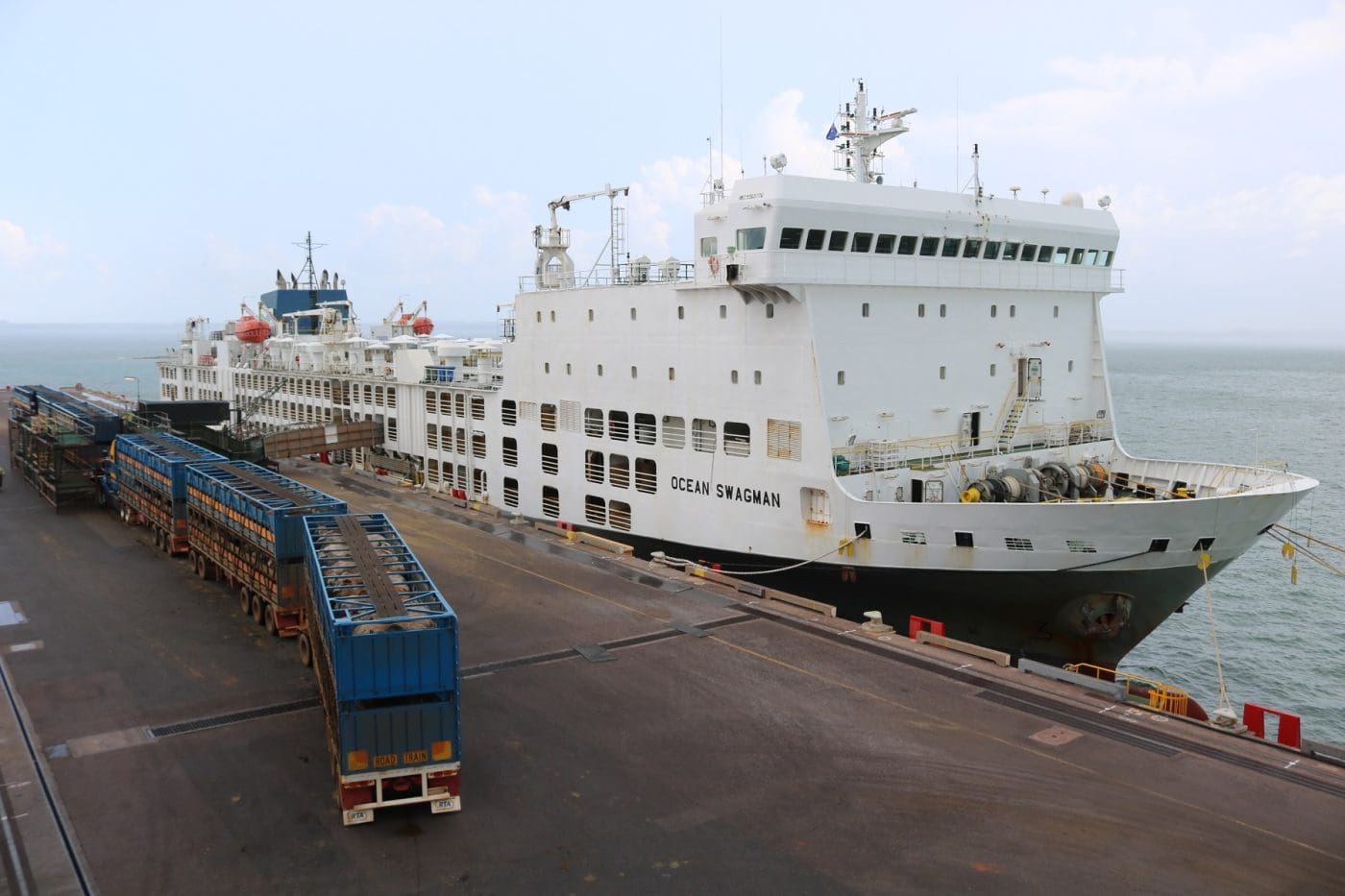
IT has been two months since the Indonesian Government announced the official removal of quotas on live cattle imports.
Despite the significance of that announcement from one of Indonesia’s most senior ministers, uncertainty remains over what the change means in practice for Australia’s cattle trade.
Importers in Indonesia are this week applying for permits for the fourth quarter of 2025 (October–December).
Applications close at the end of August, with decisions expected in September.
How the Indonesian Government responds to this latest round of permit applications is likely to reveal whether June’s announcement represented a genuine policy shift or a statement that has already been sidelined.
June announcement
The quota removal was announced on June 15 by Coordinating Minister for Food Affairs, Zulkifli Hasan, as part of the Prabowo Government’s first-year push to secure long-term beef and dairy supplies.
Minister Zulkifli said the decision allowed for the unlimited imports of live cattle for fattening, slaughter, and milk production to strengthen domestic supply chains.
 “We’re now fully opening up live cattle imports, whether for beef, fattening, or dairy purposes. It’s unrestricted,” Minister Zulkifli said at the time.
He added that eliminating the quota system would support local farms in scaling up both the volume and quality of dairy production, while reinforcing the overall supply chain from upstream to downstream.
“There are no more quotas. It’s now completely open,” he said.
The announcement came just days after Deputy Minister of Agriculture Sudaryono also revealed that Indonesia planned to import up to two million live cattle over the next five years. Of that number, 1.2 million would be dedicated to dairy production, and 800,000 to beef supply.
Despite the specific and clearcut nature of the quota removal announcement, the seniority of the Government official who delivered it and the widespread coverage it received in Indoneisan media, industry sources say that more than two months later there has still been little clarity on if, how or when the policy will take effect.
Details still missing
Australian exporters told Beef Central they are hoping for more information to emerge during the Q4 permit process now underway.
It is understood that applications for import permits must be signed off by three ministers – the Minister for Agriculture, the Minister for Trade, and the overarching Coordinating Minister for Food Affairs.
Importers must also be able to demonstrate they have realised at least 85 percent of their previous permit allocation. They must also have imported productive female cattle numbers representing at least 3 percent of their feedlot capacity, a policy which aims to support Indonesia’s aspirations to achieve self-sufficiency in cattle breeding and production.
Import permits still play critical role
Regardless of whether or not the quota has been lifted, as per Minister Zulkifli’s announcement in June, importers still have to apply for import permits, core documents which officially facilitate the ability of individual companies to conduct trade with other individual companies between the two countries.
The import permit system ensures trade is conducted by operators with adequate experience, knowledge, customer relationships, infrastructure, facilities and welfare systems and processes, rather than an open slather free-for-all.
What role quotas will still play is primarily a question of numbers.
Traditionally importers have applied for permits to import a specific number of cattle in the next period.
Whether importers will be allocated permits for unlimited numbers from now on, and for what period – ie quarterly, half-yearly or annually – are some of the questions trade members are awaiting further clarity on.
Certainty crucial for both countries
Uncertainty around the timing and volume of permit allocations has led to trade disruptions in the past.
Early in 2024, despite having ships booked and cattle assembled in pre-export-quarantine depots ready to load at the start of the yearm Jakarta took six weeks to allocate cattle import permits.
The delayed release caused major logistical and financial problems for the Australian cattle trade and also reduced the volume of beef available in Indonesia for the peak demand period of Ramadan, triggering a rush of shipments in March and April to help fill the void.
Import orders from Indonesia are expected to start increasing again in October and November in advance of the 2026 Lebaran/Ramadan period. Greater clarity on how import permits and quotas will work from now on will be essential to provide certainty for the entire trade heading into that critical supply period, one long-time trade member told Beef Central this week.