
LATE January and early February is a notoriously tight period for the domestic wholesale beef trade, as holiday bills and return-to-school fees start to burden the typical family budget.
Added to that this year is some growing uncertainly around the prospect that the Reserve Bank may apply an interest rate hike when it meets next Tuesday, and the possible impact out of China’s quota decisions.
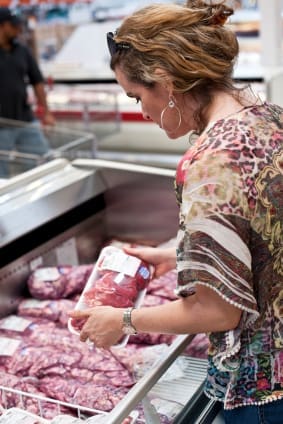 Despite some lack of consumer confidence over economic, political and trade issues like this, the domestic wholesale meat trade had a reasonably solid Christmas/New Year holiday period, trade contacts reported to Beef Central this morning.
“Processors are obviously going to try to run their plants as hard as they can this year, so there’s obviously going to be more meat about on the domestic market,” one domestic trader suggested.
He said there was a period towards the end of last year when customers were hesitant to build stocks in the pre-Christmas period, being uncertain about the level of food service and retail demand from consumers over the busy period.
“As it turned out, it wasn’t too bad, but that’s left many customers fairly current in supply at present. There’s still a bit of old meat (late 2025 packs dates) being cleaned up now in the trade, but in our case, we have virtually no chilled meat in storage that doesn’t carry a January pack date,” he said.
“That’s because we were fairly aggressive in selling during December, so we didn’t get caught with product that might ease in price or be hard to sell.”
Despite this, the state of the Australian economy, Trump’s decisions and other factors were still seeing some cautionary behaviour among beef consumers, he said.
The food service sector in the major capitals had not been too bad during January, the trader said, but consumers were increasingly looking for ‘value’ in their dining out habits.
“The people that can afford to dine at better restaurants more frequently will continue to do so, but all food service operators need to offer a standard of skill, service and presentation that justifies the price of a piece of expensive-looking beef on a menu,” he said.
Retail trade during January had also remained reasonable, despite the ‘Christmas ham hangover’ that occurs each year.
“Tenderloins, rumps and cube rolls have been solid, price wise, due to the export activity overseas, while striploins have remained harder to sell at a reasonable price,” another wholesaler said.
Grinding meat continued to dominate supermarket sales, and was turning into the main battleground in red meat between Coles, Woolworths and Aldi.
“Major domestic retailers have been buying chilled trimmings strongly – and added to that the US demand due to rapidly declining US beef production has really driven recent demand for grinding beef,” he said.
He suggested 85-90CL domestic trimmings (some variance between spot and forward, chilled and frozen) were selling anywhere from $10.50/kg to $11.50 for leaner packs, and well beyond $12/kg for good quality chilled grinding meat material being bought by major supermarkets to supplement their own trim output.
Those prices have eased a little recently compared with late last year, but much of that was driven by the declining competitiveness of the Aussie dollar, as outlined in this item yesterday.
For muscle cuts, rump prices have held reasonably firm on rates seen late last year at between $11/kg for better cow rumps through to as much as $16/kg for better quality grainfed steer, undercut removed. Cubes and tenderloins have have moved up a little since December, while strips have softened, the trader said.
With record-high temperatures in some areas this week, slow-cook secondary cuts were very hard to sell at present. And with trimmings values as high as they are, plenty of secondary cuts are going into the grind, at present.
Another wholesaler said there were no real options apart from grainfed as a result of recent kills, with relatively few cows or grassfed cattle in the mix so far this year.
Uncertainty impacts confidence
“The problem currently for the domestic market outlook is that processors really do not know what lies ahead. Does Australia develop a quota management scheme for China in time to have an effect this year? Do other export countries do the same? How much impact will the stronger dollar have on export demand? All this uncertainty ultimately affects domestic beef wholesale prices as well,” he said.
“Nobody (end users in the domestic retail and good service market) is inclined to build stocks heading into February while there is all this uncertainty hanging around.”
He suggested it may not be until April or May before the real wholesale market supply/demand picture emerged this year.
“To get a really good feel of what lies ahead, we have to get through April first. It’s going to be softer during this early part, but hopefully momentum will lift by April. It’s impossible to predict the first quarter result for wholesalers at this stage, but I personally think a lot of consumers are going to factor in the rising interest bill on the mortgage.”
The trader said he did not personally think there would be a glut of beef pushed back on the domestic market once Australia fills its 2026 China quota of 205,000t.
“Fortunately the US is still desperately short of beef for its own use, and the lack of US exports into Japan and Korea is opening opportunity there for Australia. I personally don’t think filling the China quota will cause any issues in terms of excess supply on the domestic market.”