
AUSTRALIAN beef exports for October have continued at near-record pace, with consignments to all markets last month reaching 139,286 tonnes.
That was up marginally on the previous month, but was more than 7 percent higher than October last year.
In fact October shipments were the second highest month on record, headed by July when trade topped an incredible 150,000t.
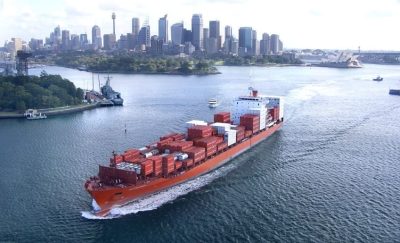 A new calendar year record volume is still squarely within reach, driven hard by high demand out of the United States, where domestic production has declined sharply as the US herd reaches 70-year lows after drought, and red meat prices – everything from trimmings to quality chilled muscle meat – have shot to record levels.
Last year established Australia’s previous full-year export record at 1.34 million tonnes, but that figure now looks well within sight.
With two months of trading remaining for 2025, exports for the year ended 31 October have already reached 1.266mt, shipment data released this morning by DAFF shows. That suggests (even with the possibility of a slower December) a full-year number somewhere around 1.45mt.
The impact of low US production is also being seen in other countries where the US and Australia traditionally compete for imported beef market share, including China, Japan and South Korea.
Australia continues to capitalise on global supply constraints caused by declining production and tariff impacts in key competitor markets such as the United States and Brazil.
Underpinning Australia’s recent export performance is high rates of slaughter, anticipated to rise 8.6pc this year to 9.02 million head by December 30 (MLA Projections), driven by robust cattle supply (especially out of the northern half of the country) and somewhat expanded processing capacity. With its beef herd fully developed after four better than average to excellent seasons in many areas, Queensland has become the supply powerhouse for processors across eastern and southern Australia over the past eight months.
With the US starting to progress into a herd rebuild phase and Brazil facing herd contraction following heavy slaughter and drought recovery, plus prohibitive tariff levels for its own exports into the US, Australia is uniquely positioned to meet rising international demand over the next year or two.
To put the past three months’ export volume performance into perspective, Australian beef exports had never previously exceeded 130,000t before October last year, but have now passed that mark for the past six consecutive months.
Grainfed exports boom
Grainfed beef shipments have followed the overall trend, accounting for 41,048t in October. That was up 3pc on September volume, and an incredible 27pc higher than October last year.
For the calendar year ended 30 October, total export shipments (grass/grain, chilled/frozen) at 1.266mt are up an incredible 169,000t or 15.4pc on the same ten months last year. That number is all the more noteworthy, because of the flooding and cyclone-related delays in production and logistics that occurred at the start of the year.
This year’s boom in export tonnage is being driven by a perfect storm:
- 70-year low cattle numbers in the United States, which is powering demand for Australian beef not only in the US itself, but also into third countries in which product from Australia and the US traditionally competes
- Impacts from Trump tariffs on export suppliers like Brazil, with Brazilian beef now all but considered unviable in the US market under an additional 50pc tariff burden, on top of the existing rate of 24.6pc.
- Trade access issues into China for some export suppliers, especially the US, where more than 400 US processing plants remain without China access after prolonged permit delays
- Strong continued underlying demand for beef in general. Despite current wholesale and retail beef price rises, consumption in both the US and Australia is up marginally on last year.
A key feature about this year’s record-setting pace is that it is being done with far fewer cattle than it was last time volume records were set (2014-15) when the processing industry was at full pace due to drought liquidation. Clearly heavier carcase weights and more grain feeding are more than offsetting larger slaughter numbers (head-count) seen a decade ago.
All key markets show strength, year-on-year
All four key export beef markets – Japan, the US, Korea and China – continued to operate at rapid pace in October, as well as progress in smaller customers like Indonesia and Canada.
The trade boom into the United States that’s been evident all year continued last month, with exports totalling 41,572t, marginally down on September, and 8pc behind the blistering pace seen in October last year.
For the calendar year to the end of October, our exports to the US have now reached 370,365t, up 53,000t or 17pc on the same period last year, again reflecting current low US production – especially for manufacturing beef, but increasingly, fed cattle as well. A figure of +400,000t now looks within easy reach for total 2025 US trade – a figure seen only once in history.
The big mover last month was Japan, which accepted 26,883t of Australian beef, up 18pc on September volume, and 18pc higher than this time last year, as US export competition into Japan declines. Ten-month trade this year to Japan is now at 209,869t, only about 3000t behind the same period last year.
China has also surged this year as an Australian export customer, partly in the face of tariff and plant license issues among US exporters, where some 400 US beef processors that previously held China access have been awaiting license renewal since February.
China filled third place in October trade, accounting for 20,258t, much the same as September trade, but close to 20pc higher than October last year. For the calendar year ten months ending October, volume to China reached 223,506t, some 70,000t or 46pc higher than last year.
South Korean trade has been impacted by the triggering of the country’s Safeguard tariff on Australian beef in August, https://www.beefcentral.com/trade/south-korean-safeguard-tariff-looms-on-australian-beef-exports/, with exports last month reaching 17,675t, down 19pc on September, and 10pc behind October last year. Calendar year to date, trade into Korea is now at 182,813t, 12pc behind last year.
Among secondary and emerging markets, Indonesia and Canada continue to stand out, with Indonesia taking 5191t in October, down 22pc on vigorous September trade and about half the record-setting 11,000t exported in October last year. Year to date, Indonesia has taken 53,727t, mostly frozen, compared with the record-high 68,000t a year earlier.
Canada, short of beef much as the US is, imported 6176t of Australian beef last month, continuing this year’s strong growth trend. This time last year the number was only 3222t. Year-to-date, Canada has reached 42,300t, up 78pc on the same ten months in 2024.