
THIS week’s property review shines a spotlight on central western New South Wales’ and an undiscovered location that raised more than $70m over the past year.
Chris Malone and Brian McAneney, Elders
Sydney-based Chris Malone grew up in the rural New South Wales township of Coolah and today connects corporate agribusiness and high net worths to local farming communities across New South Wales.

Chris Malone, Elders
For the past six years, he has been working closely with Dubbo-based agent Brian McAneney, born and raised on a mixed farming and grazing operation in the Central West, who has been operating as an agent in the region for almost 40 years.
Mr McAneney said it is a formula that works.
“The team’s structure combines seasoned experience, geographic locations and the people we have behind us – emerging talent, back-end operational strength and a pipeline of young professionals.”
While their partnership has seen success from the Liverpool Plains to Coonamble, in the last 12 months, the pair has sold more than $70 million worth of property in the Trundle district alone.
Mr Malone said the area’s strong appeal is attributed to its good value and strategic location drawing interest from buyers locally and from southern New South Wales, Victoria and South Australia.
“Trundle is seen as good value compared to rising land prices elsewhere, especially for cropping land. Its proximity to Sydney and Orange enhances the region’s appeal, positioning it as accessible yet relatively undiscovered.”
Mr Malone said previously, the market in the Trundle region was characterised by smaller property listings, appealing primarily to local buyers.
“Recent availability of larger holdings has shifted the demographic, making it attractive to both larger family operations and corporate buyers.”
The headline sales were the Darriwell and the Tara Moira Aggregations.
Late last year, major red meat processor Roger Fletcher and family secured the 8828ha Darriwell, a trophy aggregation for more than $40 million. The cropping and livestock powerhouse neighbours the Trundle township.
Last month, Condobolin’s Coupland family paid more than $20 million for the largest contingent mixed farming operation in the Trundle district comprising the 4327ha Tara Moira Aggregation, as well as two adjoining properties spanning 1181ha (the 970ha Tara Moira and Steeton and the 211ha 1489 Carlisle-Trundle Road).
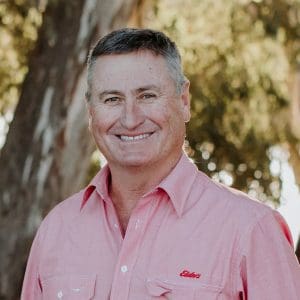
Brian McAneney, Elders
The agents explained, not only did the properties present as good value in the marketplace, but they also had scale and as a result, the listings drew interest from corporates and larger family operations looking to expand or relocate.
Mr McAneney said while corporates showed good interest in both properties, family farming entities had the ability to act more quickly.
“They are nimble and can be ‘bank fit’ quickly because they don’t have to report to boards or undertake due diligence. The approval process is mum and dad and maybe a couple of kids, sitting around the table.”
Buyers
Mr Malone said in recent years, climatic conditions, particularly in the south, has led people to look further north.
“Buyers, particularly those with diversified portfolios, are seeking not just scale, but also value, strategic location and geographic diversity – giving the ability to pivot operations depending on seasonal and commodity cycles.”
Mr Malone said succession planning is increasingly shaping buying and selling behaviour, with many family businesses aiming to structure holdings for effective generational transitions.
“Additionally, integration across the eastern seaboard is driving business models, as buyers from Victoria, southern New South Wales and interstate look north for opportunities.”
Mr McAneney said while listings of scale are drawing significant interest from out of area buyers, they have yet to finalise purchases.
“Some areas down south have become highly sought after and prices have risen exponentially as a result. A Victorian producer told me his country has risen from $1600/ac to $7000/ac in just six years compared to $1800/ac to $2200/ac in Trundle.”
Mr Malone and Mr McAneney said the aftermaths of the COVID-19 period are felt through inflated property valuations, leading to difficult vendor expectations and stagnated listings.
“We strongly believe the market will dictate what a property will sell for. In other words, keeping price out of the equation. The key is allowing interested parties to make their own minds up on how much they want to spend.”
Marketing campaigns
Mr Malone explained auctions are the preferred selling method.
“The idea is to create competition within a certain time frame. It is the most transparent way to sell. Buyers like it more than expression of interest campaigns because they can see who is bidding against them.”
Nonetheless, some properties have been successfully sold via EOI – the Darriwell and Tara Moira Aggregations included.
Gary Johnston, Johnston Rural Property Group
Also in the central west is Forbes-based rural property specialist Gary Johnston.
He noted in September 2023, the local property market was impacted by a Bureau of Meteorology announcement of an impending record drought and as a result, livestock prices tanked dramatically.
While the BOM forecast didn’t come to fruition, he said the recovery has taken two years.

Gary Johnston
“Mixed farms in the central west of New South Wales took a nosedive, but this year they started inching ahead, particularly in the wake of strong livestock prices.”
Mr Johnston said the strongest inquiry is for well-managed, productive mixed farms.
“Most of the land in this region can pivot depending on seasons and commodity prices. At present, people are looking at livestock as a more profitable enterprise with a fundamentally positive outlook.”
In terms of prices, Mr Johnston said the market has been under pressure and vendors who have had to sell are likely to have met the market. However, he noted good quality well run properties are still in demand and making very good money.
Mr Johnston said the last cycle has ended and a new one is emerging.
“The property market ran very hard for five years, up until about 18 months ago, and then started to rest and as a result, prices struggled.”
“This was on top of dry seasonal conditions, particularly in the south, and poor cereal prices. The rest period is now over, and potential buyers are taking a long-term view.”
Mr Johnston said the market is witnessing a re-emergence of neighbours buying adjoining country, as well as investors with longer investment horizons.
“Corporates, fund managers and institutional scale investors operate on investment mandate cycles – typically around 10 to 15 years. I believe new acquisitions will have a longer mandate for investment – around 20 to 30 years because the investors now understand agriculture is a longer term, passive capital investment.”
Mr Johnston said the central west of New South Wales continues to offer buyers value for money.
“People are actively looking at neighbouring holdings, consolidating and considering when is a good time to re-enter the market. Run down properties that cannot deliver some kind of return on investment are certainly proving more difficult to market and sell.”
Mr Johnston is confident there will be an upward trajectory in 2026.
“It is a good time to enter the market. I’m positive. Record livestock prices are a very big plus. If commodity prices firm, people will question why they didn’t invest in 2025!”