
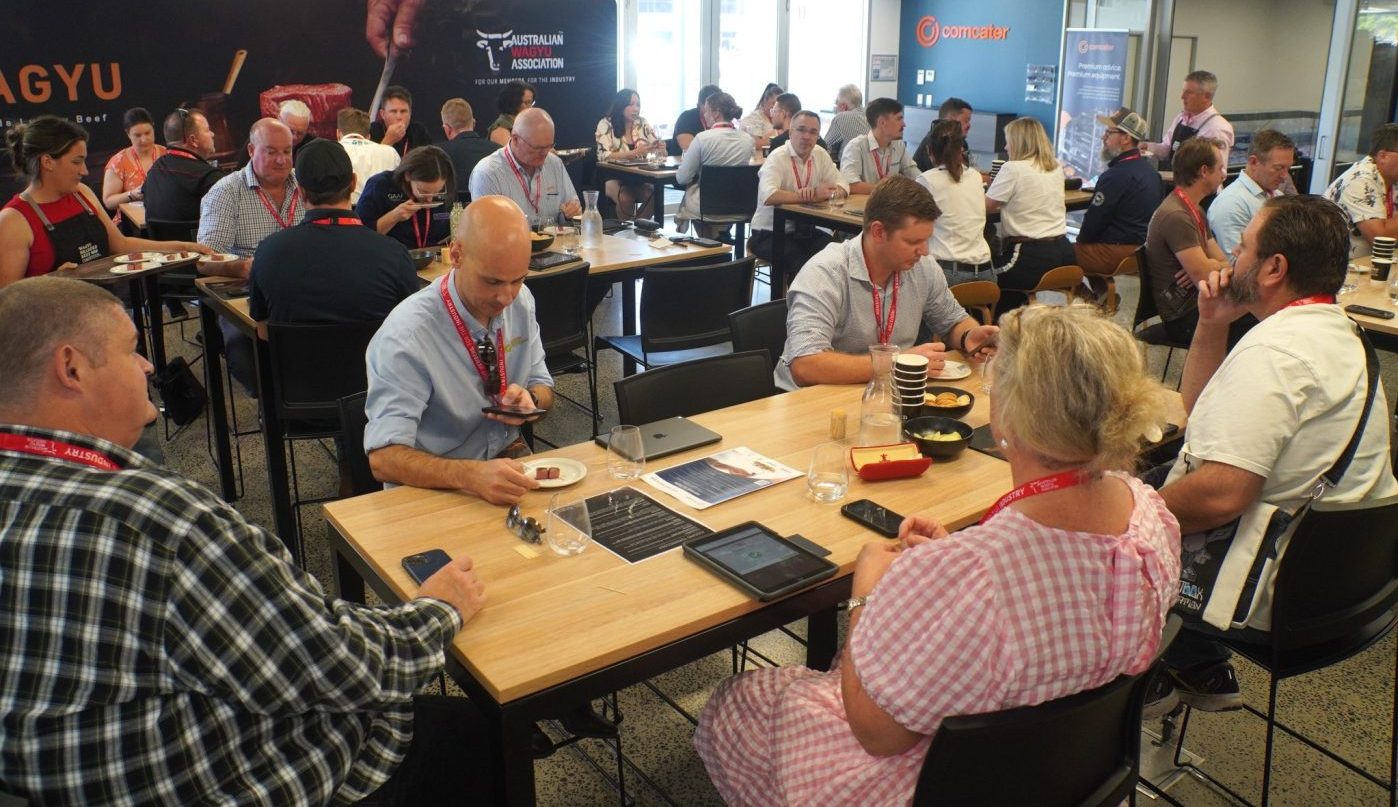
Part of the lineup of AWA branded beef judges. Click on images for a larger view
WITH whole striploin competition entries worth anything up to $2000 each, the stakes could not have been higher in Australia’s toughest and arguably most prestigious branded beef competition evaluated in Brisbane last week.
The annual Australian Wagyu Association branded beef competition sets an incredibly high bar for meat quality, marbling and sensory experience. Tenderness is all but ruled out as a trait that can distinguish the winners from the runners-up, making this one of the toughest sensory panel judging experiences in existence.
More than 60 judges lined up over three days in Brisbane last week to pass judgement, including Beef Central’s Jon Condon, who has adjudicated at all 14 competitions held since 2012.
Entries are rigorously evaluated for visual appeal, flavour, juiciness, tenderness and overall liking, in addition to a range of precision digital measurements of marbling, marbling fineness, eye muscle area and other traits.
Entries this year were judged in five classes:
- Fullblood (100pc Japanese Wagyu genetics)
- Purebred (F4 and higher)
- Crossbred, and
- two classes for F1 carcases marbling scores 5-7, and 8+.
The current year’s Wagyu branded beef competition winner announced back in April was Queensland’s Stanbroke Beef with a sample of the company’s Sanchoku Pure Wagyu brand, which topped the Purebred (+93pc content) class. Click here to view that report.
Eighty four entries judged last week for next April’s announcements were down marginally on this year’s record 91 entries, but there was an encouraging four first-time entrants from newer Wagyu supply chains still establishing in the market.
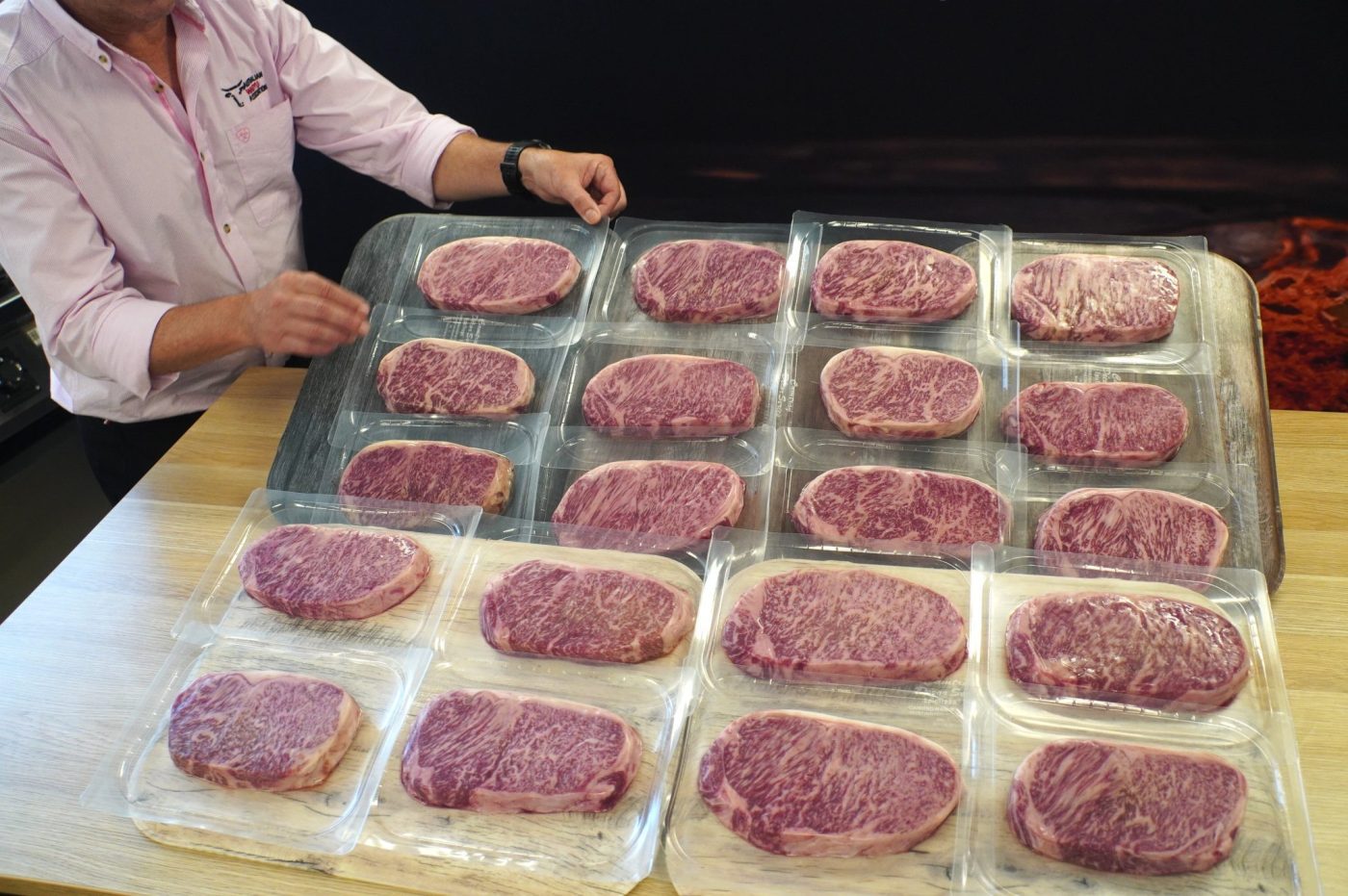
Marbling boundaries being extended
Any suggestion that Wagyu breeders may be taking their foot off the marbling selection accelerator was blown away by results seen during last week’s competition judging.
Within the crossbred class entries (50pc Wagyu content) for example, no less than 78 percent of this year’s entries expressed a camera-based marbling score of 9+ – the maximum score possible. This comes despite a general trend towards fewer days on feed among F1 Wagyu cattle in Australia. Whereas 400 days was standard for F1s only four or five years ago, 350-360 days is now common, and one large F1 program now feeds F1s only around 300 days.
Intra-muscular fat (digital marbling) in all entries this year ranged from 36pc to an incredible 69.9pc in the case of one Fullblood entry. To put that into a context that’s easier to comprehend, 69.9pc IMF equates to an AusMeat marbling score of between 19 and 20, on the industry scale that currently extends only to 9+.
Only six years ago, the highest-ever IMF seen in the competition was 57pc.
“Clearly, we haven’t found the threshold of Wagyu marbling performance yet,” competition head steward Dr Alex Ball told Beef Central.
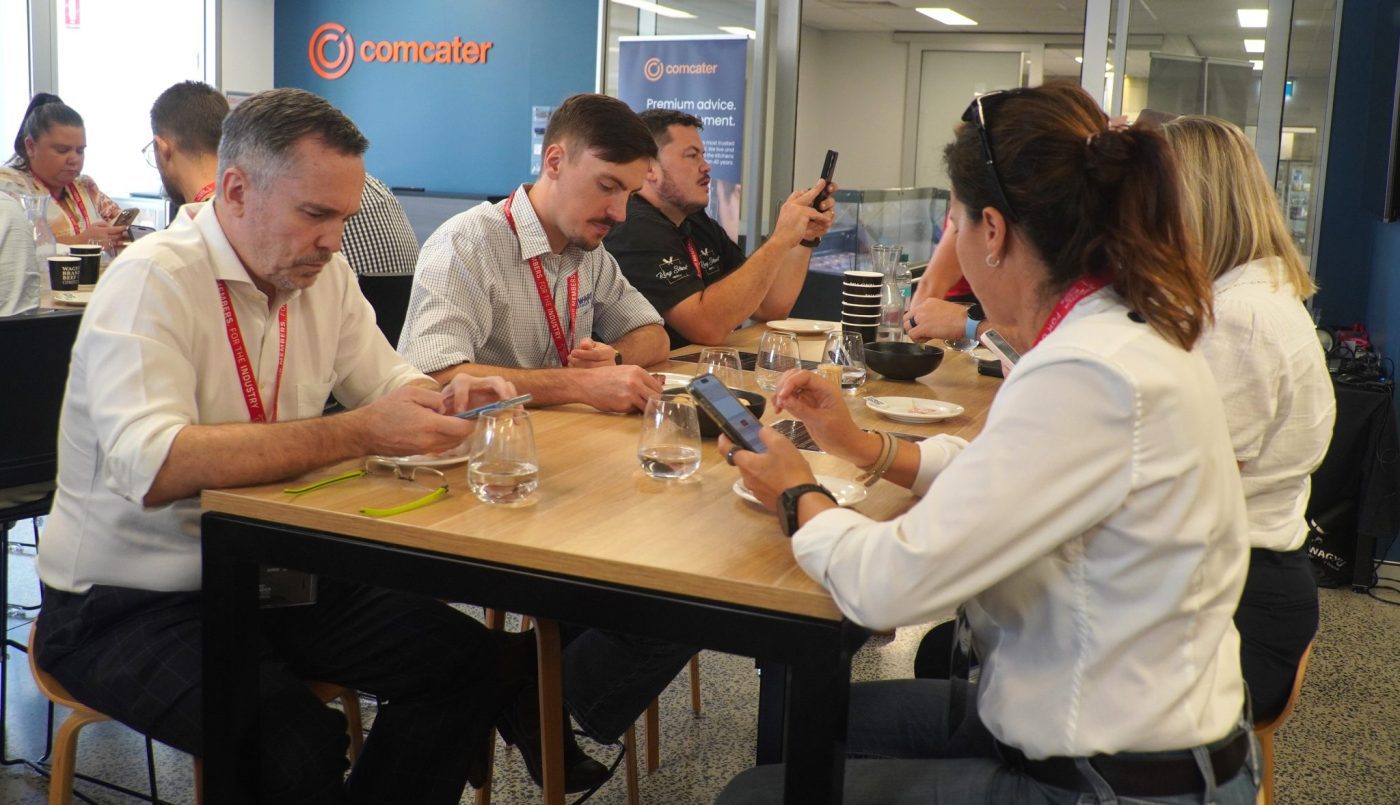
Heavy analysis
This year’s entries were arguably some of the most heavily-analysed samples of beef ever seen in a commercial branded beef taste test competition held anywhere in the world.
In addition to sensory eating quality analysis of almost 1000 samples by judges over three days, each entry has been poked, prodded, scanned, imaged and laboratory-analysed by an unprecedented array of objective testing technologies to produce hard data to support the sensory judging work.
Dr Ball said the event now provided one of the best data sets on Wagyu beef performance anywhere in the world.
Beyond the tasting room where this year’s judges ranked entries for tenderness, juiciness, flavour, overall liking and raw steak cut appearance, there was a plethora of analytical equipment in play. None was used as part of the taste test scoring process, but simply to provide hard data on carcase quality performance, covering some 40 traits.
Every competition sample was fully DNA genotyped, using Neogen’s SNP Wagyu Feeder Check chip, providing data on genotype, breed content and parentage.
Hand-held near infra-red spectroscopy was used for fatty acid composition. Hand-held, portable NIR technology allows users to analyse samples for fatty acid profile in real time, rather than waiting weeks for lab results. This was only the first year for its use as part of the AWA branded beef taste test.
More thorough fatty acid analysis from competition entries will come via samples sent for laboratory analysis, looking at the all-important ratios of saturated to unsaturated (desirable) fats, and chemical lean/fat ratios.
“We know that the next dimension in Wagyu eating quality is what we can do with different fatty-acid profiles,” Dr Ball said.
He stressed that the NIR results were not used as part of the competition’s judging/ranking process, but simply to try to work out – particularly at the top end of the Wagyu spectrum – what the new dimensions of Wagyu brand claims might look like.
“There are differences,” he said. “We see them on the grill in different melting points and cooking performance. There are definitely correlations between the judges’ opinions and the NIR scan results, and between the abundance of marbling in a sample and how desirable the fatty-acid profile is,” he said.
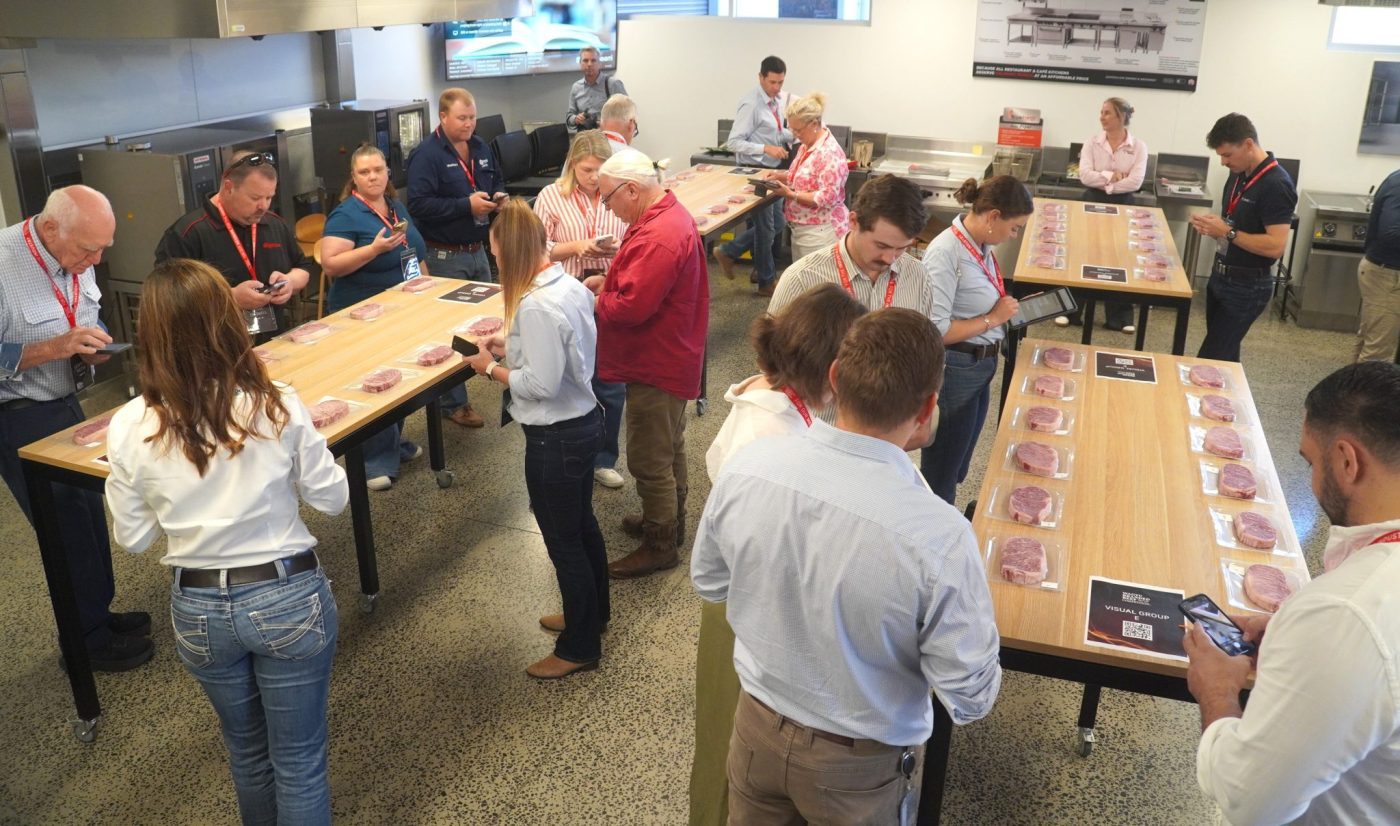
Visual raw sample scoring during Friday’s AWA judging
MIJ Camera: Used to objectively measure marbling abundance, distribution and fineness; eye muscle area and meat and fat colour. MIJ is widely used in the Japanese Wagyu industry, and by 60 licensed users worldwide. The camera accurately measures marbling scores well beyond Australia’s 9+ limit, and Japan Meat Grading Association’s marbling threshold of 12. Around 170,000 Australian Wagyu carcases have now been analysed for digital marbling performance using MIJ.
“As usual many of Australia’s really solid and well-established Wagyu brands have performed excellently again in this year’s competition – but equally, there’s some emerging Wagyu brands that have come up with some sensational product as well,” Dr Ball said.
“This demonstrates the genetic progress that continues to be made, but also the feeding environment necessary to set these cattle up for performance on the plate. A lot of Wagyu brand programs have realised that to be competitive in this competition, they need to really bring their A-Game – such is the standard now being seen,” he said.
“Past history suggests that next year’s winners will be decided by only a point or two, at most. There’s some sensational product in all five classes this year,” Dr Ball said.
After the first round of assessments in judging last week, there were still in excess of ten entries that remained serious contenders for next year’s grand champion branded beef title.
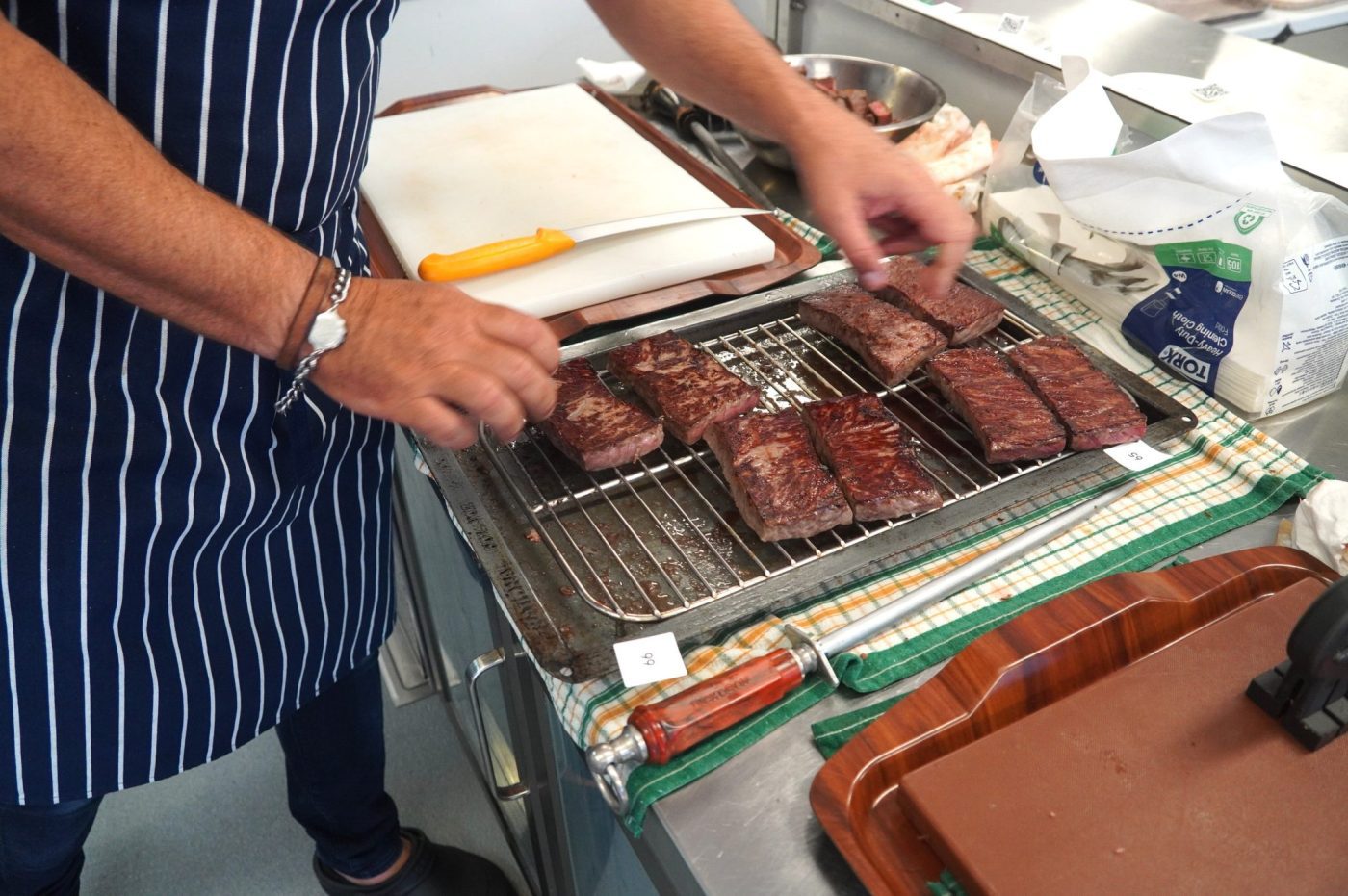
Cooked samples being prepped for judging
2026 AWA Wagyu Conference
Registrations will open in coming days for the 2026 AWA conference, taking place in Brisbane on 15-17 April.
The AWA branded beef dinner accommodating 700-800 is sure to book out quickly, so reserving seats early is strongly advised.
- Event preview to be published next week, before Beef Central goes into summer holiday recess.
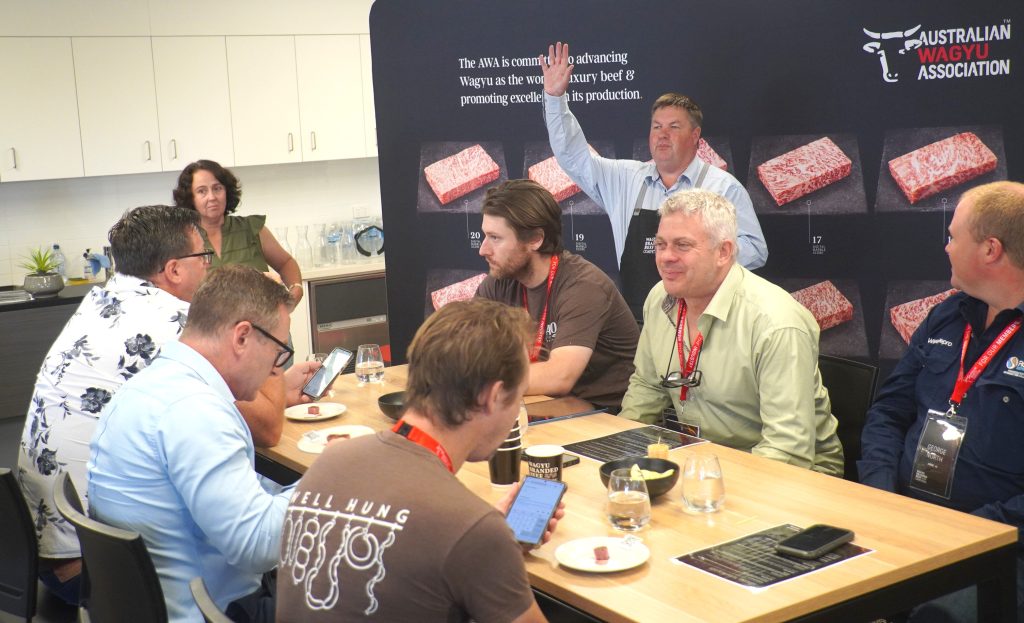
Chief steward Dr Alex Ball briefs judges during last week’s competition
New food industry technology aids in judging consistency
A new piece of food service industry technology was used for the first time at this year’s AWA branded beef competition judging, helping deliver even greater consistency in the preparation of samples.
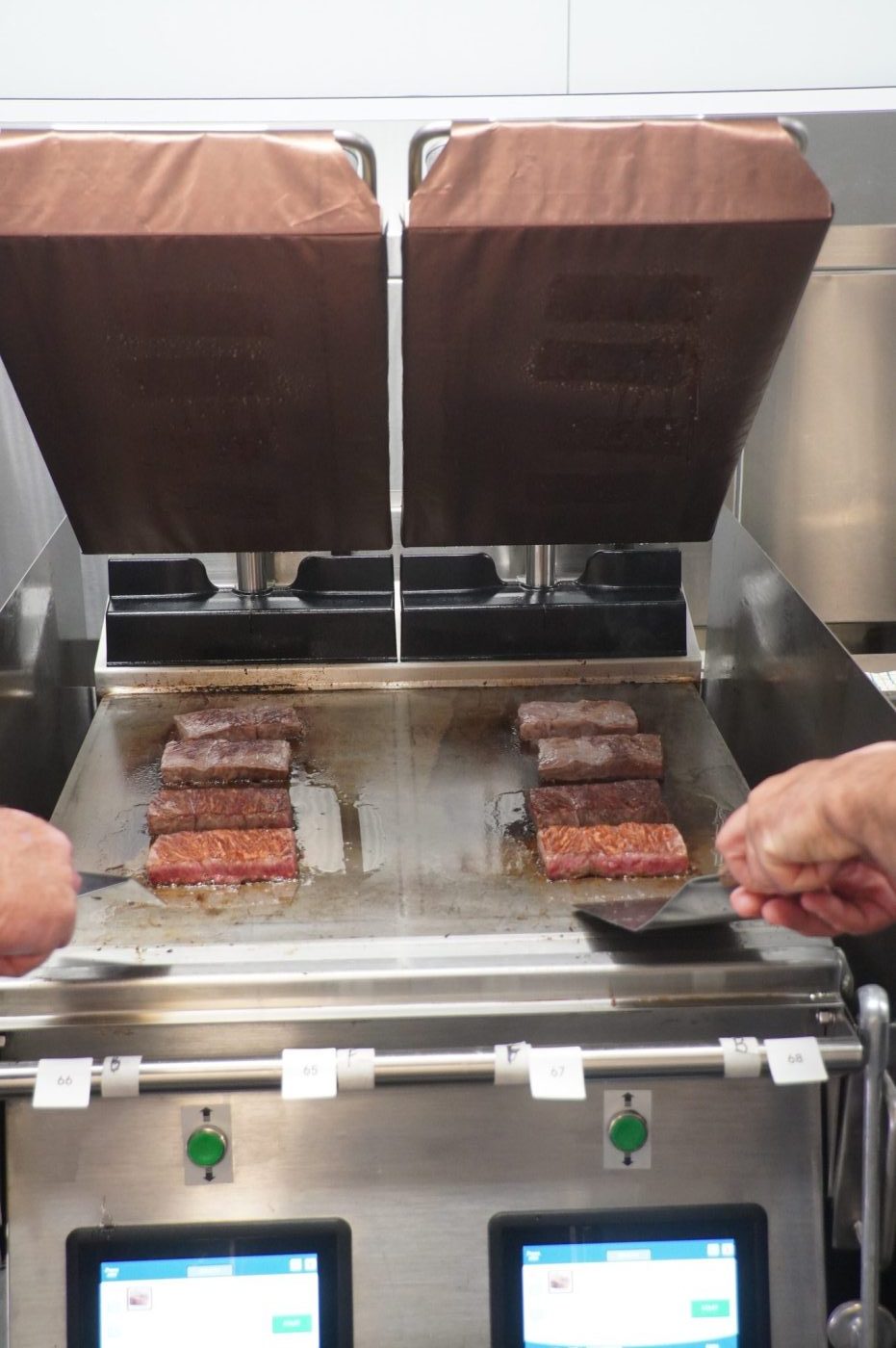
Employed for the first time by hosts – food service industry providers Comcater – was a Garland double-sided ‘clamshell’ grill. The equipment cooks both sides of each steak sample simultaneously with great precision and repeatability, while reducing cooking time by up to 50pc. Temperatures and grill plate separation distance are all digitally controlled.
Both upper and lower plates are 19mm thick polished plate steel, maintaining cooking temperatures within tight tolerances.
With each striploin steak sample cut to exactly 24mm in width, the Garland Press applies light compression pressure (23mm separation) to guarantee full-contact, even cooking.
The result was competition sensory samples that were exactly identical in degree of doneness, and the amount of caramelisation they carried on the cut surface.
Information on the Garland Press can be accessed here.