
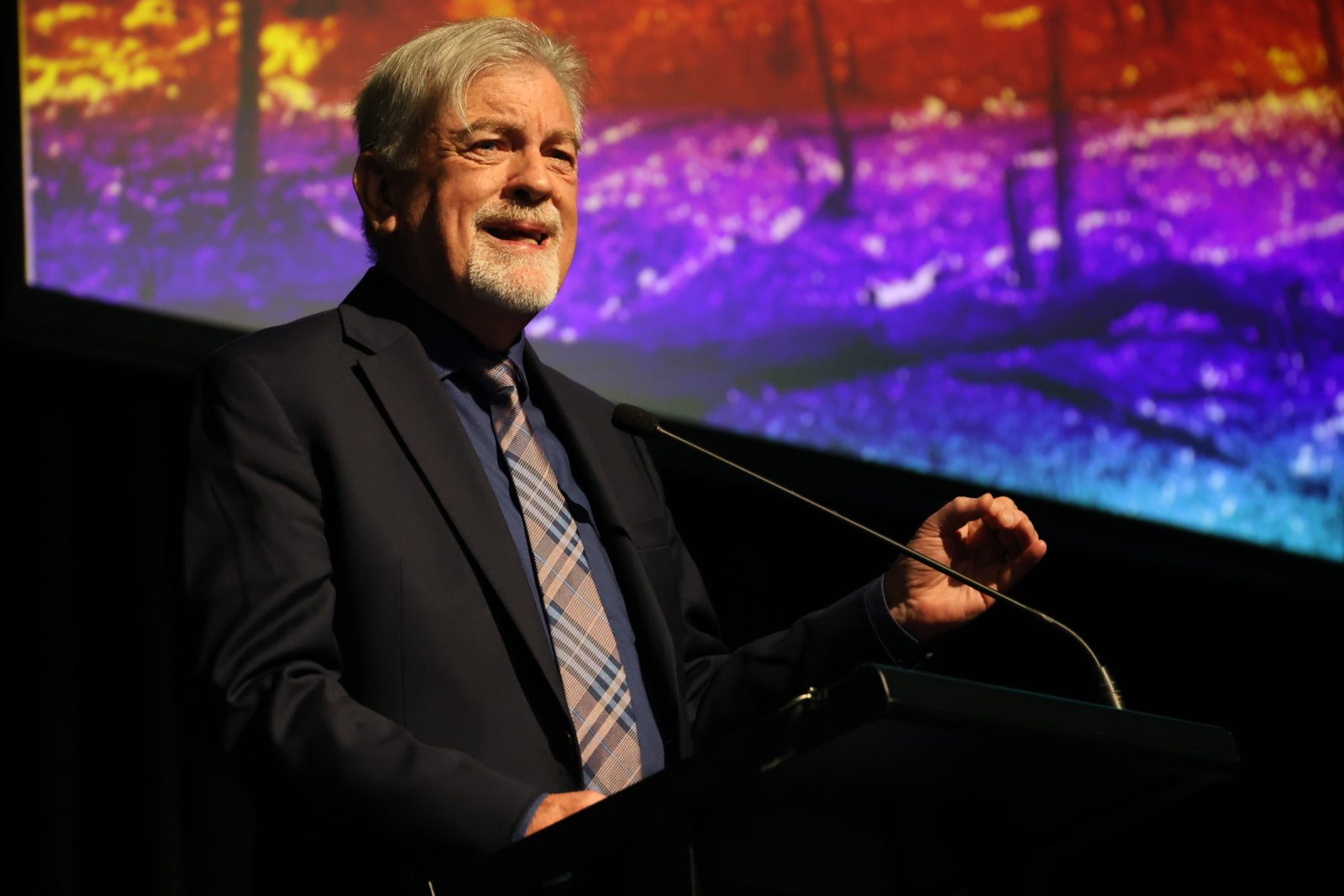
UQ alumnus and Columbia University academic Prof Glenn Denning speaking in the opening session yesterday of TropAg 2025 .
FROM mixed-farming opportunities in northern Australia to how to provide food security to some of the world’s poorest economies, the TropAg 2025 program has the lot covered.
An initiative of The University of Queensland, the triennial event was first held in 2015, and this year brought more than 700 delegates from 40 countries to the Royal International Convention Centre in Brisbane.
Presentations from researchers, governments and private practitioners from across the globe’s tropical regions were made via six keynote and 27 symposium sessions.
The Queensland Alliance for Agriculture and Food Innovation, a UQ research institute supported by the Qld Government, is central to TropAg, and its director Matthew Morell welcomed the 2025 gathering.
“Our discussions this week will help shape food systems across the globe,” Prof Morell said.
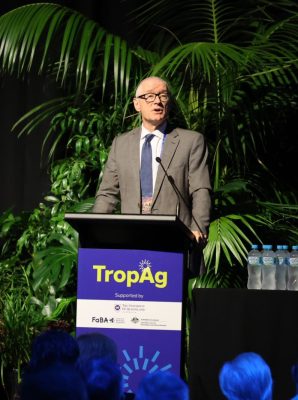
QAAFI director Prof Matthew Morell welcomes delegates to TropAg 2025.
The three-day program covered cropping, animal production, horticulture and related topics over three themes: Future Foods; Growing Agriculture, and Climate and Sustainability.
“The clock is ticking and the responsibility to act rests with all of us.”
Prof Morell said collaboration has long made Qld’s research ecosystem unique, and this was evidenced by joint work being undertaken by those from all Qld universities working with national and international organisations.
They include the Australian Centre for International Agricultural Research, and the International Crops Research Institute for the Semi-Arid Tropics, both well represented at TropAg.
Columbia University’s Glenn Denning spoke yesterday in the conference’s first plenary session on the quest for universal food security, which he said meant a world where every person could enjoy a healthy diet from a sustainable food system.
“We have to think of feed security as a human right,” Prof Denning said, adding that gains made pre-COVID and pre the Russia-Ukraine conflict are now being lost.
“It’s hard to see an end to hunger by 2030.”
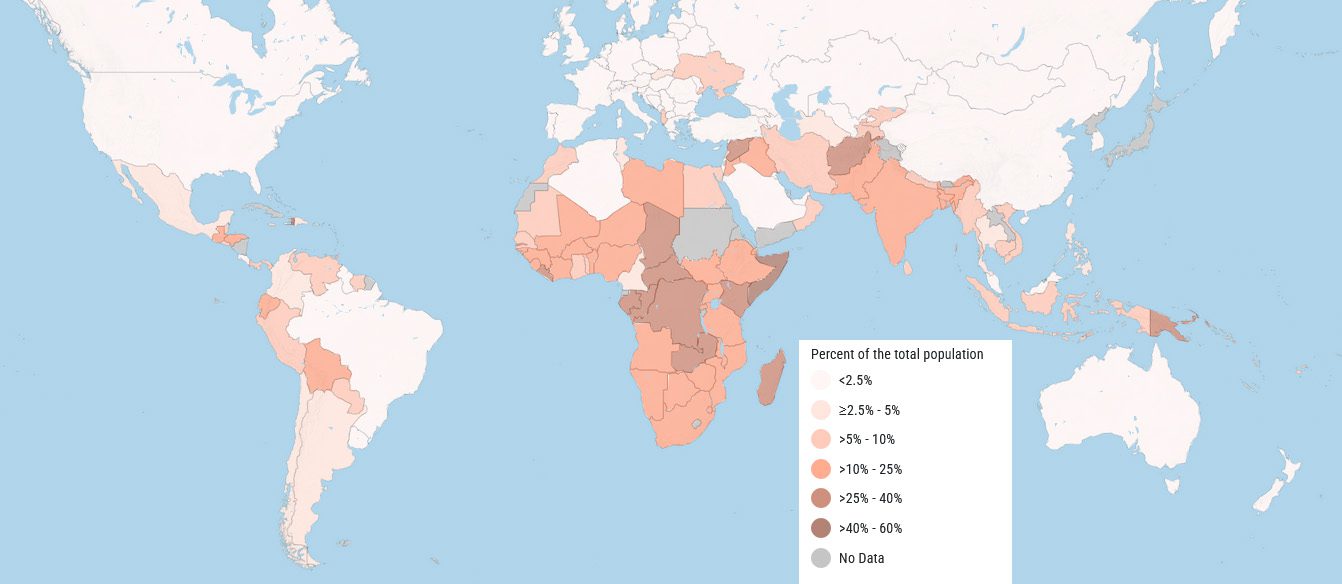
Prevalence of human undernourishment as a percentage, and over a three-year average from 2024-16 to 2022-24. Source: UN Food and Agriculture Organization
Amid a global population of more than 8 billion, Prof Denning said around 2.5-3B are overweight, 673 million are going hungry, mostly in Africa and South Asia, and 2.6B cannot afford a healthy diet as food prices continue to rise.
“There’s no doubt, and the World Food Programme reminds us often, that we’re in a food crisis like no other.”
“There’s no doubt the alarm bells are ringing.”
He said they were being heard in the geopolitical sphere, and quoted China’s President Xi Jinping as recently describing agriculture as a “national security issue of extreme importance”.
On the hopeful side, Prof Denning spoke about Brazil’s launch last year of the Global Alliance Against Hunger and Poverty, and at home, the recently launched Feeding Australia strategy.
“Our food system is not delivering in terms of global wellbeing.
“Food insecurity is in every country, including this one.”
He highlighted Indonesia’s concerns about climbing rice prices, and reminded the audience that this is not just an offshore problem.
“Twenty percent of Australian households are described as severely food insecure.”
Prof Denning said connecting farmers to markets could be part of the solution, and sustainable intensification of existing agriculture land was “the smart we want” which could increase food production with a reduced environmental impact.
He urged delegates to champion food security as a “platform for peace and prosperity”, and to use to “foster adversarial collaborations and build unlikely alliances” outside the comfort zone of regular research and project boundaries.
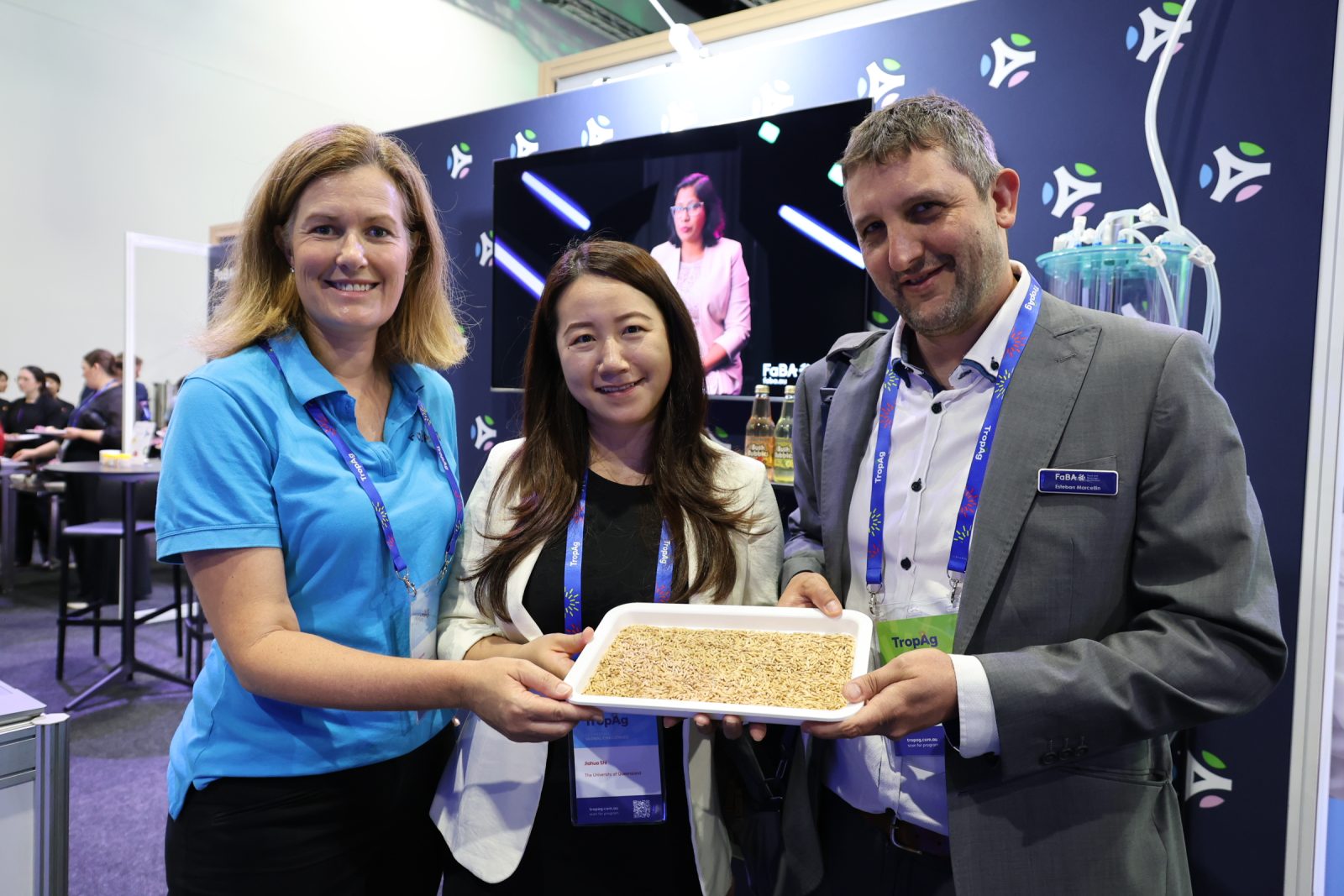
Part of the Federal Government’s Trailblazer Program, the Food and Beverage Accelerator is exhibiting at TropAg 2025. UQ hosts FaBA in collaboration with QUT, the University of Southern Queensland and UniQuest. Pictured are FaBA’s Anna Moloney, and researchers Dr Jiahua Shi and Prof Esteban Marcellin with gluten-free oats being developed using Australian Export Grains Innovation Centre IP.
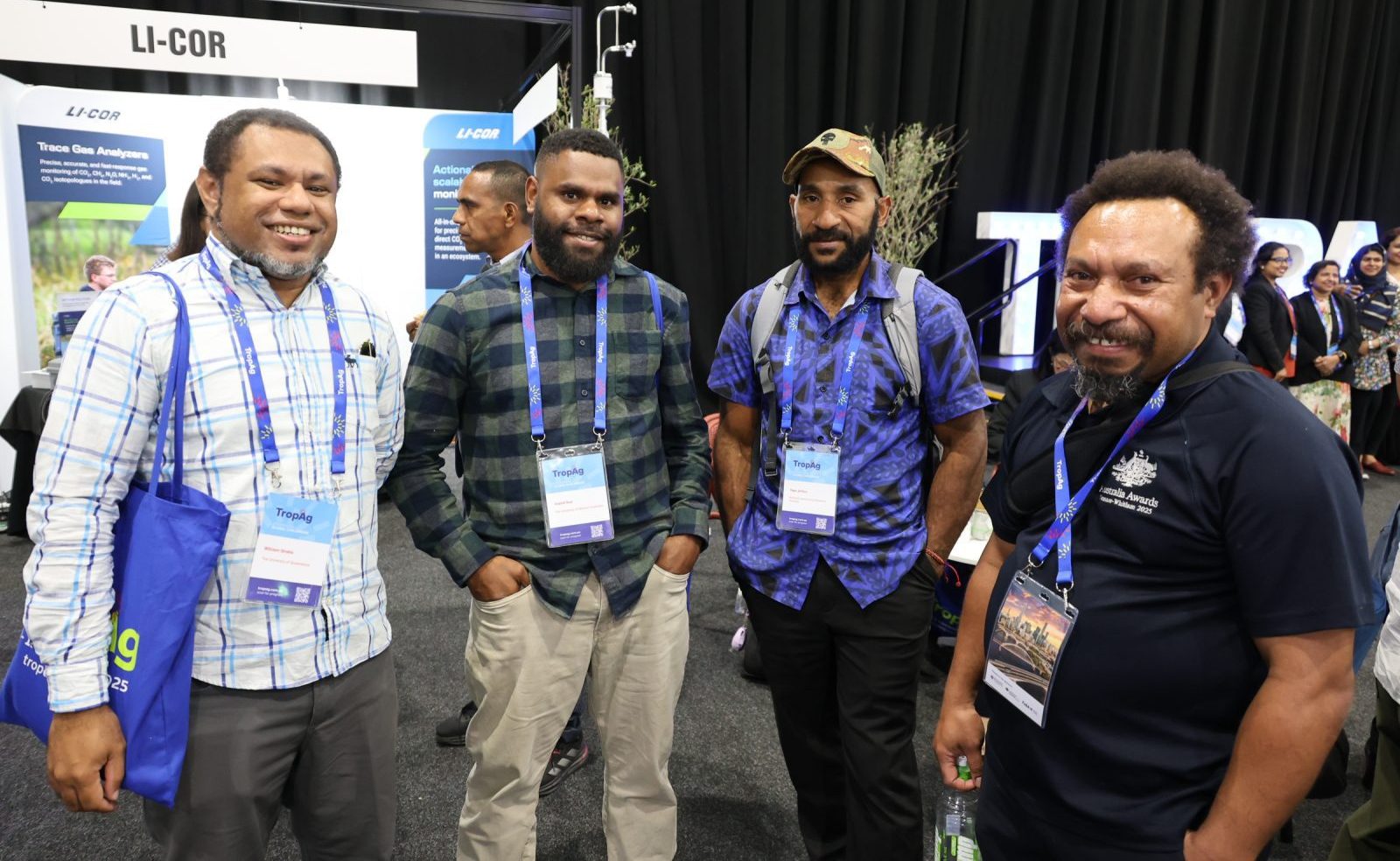
Among those with a Papua New Guinea connection at TropAg 2025 are UQ soil management PhD candidate William Sirabis, University of Western Australia cropping and livestock systems Masters student Jaspah Sua, National Agricultural Research Institute, Lae, soil and water management researcher Yapo Jeffery, and University of Newcastle biology PhD candidate majoring in cattle Stanley Amben.
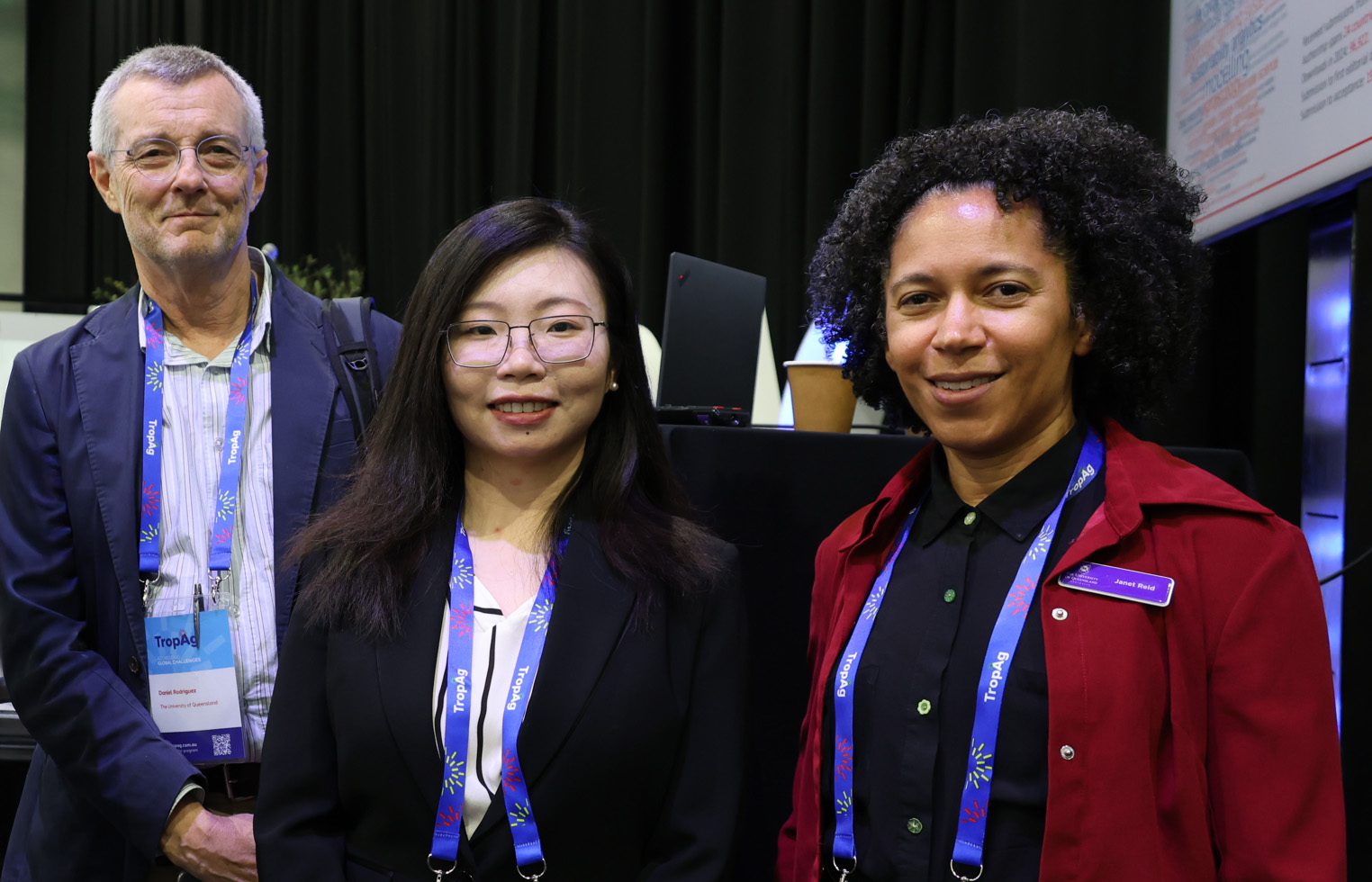
QAAFI’s Prof Daniel Rodriguez, Springer Nature associate publisher Meng Wang, Beijing, and QAAFI principal business development co-ordinator Dr Janet Reid.
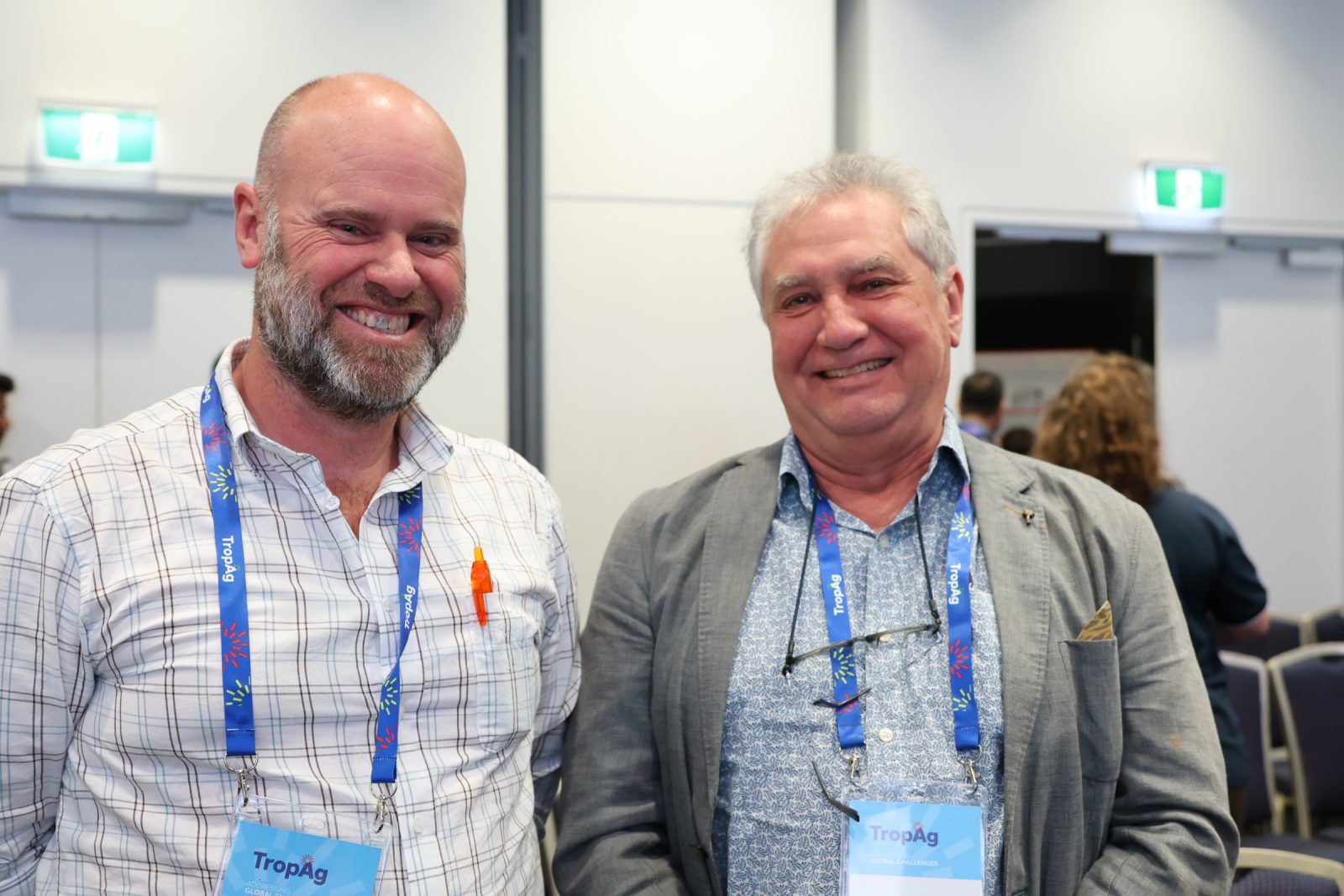
QAAFI farming systems researcher Dr Joe Eyre and UQ’s Dr Gunnar Kirchhof.
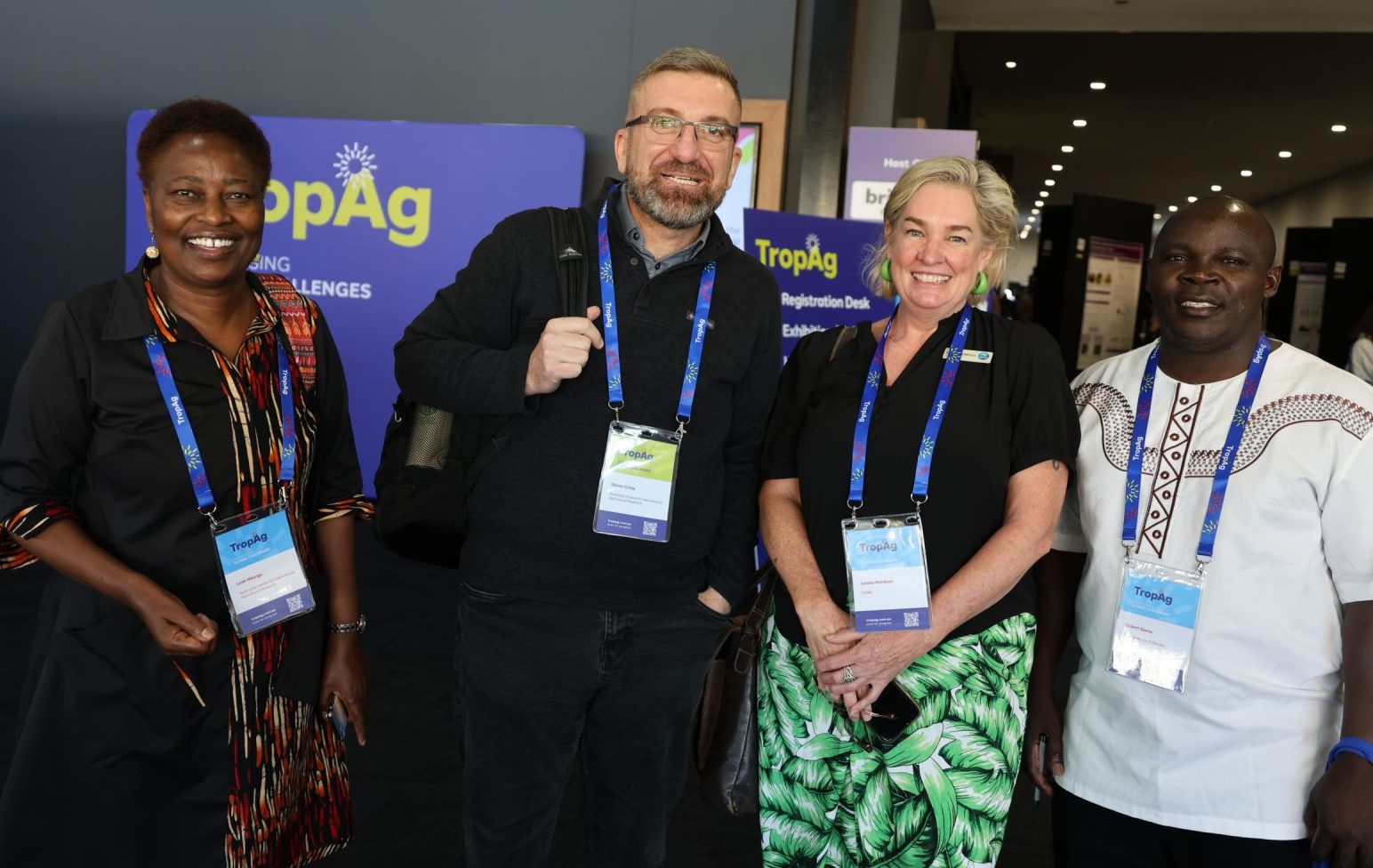
ACIAR’s Dr Leah Ndungu, Nairobi and research director Dr Steven Crimp, Canberra, CSIRO research director Larelle McMillan, Brisbane, and University of Zambia horticulture researcher Dr Gilbert Siame.
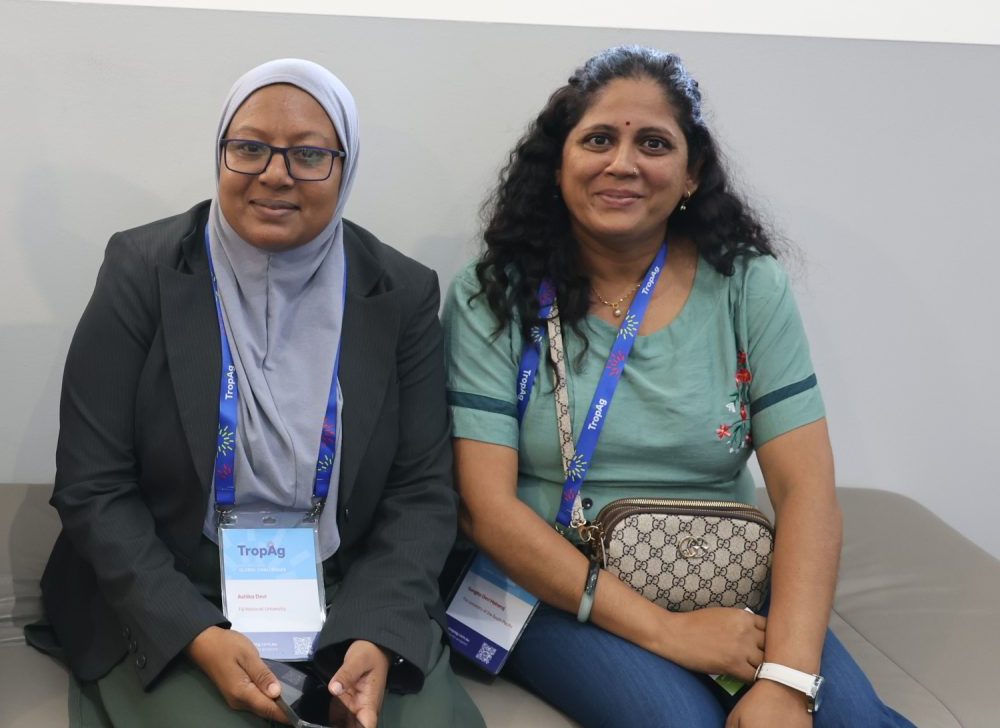
Fiji National University poultry nutrition researcher Dr Ashika Devi and University of the South Pacific Masters student Sangita Devi Maharaj.
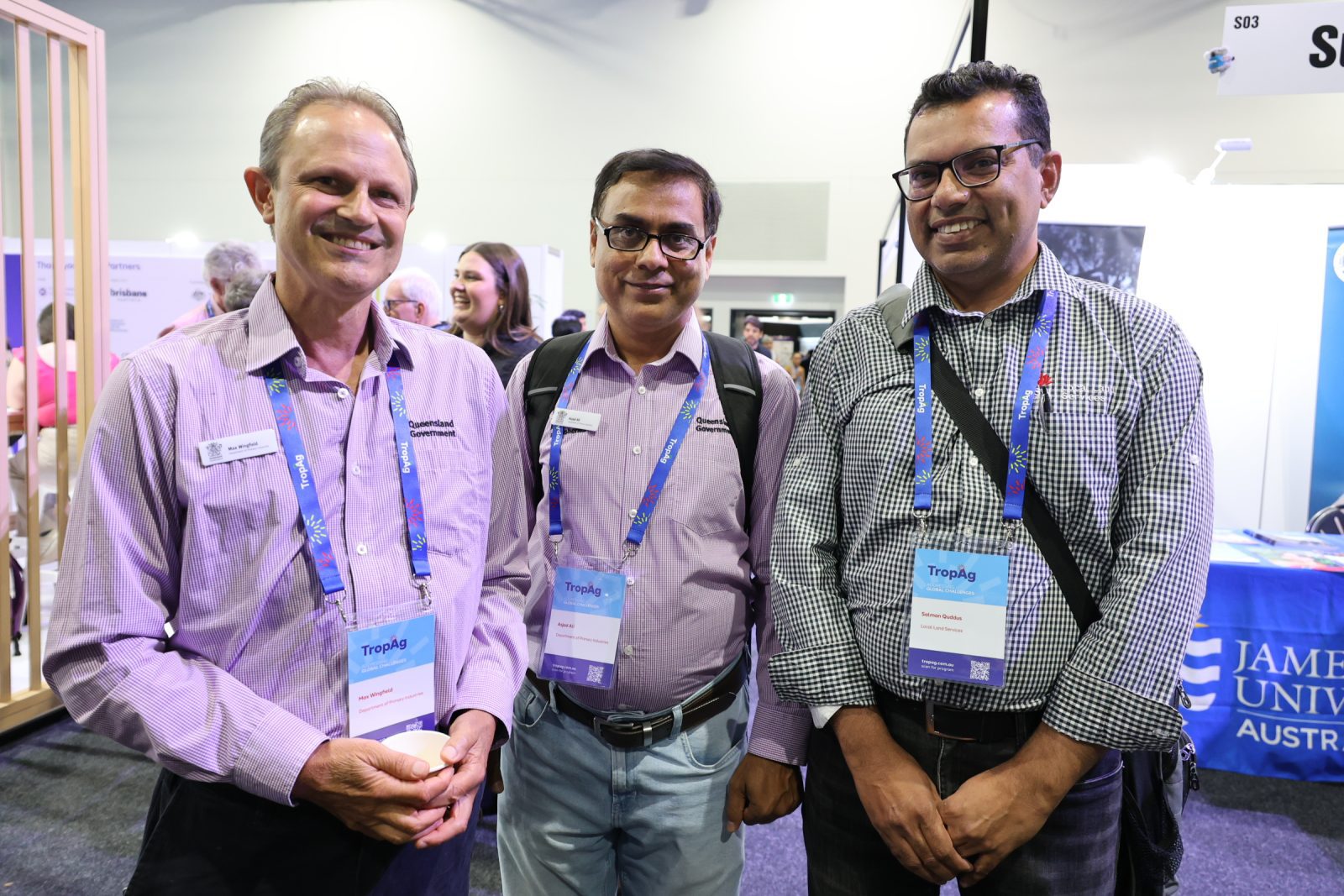
Qld DPI oyster researcher Max Wingfield, Bribie Island and colleague and mango researcher Asjad Ali, Mareeba, with NSW Local Land Services senior officer Salman Quddus, Buronga.
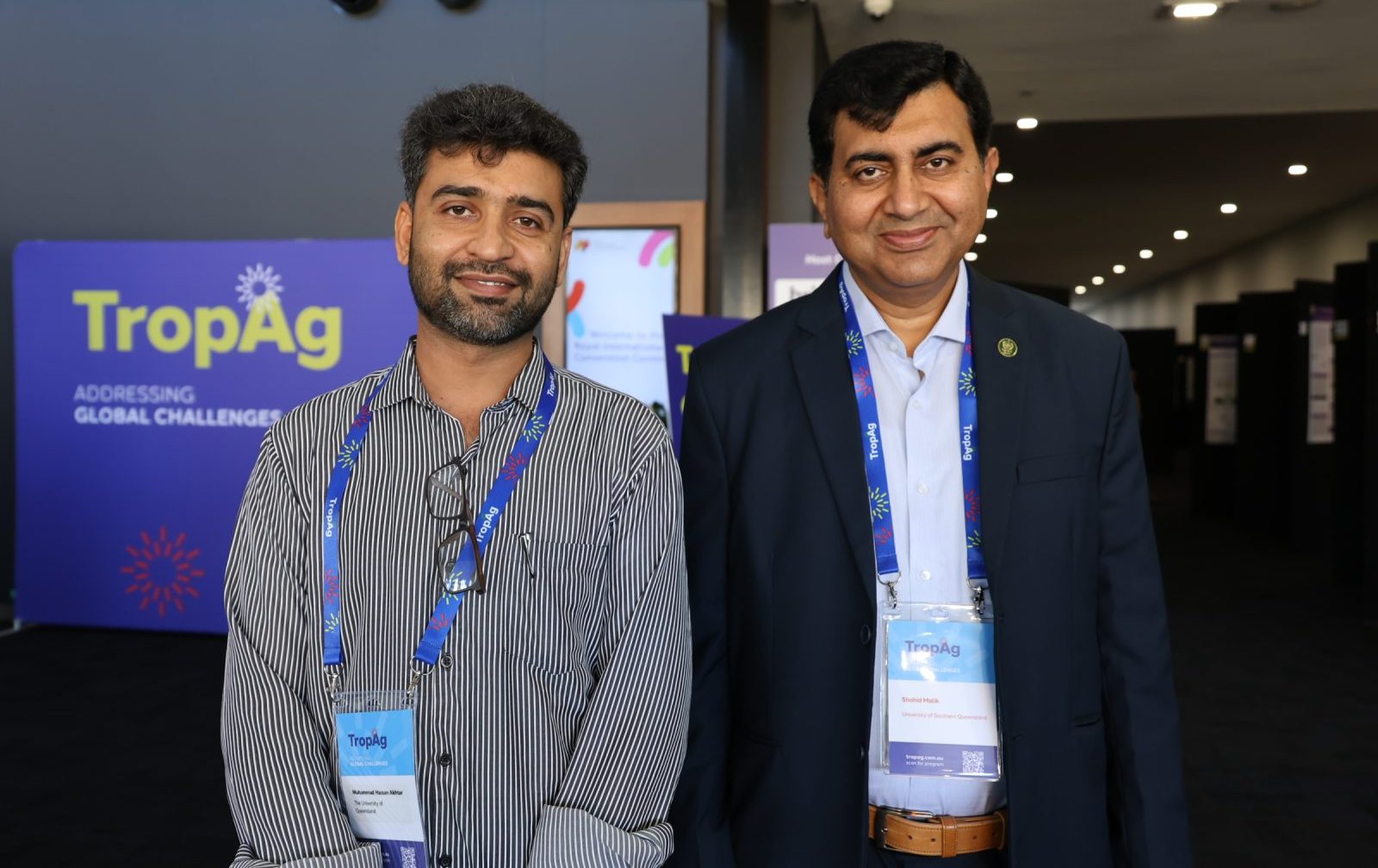
UQ PhD candidate specialising in pulses Muhammad Hassan Akhtar and Pakistan Agricultural Research Council plant sciences program leader Dr Shahid Riaz Malik.
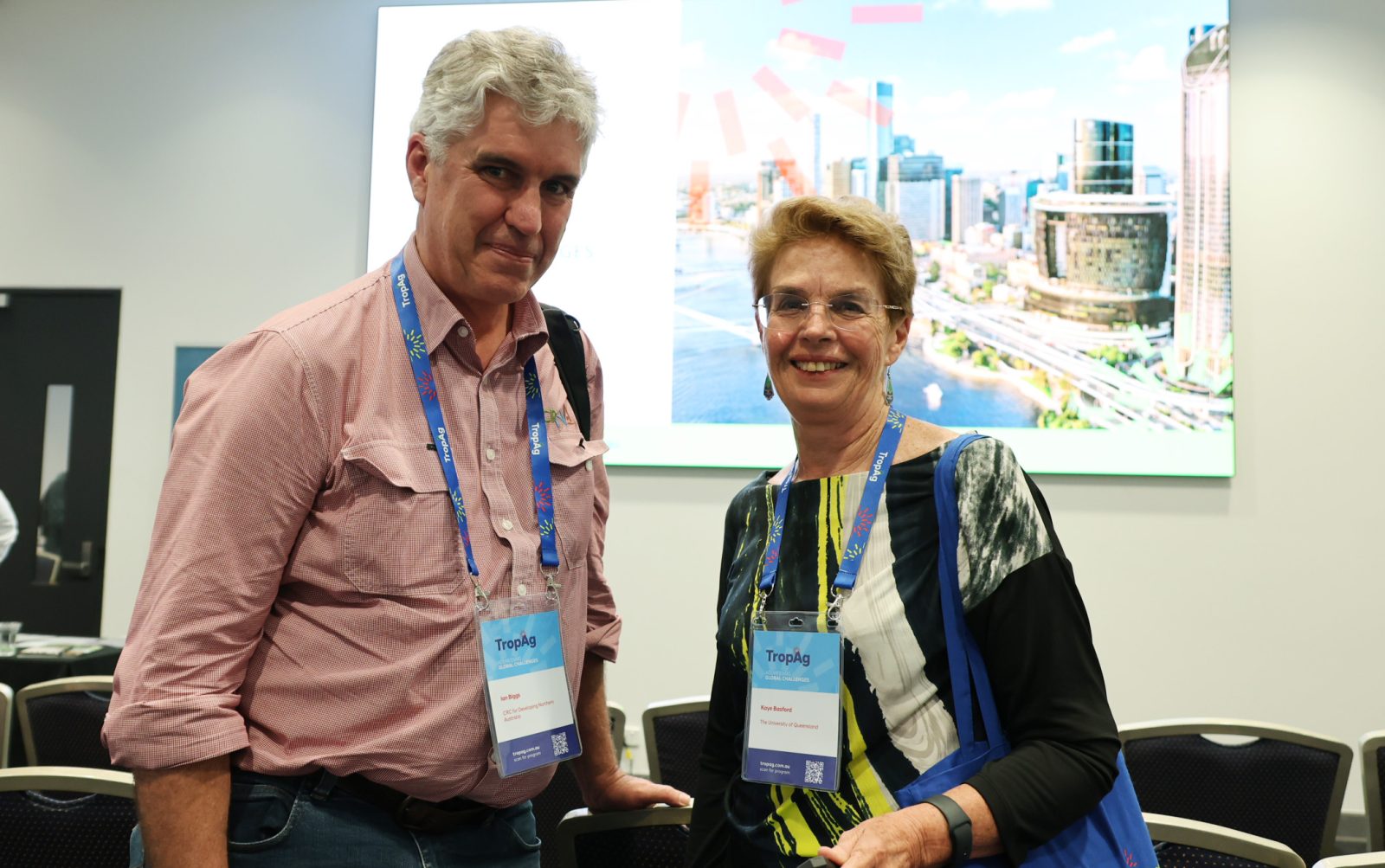
CRC for Developing Northern Australia senior project manager Dr Ian Biggs and QAAFI researcher Prof Kaye Basford.
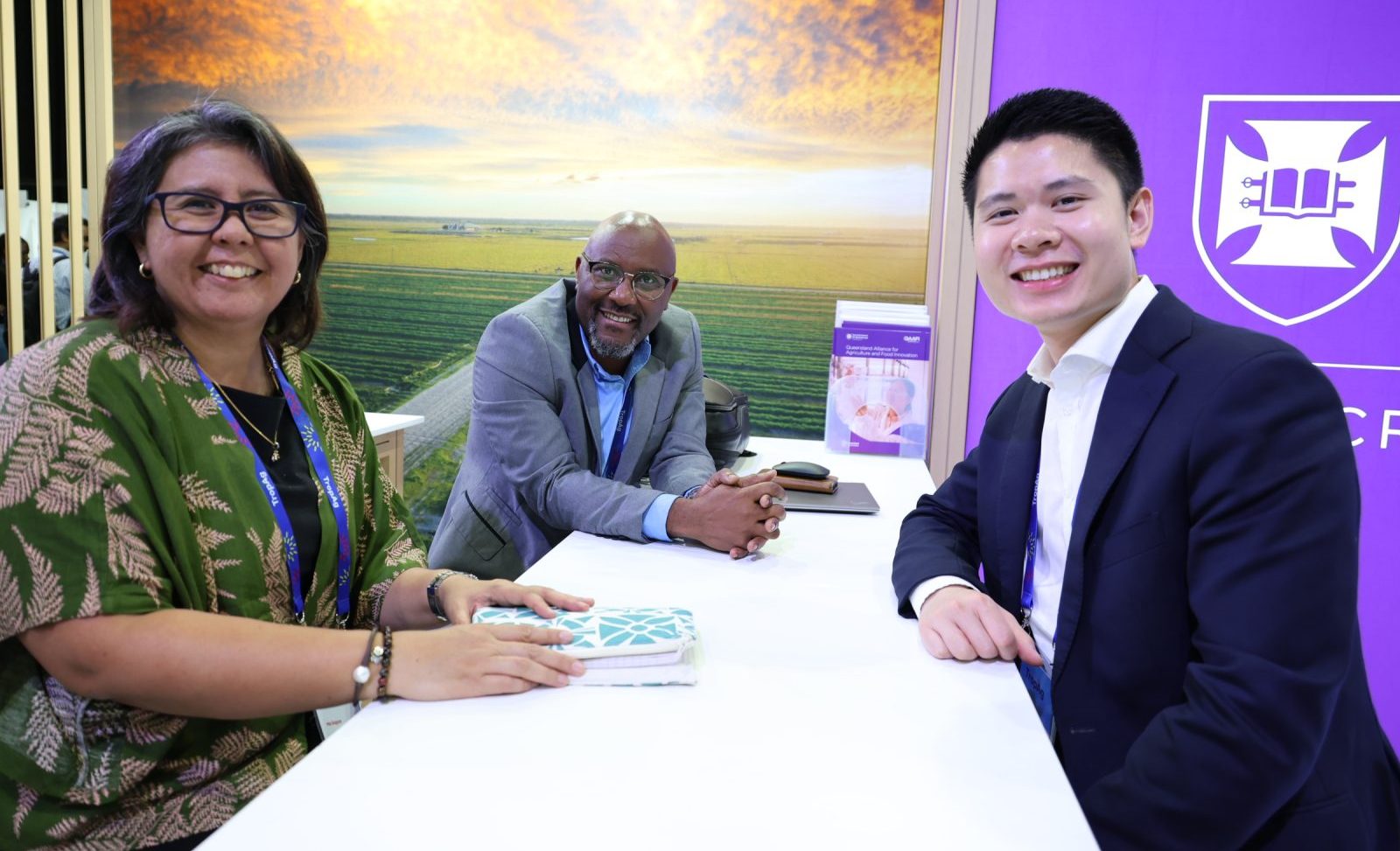
ACIAR’s Mai Alagcan, Suva, QAAFI crop protection researcher Prof Femi Akinsanmi, and QAAFI business development officer Ric Tang.
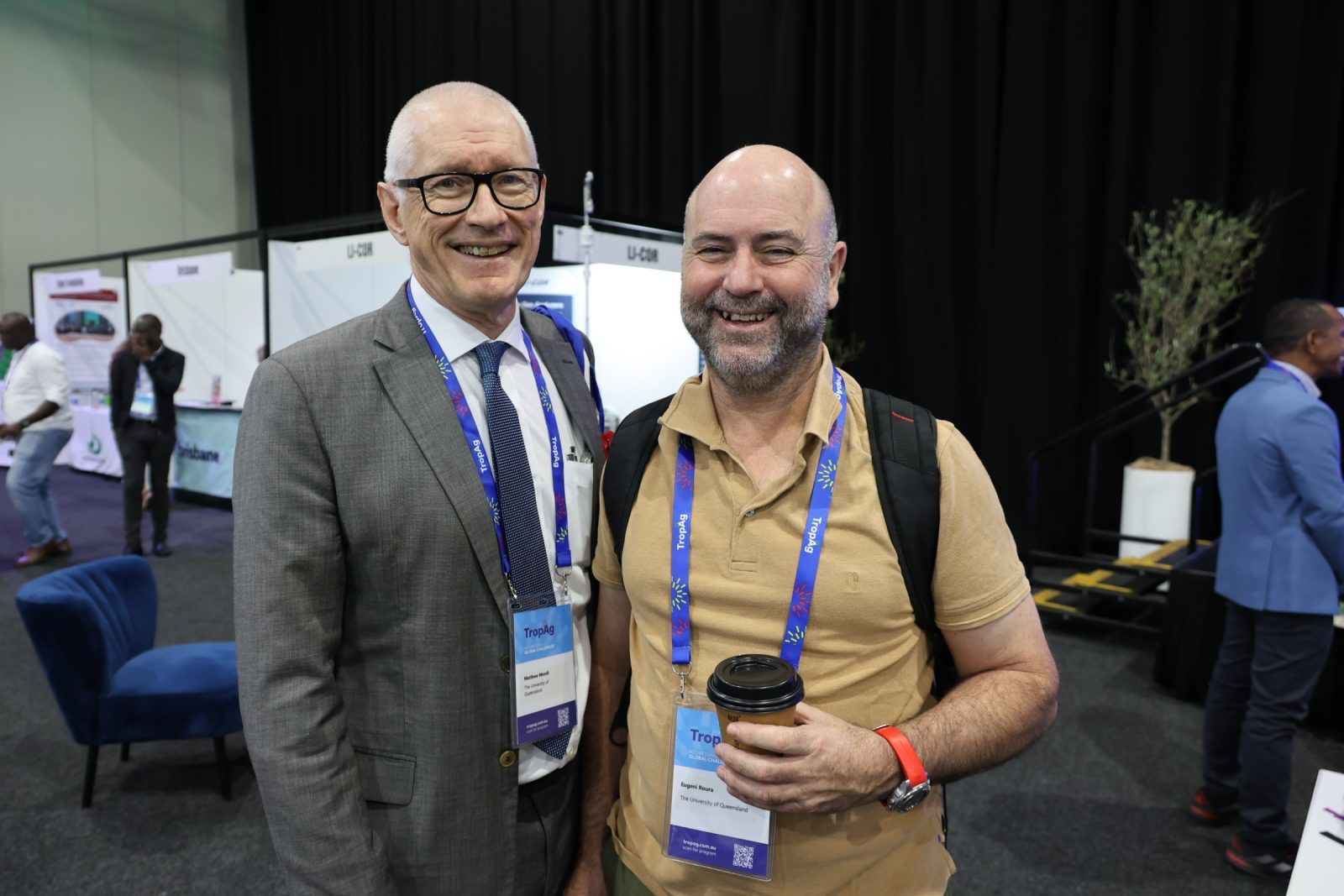
QAAFI director Prof Matthew Morell and Centre for Animal Science researcher Prof Eugeni Roura.
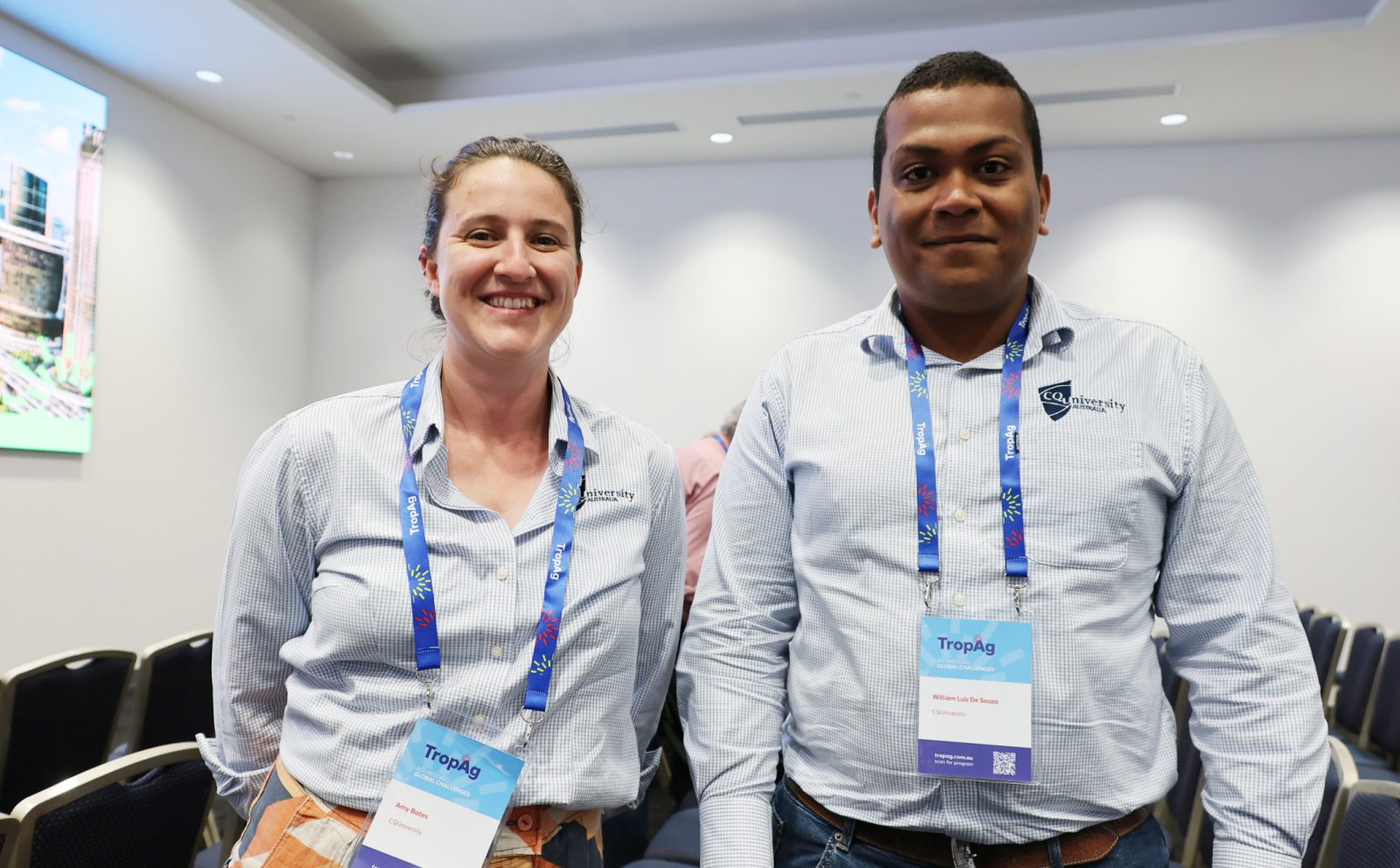
CQU precision livestock management researchers Dr Amy Bates and Dr William Luiz de Souza.