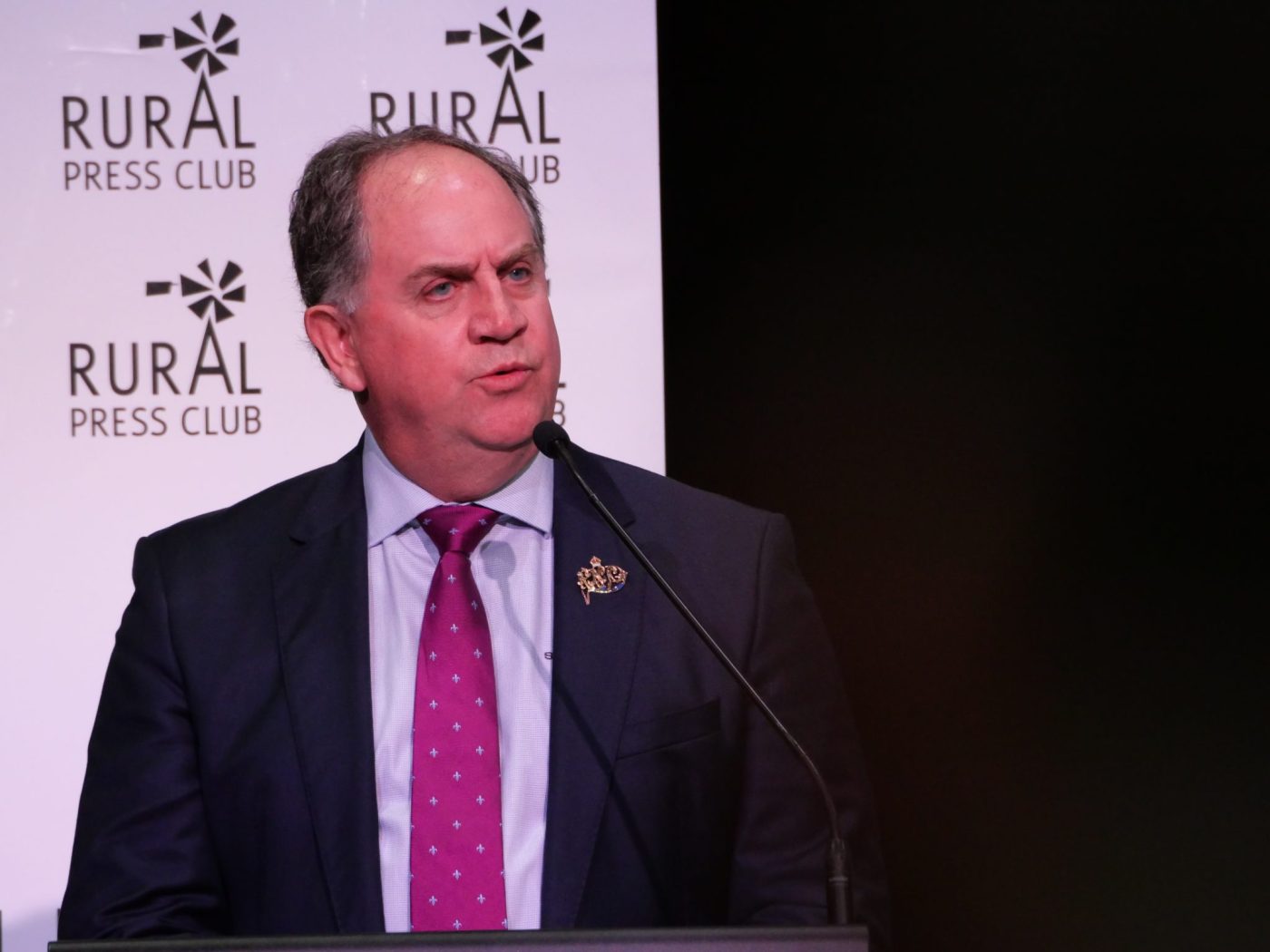
Lachie Hart delivering Malcolm McCosker Memorial Address at the 2025 Royal Queensland Show last Friday.
EVER since Paul Barry published The Rise and Rise of Kerry Packer in the early 90s, the same phrase has been applied to describe all kinds of success stories.
But “the rise and rise” does seem to be a particularly apt fit for the Hart family and Stockyard Beef.
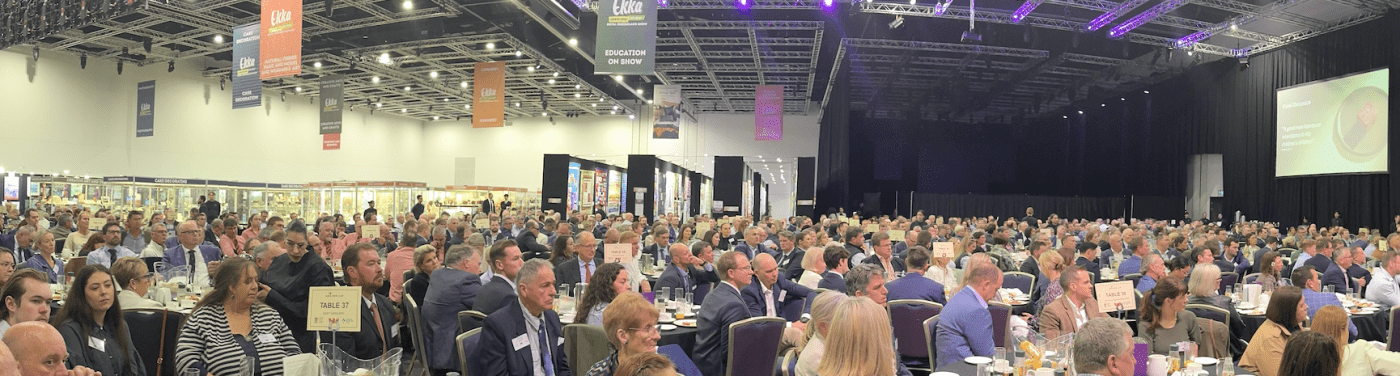
More than 700 people were in attendance at the Rural Press Club of Queensland breakfast to hear the story of Stockyard Beef.
That’s because, as a packed audience of 700 people at a Rural Press Club of Queensland breakfast at the Ekka last Friday morning heard, Stockyard’s journey has unfolded in two distinct phases.
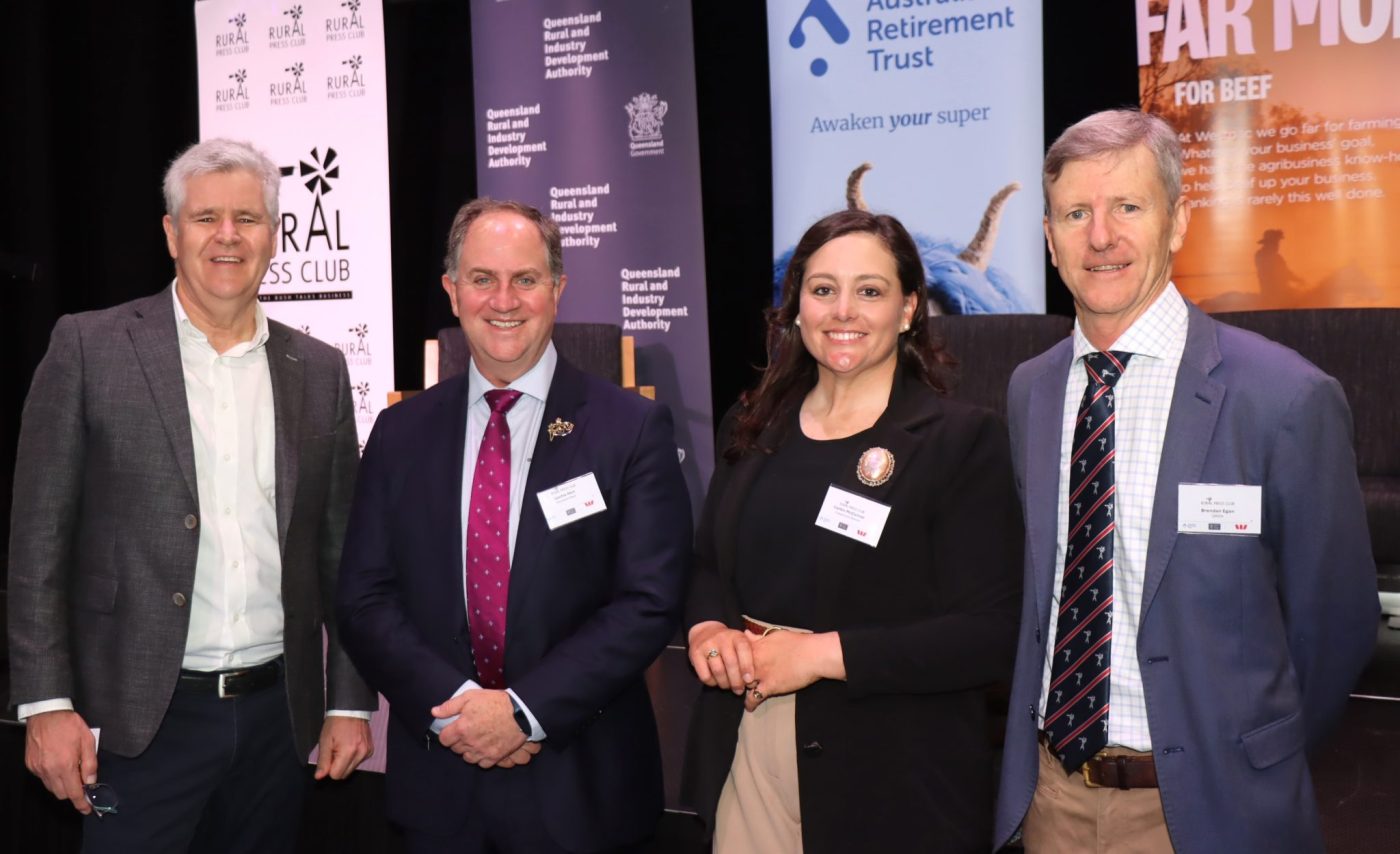
Stockyard Beef’s Lachie Hart with Cameron McMillan, Caitlin McConnel and Brendan Egan from QRIDA at the Rural Press Club of Queensland Ekka breakfast on Friday.
And along the way a decision to put governance and succession on the same footing as cattle and customers has also underpinned the family’s successful progression into a third-generation.
The deliberate steps taken to manage the inter-generational transition, evolving from a “family business” to a “business family”, was one of two compelling stories shared on stage last Friday by Robin Hart, his son Lachie and Lachie’s daughters Bec and Ali.
The other was the story of Stockyard Beef’s growth itself to become Australia’s most awarded beef brand and an internationally renowned producer of premium quality beef.
‘The rise’ phase one: pioneers with a quality beef obsession
Robin Hart grew up as a city-raised son and grandson of well-known Brisbane accountants, but developed an early love for the bush and working with cattle. He went jackarooing straight after school at age 17, and by 20 was managing a property near Dingo in Central Queensland.

Robin and Del Hart.
Del was the daughter of a respected Shorthorn Stud cattle breeding family from the Jondaryan property Berwick, and an accomplished junior cattle judge.
Robin and Del were married in 1958 – and celebrated their 68th wedding anniversary just last month – and together acquired a property called Kerwee near Eidsvold in Central Queensland.
Alongside their Eidsvold breeding property, Robin and Del started lot feeding cattle at Del’s family property Berwick at Jondaryan – still the home of Kerwee feedlot today – in 1965, largely for local butcher shops. This feedlot remains Australia’s longest held feedlot license under the same ownership.
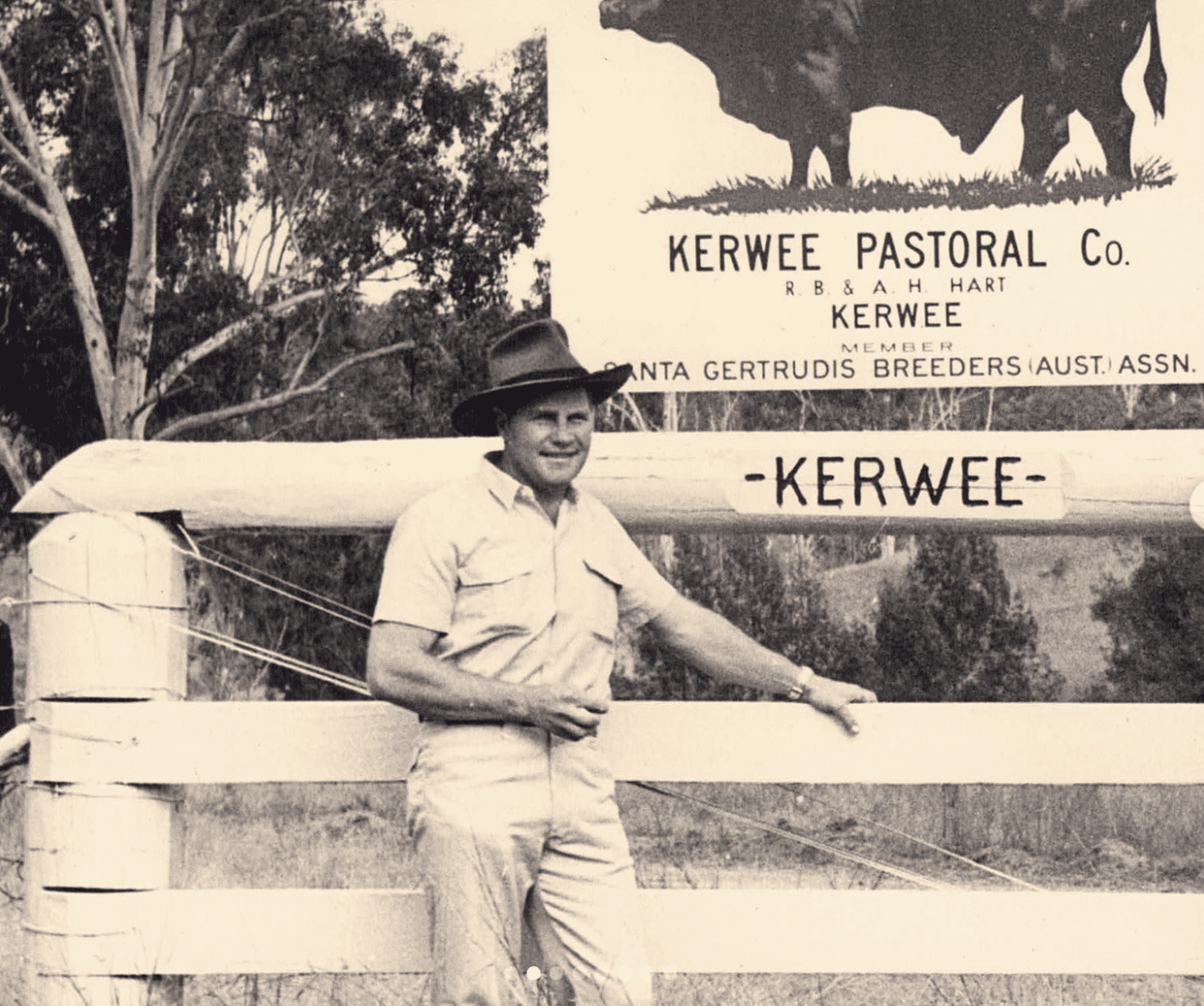
Robin Hart at Kerwee.
In his early 30s Robin was invited to join the board of a company called Amagraze, a processing and pastoral company that owned and operated properties in North West Queensland including processing interests in Biloela and Cairns and a boning room located in Brisbane.
In the early 1970s Robin travelled to Japan with a delegation of Amagraze directors, a trip that would change the course of his career from being a cattle breeder to being a beef producer, as Lachie explained.
“On his return to Australia he established a branded beef company called Stockyard Meat Packers in 1973.
“Together with other feedlot pioneers, notably Dugald Cameron, Don Bridgeford and Uen Morgan, Stockyard commenced exporting chilled grainfed beef to Japan, another first for Australia.”
“From humble beginnings the work undertaken by Robin and Dugald and Don and Uen has become a significant sector for our beef industry today.
“In the 1980s Robin bought out the other shareholders of Stockyard and we became fully owned and operated by the Hart family.”
Japan: ‘People who really analysed what they ate’
Robin said that while his first trip to Japan with Amagraze which was really operating at the lower, manufacturing end of the quality spectrum, he instantly recognised enormous scope to supply high quality beef to the market.
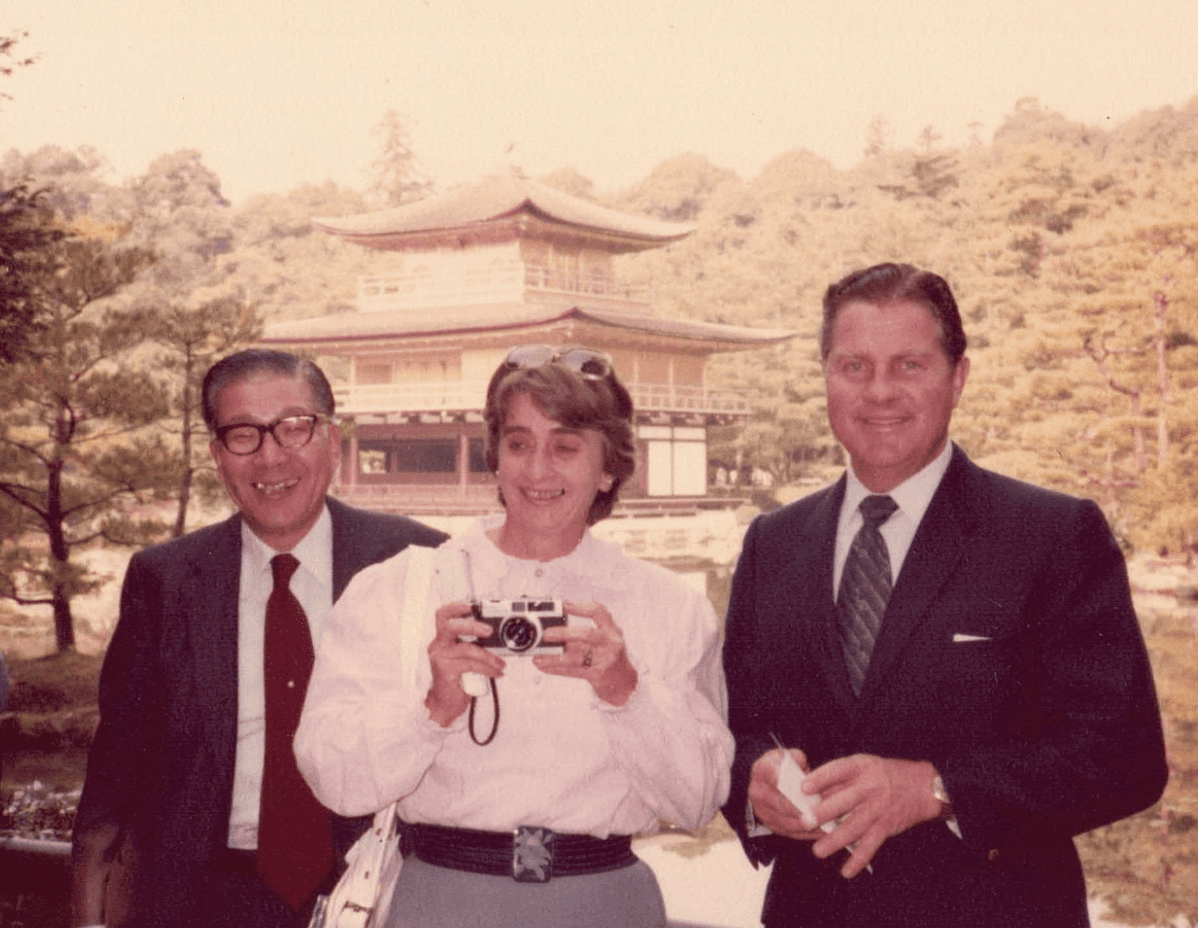 “There was this other group of people… I mean Japan was growing as a big market, there was still a huge market for manufacturing beef and still is, but there is also this perfection market, and that is what really intrigued me,” he said in conversation with moderator Arlie Felton-Taylor.
“Here was a race of people who really analysed what they ate, dissected how they enjoyed it, what did it taste like, things like we in Australia would never think about.
“We would sit down to a steak and chew it away and get on with something else.
“But here was a race of people that that really loved what they did, and eating and looking for quality and perfection.”
Robin was also quick to credit the Del’s role in the development of their business. “She played a huge role, but one that she never really expected to be acknowledged. She was just a great supporter for me. When in actual fact, she was the expert on beef,” he said, recalling her junior judging days and “very good eye” for cattle.
Through the 1980s Stockyard consolidated under full Hart family ownership, expanded feeding capacity as Japan liberalised, and built the relationships that still anchor its premium export program today.
A detour into processing – and the lesson that reset the business
In 1996 Stockyard, in a joint venture with NAPCo, bought the Grantham abattoir aiming to lift productivity and traceability.
The plant was rebuilt, new technologies were installed and innovations such as carcase-level traceability in the boning room and self-managed work teams were introduced.
Stanbroke was invited to join the joint venture in 2000. The abattoir was eventually sold to Stanbroke in 2004 following its takeover by the Menegazzo family.
 Commercially, the venture worked.
But, strategically, Lachie said, it “seemed we had lost our way” during those previous eight years of operating an abattoir.
“Our previously successful model of being quality and market driven was quickly replaced with a volume and production driven model which had a devastating impact on our brand’s reputation and value,” he said.
“So once we regained control of our brands I was determined to refocus our attention on quality and to rebuild our brand’s integrity and reputation.
“So for the next 20 years it was all about brand value and growth.”
‘The rise’ phase two: data, producer collaboration and brand value
They dropped their young grainfed and mid-fed programs and focused only on a 200-day Angus long fed and 400-day Wagyu program.
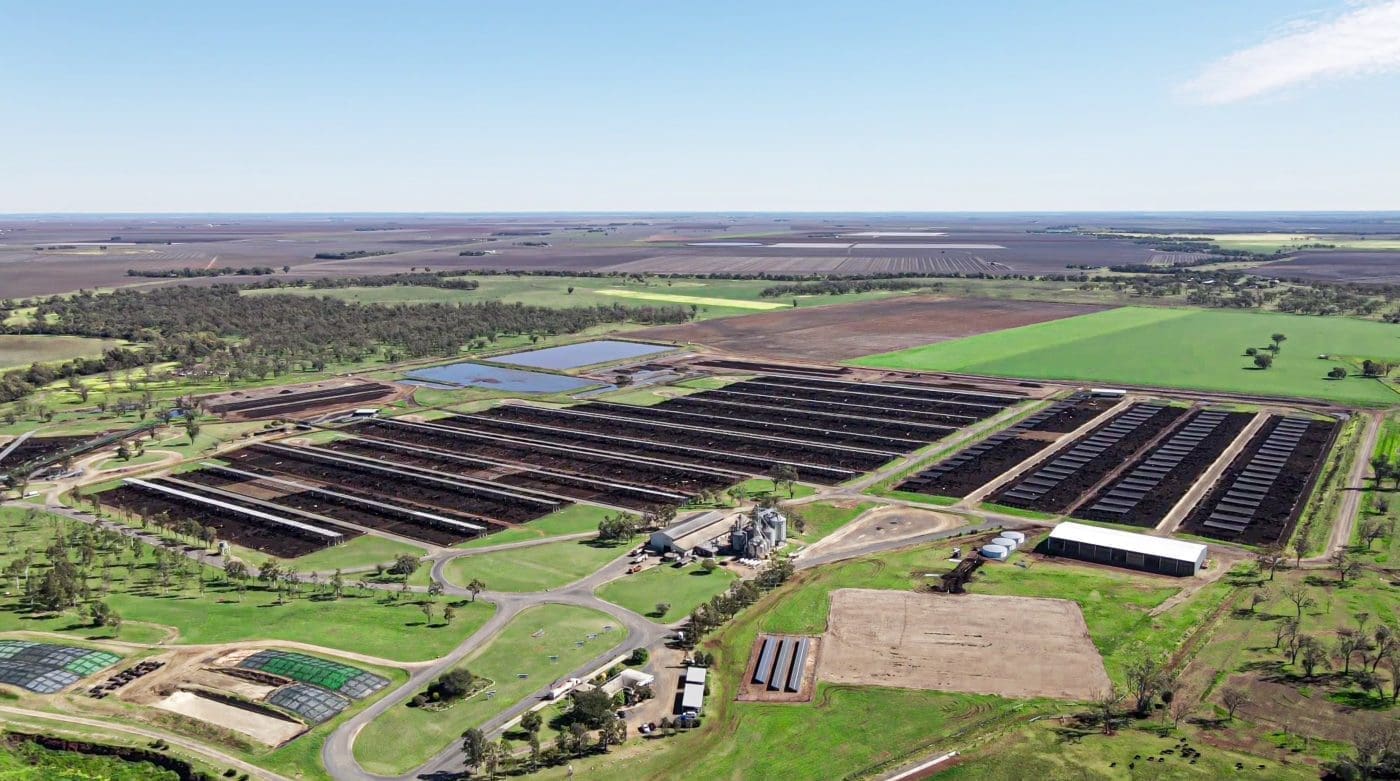
An aerial picture of the Kerwee Feedlot at Jondaryan taken in 2023.
To ensure stable and reliable supply they also moved away from customer feeding programs and moved to breeding or acquiring all cattle requirements themselves.
“We doubled the size of the feedlot to 20,000 head in 2017, and in 2020 we commenced a Wagyu breeding program to further control the genetics and ultimately the products that ends up in our cartons,” Lachie said.
“So consequently we have 2000 Wagyu breeders located at Kingsgate Station which is a 15,000 acre property on the eastern fall of Glen Innes.
“And we’re on track to build our herd to 5000 breeders by 2030.”
Where the industry uses estimated breeding values, Stockyard Beef’s supply is backed by actual performance data collected for nearly 35 years on Wagyu genetics, including weight gain, animal health, net feed intake, feed efficiency and carcase performance.
“And this is an incredibly valuable tool for us.”
At best, Stockyard’s 5000 breeders will only account for approximately 10 percent of its required volume of Wagyu feeder cattle.
“So why are we doing it?” Lachie asked.
“By collaborating with our producers, to use our performance proven genetics, it is our intention to influence 100 percent of our Wagyu supply.”
In addition to the state-of-the-art 20,000 head Kerwee Feedlot, Stockyard also has an additional 7000 head on feed in other feedlots on the Darling Downs.
“Our numbers continue to grow which is creating a dilemma for our board as to what our next move will be.
“We are well advanced in achieving our vision to be the most renowned beef in the world.
 “Our brands are now established in over 20 countries with Japan and the Middle East our largest markets.
“I am proud to say we are Australia’s most awarded beef brand.
“Just two months ago our Stockyard Angus beef was champion MSA graded branded beef of show at the Royal Queensland Awards branded beef competition.
“No other brand in Australia, most likely the world, has won as many awards as we have.
“Now look, I know I am bragging.
“But we have all worked so bloody hard to achieve that accolade.”
Lachie said the annual branded beef competitions hosted by Royal Shows in each State were a great way to objectively benchmark their product against peers and also to help promote to their customers the consistency and reliability of Stockyard branded product.
From family business to business family: making succession a discipline
The breakfast wasn’t just a brand retrospective, it was a case study in how the Harts have tackled the challenging but crucially important task of managing intergenerational change in their family business.
Lachie emphasised just how important it was for family businesses to confront rather than shy away from discussing succession.
Family businesses accounted for around 70 percent of Australian firms and employed half the national workforce, yet only 30 percent successfully transition to a second generation, 12 percent to a third and “a measly” 4 percent to a fourth.
The Harvard Business Review identifies the three top causes of failure of family businesses as poor succession planning, family conflict and lack of preparation of the next generation.
Lachie explained how Stockyard has been recast from a “family business” to a “business family”. They installed a skills-based corporate board in the early 1990s.
In 2024 they appointed the first non-family CEO, Lisa Sharp, with Lachie moving to non-executive chair.
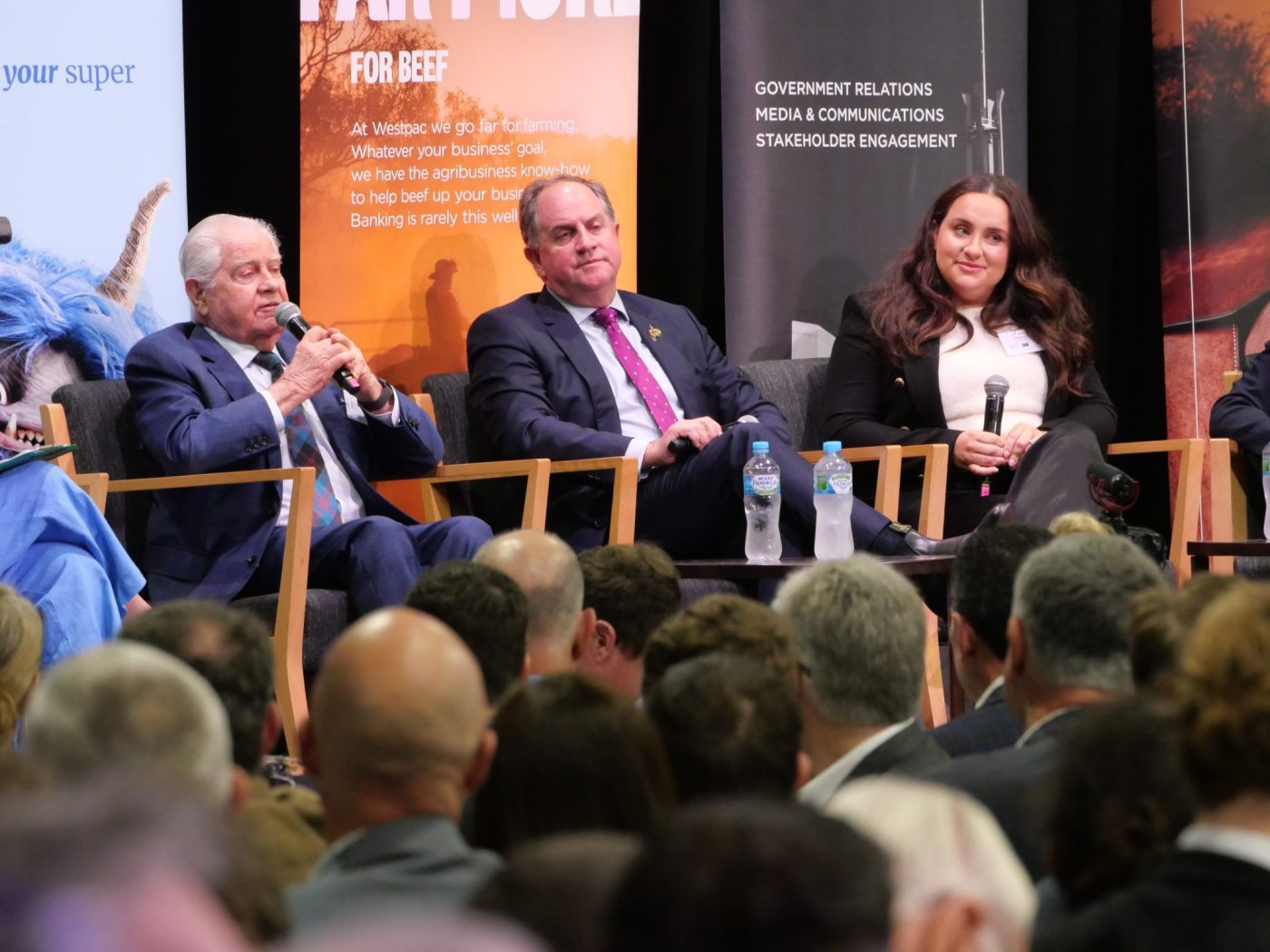
Robin, Lachie and Bec.
Alongside the governance board sits a formal family board consisting of Lachie and Sarah with daughters Bec and Ali, tasked with family direction, harmony and belonging, a family office, and development of the next generation as capable owners.
As the third generation entering the business after pursuing their own careers outside the business, Bec and Ali were introduced through a deliberate “next-gen” program that rotated them across the pastoral, feedlot, sales, logistics, finance and corporate sections of the business.
Lachie recalled one humorous moment when this transition process landed close to home. While driving in a ute with Robin inspecting cattle in the feedlot, a feed truck emerged behind them, repeatedly blowing its horn. Pulling over, they then discovered the driver of the truck was none other than Lachie’s daughter Ali, leaning out the window with the message: “Move over old man, you’re holding everyone up!”
From their own experience, Lachie shared the following key points on succession:
- Start early. “Start these conversations as early as possible. It is never too early, but it certainly can be too late.”
- Be honest and bring everyone to the table. Founders must be willing to discuss, and ultimately share, control and ownership.
- Use professionals. Legal, tax and emotional complexities are real, external advisers help keep the process on track.
- Accept that not every ‘business’ is trans-generational — but a ‘business family’ can be. Build governance and opportunities that let the next gen become good owners, whether or not they work in the operating business.
“A lot of the conversations that families have to have when they talking about succession are really difficult conversations and so I really think that start early, get involved, have that conversation
“It is generally the generation above or the parents, they’re the ones that don’t want to have the conversation, and if there are those of you in this room today, can I ask you, please, start that conversation.”
Third generation brings purpose, innovation and fresh perspectives
Raised in the city and both having gained overseas experience in their own careers in marketing and education respectively before joining Stockyard Beef, Bec and Ali Hart have returned to Stockyard with a “next gen” lens on what premium beef brands need next.
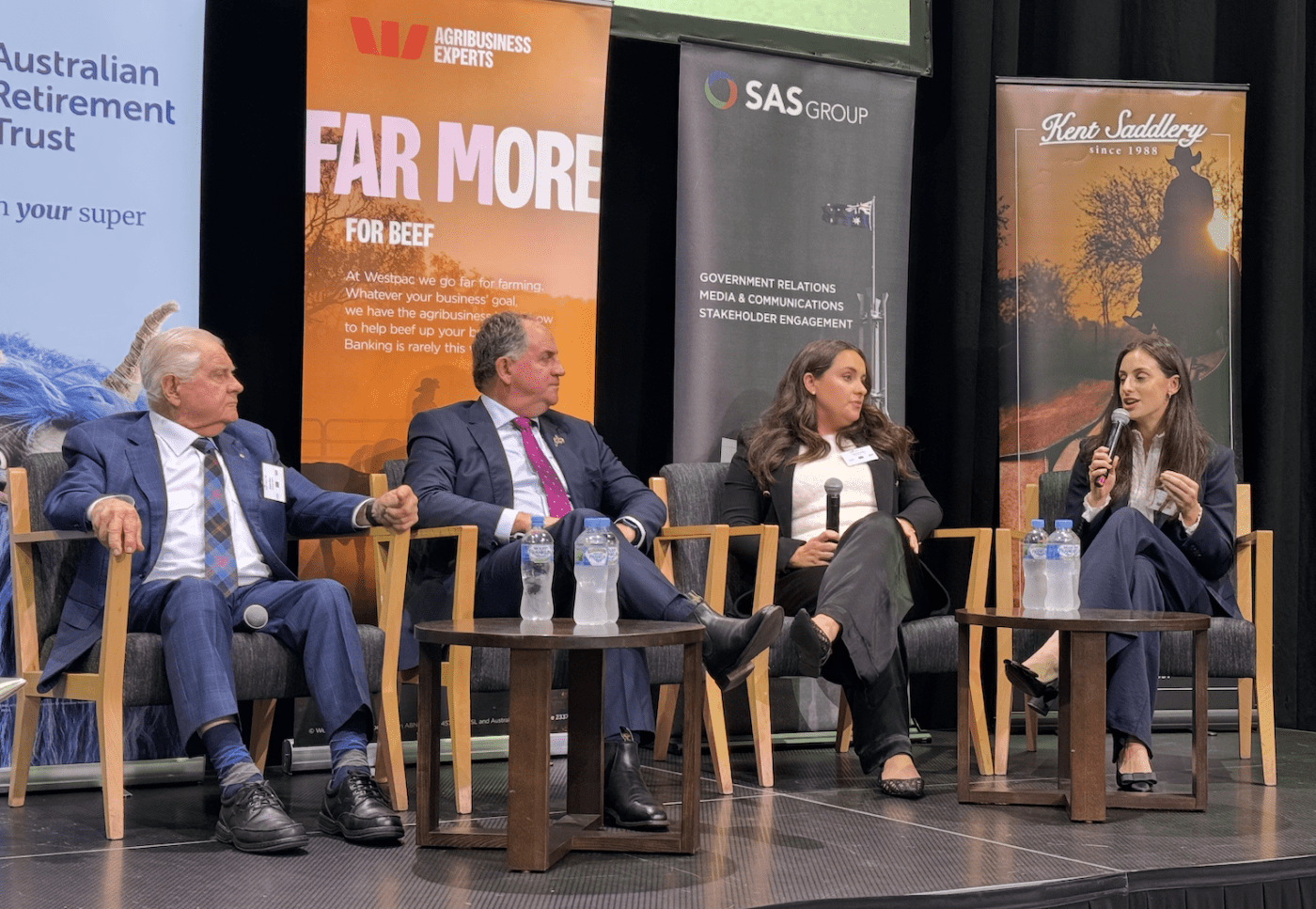
Robin, Lachie, Bec and Ali.
Bec, now Stockyard Beef marketing manager, had previously worked with not-for-profits in the UK where “purpose driven work was really important to me”.
“I naively thought that in the corporate world that would not be the case and I wouldn’t experience that,” she said.
“But I have absolutely learnt over the last three years since joining Stockyard that there is nothing more purposeful than producing this natural product and feeding the world with it.
“It fills my cup so much, the team behind the product too who care just as much as we do, it is a pinch me moment every day.”
Ali, Stockyard’s innovation manager, also brings a mindset shaped by her time in large organisations in London.
“I think the benefit of going out before you come in is – it is not like a boiling frog analogy where you slowly start to learn what it is like to run this business or market our product, which is where I started – you jump straight in and you are like, oh well, we’re doing that? and have you thought about doing this?
“And so I think having an opportunity to go out and understand how really big corporates run, you can take a little bit of what you have learned from there before you come in and I think it does help as a family member within a business to feel like your position is justified, because you can add value back to that business.”
Both are comfortable exploring how and where technology can help to produce beef more efficiently, while also being tuned into issues the younger generation rate as high priorities.
“Sustainability of course (for) this next generation is first and foremost at the top of our minds, and making sure that we are leaving a legacy behind that is gentler on the environment than perhaps before,” Bec said.
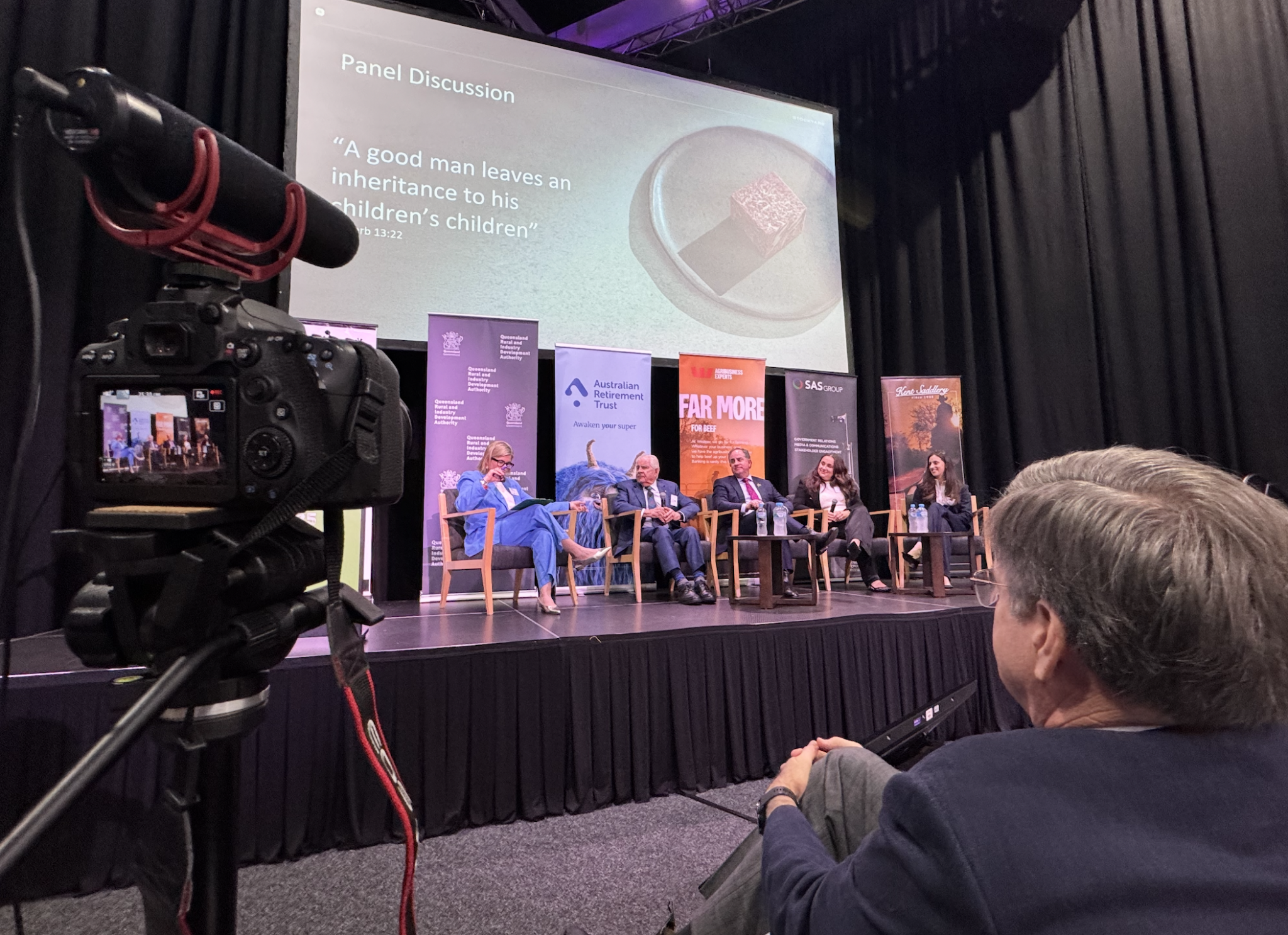 “One that is certainly top of mind for me at the moment is modern families that look very different these days to previous generations, so creating a work force and a work environment and a work culture that is really supportive of modern families and that work life balance and the wellbeing of our team, for this next generation that is top of mind.”
The “rise and rise” of Stockyard Beef has not been a straight line as much as a loop back to the simple focus that built the brand’s value in the first place – an unswerving commitment to producing the highest quality beef – and a conscious shift to professional governance so the business can thrive for generations to come.
“Stockyard has survived and succeeded for nearly seven decades. Robin and Del, with their strong entrepreneurial skills, founded the business and in many ways were pioneers of industry,” Lachie said as he closed his speech.
“Through tenacity and the loyal support of our people and stakeholders, Sarah and I have grown the business into what it is today.
“And I have utmost confidence in the girls, Bec and Ali, to continue developing the Hart family into one of Australia’s leading business families.”