
THERE’S been considerable buyer interest in four large commercial feedlots listed in quick succession during the final quarter of this year, with at least one of them in the process of being transacted.
The industry rumour-mill has been in overdrive this month on some of the feedlot assets currently on the market, including Mort & Co’s Pinegrove and Yarranbrook yards, the Shearer-Smith family’s Smithfield feedlot (all in Queensland) and Elders’ Killara feedlot near Quirindi in northern NSW.
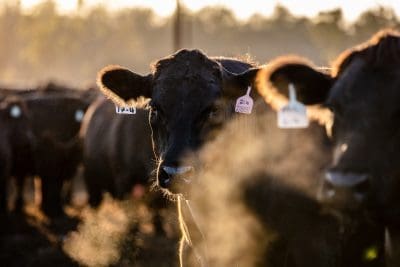 If all or even some of the businesses transact, they will help re-set beast-area values for Australian feedlot assets.
As usual, a few of the recent sale rumours are right, some are half-right, but most are well wide of the mark – mostly linked to misinterpreting a ‘site inspection’ as a sign of a ‘determined intention to buy.’
All four have come to market since Japanese trading house Marubeni sold its Rangers Valley feedlot near Glen Innes back in October, for a figure between $380m and $400m.
While settlement has not yet been completed, Beef Central can confirm that Peter and Jane Hughes and family (together with an un-named partner) are in the final stages of buying Mort & Co’s Pinegrove feedlot near Millmerran.
Mr Hughes chose not to comment on the transaction, as settlement is yet to take place.
Located between Millmerran and Cecil Plains, Pinegrove is a modern 9698 Standard Cattle Unit feedlot, with approval to expand to 21,100 SCU. The site comprises 880ha of farmland with 480 megalitres of high-security groundwater and a licence to impound up to 234 ML of surface water, supporting both irrigated and dryland cropping.
Its been a busy end to the year for Hughes Grazing/Tierawoomba Pastoral Co, having completed its $180 million purchase of the 340,000ha Julia Creek breeding and backgrounding property Millungera only a few days ago.
Peter Hughes and family were original investors and customers in the Mort & Co Grassdale feedlot when it the business was launched 22 years ago, but later sold their stake.
Since then Hughes Grazing has not owned feedlot infrastructure, or used custom-feeding space to any great extent. Instead Wagyu steers are sold as feeders to existing longfed programs, with regular large clients including Rangers Valley at Glen Innes. It may be no coincidence that Rangers Valley recently changed hands, bought by Stanbroke in a deal said to be close to $380 million.
Some may interpret the Hughes family’s investment in feedlot ‘bricks and mortar’ as signs that a vertically-integrated branded beef program may be in development.
Yarranbrook developments
Elsewhere in the recent feedlot offerings put forward by Mort and Co, the rumour mill has put forward a number of ‘buyers’ or ‘serious offers’ – none of which have held up to scrutiny.
Both the Hart family’s Stockyard business and James Maclean’s Allied Beef made inspections of the site, but neither are in serious negotiation over the business, Beef Central understands. Nor was Western Australian Wagyu producer Pardoo Beef – also connected with a possible tilt at Yarranbrook.
Yarranbrook is a large-scale feedlot operation with a capacity of 18,540 SCU, and approval to expand to 35,000 SCU. Mort & Co acquired outright ownership of the yard in 2024 and has since upgraded water systems, effluent management and on-site infrastructure. The feedlot and farm spans 13,439ha, and is supported by more than 3000ML of water entitlements from the Macintyre Brook and Coolmunda Dam system.
Smithfield feedlot
Among other prominent feedlot assets recently put on the market, expressions of interest in the Shearer-Smith family’s Smithfield feedlot at Proston, in Queensland’s South Burnett are still at an early stage, with the EOI process not closing until 22 December. However solid early interest has already been received, Beef Central understands, especially from large, established feedlot operators.
The modern, well-equipped and well-located Smithfield yard is the nation’s second largest feedlot located in ticky country, developed to its full licensed capacity of 18,500 SCU.
Elders Killara
Elsewhere, Elders Killara feedlot listing has attracted plenty of attention, but is still in the early-to-mid stages of marketing, having only been put to market five weeks ago.
Corporate and investment advisors Kidder Williams has been charged with taking Elders’ Killara feedlot to market.
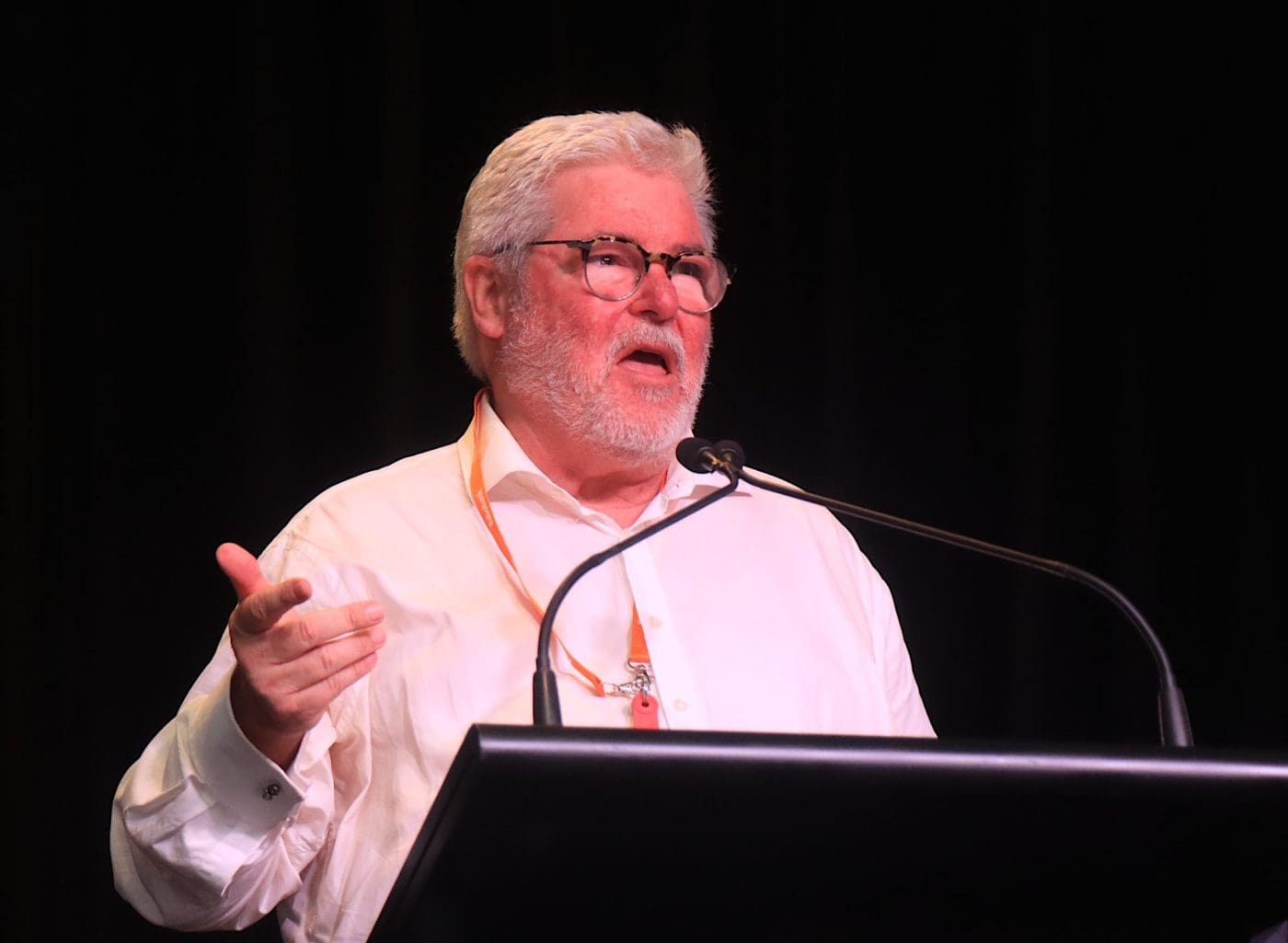
David Williams
Principal David Williams was unable to share how many inspections or lines of genuine interest had been received, but used the single word, “plenty.”
“It’s not that we’re dragging our feet with Killara, but the process is only really just starting,” he said.
Judging by the early response, Mr Williams was confident a buyer would be secured during the early stages on 2026.
Current interest in the available Australian feedlot assets was ‘much broader’ than just from existing feedlot operators looking to expand, he said.
“There’s real interest coming from offshore sources – principally Southeast Asia – and/or export processor operators,” he said.
That aligned with the growth in the grainfed side of the Australian export beef industry in recent times.
Property contacts close to the current feedlot listings have said they were aware of some unsolicited approaches from potential buyers, which may have prompted some vendors to take their assets to market this year.
“On the sell side, some vendors are looking at the outlook for the next year or two as ‘the perfect storm’, with record high beef prices,” one source said.
“They could potentially make a lot of money themselves from operating their assets over the next year or two, but the real question is: when do you get off the merry-go-round?” he said.
“It’s the same with meatworks. Why are they pushing assets like O’Connors and the Teys family share to market, at the time the market for beef is so hot?”
“Everybody has different motivations, but the primary reason is its at the top of the cycle, and the multiples look pretty good. The only thing is the greedy ones will say if I can hold on for another two years, I can still extract massive operating profits – and then sell for the same price as today.”
“But the challenge is that some buyers are going to want to do their sums on an average over the past five or six years, which would include some years with losses.”
“But for anybody making purchases of feedlot assets now, the next two years will potentially hide a lot of sins (a colloquial term for paying too much for an asset).”
There has also been some industry speculation that ‘non-operator’ owners of Australian feedlot assets might be looking at the current stage of the cycle, and considering an exit to maximise their capital gain.
David Williams said he was not specifically aware of that happening, but knew of a couple of additional feedlot assets currently on the market that had ‘not received much press’.
An example was the Bell family properties 45,000-hectares of cropping and grazing land around Coonamble that began the sell-down of one of the country’s largest privately held portfolios, following the death of stockbroking identity Colin Bell three years ago.
The 44,846ha Netherway and Wingadee were offered to the market in 2023 as part of the Bell family’s Australian Food & Agriculture Co – one of the largest diversified agricultural portfolios in the state. The buyer at around $200m was Malcolm Harris’s Cleveland Agriculture.
One of the assets held by AFA was the Conargo Feedlot located 25km north of Deniliquin, strategically located to take advantage of the Riverina’s rich livestock, grain and fodder resources and proximity to premier markets.
The feedlot is approved for 12,000 head of cattle, and has been operating since 2017. It was used principally by AFA to feed company-bred and purchased livestock as well as custom feeding for a number of clients.
- Beef Central will circle back with updates on the remaining three feedlot assets when we return from Christmas break in January.