
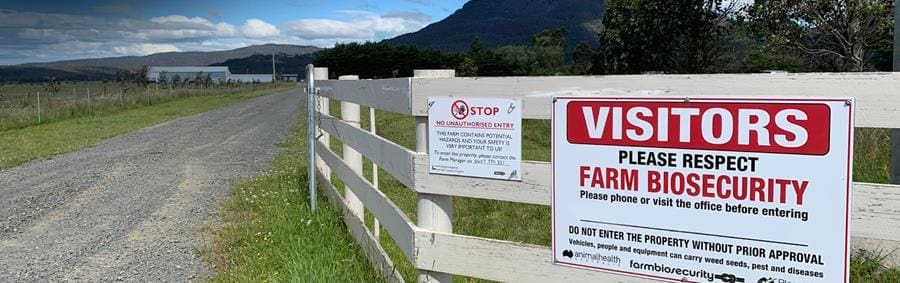
The arrival of Lumpy Skin Disease (LSD) in Bali is a timely reminder that biosecurity risks are not going away; they are just getting closer, and the risk of incursion is increasing.
Unknown to many Australian cattle producers is the fact that LSD has been spreading rapidly around the globe. In Europe, there have been major LSD outbreaks in France, Italy and Spain.
In Asia, recent outbreaks have occurred in Japan, Thailand and Korea, necessitating both Thailand and Korea vaccinating their entire cattle herds (6 million head).
Outbreaks in the last five years have also occurred in China, Bangladesh, India, Nepal, Sri Lanka, Vietnam, Myanmar, Thailand, Malaysia, Singapore, Laos and Cambodia, with many recurring outbreaks due to recombinant strains or poor-quality vaccine use (DAFF 25). The occurrence of major outbreaks and the need to secure high-quality vaccines from the European vaccine bank has created an acute shortage of vaccine. Australia currently only has access to 300,000 doses (DAFF 25, Global approaches to LSD). This will be a long way short if we need to protect a herd of 30 million head.
Not only does LSD have a long incubation period, we also have additional challenges in northern Australia, including an inability to clean muster, as well as a monsoonal wet season limiting access and husbandry. Add to that a northern coastline where feral buffalo and cattle roam. Should we have an outbreak of LSD, we will be on the waiting list due to the current demand for vaccine in Europe (DAFF 25).
Our biosecurity system – a national asset
As farmers, we are major stakeholders in our biosecurity system, which is considered a national asset and the envy of most countries, yet most of us have little understanding of how effective our biosecurity system is. In the 2016 Parliament, the Quarantine Act of 1908 was replaced with the Biosecurity Act of 2015. The new Act brought in significant reforms that have been difficult for government to implement (IGB 25).
One significant reform implemented was the Office of the Independent Inspector General of Biosecurity. Although the role has major limitations and the inspector is responsible to the Minister, for the first time producers, state farm organisations, peak councils and interested stakeholders have some oversight and knowledge of how effectively our biosecurity system operates.
What’s at stake?
The Department of Agriculture, Fisheries and Forestry claims its regulatory system protects:
$51 billion in agriculture, fisheries and forestry
$50 billion in tourism
$5.7 trillion in environmental assets
1.6 million jobs
The task at hand for our biosecurity system and DAFF is simply daunting. In 2024–25, volumes of cargo continued to increase by up to 25 per cent.
The department assessed:
26,000 import permits
154 million import cargo consignments, resulting in 9,400 pest and disease identifications
2.6 million containers, with 680,000 requiring intervention
23 million international travellers by air and sea, with 6,400 pest and disease identifications
19,100 vessels arriving in Australia, with 3,700 identifications of pests and disease
109,800 international aircraft
(DAFF Expenditure Report 2024–25)
The Inspector General’s mission is to improve the integrity of Australia’s biosecurity system through independent evaluation of programs, particularly pre-border and at-border, highlight gaps and weaknesses, and make recommendations that result in improvements to the system. Reviews by the Inspector General also provide transparency and an assurance framework for stakeholders on where improvement is needed.
There have been four Independent Inspectors General appointed since 2016. It is prudent for interested stakeholders to read their reports and work programs (Australian Government, Inspector General of Biosecurity Reviews).
Extracts from Inspector General of Biosecurity
Executive Summary – IGB 25
“The MRIT assessment shows a system with some pockets of maturity but also significant gaps in areas critical to regulatory effectiveness and credibility frameworks. Tools exist but are inconsistently applied, and staff have limited awareness of systems. Notably, there is a lack of high-level governance bodies and cross-jurisdiction forums. This contributes to fragmented oversight and limits the department’s ability to coordinate, prioritise and respond to biosecurity threats. This governance gap leaves Australia exposed to increasing biosecurity risks.”
In the IGB report, page 29 notes:
“The department has a robust regulatory philosophy. Its application in the biosecurity group is compromised, particularly in the area of non-compliance. Staff confirm inconsistent enforcement, with strong penalties for passenger clearance compared to commercial imports. Also noted by the Australian National Audit Office (ANAO 21).”
“Staff also highlight a lack of consequence for repeat offenders and inconsistent enforcement due to perceived political pressure to prioritise trade over regulation. A lack of visibility once a compliance report is submitted, gaps in illegal imports and loopholes in cargo pathways were also noted. Staff noted leniency with non-compliance from high-profile businesses, with calls for a more fair and transparent application of enforcement.”
Former Inspector General review – IGB 2021
“The Australian biosecurity system is under significant pressure due to a lack of regulatory maturity, an inadequate operational model and persistent issues with accountability, decision-making and internal communication. My broad assessment is that the biosecurity system is not in a strong position to prevail to 2025, based on an examination of systemic problems, regulatory maturity, its approach to co-regulation, inadequate frontline focus and the absence of an appropriate funding model.”
Culture
“The culture of the department and the ongoing cycle of new biosecurity pressures and new government initiatives has generated an environment where the department is much better at starting initiatives and promising improvements than it is at delivering targeted outcomes and locking in reforms.”
“The department has not completed the planned rollout of the Biosecurity Act of 2015, leaving managers, technical staff and frontline officers inadequately trained and supported in the delivery of the new regulatory regime,” (IGB 2021).
Since 2015, there have been changes of minister and government, as well as several departmental reviews:
ANAO – Australian National Audit Office (2017)
APS – Australian Public Service Review (2019, Thodey)
APSC – Australian Public Service Commission Review (2023)
Transformation Program DAFF (2024)
Australian Government Deregulation Agenda (launched 2019)
Australian Government Biosecurity Strategy 2030 (2021), replaced by the Biosecurity Roadmap 2024
DAFF Future Ready 21–25, abandoned in 2022 and replaced following a change of government with Designing DAFF
The last Inspector General states that the issue of starting reform initiatives for the biosecurity system and not completing them is still relevant today:
“The Inspector General acknowledges that the department’s perpetual engagement with reform, rather than a commitment to seeing a single initiative through to completion, has created a detrimental cycle. It has not only squandered valuable resources and demoralised its workforce, but most importantly stalled its progress towards achieving the robust and future-ready regulatory maturity it needs if it is to deal effectively with evolving and increasing biosecurity risks. The focus has been on starting reform rather than completing them and embedding their benefits” (IGB 2025).
The question
The Biosecurity Act has been in place for 10 years. In that time, we have had three distinguished and prominent Independent Inspectors General complete their work programs, all critical of the department’s performance.
Changes of government, changes of priorities, deregulation, cost efficiencies, lack of communication between sectors of government, shifting skilled staff and budgets within the department, inadequate compliance and an almost complete failure to complete reforms should make us question whether a government department is the most suitable location to be entrusted with the nation’s biosecurity.
So the question for producers, their state farm organisations and peak industry councils is: do we want more of the same, or should we consider alternative options?
The Beale Review of 2008 was the foundation document that led to the new Biosecurity Act of 2015.
A key recommendation from the review that was not implemented in the 2016 legislation was the establishment of a statutory authority known as the National Biosecurity Authority, similar to the Civil Aviation Safety Authority or the Great Barrier Reef Marine Park Authority.
- Markus Rathsmann is a cattle producer from Mt Ringwood Station in the Northern Territory and a past-president of the former Cattle Council of Australia.