
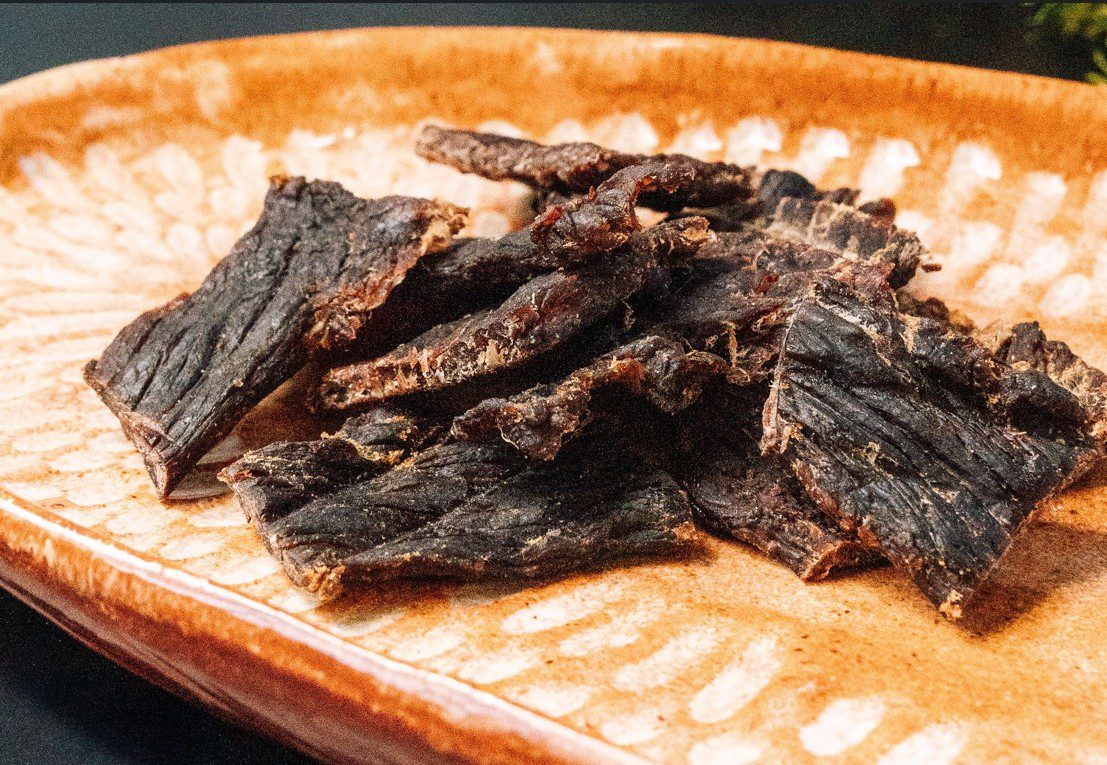
Beef jerky produced from the Normanby Aboriginal Corporation’s Bush Beef project
THE Normanby Aboriginal Corporation in the lower Cape York region of Far North Queensland is seeking to raise $10 million to commercialise, launch and nationally scale its innovative and sustainable indigenous-led food enterprise called Bush Beef.
The Corporation operates 30,000ha Normanby Station on the river of the same name near Cooktown in the lower Cape York.
Facilitated by Esparq Ventures, a First Nations-led venture capital raiser based in Cairns, the project has already raised $600,000 under its first phase in combined support from the Macdoch Foundation, Bright Moon Trust, and a private trust.
The Indigenous-led regenerative enterprise will harvest “uniquely sustainable and wildly harvested” feral cattle off Normanby Station with the ultimate aim to supply chefs, wholesalers and consumers nationwide.
The first stage is focussed not on fresh beef, but value-added products including jerky and beef pies. Sales will be via local farmers markets and online. Eventually the project aims to expand into chilled/frozen muscle meat/trimmings.

Beef pies produced from the Normanby Aboriginal Corporation’s Bush Beef project
The project emerges as a new report released on Friday, commissioned by the Department of Agriculture, Fisheries and Forestry, finds that Australian consumers are prepared to pay more for agricultural products produced by Aboriginal and Torres Strait Islanders (further details below).
“This comes as ethical, climate-friendly food sources are in growing demand. With further funding, Bush Beef will be able to further accelerate its reach and scale,” the Normanby Aboriginal Corporation said in a statement.
“The model has already demonstrated its appeal through successful pop-up events at select restaurants, where chefs and diners praised its clean, gamey flavour and strong provenance. Bush Beef is now in discussions with some of Australia’s leading restaurants, keen to feature this unique product,” the project backers said.
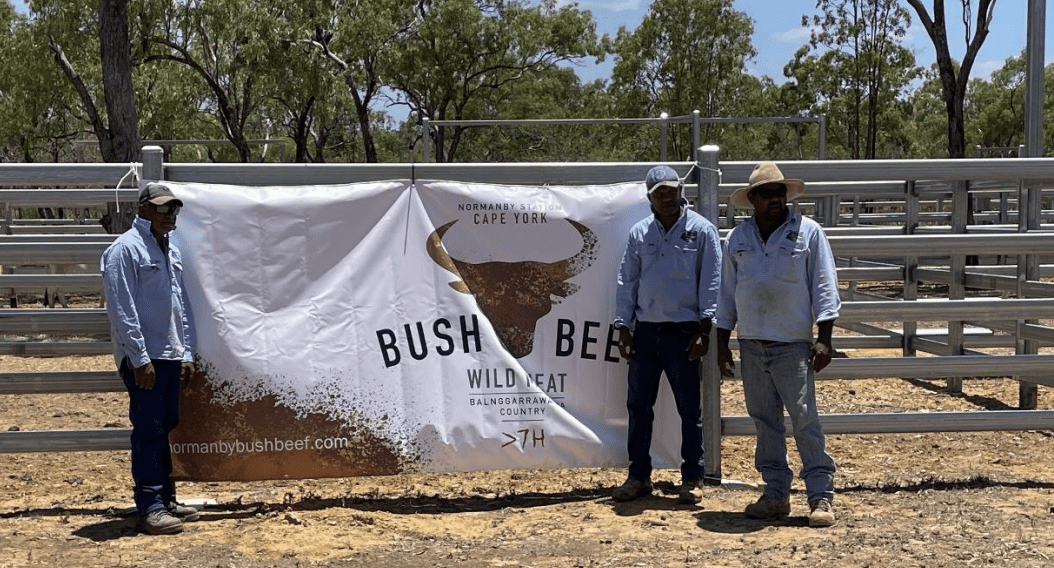
For years, unclaimed cleanskin cattle across Normanby Station had eroded land, degraded riverbanks and damaged cultural rock art sites, they said.
In response, the NAC established ranger programs to restore ecosystems, reducing the number of free-roaming cattle, but the by-product of this work had no viable outlet.
With research support from the Cooperative Research Centre, NAC began exploring ways to turn this challenge into opportunity.
Bush Beef provides processing and distribution services of its signature wild food product, which is climate-friendly, sustainably harvested, and connected to Country.
Brahman cross cattle harvested for the project will be harvested at the Byrnes family’s Rocky Creek abattoir near Mareeba.
The cattle are described as ‘organic’ in the sense that many have never seen a human before, are not grain finished, only eating native grass, and have never been exposed to antibiotics or chemicals.
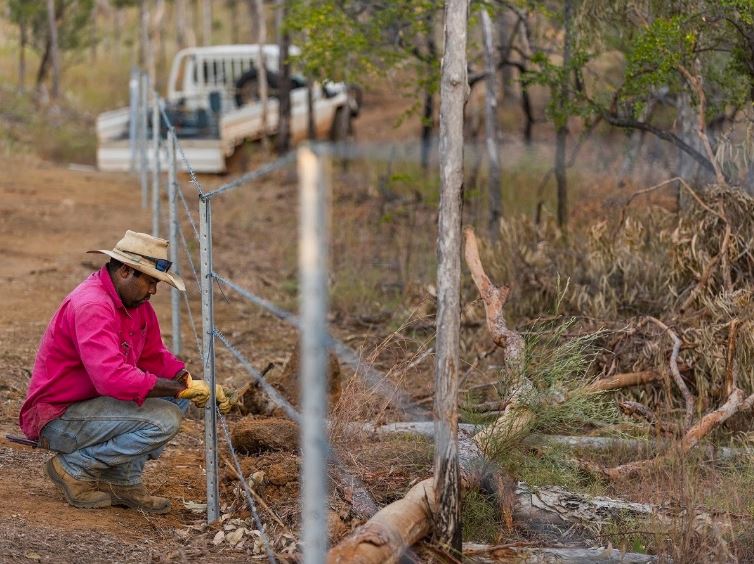
Fencing work on Normanby Station near Cooktown
NAC managing director Vince Harrigan said Bush Beef was sustainably harvested, with no preservatives, chemicals or traditional farming methods used.
“It’s providing the true paddock to plate experience, giving Australians a wild food like no other. We’re turning a cultural and environmental challenge into an opportunity for our land and community,” he said.
“We thank the businesses and people who have backed us so far, and can’t wait to work with more values-aligned organisations and restaurateurs wanting to serve organic beef from some of the most remote paddocks in the world.”
A meaty opportunity to scale Indigenous innovation
The business model has been designed to be scalable and replicable, the statement said.
“Traditional land owners in other states and territories could adopt this approach to deliver environmental, cultural, and economic benefits in their communities.”
Head of advisory at Esparq Ventures, Dominiqe Bird said the market was hungry for ethical, wild food and climate-friendly sources of protein.
“Bush Beef is proving it can solve environmental challenges while delivering a premium, high-quality product. We’re proud to partner with NAC to bring such a unique offering to market, and we see huge potential for this model to be replicated by other Indigenous communities across the country.”
“Bush Beef is just getting started. We hope and invite other Indigenous communities across the country to work together to leverage our model and replicate our impact. For investors, partners, and other supporters wanting to be a part of this exciting venture in the early stages of commercialisation, we’re open to discussions with like-minded people looking for bold, relentless, and resilient entrepreneurs to back.”
Michelle Gortan is chief executive of one of the project’s early backers Macdoch Foundation.
“We’re proud to be supporting Bush Beef, an exciting example of how First Nations-led agriculture can deliver environmental benefits, empower communities, and create economic opportunities for Indigenous entrepreneurs and businesses,” she said.
“We were drawn to Normanby Aboriginal Corporation for their commitment to addressing food security while managing Country and preserving cultural sites. Bush Beef is preparing to scale nationally after repeated, positive market feedback. We can’t wait to see how Bush Beef continues to grow and scale.”
Consumers ready to pay more for authentic Indigenous food products
Meanwhile, a landmark report released on Friday reveals strong consumer demand for authentic Aboriginal and Torres Strait Islander agricultural products, with buyers willing to pay a premium for goods that carry cultural integrity and verified provenance.
The Indigenous Agriculture Product Framework project was commissioned by the Department of Agriculture, Fisheries and Forestry, through a $1.93 million grant, and delivered in partnership with the National Farmers Federation and the Indigenous Land and Sea Corporation (ILSC).
Market research undertaken as part of the project found 30 percent of Australian consumers would pay a premium for Indigenous products, while more than half, if presented with otherwise comparable products, would preference an Indigenous product.
The contribution of Indigenous agriculture to the national economy is at $1.4 billion annually, supporting around 1900 jobs
Chair of the NFF Advisory Committee for the project Natalie Sommerville said the final report made important recommendations on how Indigenous producers and communities can benefit from strong demand for their goods both at home and abroad.
“We have estimated the total contribution of Indigenous agriculture to the national economy at $1.4 billion annually, supporting around 1900 jobs,” she said, ‘but there is still money being left on the table.”
The Final Report makes detailed recommendations for the establishment of a verifiable, culturally-grounded credential, supported by a vast majority of Indigenous producers consulted through the project, that would allow them to more clearly, and with greater consumer confidence, differentiate their goods in domestic and valuable overseas markets.
“Importantly, the project found support for Indigenous products to include all agricultural products and not limited to bush foods or native species.”
ILSC group chief executive officer Joe Morrison member of the project steering committee, said this project was an important first step in understanding how to boost productivity in both Australia and in international exports, from Indigenous producers directly.
“This project is an important first step in creating long-term prosperity for Indigenous producers and driving economic self-determination on Country – both key drivers for the ILSC,” Mr Morrison said.
“Indigenous producers play a vital role in the agricultural industry – with businesses centred on Caring for Country and building communities.”
Mr Morrison also noted the project’s significance in providing insights into the ongoing need for foundational supports, to ensure the industry’s ongoing viability.
“This report has highlighted future opportunities for Indigenous producers in providing a unique credential to the marketing of their products. It has also confirmed the need to continue to invest in skills, business development and infrastructure. The recommendations provide a practical pathway to make this a reality.”
NFF president Hamish McIntyre said the project had provided a platform for Indigenous producers around the country to not just engage with a potential credential, but for an exchange on the challenges and opportunities they face more broadly.
“We have been guided throughout this project by Indigenous producers, engaged in mainstream commodities and the emerging bushfood sector, who have generously shared not just their insights but hopes and ambitions, not just for themselves, or even Indigenous agriculture, but for the sector as a whole,” Mr McIntyre said.
“The NFF looks forward to continue walking with Indigenous producers with the aim, together with government and other stakeholders, to make real the economic self-determination opportunities for Indigenous people through agriculture that this project has demonstrated.”
Chairman of the Kimberley Agriculture and Pastoral Co (KAPCO), Wayne Bergmann, said the creation of a credential that strengthens the provenance claims of Indigenous agricultural products is an exciting step forward.
“A well-designed framework can build consumer confidence in the domestic market and open new doors in international markets,” he said.
“Importantly, a strong credentialing framework also has the potential to amplify the social impact of purchasing from Indigenous businesses—supporting enterprises that employ Aboriginal people, care for Country, and reinvest benefits back into their communities.
“KAPCO would welcome an ongoing discussion around the further development and implementation to ensure the outcomes deliver real value for businesses without adding unnecessary financial or administrative pressure. It’s vital that any future system supports existing products and empowers new and emerging Indigenous producers to thrive.”
The Final Report can be found here.