
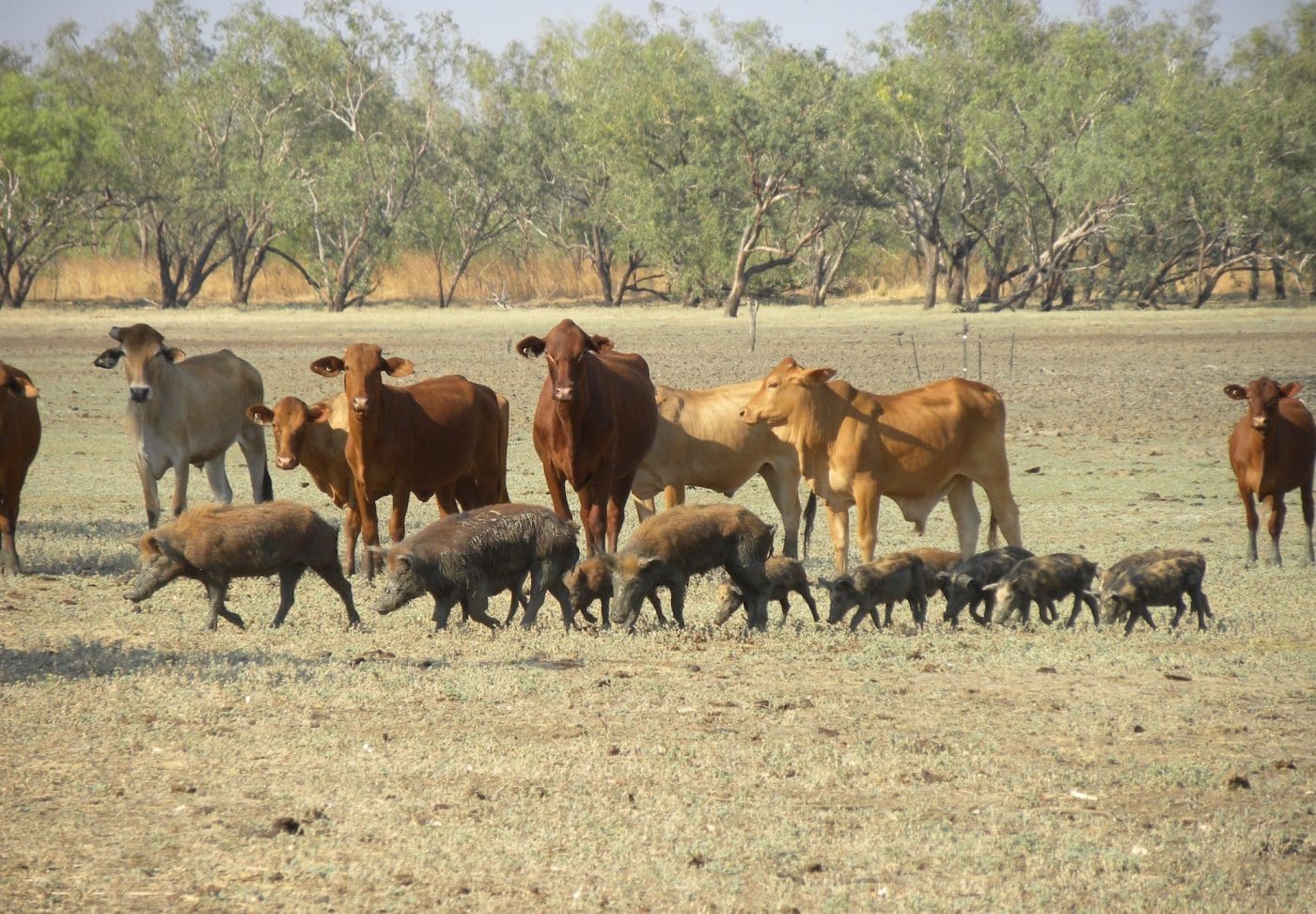
EXPERIENCED aerial shooters are being engaged to reduce feral pig numbers in flood-ravaged north-west Queensland, backed by the Albanese and Crisafulli Governments.
AgForce wrote to the agriculture minister this week highlighting the opportunity for a feral pig cull, with the animals isolated on banks.
“This is an efficient way of getting ahead while numbers are concentrated, we have a real opportunity to reduce the impact if this advances in a timely manner,” AgForce biosecurity committee chair Ken Cunliffe said.
“This issue highlights the need for agility of funding and response when moments like this present itself.”
The department is also working with Queensland Parks and Wildlife Service to coordinate the response across protected areas.
Federal Minister for Emergency Management Kristy McBain said all levels of government were continuing to work closely to deliver what primary producers need to recover.
“We know that with the amount of fencing that’s been damaged, feral pigs can cause major issues and further losses if we don’t act quickly,” Minister McBain said.
“All levels of government are working closely with local authorities to get out in front of this problem, and we will continue to listen to those facing the challenges of this severe weather event.”
Queensland Minister for Primary Industries Tony Perrett said that it was important to take this opportunity because after floodwaters recede and the ground dries out, the resources and conditions are optimal for significant growth in feral pig populations.
“These conditions are very good for experienced contractors to work with landholders to identify these mobs of feral pigs, which group together in these conditions, Minister Perrett said.
“It’s an opportunity to significantly reduce the population density and prevent an explosion in numbers later, which could have a devastating impact on our environment and on stock numbers.
“The Crisafulli Government takes the management of invasive species like feral pigs very seriously. In addition to 100 additional biosecurity officers over this term of government, we’re also backing on-ground control with $2.2 million for regional coordinators plus $2 million in targeted grants and action plans to help producers tackle this issue.”
The department is also working with Queensland Parks and Wildlife Service to coordinate the response across protected areas.
The initiative is part of a $11.32 million Primary Producer Support Package announced under joint Commonwealth-state Disaster Recovery Funding Arrangements (DRFA) in response to the North Queensland Monsoon Trough.
The Queensland Government says it will continue to monitor conditions and adjust operations as required to protect producers and regional communities.
Source: AgForce/Queensland and Federal Government