
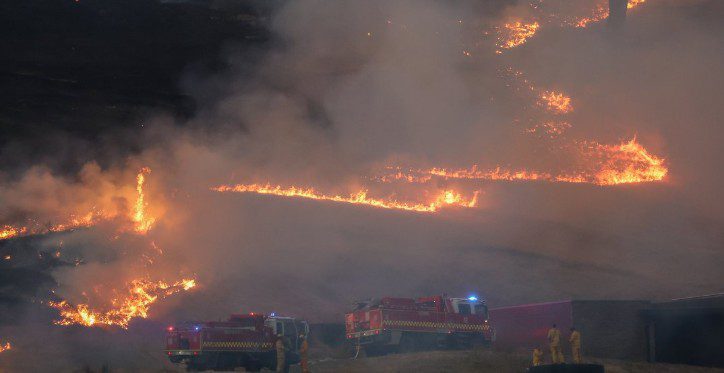
CATTLE in Victoria are being sold prematurely with the bushfires forcing stock to move and the dry conditions limiting options of where to send them.
There have been several fires this month across Victoria impacting the upper Murray, central and southern parts of the state, forcing large numbers of cattle to move to the western districts on agistment.
Speaking on The Week in Beef Casterton stock agent Guy Robertson from TDC said while there is feed in the western districts, groundwater is an issue having had no rain for 50 days.
“The western districts have taken a lot of cattle on agistment but water is an issue, there’s plenty of dams dry or only have 10 per cent left,” he said.
“There is plenty of dry feed everywhere in western and southwest Victoria, it’s just having the water to get to utilise that feed.”
As a result, Mr Robertson said a lot of cattle from bushfire affected areas are going straight to processors, including PTIC cows.
“A lot of autumn calving cows are getting killed and what people are saying is ‘we could start feeding them in containment, we could put a fence around them, we have plenty of donated hay and donated tailings, but if it gets to April and it hasn’t rained and the donated hay has started running out, we will have a cow with a calf at foot and where do we go from there’?,” he explained.
“Or do the cattle go on agistment but for how long? Do they have to calve out on the agistment, is there enough water to keep the cattle that long and what if it doesn’t rain?
“Agents have said if there is a PTIC cow worth $2500 to $2800 to kill, it is going to a processor to create a bit of cashflow and ease the pressure of rebuilding fences and infrastructure, rather than having the pressure of having a cow and calf on foot and no feed.
“My thoughts go out to those producers because it’s a pretty tough position to be in.”
Young cattle on the move
One lotfeeder told Beef Central there are a lot of light cattle that are being turned off earlier than usual and chasing feedlot space as a result of the conditions in Victoria currently.
Michael Unthank from Brian Unthank Rural in Albury told Beef Central he has clients that have been burnt out which have forced them to market cattle prematurely.
“The cattle that would normally be kept on and given a bit more time through autumn and into the winter months are prematurely being run through the store pens, so restockers could take them on,” he said.
“There’s also been a few older cows that probably would have probably gone an extra year but are drifting into the fat market and being sold to processors.”
One southern processor told Beef Central that cattle numbers had increased with cattle flowing compared to before Christmas when cattle were hard to find.
Long term impact of early turn off
Mr Unthank said there will be long term impacts of this early turnoff of cattle in the south.
“For those clients who have had to sell off prematurely, it will turn their whole program upside down and will take a lot of time to get them back making the money that they should be making off the farm,” he said.
“There’s going to be a lot of cattle that probably would come on the market later on in the year that won’t now, so there’s not going to be great big numbers later in the year.”
Mr Robertson said this turn off is off the back of large numbers of cattle that were slaughtered in winter last year during the drought.
“A lot of spring calving cows killed were through the winter and now there is another flush of fire affected cows and each one that goes out of the system will put pressure on calves next year,” he said.
“You would think all of this will hold prices next year in good stead, but each one that goes out of the system is just going to put more pressure on calves next year.”