
THERE has been a strong undertone to export manufacturing meat sales made out of Australia in the early stages of 2026, despite heavy December purchasing in key destinations and market uncertainty around the impact of China’s beef quotas later in the year.
A large Australian export trade desk manager told Beef Central yesterday that forward-sold values into both the US and China this week were up on business done during the final stages of 2025.
 He pointed out, however that currency movement may have removed a little of the gloss, with the Aussie dollar hitting US67.62c yesterday – its highest point since July 2024. This time last year the Aussie was still worth only 62-a-half.
In the US, the underlying lack of domestic production is clearly the key driver in stronger early 2026 sales values.
US domestic cow and bull slaughter for the week ending January 17 was estimated at 107,000 head, down 7.1pc from a year ago and 21pc below the five-year average. Fed cattle slaughter the week before last was estimated at 455,000 head, 6.4pc lower than a year ago. Over the first three weeks of the year, US fed cattle slaughter ran 7pc lower year-on-year, leaving a big hole to fill.
For the current month (up to 19 January) DAFF reports exports to the US of only 13,100t, but that number is expected to enlarge significantly over the next fortnight. January is normally the quietest trading month of the year due to Christmas shutdowns, but could easily top 26,000-28,000t this year, a trade source said.
Already this year, Australian beef processors’ adult cattle throughput is some 4pc higher than the same period last year, with year-to-date slaughter to Friday already above 265,000 head.
“We’re fielding some good manufacturing beef demand – out of the US on lean, and out of China for fattier trimmings,” a large Queensland export packer contact told Beef Central yesterday, as the new trading season starts to unfold.
“We’ve been back at work just over two weeks, and we started getting hit with inquiry for lean out of the US, on a 6-8 week forward sold position – despite the shift in currency that’s happened,” the trader said.
Some of that forward-sold beef could be as late as an April shipment, starting to nudge into the northern hemisphere warmer months high-demand grilling season.
Forward prices negotiated on 90CL trimmings this week out of Queensland into the US were around A$11.20-$11.40/kg, up on December business – but when converted into US currency CIF, there was “an absolute lift” from late last year.
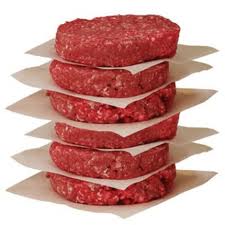 “It has not been mammoth, but it’s been noticeable – and that’s all about the US domestic shortage,” the trader said. “For spot market beef for shipment this week, there might even be more in it,” the trader said
“We thought that surprising given that Brazil filled its entire US quota in just the first six days of January. We thought that Brazil trade would have filled any hole that might have emerged in the US market.”
“But evidently US customers ate through those stocks that built up late last year, and the Brazilian product that’s just come into the market has really only filled-up the pipeline again. It looks like its not leaving an abundance of beef in the US market, but simply filling up what’s been depleted.”
“And on top of that, there are still plenty of end-users who do not include Brazilian beef in their formula. That means they still need domestic US, they need Aussie, and they need Kiwi.”
From what the trader has observed since returning to work a fortnight ago, New Zealand supply this year has been quite quiet.
“They have not come out of the blocks strongly. Normally NZ would be into their seasonal dairy cow slaughter by now.”
But the big fundamental driving this US price demand remained the fact that the US domestic beef system remains short.
“There’s a general lack of domestic manufacturing beef, and what there is is expensive,” the trader said.
China response, for different reasons
At the other end of trimmings spectrum, China looked like ‘absolutely driving’ the 65s (65CL fatty trim) market for the next couple of months, under the new quota regime.
The export trader said there was no real sign yet that the news of the China quota/tariff imposition had spooked the export manufacturing beef market.
The trader quoted fattier 65CL CIF that might have been US210-215c/lb late last year, selling for anywhere from 230c-240c/lb for April delivery (roughly equivalent to A$7.50-$7.80/kg).
The trader agreed this trend was more directly related to actions taken since the quota limitations were announced.
Beef Central asked about speculation that other export customers like Japan and Korea might now try to hold back on purchasing, hopeful that prices might decline come May or June once Australia fills its China quota.
“Customers who can afford to do that, may try to do so,” the trader said. “But over the last five years, as all meat prices have increased, a lot more customers cannot afford to keep a bucket-load of stock on hand like this.”
“Some North Asian customers are more concerned about losing money on meat that ultimately looks too expensive, than they are of running out of meat,” the trader said.
“With very high priced meat, people cannot afford the working capital, with inventory sitting there, waiting. In the meantime, Chinese buyers are clearly coming out hard, wanting to take advantage of the zero percent tariff – as long as it lasts.”
Trade relationships risk damage
One of the casualties that has not yet been widely discussed from China’s quota/tariff move this year is the impact on long-standing trade relationships with loyal, large Chinese customers.
“Once Australia’s quota is filled in April or May, those customers are going to have to source product elsewhere – Argentina, for example, which has 500,000t of quota this year. Some of those relationships with Australian exporters have taken three, five, ten years to establish, but it is very hard to draw those customers back next January, after the tariff re-sets,” the trader said.
Imported prices ‘fully firm’
US market analyst Len Steiner, writing in his weekly imported beef market report issued on Friday, said imported beef prices into the US continued to trade very firm for much of the previous week, on limited offers from South American and Australian suppliers, and continued chatter about higher prices/strong shipments to China.
US shipments from Paraguay and Uruguay in December were near record levels and accounted for a larger share of overall exports, the Steiner report said.
“Expectations are for exports to the US to be higher in 2026 on forecasts for lower slaughter and seasonal uptick in lean beef values.”
Offers from Australian suppliers into the US the week before last were more limited and for shipments further out, while South American offers dried up, given sharply higher prices in China, he said.
“On the other hand, US end users are looking to maintain their positions going into the spring. Patty manufacturers usually start building inventories in March and April for summer peak season, so prospects of lower domestic fed and non fed cattle slaughter have resulted in buyers more engaged in bidding on imported loads,” the Steiner report said.