
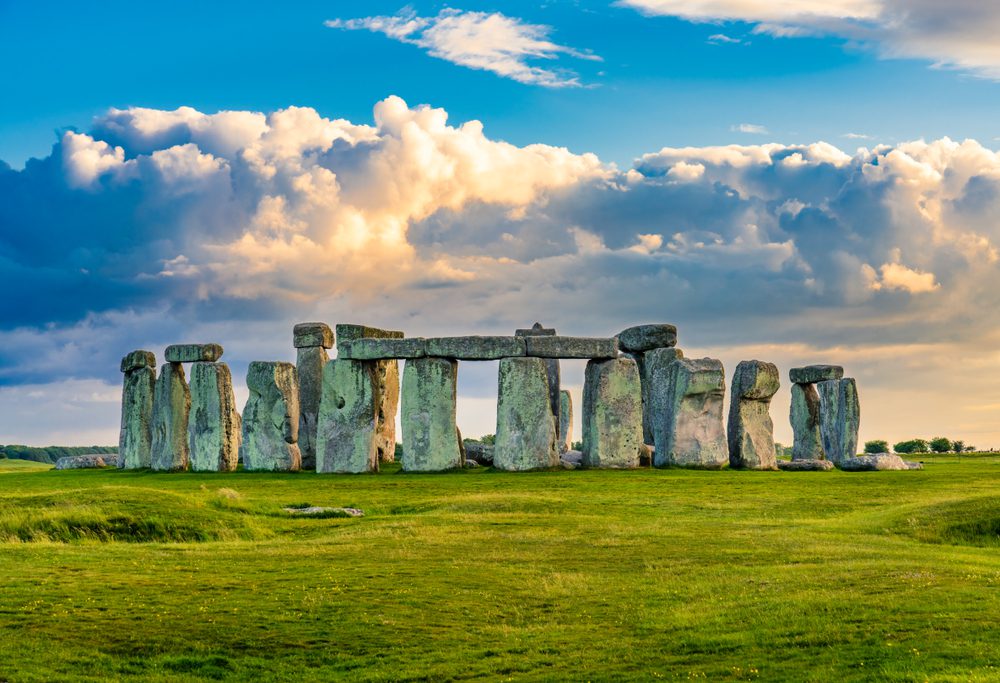
Image: Shutterstock
For centuries, one of the great mysteries of Stonehenge surrounded how its enormous igneous bluestones were transported 280 kilometres from the Preseli Hills of Wales to the Salisbury Plain.
Now, scientists believe the answer may lie not only in the stones themselves but in the cows that walked alongside them.
Cow’s tooth unlocks ancient clues
New research published this month has revealed that a single Neolithic cow tooth, unearthed a century ago at Stonehenge’s southern entrance, may hold vital evidence of how the monument was built.
Using cutting-edge isotope analysis, scientists from the British Geological Survey, Cardiff University, and University College London traced the animal’s movements and diet back 5000 years.
The tooth recorded six months of the cow’s life, showing a seasonal shift from woodland fodder in winter to open pasture in summer.
Strontium isotopes pointed to food sources from different geological areas, while unusual lead isotope signals matched those found in Wales’ Palaeozoic rocks—the same region where Stonehenge’s bluestones originated.
In short, the cow’s life story places her origins firmly in Wales before her journey to Salisbury Plain, mirroring the path taken by the mighty stones themselves.
Beasts of burden
The discovery suggests cattle were active participants in hauling the multi-tonne bluestones, enduring the same long journey as the builders and providing muscle power to drag or carry supplies.
“This study has revealed unprecedented details of six months in a cow’s life, providing the first evidence of cattle movement from Wales,” said Professor Jane Evans, British Geological Society honorary research associate.
 “A slice of one cow tooth has told us an extraordinary tale.”
The analysis also revealed spikes in the tooth’s lead isotopes, which could not be explained by geography alone.
Instead, they suggest the cow was female and pregnant when she made the journey. Peptide-based sex testing confirmed a high probability the animal was female, making her a symbol not just of strength and endurance but of fertility and renewal.
“This research has provided key new insights into the biography of this enigmatic cow,” said Professor Richard Madgwick of Cardiff University. “It gives us unparalleled detail on the distant origins of the animal and the arduous journey it was brought on.”
The evolving Stonehenge story
Stonehenge has long been seen as a human achievement of engineering and ritual. This latest evidence places cows firmly in that narrative, not just as ritual deposits but as living, breathing partners in the construction effort. Their movement from Wales adds yet more weight to the theory that livestock played a role in transporting the bluestones.
As Professor Madgwick noted, “So often grand narratives dominate research on major archaeological sites, but this detailed biographical approach on a single animal provides a brand-new facet to the story of Stonehenge.”
Thanks to the humble cow the story of how one of the world’s most famous monuments came to be has taken one more step foward.
Information source: British Geological Society