
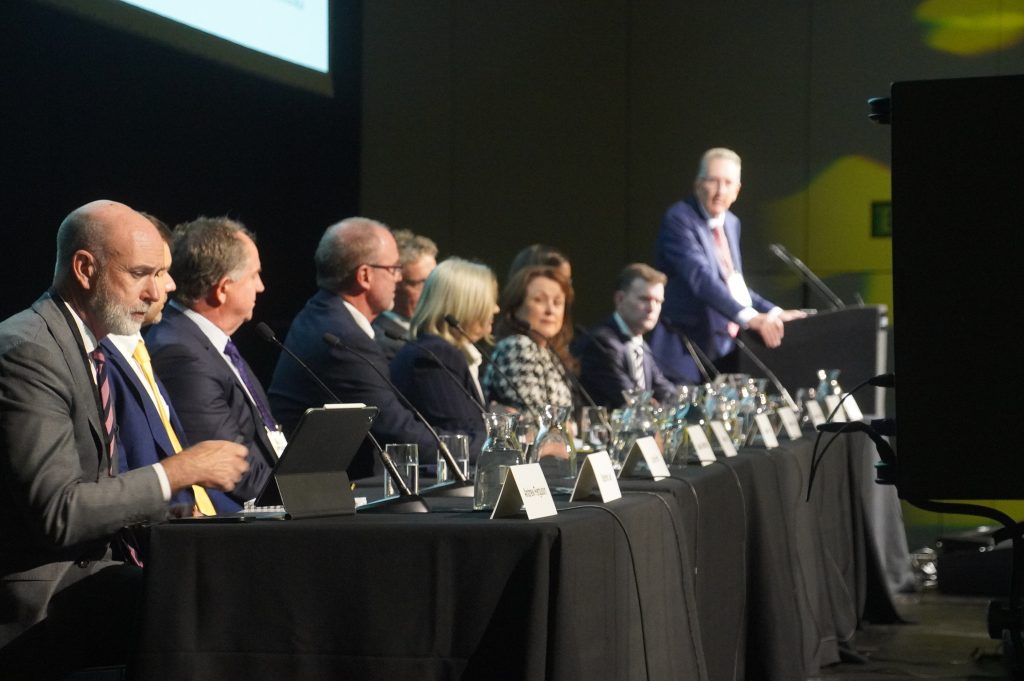
Cattle Australia chairman Garry Edwards told yesterday’s Meat & Livestock Australia annual general meeting in Adelaide his organisation was “incredibly disappointed” in the board’s decision to vote down CA’s member resolution to make subtle, but important changes to the board selection process.
Currently, MLA levy-paying members do not ‘vote’ for MLA board candidates, but simply ‘endorse’ or ‘reject’ each candidate put forward by the industry-elected board selection committee. In the 27 year history of MLA, not one proposed candidate has ever been rejected by levy payers.
The basic principle behind CA’s resolution was that there are odd occasions when the MLA board selection committee cannot come to a unanimous decision on a preferred candidate for a prescribed board skill-set – most typically when there are two or more outstanding candidates.
In those situations, CA felt it appropriate to allow MLA members themselves to cast a vote for one of the two candidates, in a ‘truly democratic’ process.
The resolution sought to amend the MLA constitution to read: “The selection committee may endorse more candidates than the number of vacancies to be filled at an AGM.”
Would such a change be regularly exercised? Probably not, Beef Central has concluded, as other board selection committee members told us that it is rare for split decisions on candidates. However the principle still stands, CA believes.
Prior to yesterday’s AGM, some stakeholders attending the meeting felt it was likely that the MLA board would abstain from the vote, given that the outcome could directly affect the board’s future composition.
CA’s member resolution required a 75 percent vote in support to get up.
But with MLA chair John Lloyd holding 541,815 proxies, that result was never likely to happen, once the MLA board announced it would vote against the motion. Ultimately the resolution fell well short, attracting only 54.7pc in support. However with more than half of the voting membership in favour of CA’s motion, the result clearly indicated that a substantial slice of the industry still backed the move, in principle.
Beef Central has since been told that even if the MLA chair’s proxies were not exercised, the vote in favour would still have “only got to 60-odd” percent.
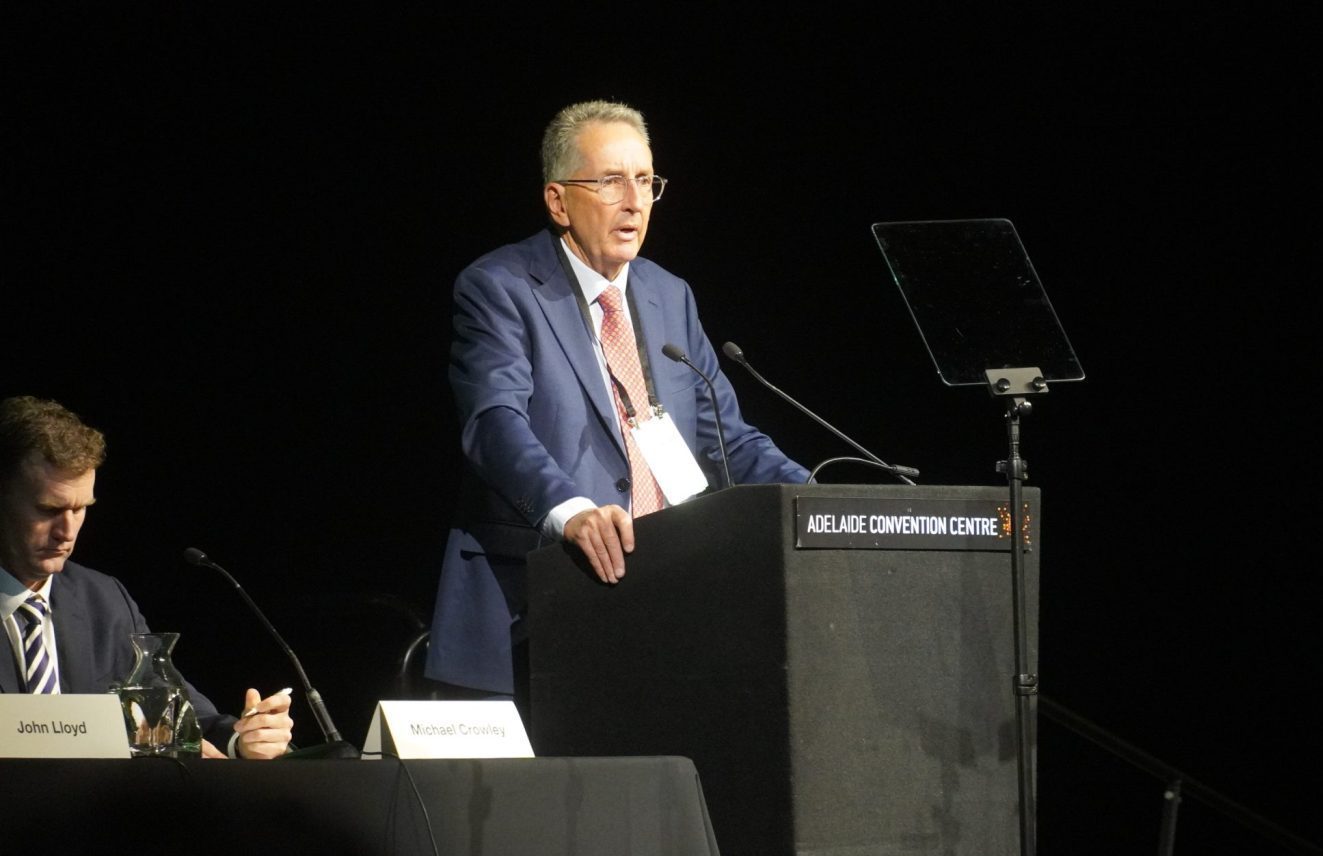
MLA chair John Lloyd
In explaining the MLA board’s reasons, chairman John Lloyd said while the board appreciated the intent of CA in putting forward the resolution, it was important to consider one “serious and unintended consequence, should the resolution be passed.”
“It is normal that each year, a significant number of proxy votes are held by the MLA chair. In the event of a multi-candidate contest, those proxies would be highly material in determining the outcome of such a contest,” Mr Lloyd said.
“It was never envisaged that the MLA board could, in effect, be selecting it’s own membership. So to avoid this unintended consequence, it is the board’s decision to vote against the resolution.
“The board acknowledges that this task of vetting and selecting candidates has been effectively undertaken by the selection committee, which is made up of peak industry body appointed members and levy-payer elected industry representatives,” he said.
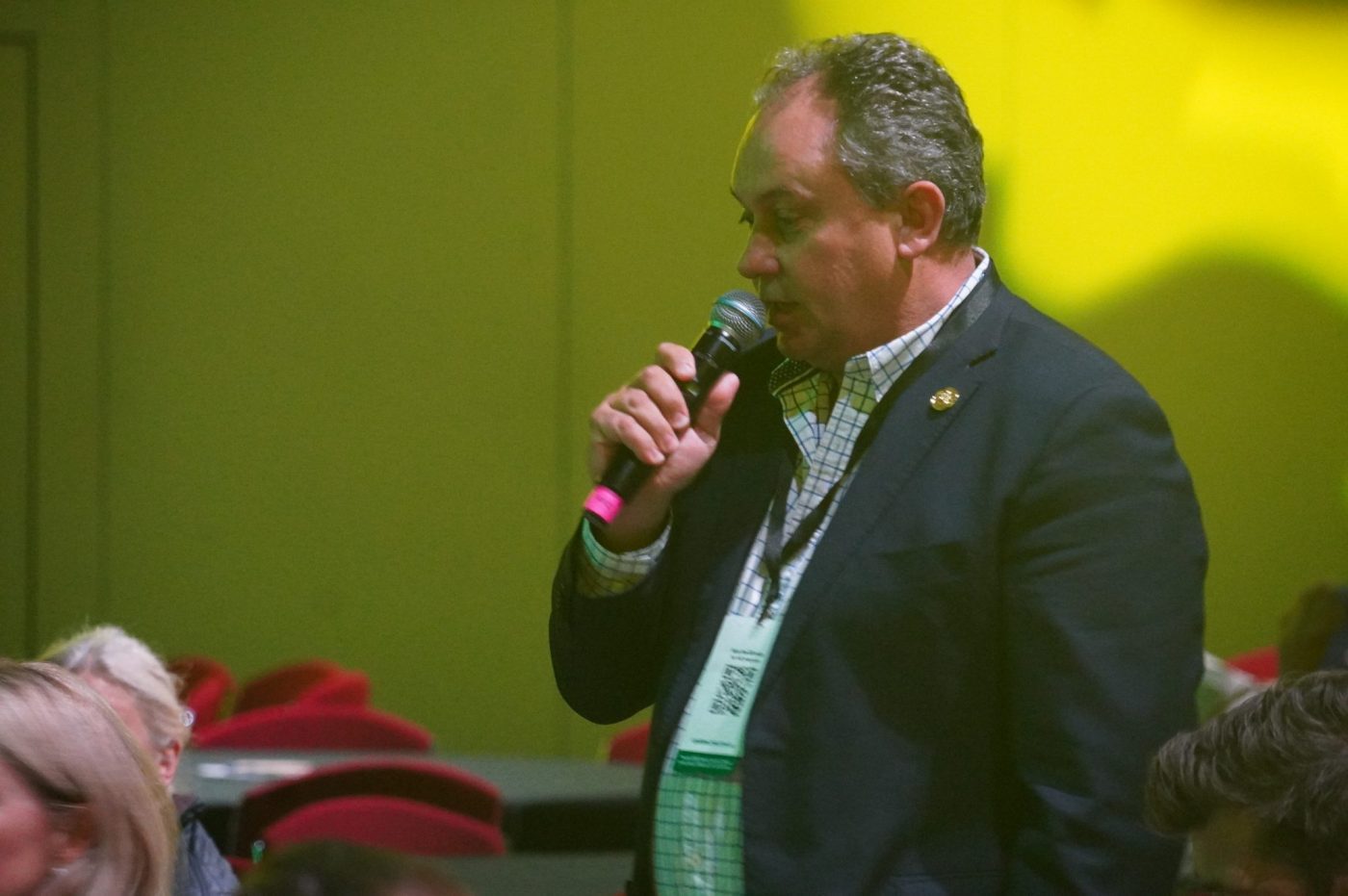
CA chair Garry Edwards
Asking to speak for the resolution, CA chairman Garry Edwards said CA had proposed a “very, very minor” change in replacing the words ‘must not’ with the word ‘may’,” so that in the event of the selection committee coming up with more than one exceptional candidate over which they could not reach unanimous agreement, that the levy payers might be given the opportunity to vote on the outcome – rather than leaving a split decision, or some other component.”
“We envisage this would only occur in circumstances where there is more than one exceptional candidate,” Mr Edwards said. “I, myself, sit on the selection committee, and I can attest to the fact that it is an incredibly robust process. The challenge is, though, that there is never an opportunity under the current situation where the levy payers and members of this meeting get a chance to vote on any director’s appointment – other than simply endorsing a nominee.”
“I will note that CA is incredibly disappointed that the MLA board has chosen to vote against this resolution, because the simple ability that the board has today, and at every meeting, is to choose to abstain.”
“To vote against a resolution that is actually giving levy payers the right to vote would seem somewhat hypocritical,” he said.
There were no speakers against the resolution.
Directors re-elected
Other membership votes taken during the AGM were more routine, with three candidates for board seats put forward by the board selection committee being successful.
All three were returning for another three-year term. They included:
- Chairman, John Lloyd
- Lotfeeder Tess Herbert
- Sustainability expert Jack Holden
All three were strongly endorsed by MLA levy payers, attracting 88-90pc in support.
Earlier, board selection committee chair Julie McDonald said a robust process was used to select this year’s board candidates, with 97 applicants seeking one of the three positions available in this year’s cycle. A short-list of eight candidates was interviewed for the three positions in August.
“The process taken by the committee was thorough, and consistent,” Ms McDonald said.
Apart from the boardmember approval issue, this year’s AGM was an upbeat and optimistic affair, with the outlook for Australian beef heading into 2026 rarely if ever better.
“We continue to enjoy very favourable trade conditions, and the demand outlook remains very bright,” chairman John Lloyd said during his report to stakeholders. “However we recognise that the trade environment can change very quickly, and we will not be complacent in pursuing further improvements in our trade status,” he said.
Stakeholders were told that 88pc of Australia’s red meat exports now went into markets where bilateral trade agreements with Australia were in play.
“Supporting industry and government in free trade agreement negotiations and reducing technical and non-tariff barriers to trade remain at the very top of our priority list,” Mr Lloyd said.
- See today’s separate report on the dramatic changes in consumer attitudes towards beef