
DEMAND for beef among Australian consumers remains remarkably robust, despite significant wholesale and retail price rises seen this year as Australian beef comes under heavy international demand.
As Beef Central reported some months ago, beef consumption in Australia has risen this year, on a per capita basis – for the first time in a decade or more – at a time when retail prices over the past 12 months have risen by close to double digits.
Helping unpack some of the reasons behind that to an audience of around 450 grassfed cattle producers attending Cattle Australia’s annual Cattle Connect event held in Dalby yesterday, was MLA’s general manager of marketing and insights, Nathan Low.
Sharing results from this year’s Polinate community sentiment survey, Mr Low told the gathering the best ‘social capital’ that the beef industry could ever have was consumers voting with their wallets.
The annual survey has been conducted for the past 15 years, now providing valuable longtitudinal data on changing consumer perceptions and attitudes over time.
“We are absolutely in an environment now where more people care about where their food comes from, and they have access to way more content and information about what they eat than they ever have before,” Mr Low said.
“But they are also much more polarised in their views. So its really important that we are tracking that sentiment and that information is available, for consumers who want it.”
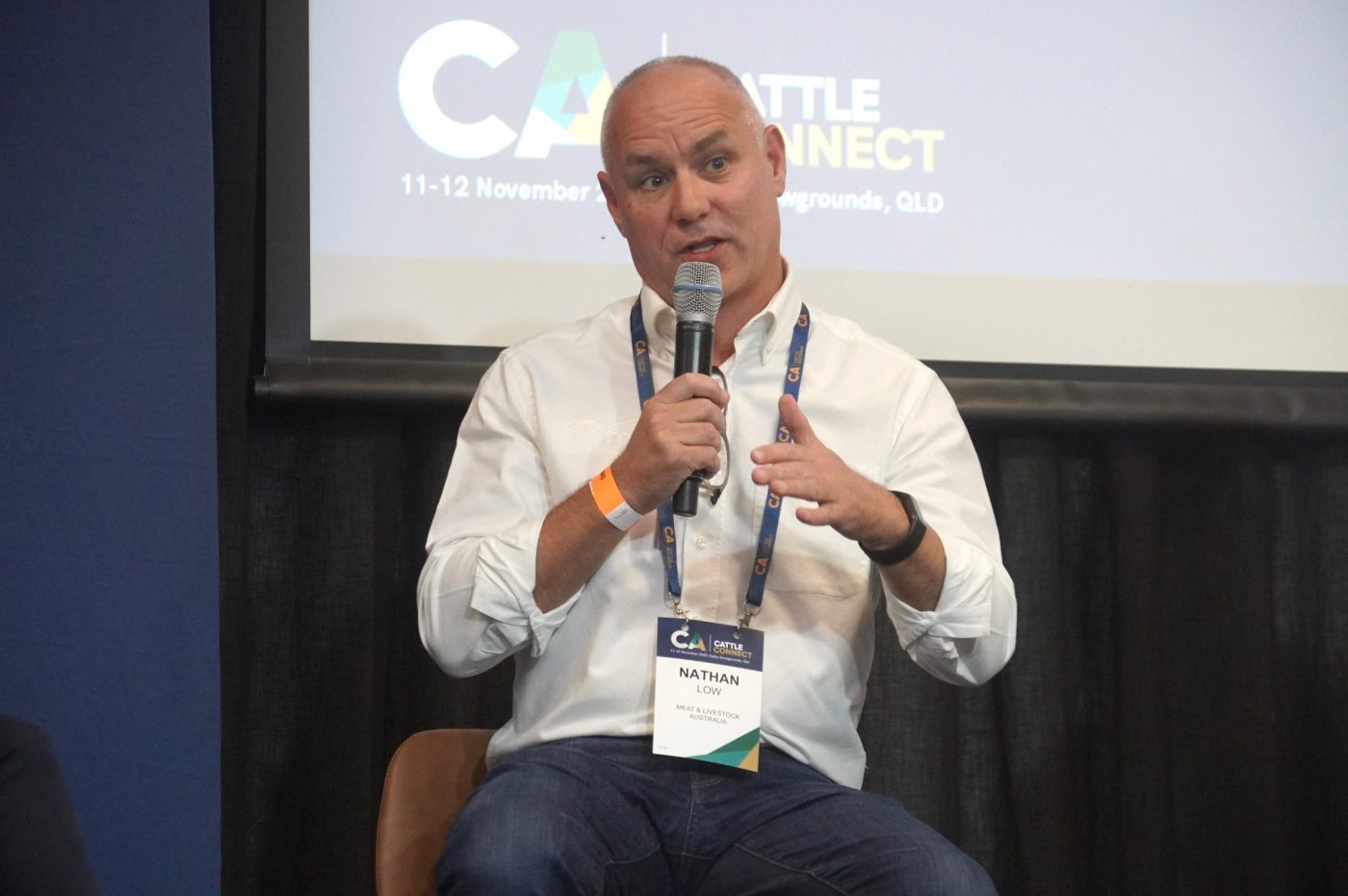
MLA’s Nathan Low presenting during yesterday’s Cattle Australia event in Dalby
Drilling into the community sentiment part of the latest survey, the degree of trust in the industry was the highest score in the 15 years it has been conducted, Mr Low said. “And we were already coming off a really high base.”
Environmental stewardship, transparency
He said the two biggest drivers of consumer trust, as it relates to the beef industry, were environmental stewardship and transparency.
“The perception within the Australian community is that we are doing the right things, and are really open, honest and transparent about it. So we are in a really, really good place.”
Mr Low offered several factors behind the ‘trust’ result.
“The first is a long history of doing the right thing. Industry has been more and more public, through the great work the peak industry bodies are doing, plus MLA platforms like Good Meat, which tells high quality content stories about what the industry is doing from a nutrition, sustainability and animal welfare perspective.”
“So we are out there, for those growing numbers of consumers seeking that information.”
Equally, large retailers like Woolworths and its competitors – that had almost all Australians walking into their stores multiple times each week – provided a strong platform to engage with consumers on these topics.
“That’s why the openness and transparency piece is really important – our willingness to tell the story, open the doors, and working with the supply chain to get that message out.”
A lot of the story-telling and other good content featured beef producers themselves, on-farm.
“That, to me, is a key component of that transparency,” Mr Low said.
“It’s that part of the story that consumers love – the connection that out industry has with Australian culture.”
Nutrition, protein trends big drivers
Referring to the recent Australian dietary guidelines review, Mr Low said nutrition played a critical role in the nation’s health, and red meat was an important part of that.
He said another really important statistic to come from this year’s community sentiment survey was that there were more people claiming to have increased their red meat consumption than those claiming to have reduced it.
“We talk about net increases or decreases – and for the first time in 15 years, the net figure was up this year. What was primarily driving that was people increasing their consumption for nutrition reasons.
That was being driven by a couple of factors, he said.
“The first is, there’s a really big protein trend happening at the moment. Anybody who has walked down the food aisles at a supermarket lately will see any packaging that can make a protein claim, doing so.
“There’s a huge consumer interest at present in protein consumption,” Mr Low said.
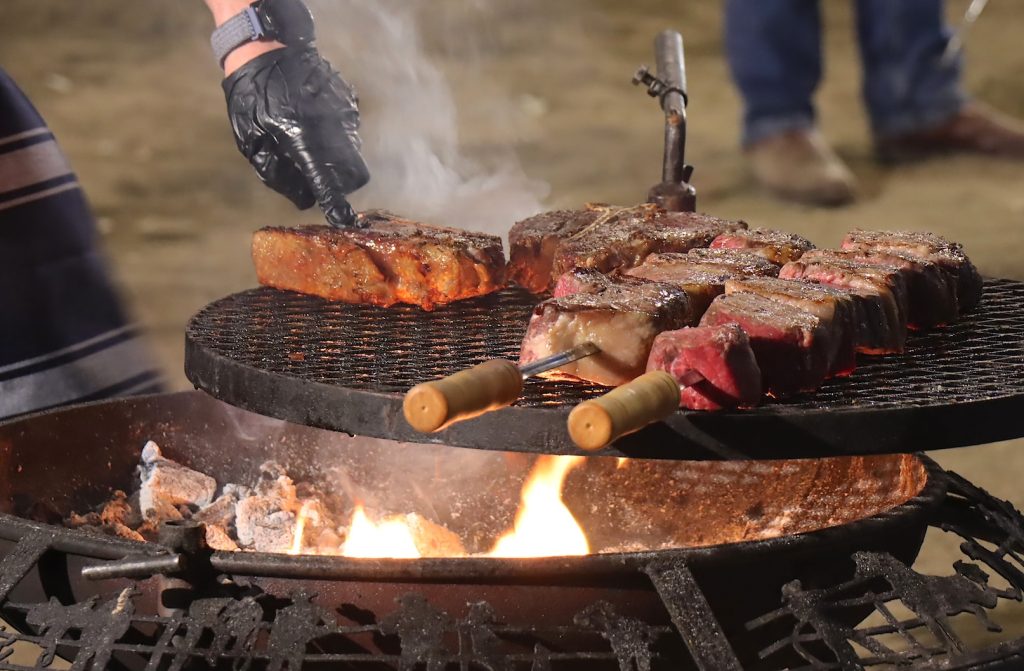
Rump cap and t-bones on the grill during CA’s Dalby Cattle Connect event
Gender protein gap
Another important factor was what he described as the ‘gender protein gap.’
“Dietary guidelines, as they are currently written, suggest an average daily recommended red meat intake of 65 grams. Australian men are right on that, at 64g, while women are consuming 35pc less red meat than men,” he said.
“In general, women could be at risk of not meeting iron requirements, and specifically, young women. On average, young women are consuming 30g of red meat per day, and their iron requirements are higher.”
“Red meat plays a critical role in that space, and to double-down on that message, as part of our submission to the expert committee running the dietary guidelines review process, MLA in collaboration with CSIRO conducted a research study looking Australia’s current diets, including a deep-dive int micro-nutrient needs.
“What was found, based on Australian data, was that the most nutritious diet included less junk food, more vegetables and 60-80pc of protein from animal sources, with red meat the top source. This diet me the greatest number of micro-nutrient targets.
It means the easiest way for Australians to get their micro-nutrient needs is to eat a healthy balanced diet that includes 60-80pc of protein requirements as animal-based.
“So we have a really strong story, and MLA has been on the front foot in terms of the formal submissions and peer-reviewed science that goes into the dietary guidelines review process,” Mr Low said.
Questions
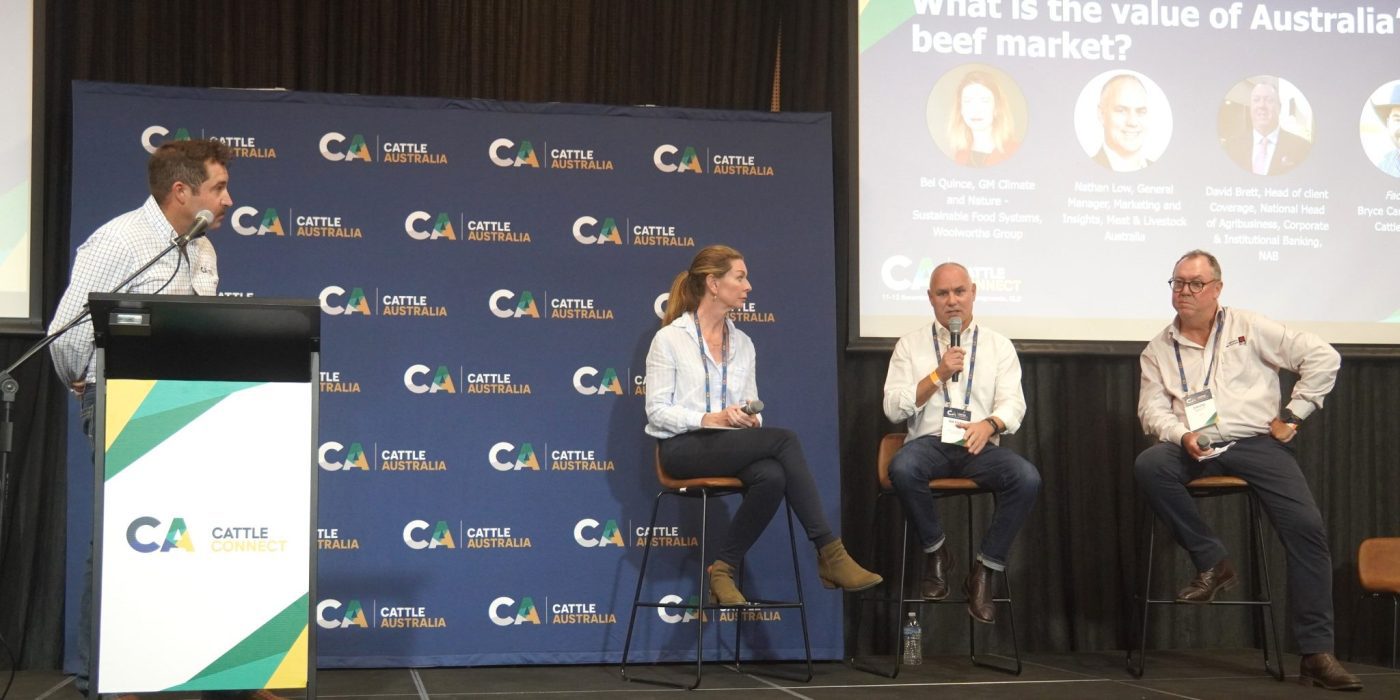
During questiontime, Woolworths general manager for sustainability Bel Quince (separate story to come) was asked about the customer/value proposition, and the competing conversations to attract customer attention in the retail space.
“Cost of living is certainly playing out in terms of Australian consumer choices,” Ms Quince said.
“But there’s also a segmentation layer. There’s a customer group that is really focussed on simply feeding the family, and then there are other segments, including customers that may be more affluent and more selective around choices, and have a higher affordability position,” she said.
“But the other consumer dynamic that’s playing through is that the position has moved from an ‘either/or’ position on product credentials, to an ‘and’ position,” she said.
“That’s value, as defined in several ways, and health. They want to know they can take this product home and not feel ‘bad’ about it, in some way. That layering of customer choices is now not about a one-dimensional trade-off, but about layering of the ‘and’ expectation that is really starting to show through in consumer buying patterns, as well.”
Half the population exposed to cost of living
MLA’s Nathan Low said Australia was ‘absolutely’ going through a cost-of-living crisis at present – but it only applied to half of the population.
“Actually, half of the population is still quite cashed-up, they have the disposable income to spend – and that’s why in an environment where retail price of beef per kilo has gone up in double digits over the past 12 months, consumption of beef is still increasing,” he said.
“it’s why retailers like Woolworths, in conjunction with MLA, have recently launched a premium range of chef’s steaks into the Woolworths meat case. We have always had some higher-priced products in the retail meat case, but that’s historically been value-added type products. Now we are just seeing fresh meat offerings including steaks ranging from $30 to $40 each, for those consumers who have the money to spend on a luxury experience.”
“That’s also being driven somewhat by consumers shifting out of food service (hotel, restaurant dining), but still looking for a high-end, high quality, luxury experience at home.”
“That’s creating more opportunities to see more premium products in more channels.”