
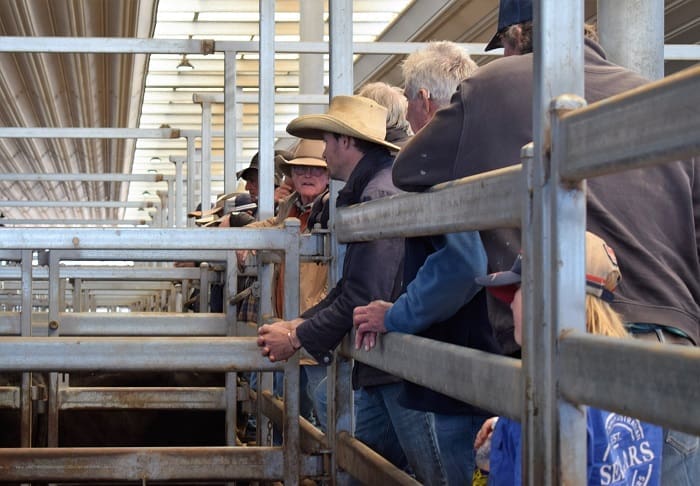
SALEYARDS across the eastern states have had a busy start to 2026, with prices dipping slightly in the past week and heatwave conditions appearing to have an impact on the market.
Weekly slaughter numbers are slightly up on this time last year, with 143,000 head killed this week, compared to 140,000 in the same week last year.
National yardings for January are slightly down on last year, with a heatwave impacted yarding this week largely credited for that reduction. Sales at Mount Compass, Naracoorte and Warwick were cancelled due to heat, numbers were reduced at a lot of yards and the Wagga sale, a traditionally big contributor to national yarding numbers, did not run because of the public holiday.
However, the first three weeks of January saw some considerable sized yardings at some of the bigger saleyards in Queensland and New South Wales.
Roma has penned 4600 head, 7300 and 7400 in its first three sales of the year. Dalby had an early sale with 930, then 5400 and 7300, followed by a heat impacted yarding of 4200 on Wednesday. Dubbo has had four sales, with 3300, 8040, 7880 and a heat impacted 3800 yesterday.
Processing numbers have not taken as big a hit as the saleyards in the past week, with one processor telling Beef Central earlier this week that a series of measures have been put in place to navigate the heat.
He said cattle have been trucked out really early in the morning (like 4:30am), to get to the works while it is still early and similar movements have been taken at dusk.
Big yardings finish 2025
The busy start to the year in Australian saleyards has come after a big yarding in December last year. Meat & Livestock Australia national yarding figures show 236,762 head were penned in December, as opposed to 164,573 in December the year before.
Yards in Northern NSW and Southern Qld were largely responsible for those numbers. Roma and Dalby had some yardings that went over 9000 head and Dubbo went over 10,000 head for the first time ever – a number it eclipsed three times.
Many reasons have been given for the increase in numbers going to the saleyards, with a strong market and drying out conditions the two main reasons.
All the main saleyard indicators have started 2026 at a similar level to what they were last year, with a rise in the past week followed by a slight dip this week.
The Eastern Young Cattle Indicator has lost 21c this week to open today 840c/kg carcase weight, the National Young Cattle Indicator opened today 452c/kg down 12c on the start of the week and the Feeder Steer Indicator has lost 7c to 465c/kg.