
143rd Edition: December 2025
Key Points:
- Indonesia continues exploring Brazilian feeder cattle.
- Vietnam meat imports are rising as high feed costs squeeze domestic production.
- Philippine beef demand is set to rise into 2026, with meat imports lifting 13.5 percent and dairy production also trending higher.
Regional Trends and Overview
Regional Price Graph
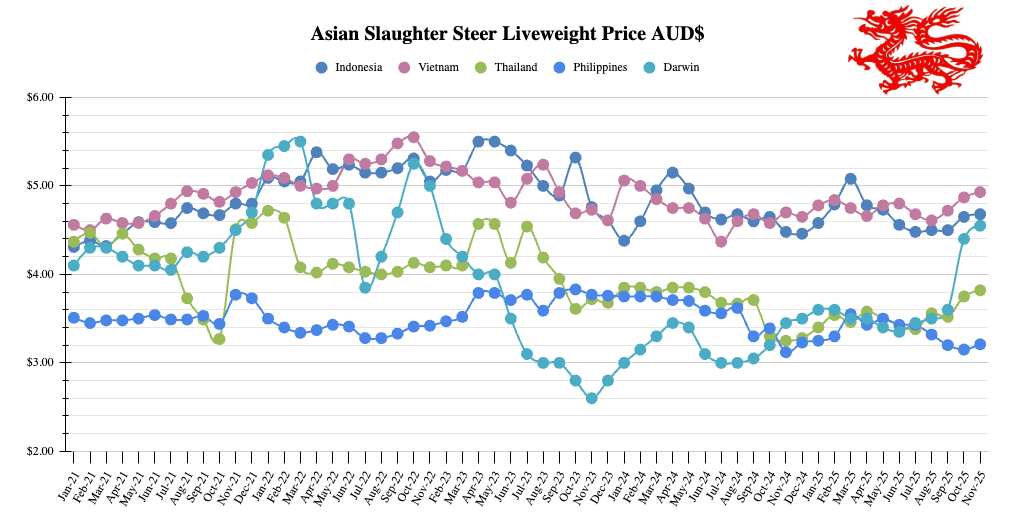
Indonesia: Slaughter Steers $4.68 AUD per kg live weight (IDR 10,905 = $1 AUD)

Dr Michael Patching
Prices
Prices in Indonesia continue to rise.
In Lampung, slaughter bulls and steers are now trading at IDR 51,500 per kilogram ($4.68 AUD), while Java remains slightly higher at IDR 52,500 ($4.77 AUD), reflecting the usual premium for central markets with stronger demand.
Retail prices are also climbing: wet market beef now sits at IDR 140,000 per kilogram ($12.72 AUD), and supermarket cuts are reaching IDR 16,450 per kilogram ($1.49 AUD).
Meanwhile, chicken remains more affordable at IDR 31,900 per kilogram ($2.90 AUD), keeping poultry as the preferred protein for most households.
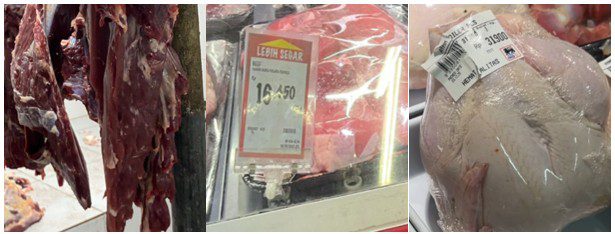
Photos: Local meat and livestock sales in Indonesia
Indonesia Looks to Brazil, but Still a Long Way from Ready
Indonesia is again exploring the option of importing Brazilian feeder cattle, following President Prabowo’s visit to Brasília in October. The goal is to diversify supply and reduce reliance on Australia, but the logistics are a long way from viable. A shipment from Brazil would take up to 45 days, compared to less than a week from Darwin. Feed requirements, welfare risks, and voyage losses are all major concerns. A pilot consignment is being considered to test how the cattle perform, but nothing concrete has been announced.
The vessels likely to be used is an interesting consideration. Brazil and Indonesia do not apply the same welfare standards required in Australian exports. Most ships available are older vessels that no longer meet Australian compliance, with higher stocking densities and limited oversight on mortality. They are probably marginally cheaper to use which may support the business case. Some sources also say a feed reload would be essential partway through the journey, or as a contingency, yet there is currently no suitable port to make that possible. If a shipment does happen, I expect it will mirror the 2021 Vietnam consignment. Technically it may work, but it is unlikely to be commercially repeatable.
Vietnam: Slaughter Steers $4.87 AUD per kg live weight (VND 17,238 = $1 AUD)Modernising Vietnam’s Abattoirs A Double-Edged Sword for Live Export
Vietnam is progressing its strategy to shut down small, unhygienic abattoirs, with Hanoi targeting full closure of informal slaughterhouses by 2030. The aim is to centralise processing into larger, modern facilities with better hygiene and oversight. While the direction is positive for local consumers, it has implications for the live cattle trade. Australian live exports to Vietnam were down 25 percent year-on-year to the end of October, and this regulatory shift will likely limit the ability for this market to recover volume in future.
I was involved in a study led by Impetus Animal Welfare Ltd, supported by DFAT under the Australia–Vietnam Economic Grant. We surveyed 99 abattoirs and found that most existing operations are small, low-margin businesses with limited appetite or capacity to invest. Hygiene, equipment and waste management were all flagged as critical issues, but 91 percent of owners said they couldn’t or wouldn’t fund upgrades themselves.
This shift makes it harder for Vietnam to scale up quickly in response to demand, as it has in the past. During previous periods of strong live cattle imports, new abattoirs opened rapidly to handle the volume. That kind of flexibility won’t exist in a more regulated, consolidated sector. On the flip side, better facilities could mean higher quality beef, giving Vietnamese product a chance to stand apart from low-grade Indian buffalo in the domestic market.
Feed Costs and Import Dependence Keep Pressure on Livestock Sector
Feed costs remain a major strain on Vietnam’s livestock sector, with soymeal and corn imports rising again in November. Limited local production and high shipping costs have kept feed as the biggest expense, particularly for pig and poultry farms. Smaller operators are under the most pressure, with many running close to break-even. Meat imports continue to climb as domestic supply struggles, with Indian buffalo dominating the low-cost segment. Despite the squeeze, larger integrated poultry groups are still growing, and broiler production is expected to rise into 2026, though small and medium farms are likely to keep losing ground.
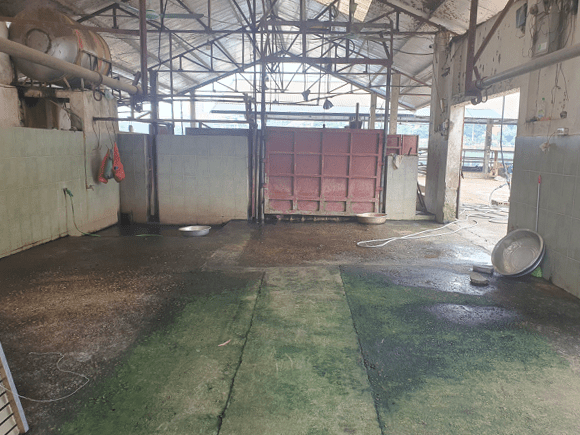
Photo: Indonesian beef abattoir
Philippines: Slaughter Steers $3.21 AUD per kg Live weight (₱38 = $1 AUD)
Prices
Livestock prices in the Philippines remain relatively stable this week.
Wet market beef knuckle is slightly lower at ₱375 per kilogram ($9.78 AUD), while supermarket beef knuckle remains steady at ₱415 per kilogram ($10.82). Slaughter steer prices have inched up to ₱123 per kilogram ($3.21 AUD), and pork carcass continues to hold firm at ₱240 per kilogram ($6.26 AUD).
In the poultry section, supermarket broilers have increased to ₱170 per kilogram ($4.43 AUD), while branded products like Magnolia remain unchanged at ₱185 per kilogram ($4.82 AUD). Overall, the market remains well-balanced with stable supply and no clear indicators of upward or downward pressure at the moment.
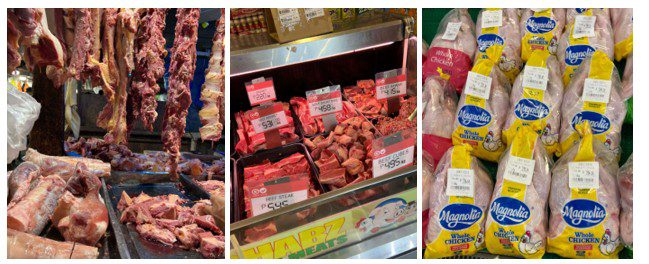
Photos: Local meat and livestock sales in Mindanao
Beef Demand Expected to Strengthen Into 2026 as Pork and Poultry Struggle
Beef demand in the Philippines is expected to remain strong into 2026, largely driven by ongoing disruptions to pork and poultry supply from African Swine Fever and avian influenza. These conditions are shifting consumer preferences toward alternative proteins, with beef picking up some of that demand. With around 95 percent of the domestic cattle herd managed by smallholders with fewer than ten head, local production remains fragmented and well below consumption needs.
Import data points to a widening supply gap. Total meat imports rose by 13.5 percent in the year to September, with beef up 4.3 percent. Brazil remains the dominant supplier, accounting for 39 percent of imports. While demand for Australian product is solid, there is a real risk of losing ground if Brazil’s presence expands and protocol negotiations progress.
Live export volumes also reflect strong demand, with Australian cattle shipments up 12 percent year-on-year. Similar to Indonesia, interest in Brazilian live cattle is emerging following FMD-free recognition earlier this year, but the economics remain difficult. The Brazil route requires large consignments of 10,000 head or more to make shipments viable, while the Philippines currently only takes around 3,000 head per shipment every few months.
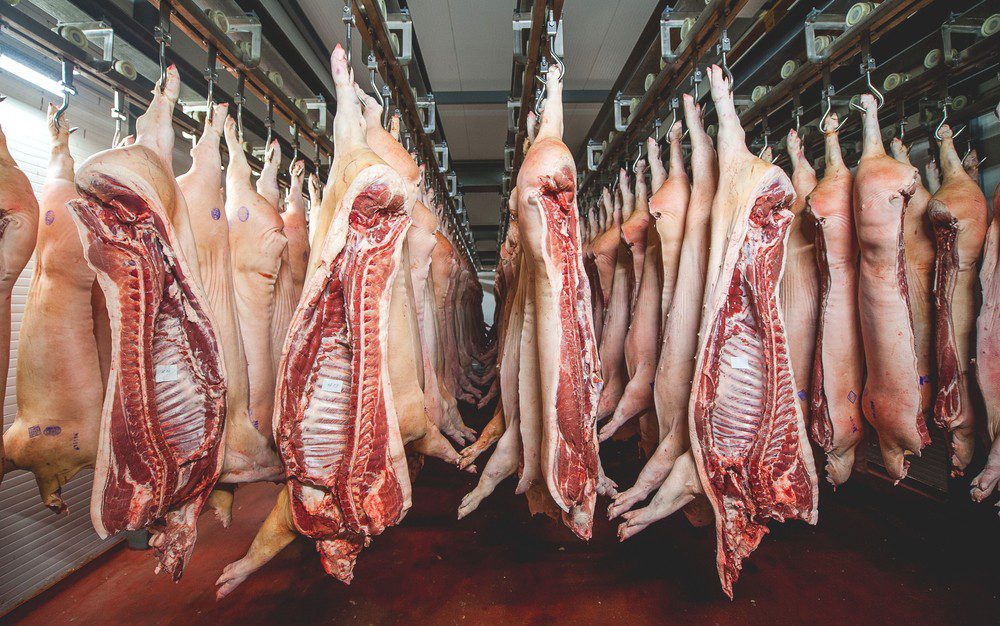
Photo: Swine carcass in Davao del Sur
Australia: Feeder Steers Darwin $4.55
Northern trade expected to slow into January as supply tightens and permits pending
Exporters are probably welcoming the January slowdown, with little to no activity expected to Indonesia while the market waits on import permits. Despite announcements from the Indonesian Government about scrapping quotas and streamlining the process, in practice it looks like the usual system is still in place. So we’re expecting the same start-of-year lag as usual while importers work through permit approvals.
Prices have continued to edge higher, with live export cattle now reportedly trading at around $4.55 per kilo. Supply remains tight across the north, which is keeping upward pressure on price and limiting options for meeting export demand. The recent cyclone off Darwin caused a few days of disruption, holding up shipping and loadings temporarily. While short-lived, it’s another reminder of how vulnerable northern logistics are at this time of year.
Year 2025 cattle exports – comparison across SE Asian markets
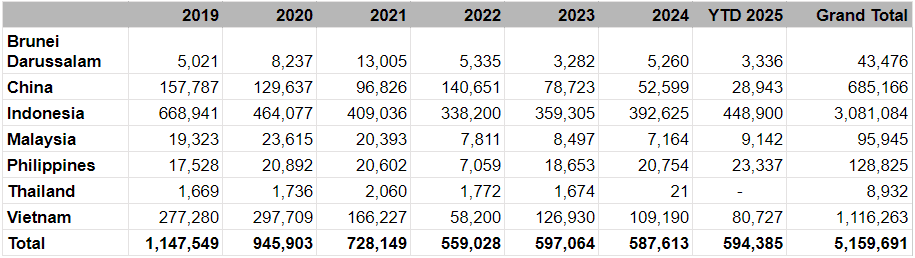
Source: DAFF website