
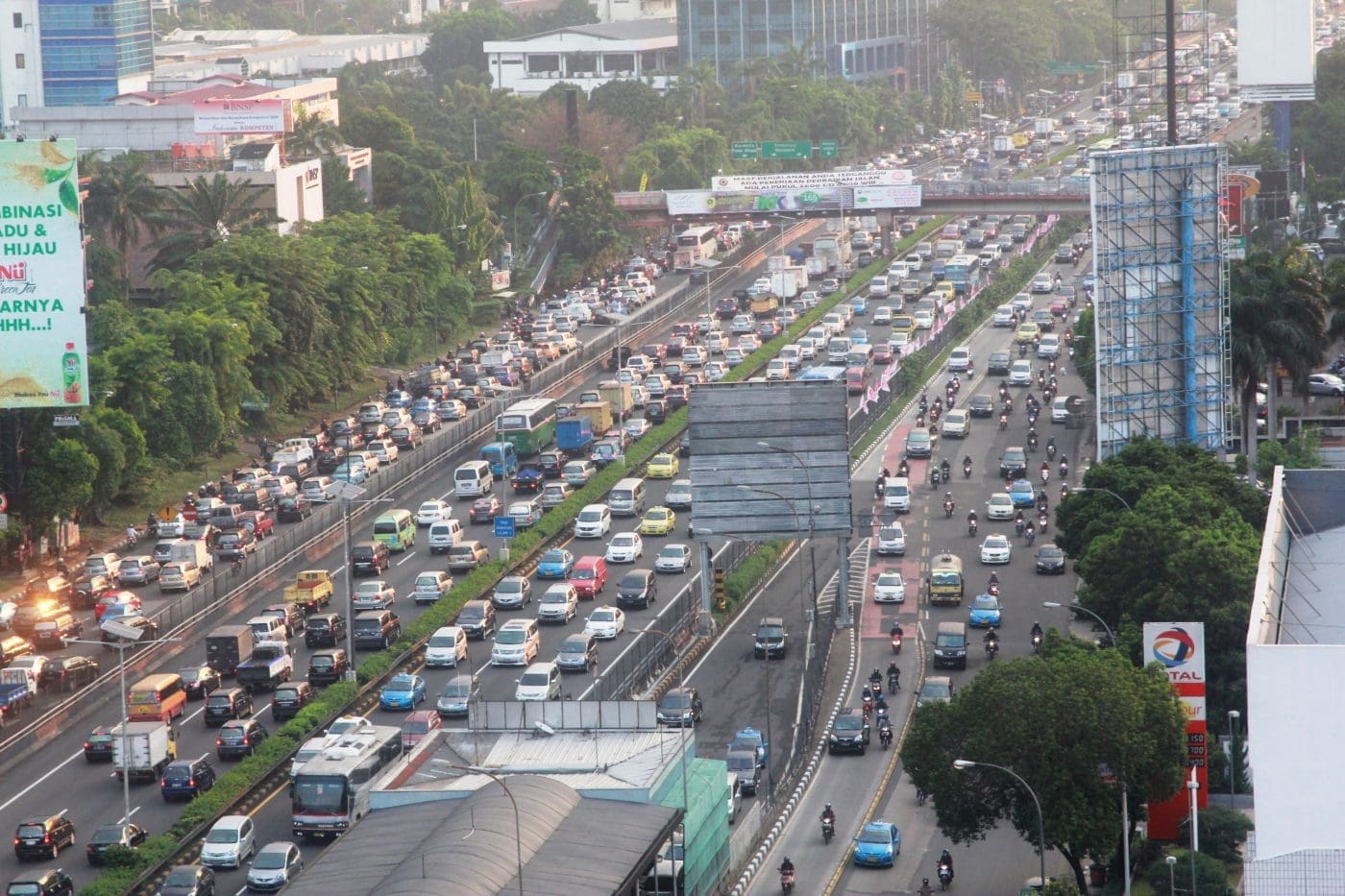
Traffic in Jakarta. The Indonesian capital has just overtaken Tokyo as the world’s largest city.
ONE number that simultaneously captured the challenges and opportunities facing Australia’s livestock export trade and broader economy in general on the opening day of its LIVEXchange conference in Perth was 42 million.
That is the number of people now living in Jakarta, which has just overtaken Tokyo as the world’s largest city.
WA Livestock Export Association chair John Cunnington drew attention to that eye-catching fact during a panel session on Wednesday.
He noted that Indonesia, with a young and growing population and a rapidly emerging middle class, is slated by many economists to become the fourth largest economy by 2050.
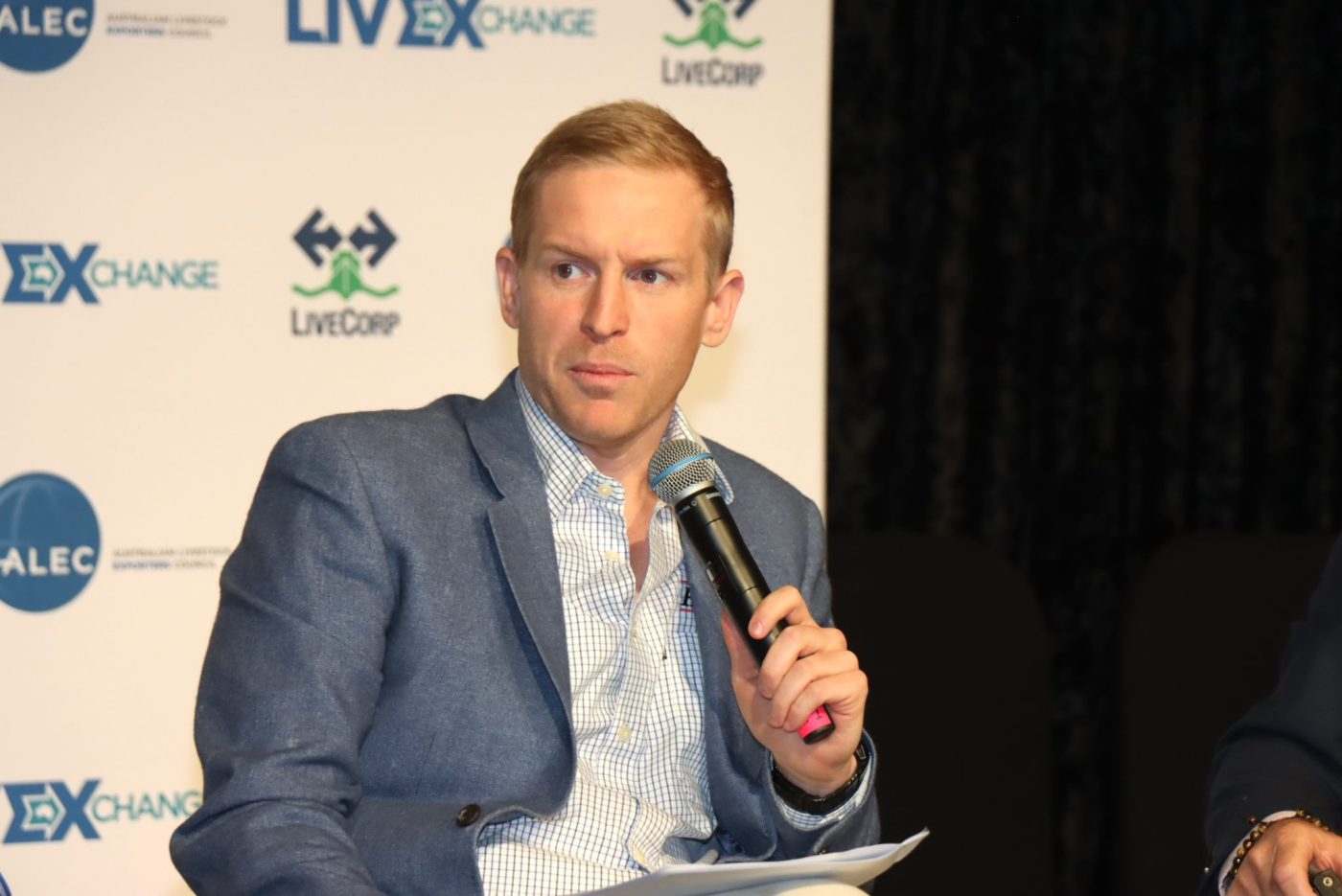 “We have a history of supplying cattle to Indonesia for over 40 years, so there are really deep ties and relationships there,” Mr Cunnington said.
He noted that President Prabowo has also indicated his support for live cattle imports by mandating a strategic shift in Indonesia’s beef supply policy, indicating his preference for a move away from importing frozen meat toward procuring live cattle and raising them domestically.
However, Australia could not afford to be complacent and simply assume it will automatically benefit from future trade opportunities created by Indonesia’s growth.
“I believe we sometimes take Indonesia for granted,” Mr Cunnington said.
“At the same time that President Prabowo is making these strategic shifts towards live cattle, he is also making strategic shifts towards relationships with the BRICs (Brazil, Russia, India and China).
“Indonesia has become the latest partner in that.
“So I think it’s imperative on the trade and Australia to make deeper ties at government to government levels and also business to business levels, and further invest in these relationships.
“It is our most important market now, and it’s essential for the live export industry into the future.”
Figures and statistics shared at the conference by Meat & Livestock Australia General Manager International Markets, Andrew Cox, further highlighted the “tremendous” trade opportunities Australia has on its doorstep.
 “The number of affluent middle class consumers is set to approximately double by 2030 in Southeast Asian countries such as Indonesia and Vietnam with Thailand, and Philippines all growing fast.
“Anyone who’s been up to the region will be struck by the number of young consumers there.
“The explosion in infrastructure in cities, metros, trains, buses, road networks, the explosion in food service outlets in retail, malls, and tourism is quite astounding for Australians who are probably used to a more sedate pace of development.
“So it’s a tremendous opportunity for our industry, because we know that as counties develop and as economies grow and consumers develop a little more wealth, then they instantly start looking to include more red meat into their diet for their family, health and enjoyment.”
Statistics shared by Mr Cox also highlighted the importance of the livestock export trade to the relationship between Australia and Indonesia.
Beef from Australian cattle contributes around 20 percent of Indonesia’s entire annual beef consumption.
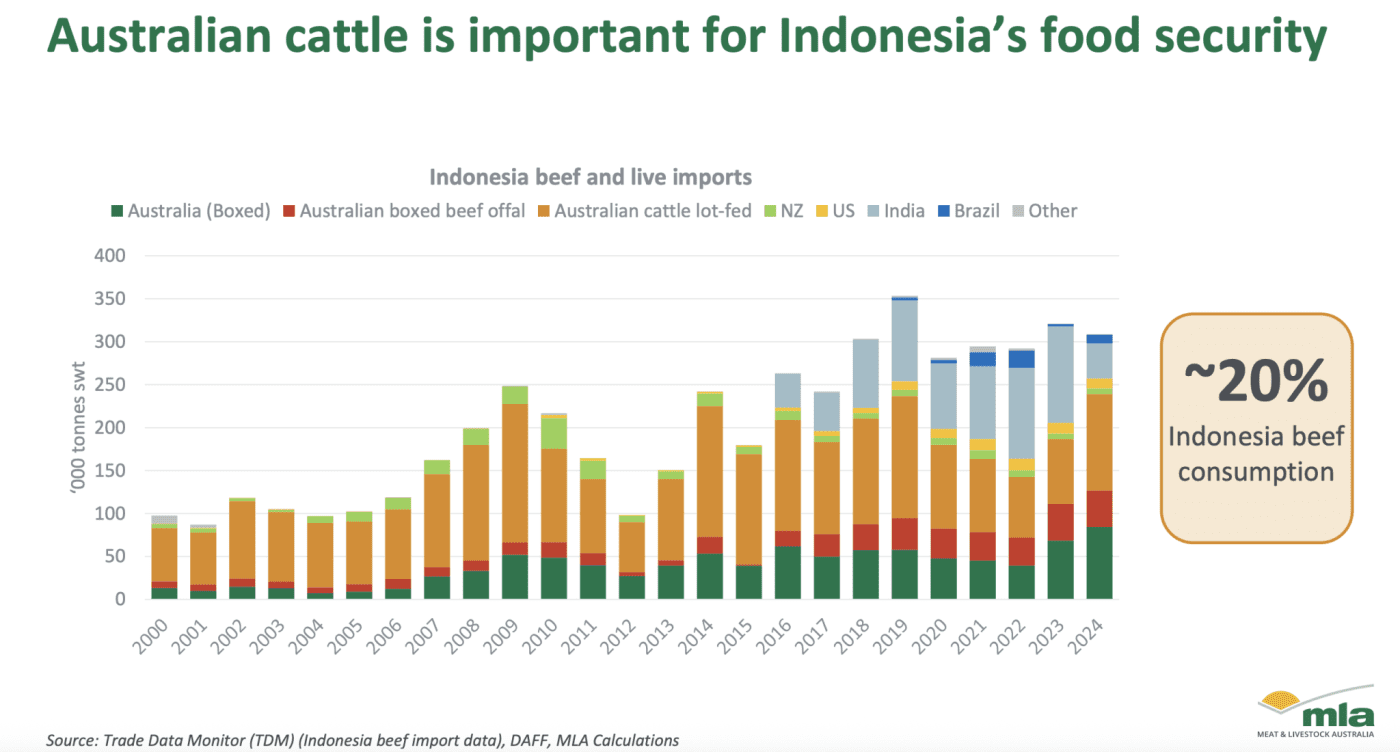
That is despite the emergence of competition from low-cost suppliers such as Indian buffalo meat and Brazilian beef, and increased imports of boxed beef, which have emerged as Indonesia has sought to diversify its sources of imported cattle and beef away from a heavy reliance on Australia alone in the years following the high-impact 2011 cattle export ban.
As part of that trend, Brazil is emerging as a potential new supplier of live beef cattle in addition to its existing status as a boxed beef supplier.
Indonesia is reportedly looking to Brazil to help deliver 17 million dairy cattle to increase local milk and beef production, in a move that would also open the door for Brazilian beef cattle to be shipped to Indonesia as well as dairy cattle.
No live shipments of cattle to Indonesia have yet been recorded from Brazil, which would require a transit of 30 to 40 days for cattle to reach Indonesia by ship.
However, Brazil has now achieved Foot and Mouth Disease-free status, and protocols are now being developed between the two countries which would facilitate the import of live cattle from Brazil by Indonesia.
“Certainly something to watch going forward in terms of competition,” Mr Cox said.
“Protein is the hottest trend in food right now”
In another positive message for the industry, Mr Cox said that after a few decades of being a whipping boy in nutrition, “protein is the hottest trend in food right now”.
“Certainly from my read on international markets and Australia as well, there’s a much reduced fear of animal fats, there’s an increased recognition of the role nutrient dense red meat plays in healthy diets.
“And there’s certainly been increased scrutiny on the highly processed foods sector, such as fake meat, to the point where I think we’re now looking back at the food pyramids from the 90s, which put processed cereals above meat and produce, as a comical hallucination from the food industry.
“So we’re in good space on the role of protein and the role of red meat in a healthy diet.”
In all markets there is typically an inverse relationship between the price of meat and per-capita consumption. In other words, as the price of a product rises, consumers usually buy less of it.
However, data from the US shows that since Covid – which was a catalyst for people to re-evaluate their diets – consumers have broken the historical relationship between price and volume, and are paying more for beef while eating more of it at the same time.
“That’s one example from the US, but we’re seeing this trend in many, many markets,” Mr Cox said.
“Demand for red meat globally is extremely hot, not just in developing countries, but also in developed nations. Consumers are bearing with price increases and still maintaining a central role for red meat in their diets.
“So I think that’s a really great positive which sometimes is overlooked.”