
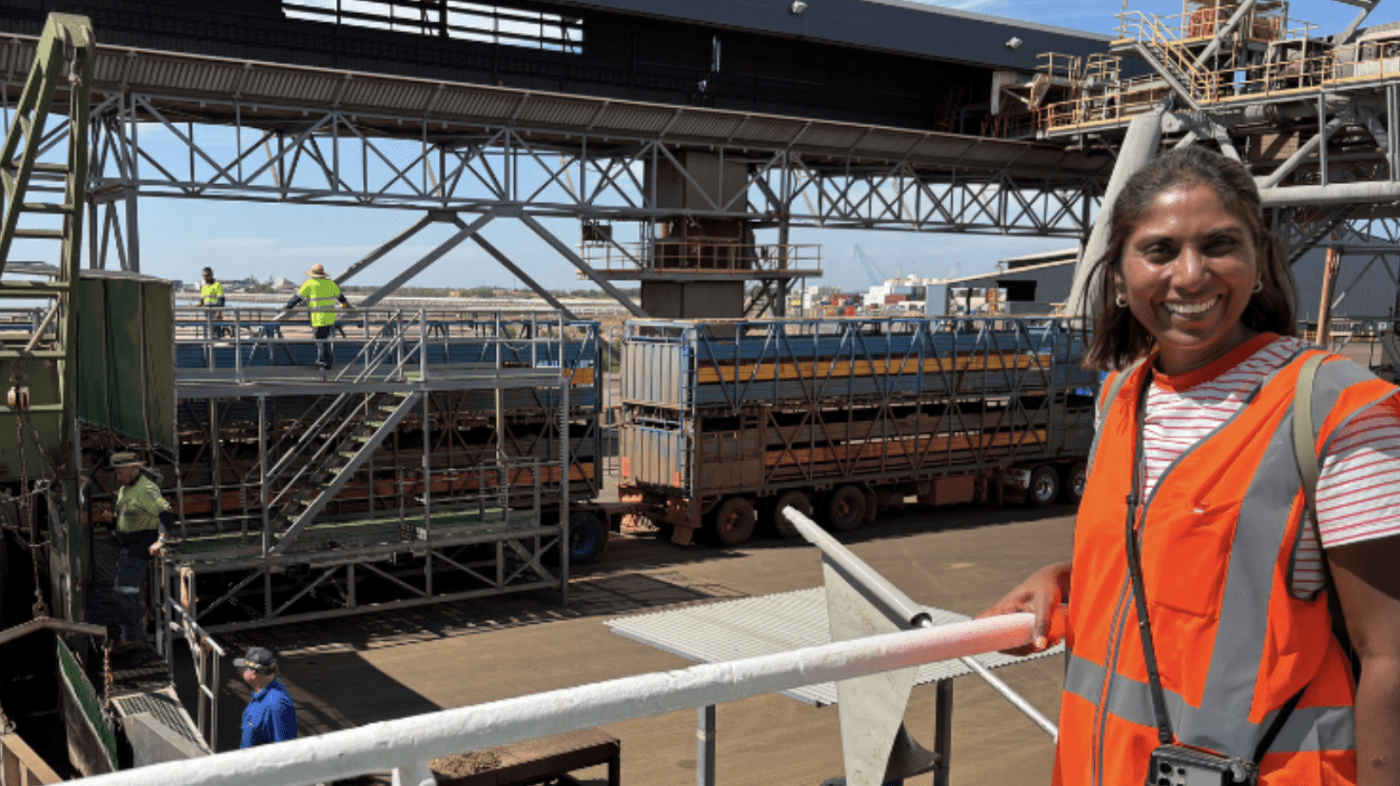
WHEN Dr Anneline Padaychee was asked to speak about the importance of the live export industry, she had no idea how the industry worked and definitely had some questions about animal welfare.
Dr Padayachee had never been to a farm before 2019 and professes to be most comfortable when there is traffic around. However, the past five years has seen her become a regular speaker at agriculture focused conferences (including beef).
Her main message is that nutrition and health benefits starts on farm and often focuses on supporting the agriculture sector in understanding their important role in human health and nutrition – a point she makes in an enthusiastic and feel good way.
The subject she was asked to speak about at the recent Livexchange conference in Perth was the importance of highly nutritious, animal derived foods, in developing countries.
“From a nutrition and food accessibility perspective, I thought that is a great thing. Anyone who works in nutrition, that’s a big motivation,” she said.
“While I understood the health side, on the other side I was very unclear about the process of live export, because you see what you see based on the media.”
Speaking on the Week in Beef podcast Dr Padayachee said she told the organisers of the conference that she would like to personally see how the supply chain works before confirming whether she will speak at the conference.
She then went up to Darwin to watch the loading of a ship, spoke to different exporters at different times, spoke to producers in Australia both in and out of the live export supply chain and to importers in Indonesia.
“This is a different world for me. I’m not an ag person, I don’t have a background in it at all. So, I really wanted to understand the people who do it,” she said.
“After I saw what actually happens, I thought ‘I don’t understand why this sector is still being judged and demonised for an incident that happened a decade ago’.
“If nothing had changed, fair enough. But it has and it is quite incredible. The amount of welfare and processes in place, I used to work in baby formula and this is so much more complicated.”
A misunderstood industry
Having researched the industry and learnt more about the people involved, Dr Padayachee concluded that the importance of live export was misunderstood by many.
“We can sit in our beautiful air-conditioned offices all around the world and talk about disparity, talk about equitable food distribution, talk about poverty causes, talk about social responsibility, collect the data on developing countries and create targets and moving goals. All collated in published reports. All of this is fine.
“But I have to say, hats off to the live export guys here in Australia. Live export actually helps societies in these countries become self-empowered, breaking the cycle of poverty.
“That sounds pretty full-on to say it, but it’s true. Practical solutions, practical change, action over words. It’s so much more than providing food and feeding the world. It is social responsibility, equitable distribution, socioeconomic development and public health nutrition all in one.
“And that’s cool, and that’s epic, and this sector should be extremely commended for what they do.”
A whole of supply chain approach to nutrition
Dr Padayachee has taken this approach to other industries she has been involved with. A lot of her early work was done in the infant formula industry, before she was asked to speak at a Dairy Australia conference.
 “My customer group were premature infants and newborn babies that don’t have access to any breast milk. They are the most vulnerable in society.
“The dairy conference organisers asked me to talk about the nutritional differences between dairy milk and the nut milks.
“I walked into this room, and I just thought these dairy farmers are the coolest people I’ve ever met.
“They essentially coach these incredible animals, these cool cows, that can eat grass that has not a lot of nutrition in it apart from water, fibre and a scattering of minerals and vitamins. And they just chew and chew and chew and chew and chew, then it does its magic in their amazing digestive tract and rumen create nutritional liquid gold in the form of milk.”
Leaning into farming
Having been to the dairy conference, she asked if she could go and see a farm. An experience she said was like being in a giant lab.
“And every single corner of the lab has got different conditions. The environment never stays the same, yet farmers somehow navigate that,” she said.
“You just call yourself farmer, but if I had to compare the human version of what farmers do, there’s at least six or seven different job titles we could do for all the roles that you accomplish.”
She was then asked to speak at the Australian Lot Feeders’ Association’s Beef Ex conference in 2022 – a request that required further research with a visit to a feedlot.
““I was unsure of this sector because, again, of what I see on mainstream media and youtube. And it’s largely based on the USA structure. But the Australian version is so very different. That just blew my mind, because I met the animal version of me.
“There’s a PhD in animal nutrition sitting there and I’m looking at their software program. I’ve used a similar program, I was unsure of this sector because, again, of what I see on mainstream media and youtube. And it’s largely based on the USA structure. But the Australian version is so very different. and I do the exact same thing for all my baby ingredients.”
Dr Anneline has since spoken at the Wagyu and Angus conferences, along with the Livexchange conference that has just been. She has now visited all manner of livestock operations and continues to champion the product.
A boring message
Most of her requests to talk to industry groups and conferences have been about a nutritionist’s perspective on the role of red meat.
She said that message was quite boring – with no quick fixes or superfood messages.
“If you can afford it, access it, and it’s part of your value systems. No one should feel guilty to eat red meat,” she said.
“But, like all good things, because red meat is extremely nutritionally dense, you don’t need a lot to get a lot of benefit.
“A balanced diet of – a third of a plate of protein rich foods, whether that’s red meat, chicken, fish, eggs, tofu, tempeh, around a third of it a range of different veggies and the rest legumes or wholegains. If you eat colour, you have all your bases covered. It’s a boring story, but it’s an accurate story.”