
A PARLIAMENTARY inquiry into the phase out of live sheep exports has heard from several cattle industry groups keen to defend their Western Australian counterparts.
Having announced a plan to phase out live sheep exports by 2028, the Federal Government commissioned a parliamentary inquiry to run a quick investigation into the bill. The WA industry has since taken to the streets of Perth to protest the bill and has started a petition, which has seen thousands of signatures.
This week’s public hearings have seen some tense exchanges from livestock groups across the spectrum, who have been keen to state their opposition to the ban.
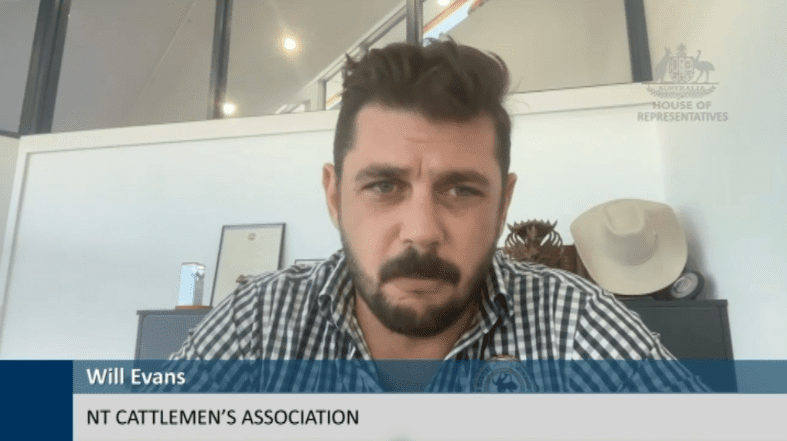
Leading the charge has been the Northern Territory Cattleman’s Association, with chief executive officer Will Evans telling the committee he was concerned about the Government’s conduct with the policy.
One of the Government’s main defences of the policy has been that it has taken it two elections and has a mandate to implement it. Mr Evans said conflicting messages from Australian Labor Party candidates last election made the Government’s intentions with the trade ambiguous.
“For someone working in the industry, it was not clear what the ALP policy was during the election period,” he said.
“For the Government to now claim that it has a mandate on the issue, when it is not clear that it does, is alarming.”
Powerful words from @WillEvans0404 CEO of @NTCattlemen at the Inquiry into the Government’s live sheep ban and why the policy should be reversed.@keepthesheepWA #keepthesheep pic.twitter.com/5A1dguxELq
— ALEC (@AustLiveExports) June 13, 2024
The Government has been keen to state that it supports live cattle exports, with agriculture minister Murray Watt recently telling Beef Central that he had defended the trade when the cross bench was calling for an end to it.
Mr Evans said with the Government still unable to settle a class action, which found 2011 ban of live cattle exports to be unlawful, it was hard to feel the support.
“We are by this Government that we are an industry today that enjoys its support and yet this support does not extend to the families in the class action and righting the wrongs of the past,” he said.
“While waiting for this compensation to be paid, we are forced to watch and even asked to participate in the same wrong being inflicted upon our friends in Western Australia. We are told that this decision is warranted it, that it is needed and that it is the will of the Australian people, I reject that.”
AMIC raises concerns about motivations of the bill
The Australian Meat Industry Council says it remains neutral on the phase out of the live sheep trade.
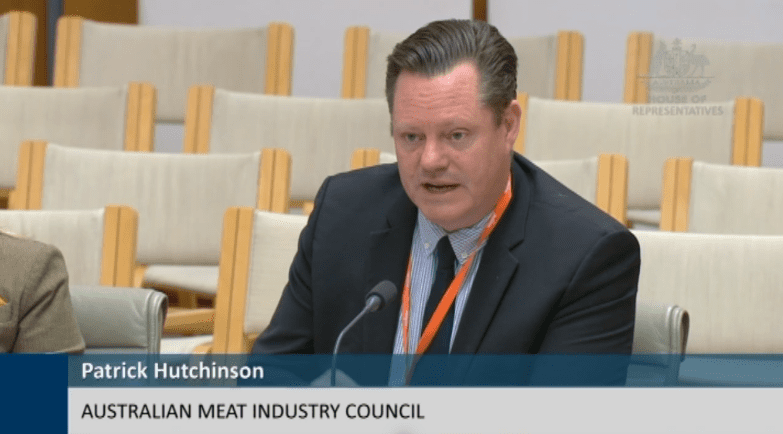 CEO Patrick Hutchinson said he was concerned about the Government’s reliance on animal welfare groups to formulate the legislation.
“These groups, some of which are giving evidence later and have before, purporting to be animal rights activists have felt they won the first battle by closing live sheep exports by sea,” Mr Hutchinson said.
“Perversely these groups are now targeting Australian livestock processing facilities.”
Mr Hutchinson said he profoundly rejected these groups, with the exception of the RSPCA.
“We cannot have science-based conversations with these groups who only want to see an end to livestock based food systems and force consumers into a vegan lifestyle,” he said.
Cattle Australia concerned about precedent
Cattle Australia CEO Chris Parker said with a lack of scientific evidence supporting the bill he was concerned about the precedent the Government was setting.
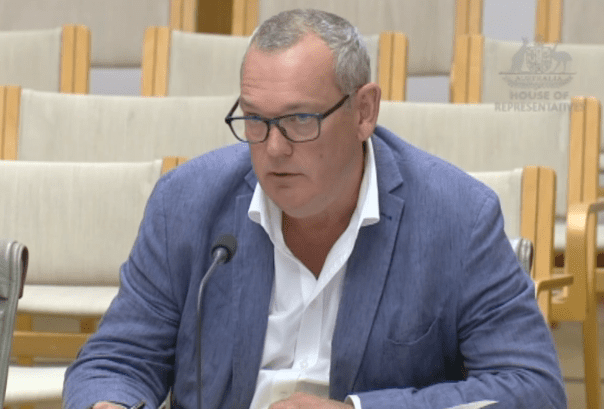
Chris Parker
“This Bill provides no level of surety for the West Australian agricultural industry, but instead increases the sovereign risk to all export of live animals, as it changes fundamentally the basis of prohibition and increases complexity and risk, therefore impacting on all animal export businesses.
“The Bill’s explanatory memorandum outlines that one of its purposes is ‘to protect the welfare of sheep when exported from Australia by sea and to assist sheep producers and sheep supply chain businesses to adjust to the phase-out of live sheep by sea’.
“The Australian live export industry is world-leading in animal welfare and is responsible for lifting welfare standards in our international live export markets. The live export industry is committed to promoting a culture of continuous improvement that has raised standards globally and resulted in world-class animal welfare outcomes.
“Live exports remain integral to several free trade agreements, and provide market diversification options and a degree of competition for producers in Queensland, Western Australia and the Northern Territory, where processing options can be limited. This is crucial for cattle producers, as it provides a competitive edge and mitigates the risk of market dependency.
“Currently, there is no scientific evidence to support the notion that the live export of sheep by sea should be phased out. This lack of evidence raises concerns about setting a precedent that could negatively impact Australia’s international market relationships.
“CA believes the Government decision should be based on scientific evidence. Phasing out live sheep exports without supporting performance evidence puts the live cattle trade at risk, as it could become the next target of ongoing campaigns and animal activist activities aimed at eliminating live exports entirely.
“Ultimately, the live cattle trade, and any part of the supply chain handling live animals, will be under threat. This approach risks shutting down industries based on emotion or ideology, setting a dangerous precedent and creating sovereign risk for livestock and other agricultural sectors.”