
Editor’s note: Tonight marks the 2026 season return of Beef Central’s weekly genetics reviews written by Alastair Rayner. Weekly reports will from next week appear on Tuesday evenings, and are included in our weekly genetics email to subscribers ….
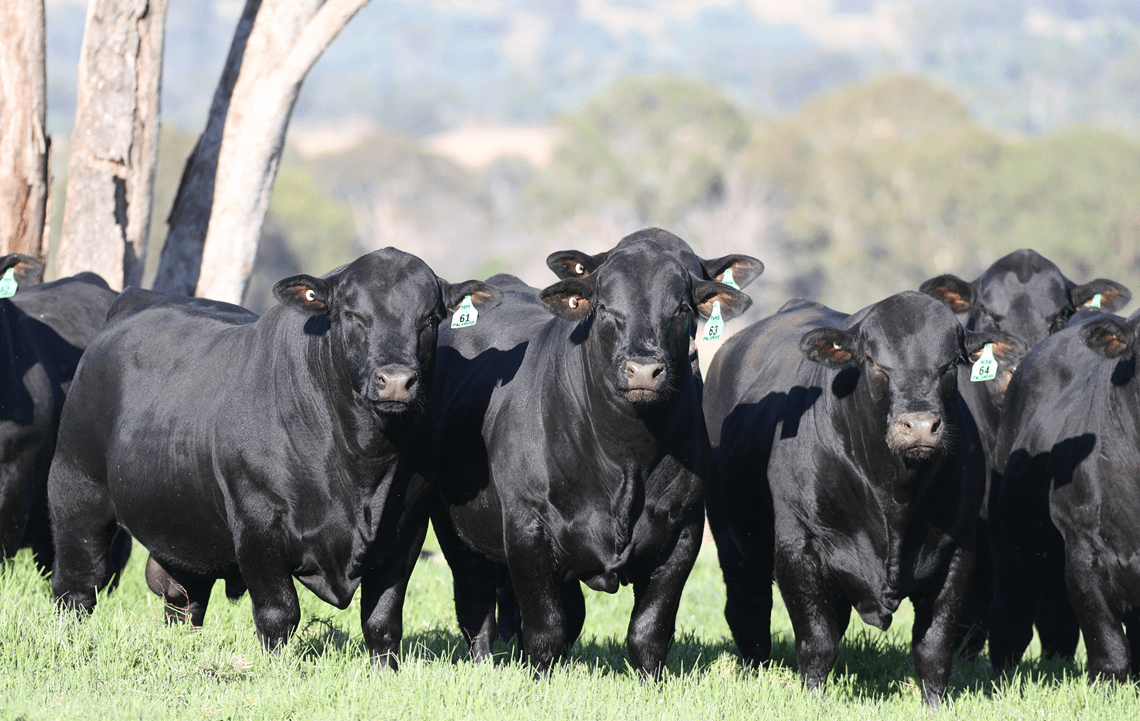
FEBRUARY traditionally marks the start of the autumn bull selling season, and early sales across Western Australia, Victoria and Queensland have already returned some strong results.
This was particularly evident at this week’s Big Country Brahman Sale in Charters Towers in North Queensland, where competition for bulls was surprisingly strong, with Red Brahman bulls averaging $14,171 and topping at $90,000, while demand for Grey Brahman bulls peaked at $130,000.
It is still early to determine how recent seasonal disruptions that range from heatwaves and bushfires in the south to flooding and ongoing monsoonal activity in the north, will affect production and herd rebuilding decisions this year.
Similarly, while uncertainty around export demand, particularly ongoing concerns about access to the China market, remains a consideration, early sale results suggest this has not significantly impacted competition or willingness to invest in bulls.
While many producers feel it is still too early in the year to make firm predictions about market direction, many producers appear cautious rather than overly optimistic. This caution is likely to be a major influence on decisions around both herd numbers and subsequent bull purchases.
MLA’s latest Beef Producer Intentions Survey released this week asked questions about bull purchases made during the closing stages of 2025, for the upcoming spring breeding season. Responses included 14pc of producers saying they had bought more bulls than the previous year (variances seen from state to state, with Queensland the highest at 17pc and SA the lowest at 7pc); 44pc who bought about the same as the previous 2024 year, and 41pc who said they had bought less.
What these early signals mean for bull buyers and sellers
For bull buyers, increased uncertainty has sharpened focus on the impact and the cost of poor bull selection decisions on herd production and profitability.
A trend that began to emerge during the spring bull sales of 2025 was a preference for bulls that not only offered a broader spread of market-relevant traits but were also had maturity patterns suited to variable seasonal conditions.
The importance of herd fertility, measured not only through weaning percentages, but also by kilograms of calf weaned per cow, continues to be an area where many producers can make significant improvements.
Recent drought conditions across southern Australia have reenforced for many producers just how difficult extended calving periods are to absorb when seasons turn quickly or when market access is disrupted. As a result, traits linked to joining success, calving spread and cow longevity are attracting greater attention than during periods characterised by confidence and expansion.
For seedstock producers, this more cautious approach is likely to be reflected throughout the autumn bull sales. There is broad agreement among leading stud stock agents that buyers remain prepared to pay for bulls where breeding objectives are clearly articulated and supported by credible data.
Several agents speaking on background this week suggested they believe that several sale drafts may be smaller this year. However, while numbers may be lower the bulls offered may be higher in overall quality.
There was also some agreement that there are seedstock breeders who have chosen to take only their best bulls through to sale, rather than incur additional costs preparing bulls that may not fully meet producer expectations.
Structural changes reshaping genetics
While bull sales often dominate attention when discussing genetics and industry trends, a more fundamental set of changes during 2025 will shape how genetic improvement is delivered and used into the future.
The most significant of these has occurred in Wagyu. As reported in Beef Central late last year, the Australian Wagyu Association has launched a fully independent Wagyu genetic evaluation platform, underpinned by one of the largest Wagyu genomic datasets globally.
Rather than adapting a generic beef model, the system applies Wagyu-specific biological and statistical frameworks, allowing more frequent updates, improved trait reporting and tighter integration with member systems.
In parallel, the introduction of targeted DNA tests, including screening for genetic variants associated with embryonic mortality, highlights a broader shift in how genomics is being applied. Rather than focusing solely on accelerating genetic gain, genomics is increasingly being used to manage biological risk.
In Wagyu production systems, where fertility failures carry high financial cost, genomics is becoming as much a risk-management tool as a selection tool.
As outlined earlier by Beef Central, the Angus breed is moving in a similar direction. Angus Australia has launched Angus GenetiQ, an evaluation platform intended to give the breed greater control over data pipelines, evaluation cycles and future trait development. For the time being, Angus GenetiQ will operate alongside BreedPlan rather than replace it.
However, these developments present a clear signal that major breeds are seeking more control over how genetic evaluations are built, updated and delivered, rather than relying solely on a single, standardised system.
Genomics extends further into commercial herds
In 2026, the role of genomics is expected to continue expanding beyond traditional seedstock systems and have a larger uptake by commercial producers. Genomics providers such as Basepair Genomics, Neogen Australasia and Weatherbys Scientific have had a strong presence in recent years, offering genomic tools that support selection and verification beyond the formal breed registry systems.
This year an additional program GenSELECT will be offered in partnership between ABRI and Neogen Australasia and is being introduced in conjunction with Herefords Australia. These programs allow producers to use genomic information to rank animals for economically relevant traits without requiring full pedigree recording or participation in formal seedstock evaluation systems.
Rather than replacing EBVs or traditional visual and performance-based selection methods, programs like GenSELECT sit between national evaluation systems and private genomic testing. Their value lies in supporting practical commercial decisions, particularly around replacement selection and bull buying.
Taken together, the presence of multiple providers and programs suggests that uptake of genomics across commercial herds is likely to accelerate. For many producers, genomic selection is increasingly being used alongside established methods of identifying replacements, providing an additional layer of confidence rather than a wholesale change in approach.
What this means heading into 2026
Collectively, the genetics landscape in 2026 will be defined less by constraints around access to information and more by the increasing depth, accuracy and breadth of genetic data available to producers. Breed-specific evaluation systems, commercial genomic programs and established national frameworks are all being strengthened through larger datasets and improved genomic integration.
In practical terms, producers will increasingly be presented with more comprehensive and more reliable information than at any point previously. This includes improved within-breed data, more accurate genetic predictions, and a growing body of genomic insights that can support decision-making alongside traditional selection methods. It is also expected that systems such as BreedPlan will continue to improve as additional performance and genomic data is captured and incorporated.
The risk in this environment is not lack of access, but information overload or under-utilisation of these tools. Without clear breeding objectives, the value of increasingly detailed genetic information may not be fully realised. In a year shaped more by uncertainty than expansion, the ability to use genetic information to support resilience, adaptability and fertility is likely to matter more than chasing maximum output.
For both bull buyers and seedstock producers, the key message to focus on this year will be that better information delivers better outcomes. But this will only happen when that information is applied with purpose.

Alastair Rayner
Alastair Rayner is Principal of RaynerAg. He has over 28 years’ experience advising beef producers and graziers across Australia. Alastair can be contacted here or through his website: www.raynerag.com.au