
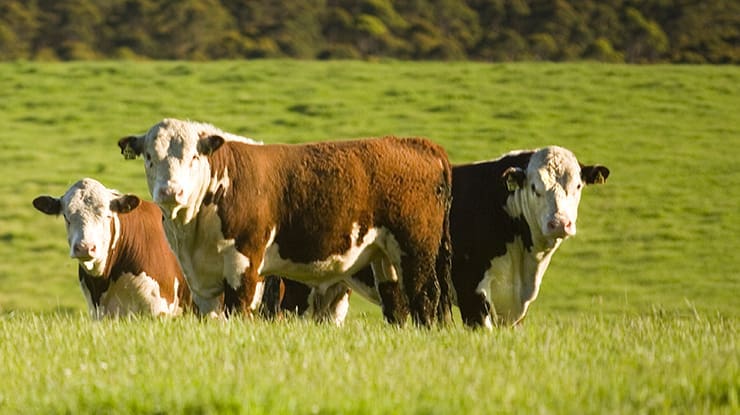
ENSURING that the bull team is ready to start work does take preparation.
Very few producers would simply muster bulls and put them straight into the cow paddock without first considering whether the team and each individual bull, is genuinely ready for joining.
One of the fundamental checks available to producers is the Bull Breeding Soundness Examination (BBSE). A BBSE provides an important benchmark and helps confirm that bulls are physically capable of contributing to herd reproductive performance.
The BBSE evaluates structural soundness, reproductive anatomy and semen characteristics, giving producers confidence that obvious risks have been addressed before joining begins.
However, it is important not to view a BBSE as a simple ‘pass-or-fail’ process.
Research conducted in Canada by Dr Albert Barth and Dr Cheryl Waldner from the Western College of Veterinary Medicine, University of Saskatchewan, published in the Canadian Veterinary Journal, analysed breeding soundness examination records from more than 2100 beef bulls evaluated over 13 years. Their work demonstrated that the real value of a BBSE lies in risk management.
While a BBSE helps identify bulls unlikely to perform adequately, reducing the chance of reproductive failure within a breeding season, it does not guarantee fertility outcomes or ensure that all bulls classified as satisfactory will perform equally once they enter the paddock.
Bulls that pass a BBSE can still differ in how effectively they perform during a breeding season. Some achieve very high conception rates, others moderate results, and some operate closer to the threshold where performance begins to decline.
The role of the BBSE is to remove the poorest performers – not necessarily to identify the most reproductively efficient sires.
For producers, this means that passing a BBSE confirms a bull is capable of breeding, but it does not automatically mean he will deliver optimal pregnancy outcomes.
Various influences, including ‘excessive condition’
Bull fertility is influenced by far more than semen morphology alone. Nutrition, health status, physical fitness, age, environmental stress and management all contribute to reproductive performance.
Producers are often faced with a practical dilemma when inspecting sale bulls. On one hand, many buyers remain cautious of bulls that appear over-prepared, concerned that excessive body condition may compromise fertility or long-term working ability.
 On the other, bulls presented in lighter condition are frequently overlooked because they are perceived as lacking the strength or preparedness required to begin work immediately after purchase.
For seedstock producers, there’s no easy solution. Bulls must be presented in sufficient condition to meet market expectations, yet excessive fatness can raise concern among commercial buyers.
For many years, discussion around “overdone” bulls relied largely on practical experience rather than clear biological explanation.
A recent study led by Pedro Fontes and colleagues from the University of Georgia and collaborating US universities, published in the Journal of Animal Science, has provided new insight into how pre-sale growth rate and body condition may influence reproductive physiology in developing bulls.
The study compared normally developed yearling bulls with bulls grown on a higher nutritional plane typical of intensive development programs.
Bulls grown for higher rates of gain accumulated greater levels of body fat and showed metabolic changes associated with sustained energy surplus, including increased insulin resistance and elevated markers linked with systemic inflammation.
Importantly, these bulls were not infertile. Testosterone concentrations and conventional semen morphology remained largely within acceptable ranges, meaning many would still meet BBSE standards.
However, more detailed assessment revealed subtle but consistent differences in semen function, including reduced progressive sperm motility, increased proportions of sperm with compromised cell membranes and fewer ejaculates meeting semen freezing standards.
In practical terms, growth rate and nutritional intensity influenced functional semen quality even though bulls might still pass conventional examinations.
The biological consequence of reduced sperm function is rarely total infertility. Instead, it may appear as reduced reproductive efficiency.
In commercial herds, this can translate into fewer cows conceiving in the first cycle, more late pregnancies, wider calving spreads and reduced lifetime productivity of calves born later in the season.
Because mating still occurs and overall pregnancy rates may remain acceptable, the underlying cause can easily be overlooked. Similar considerations apply to semen collected for artificial insemination or embryo transfer programs, where relatively small differences in sperm function can influence fertilisation success and early embryo development.
Important message
The important message from this work is not that grain feeding or sale preparation should be avoided. Many successful seedstock programs utilise grain assistance or supplementary feeding responsibly.
Rather, the research highlights the difference between supporting normal development and over-riding the animal’s natural development pace.
A BBSE remains an essential tool for managing reproductive risk, but it should be considered alongside an understanding of how bulls have been developed prior to sale. Bulls that combine structural soundness, appropriate condition and physiological readiness for work are more likely to transition successfully into joining.
A bull that passes his exam but has spent months being pushed beyond his physiological limits isn’t fully ready for work.
The goal is an animal that is fit, balanced, and genuinely prepared, not just certified.
 Alastair Rayner is Principal of RaynerAg. He has over 28 years’ experience advising beef producers and graziers across Australia. Alastair can be contacted here or through his website: www.raynerag.com.au